China Expands AI Export Controls; GlobalFoundries NY Fab Gets Japanese Financing
China has expanded export controls to cover AI-related items, while GlobalFoundries’ New York semiconductor fab project advances with Japanese financing support. The dual developments signal ongoing shifts in the global AI hardware supply chain, with potential ripple effects on AI model availability, pricing, and reliability for content creators. The changes highlight the value of flexible, multi-model AI workflows that can adapt to ecosystem shifts.

Table of contents
Dual October 19 Developments Shift the AI Hardware Landscape
Two overlapping announcements on October 19 are sending ripples through the global AI ecosystem, with potential consequences for every creator relying on cloud-based AI tools for content production.
According to reports from The Automated Daily, the two linked developments involve the regulatory and manufacturing sides of the AI hardware supply chain. First, China has expanded its export controls to cover both solar and AI-related items, marking a broadening of existing trade restrictions into AI hardware categories. Second, GlobalFoundries’ New York-based semiconductor fab project is advancing with new support from Japanese financing, adding momentum to domestic chip manufacturing capacity in the U.S.
While full details of both developments remain limited in initial reports, their combined focus on AI hardware supply chains puts them on the radar of any creator who builds content with AI tools. Shifts in hardware availability and cost can trickle down to the tools creators use every day, affecting everything from subscription pricing to model reliability.
Why AI Hardware Supply Chains Matter for Content Creators
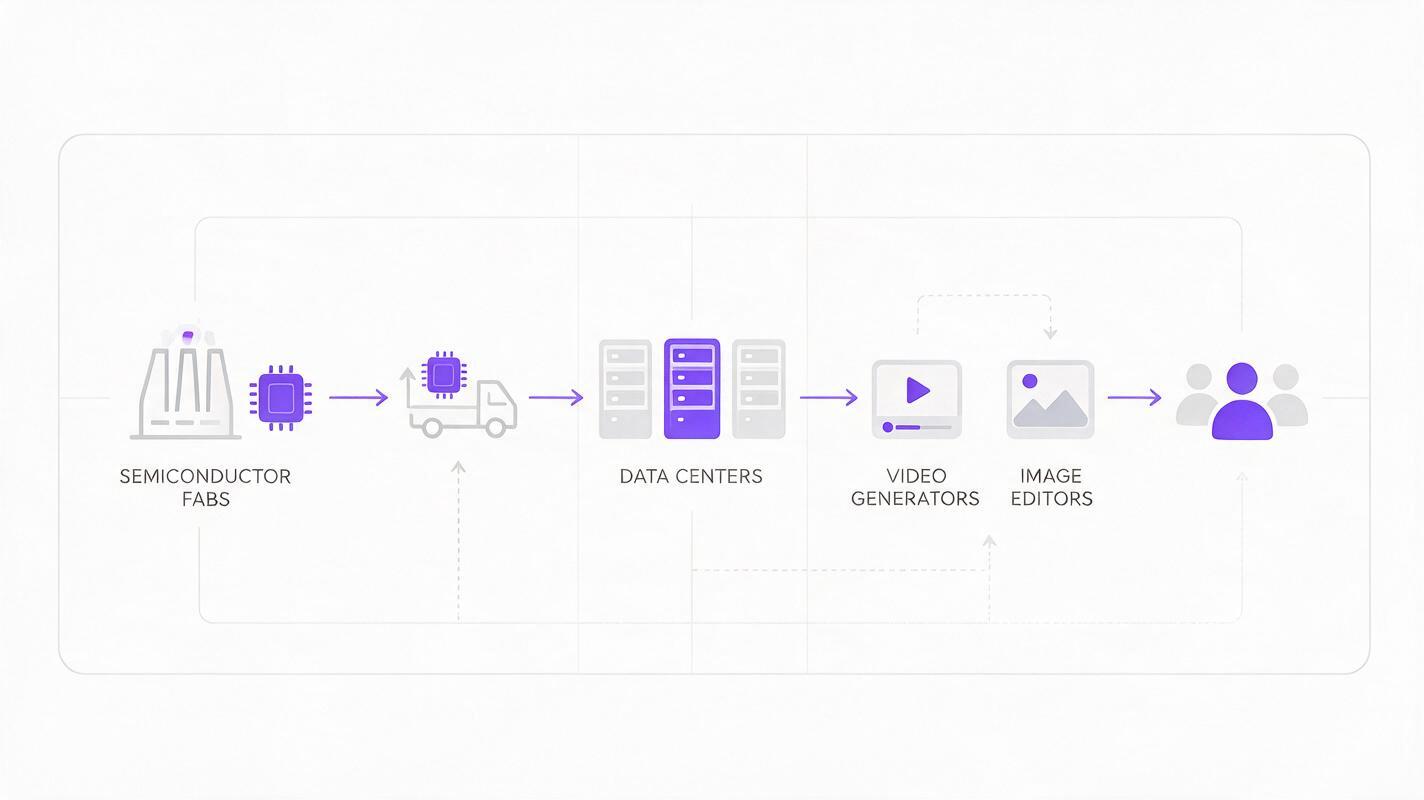
It’s easy to think of AI tools as purely software products, but every AI service depends on physical semiconductor chips to run. Every prompt sent to an ai video generator, every image generated by an ai image generator, and every script drafted by an AI writing assistant relies on data center chips to process requests and return results.
When the global supply of these chips is constrained or disrupted, the effects ripple through the entire AI ecosystem. AI providers may face higher costs for hardware, which can get passed on to users in the form of higher API prices, reduced free tier limits, or longer wait times for requests. In severe cases, providers may even restrict access to certain models to manage demand.
For creators who build their entire ai workflow around a single AI model or platform, these shifts can be particularly disruptive. A sudden price hike or service outage can derail production schedules, force last-minute changes to project plans, and increase overall content creation costs.
Potential Impacts of Expanded AI Export Controls
The expansion of China’s export controls to include AI-related items introduces new uncertainty into the global AI hardware supply chain. While the specific scope of the AI-related controls has not been detailed in initial reports, export restrictions on critical AI components can limit the flow of hardware between regions and reshape the global manufacturing landscape.
For creators, the most direct potential impact is on the cost and availability of AI services. If export controls reduce the supply of key components used in AI data centers, providers may raise prices to offset higher hardware costs. This can make it more expensive for independent creators and small teams to access the high-performance models needed for ai video workflow, high-resolution image synthesis, and other resource-intensive tasks.
Export controls can also contribute to regional disparities in AI access. Creators in certain regions may face limited availability of specific models or tools, making it harder for global teams to collaborate using consistent tools. For creators building ai automation pipelines that rely on specific APIs, this regional variability can add complexity to workflow design and maintenance.
It’s important to note that the full impact of the expanded controls will depend on their scope, implementation timeline, and how the industry adapts. Initial reports do not include details on which specific AI-related items are covered or when the new controls will take effect.

What the GlobalFoundries Fab Advancement Signals
On the manufacturing side, the advancement of GlobalFoundries’ New York fab project with Japanese financing support is a positive development for long-term AI hardware supply. Expanded semiconductor manufacturing capacity can help ease supply constraints over time, leading to more stable pricing and wider availability of the chips that power AI services.
For creators, increased chip manufacturing capacity could translate to faster inference times, fewer service outages, and more predictable pricing for AI tools. Resource-intensive tasks like video generation and high-resolution image synthesis require significant computing power, and expanded hardware capacity can make these tools more accessible to a broader range of creators.
It’s worth noting that semiconductor fab projects typically take years to reach full production capacity, so near-term impacts on AI tool pricing or availability may be limited. Even so, the investment signals ongoing confidence in the long-term growth of the AI industry and a commitment to expanding the hardware infrastructure that supports it.
Building Resilient AI Workflows for Creators
The combination of new export controls and expanding manufacturing capacity underscores a key reality for AI-powered creators: the AI ecosystem is constantly evolving, and relying on a single tool or model can leave your workflow vulnerable to sudden shifts.
Building a resilient workflow means diversifying the AI tools you use, so you can switch between models or platforms if one becomes too expensive, unavailable, or unreliable. This doesn’t mean you have to abandon your favorite tools — it means having alternatives in place so you can keep creating without interruption.
One of the easiest ways to build this resilience is to use a multi-model AI platform like MagicBoat, which gives you access to dozens of AI tools for video, image, audio, and script creation all in one place. With a single account, you can test different models, compare outputs, and adjust your workflow as market conditions change, without having to manage multiple subscriptions or learn new interfaces.
If you’re ready to build a more resilient creative workflow with access to a wide range of AI tools, you can try these models for free on MagicBoat today.

Key Takeaways
- China’s expanded export controls on AI-related items and GlobalFoundries’ advancing New York fab are two key shifts in the global AI hardware supply chain reported on October 19.
- AI hardware supply chain changes can impact the pricing, availability, and reliability of the AI tools creators use every day, from image generators to video production platforms.
- Creators who rely on a single AI model or platform are most vulnerable to supply chain disruptions and market shifts.
- Building a flexible, multi-model ai workflow helps mitigate risks and ensures you can keep creating even if your primary tool experiences issues.
- Multi-model platforms like MagicBoat provide centralized access to a range of AI tools, making it easy to diversify your workflow and adapt to changing conditions.
Keywords
ai export controls, globalfoundries ny fab, ai hardware supply chain, ai workflow, ai content creation, ai model availability, ai ecosystem