Cisco, Applied Materials, Cerebras Beat AI Hardware Earnings; Nebius Slides
Three AI hardware-chain companies — Cisco, Applied Materials, and Cerebras — delivered better-than-expected quarterly earnings after the November 12, 2026 US close, with each raising forward guidance on strong AI infrastructure demand. Cloud infrastructure provider Nebius also beat revenue estimates but issued soft full-year guidance and pushed back its pre-tax breakeven timeline, sending its shares sharply lower and dragging down fellow neocloud stocks. The mixed results highlight a growing split between established hardware suppliers and leveraged neocloud operators amid surging global AI capital expenditure, with direct implications for AI content creators.
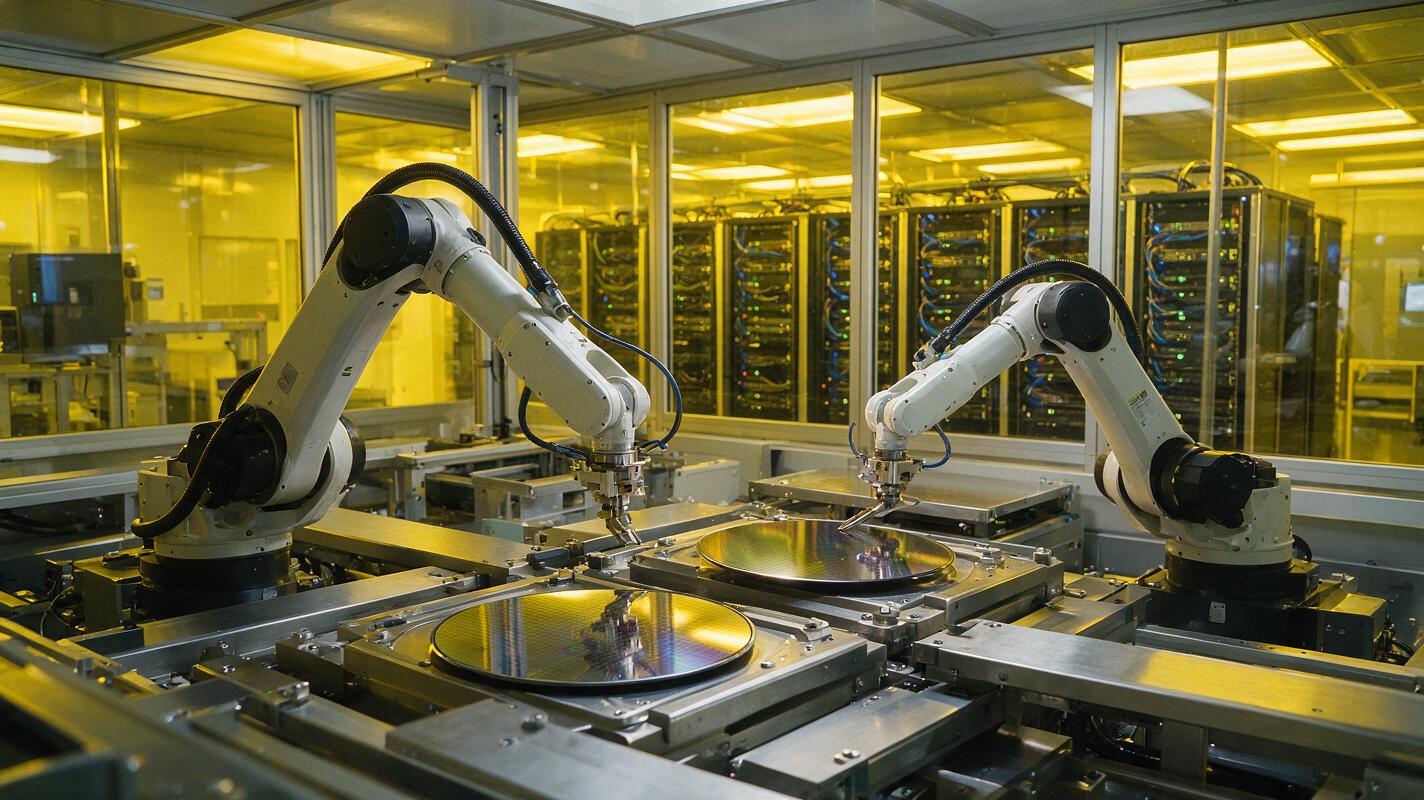
Table of contents
AI Hardware Chain Delivers Mixed Earnings After November 12 Close
On November 12, 2026, four companies across the AI hardware and infrastructure stack reported quarterly results after the US market close, delivering a split picture of booming demand for core AI hardware and growing pressure on leveraged cloud infrastructure providers. Three firms — Cisco, Applied Materials, and Cerebras — handily beat analyst expectations and raised forward guidance, while neocloud provider Nebius beat top-line estimates but disappointed on full-year outlook, triggering a sharp selloff.
The results come amid a period of intense volatility in AI-related stocks, as investors weigh surging ai capital expenditure against rising interest rates and growing scrutiny of unprofitable infrastructure business models. The split between hardware suppliers and neocloud operators offers a clear view of where value is accruing in the AI industry today.
Breakdown of Quarterly Results
Cisco FY27 Q1: AI Networking Drives 24% Revenue Growth
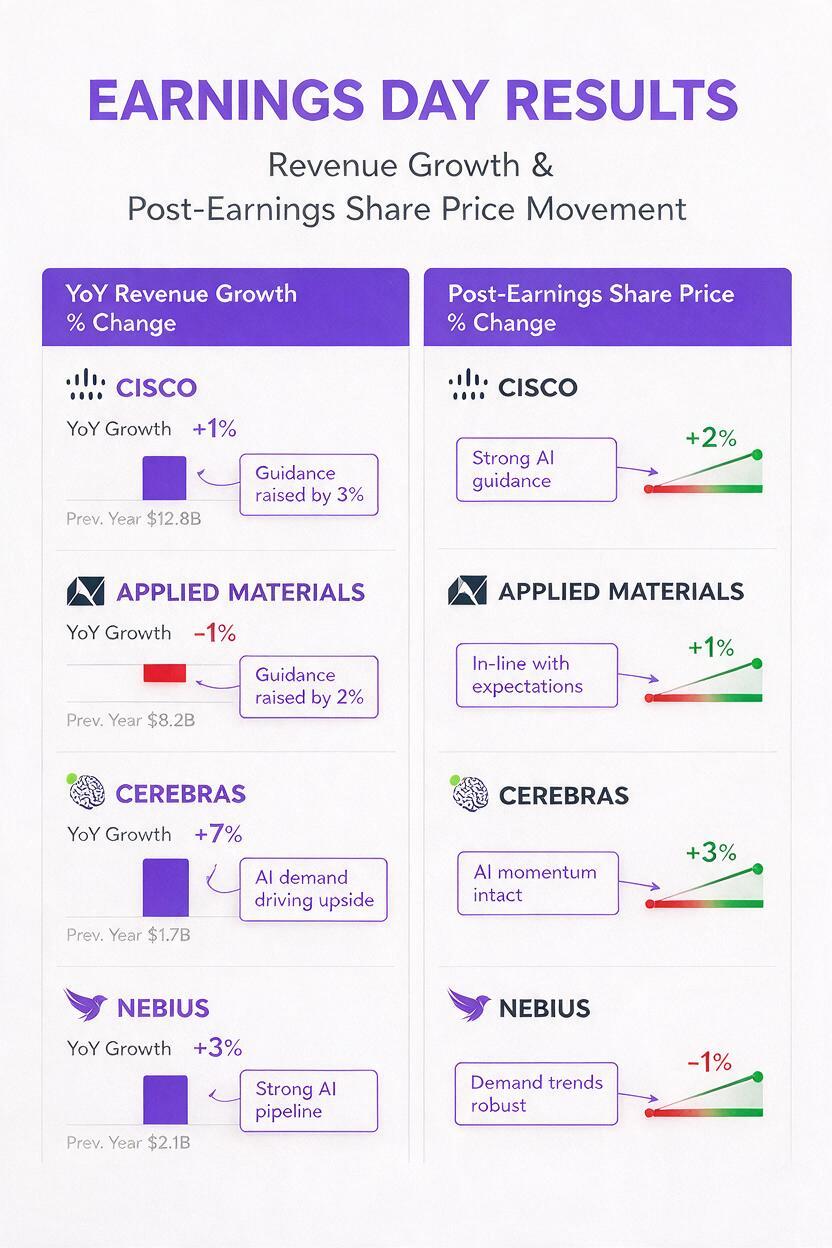
Cisco reported fiscal 2027 first-quarter revenue of $18.5 billion, up 24% year over year, with net income of roughly $4.6 billion, a 59% increase. Adjusted earnings per share came in at $1.40, up 40% from the year-ago period. The company’s networking segment grew 43%, products rose 32%, and services increased 1%.
Cisco raised its full-year forecast for AI infrastructure revenue from hyperscalers from $7.5 billion to $9 billion — more than double the figure from the prior fiscal year. It also lifted full-year revenue guidance to $74.8–75.8 billion from $72.2–73.4 billion, and adjusted EPS guidance to $5.47–5.53. The company generated $4.4 billion in operating cash flow and returned $3.7 billion to shareholders via buybacks and dividends during the quarter.
Applied Materials FY26 Q4: Semiconductor Equipment Sales Surge 53%
Applied Materials posted fiscal 2026 fourth-quarter revenue of $10.41 billion, up 53% year over year, with adjusted EPS of $4.16 — a 92% increase. Adjusted gross margin reached 50.6%, up 2.5 percentage points from the year-ago quarter.
Semiconductor systems revenue totaled roughly $8 billion, broken down as 58% foundry/logic, 33% DRAM, and 9% flash. The company issued first-quarter guidance of $11 billion in revenue, plus or minus $500 million, and adjusted EPS of $4.35, plus or minus 20 cents.
Cerebras Q3: Core Revenue Jumps 70%, Shares Rise 18% After Hours
AI chip and compute provider Cerebras reported third-quarter GAAP revenue of $210.8 million, up 55% year over year, with non-GAAP core revenue of $230.9 million, a 70% increase. Cloud and other services revenue hit $141.9 million, up 265% year over year and representing roughly 67% of total revenue. The company posted non-GAAP core net income of $29.82 million.
Cerebras noted 700MW of contracted data-center capacity and $26.1 billion in remaining performance obligations. It signed two new hyperscaler deals during the quarter, including an Oracle partnership set to launch in 2027. The company raised full-year core revenue guidance to $940–960 million, with fourth-quarter core revenue expected to reach $310–330 million. Its CEO is targeting 2027 revenue at three times 2026 levels. Shares rose more than 18% in after-hours trading following the results.
Nebius Q3: Revenue Beats but Guidance Disappoints, Stock Drops 16.8%
In a stark counterexample, neocloud infrastructure provider Nebius also reported strong top-line growth, with third-quarter revenue of $980.8 million, up 571% year over year, and adjusted EBITDA of $465.8 million — both beating analyst estimates. However, the company’s full-year revenue guidance landed at the low end of its previously stated $3.0–3.4 billion range, compared to consensus expectations of roughly $3.37 billion.
Nebius also pushed its pre-tax breakeven timeline to the end of 2027, later than investors had expected. The news sent its shares down 16.84% on the day, and dragged fellow neocloud stocks lower: CoreWeave fell 6.86% and IREN dropped 6.53%.
What the Results Reveal About AI Industry Spending Trends
The mixed earnings paint a clear picture of a two-tier AI infrastructure market. Established semiconductor equipment, networking, and specialized AI chip suppliers are capturing the direct benefit of surging global ai capital expenditure, as hyperscalers and large tech firms continue to pour money into building out AI compute capacity. These companies have strong balance sheets, proven business models, and growing order books, making them more resilient to market volatility.
Demand is not limited to US-based hyperscalers either: fast-growing model providers like DeepSeek and other international AI firms are also ramping up hardware purchases to support their expanding user bases and new model launches, adding to the pressure on semiconductor supply chains.
On the other side, leveraged neocloud providers that rely on debt financing to build out GPU capacity are facing growing investor scrutiny. Even with triple-digit revenue growth, any miss on guidance or delay in profitability can trigger sharp selloffs, as investors grow more cautious about ai funding for capital-intensive business models with unproven paths to sustained profitability.
This split is consistent with broader ai industry trends seen in recent months, where the foundational hardware layer continues to see strong demand while the mid-layer of infrastructure providers faces repricing as interest rates rise and investors demand clearer paths to profitability.
What This Means for AI Content Creators
For creators who rely on AI tools for content production, these infrastructure shifts have direct, tangible impacts. The strong growth in semiconductor and networking equipment sales means more AI compute capacity is coming online over the next 12–24 months, which could eventually help ease ai video cost pressures and make high-end creative tools more accessible to independent creators and small teams.
However, the volatility among neocloud providers is a reminder that relying on a single AI tool or infrastructure vendor carries risks. If a provider faces financial pressure, it may raise prices, slow feature updates, or even experience service disruptions — all of which can derail content production workflows and delay project timelines.
Using a multi-model creative platform like MagicBoat helps mitigate these risks by giving creators access to a wide range of top-tier AI tools across multiple providers, all in one place. Whether you need an ai image generator for social media assets, an ai video generator for short-form content, or AI-powered script and audio tools, you can switch between models and providers seamlessly without being locked into a single vendor’s infrastructure.
try these models for free to see how a multi-model platform can make your creative workflow more stable and flexible, even as the AI infrastructure landscape continues to shift.

Key Takeaways
- Three AI hardware-chain companies — Cisco, Applied Materials, and Cerebras — beat quarterly earnings and raised forward guidance on strong AI infrastructure demand.
- Neocloud provider Nebius beat revenue estimates but issued soft full-year guidance and pushed back breakeven, triggering a 16.8% share drop and dragging down other neocloud stocks.
- The results highlight a growing two-tier split between stable, profitable hardware suppliers and leveraged neocloud providers amid rising ai capital expenditure.
- AI content creators can reduce workflow risk by using a multi-model platform that aggregates tools across multiple infrastructure providers.
- Expanding hardware supply from firms like Applied Materials and Cisco may eventually lower ai video cost and make high-end creative tools more accessible.
Keywords
ai capital expenditure, ai industry, ai funding, ai video cost, ai image generator, deepseek, cisco, cerebras