Jensen Huang Considers Nvidia CEO Return as Board Faces Pressure
A reported comeback campaign has placed Nvidia’s leadership decision at the center of a widening dispute involving investors, technology executives, the board and the US government.
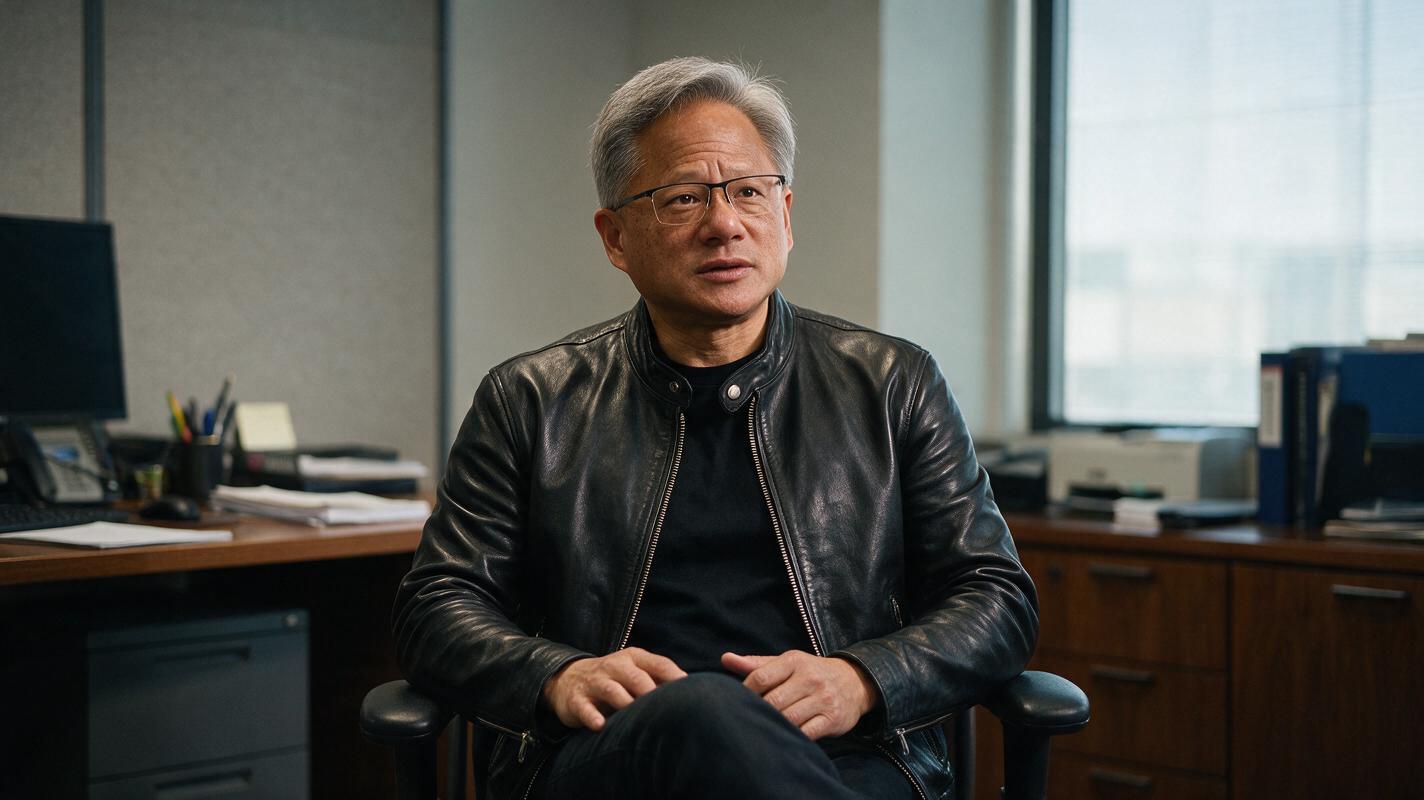
Table of contents
Nvidia leadership news · November 16, 2026
Jensen Huang Considers Nvidia CEO Return as Board Faces PressureA reported comeback campaign has placed Nvidia’s leadership decision at the center of a widening dispute involving investors, technology executives, the board and the US government.
Jensen Huang’s Reported Return Campaign
Three days after Jensen Huang resigned as Nvidia CEO, the Financial Times reported on November 15–16 that he was considering a return to the position. According to the report, Silicon Valley allies were pressing Nvidia’s board to reconsider its succession process and were also seeking White House support for Huang’s possible comeback.
Altimeter Capital founder Brad Gerstner and Atreides Management chief investment officer Gavin Baker co-signed an open letter asking the board not to rush the appointment of a permanent successor before the underlying facts had been established. Several prominent technology and investment figures publicly backed Huang, including Elon Musk, Bill Ackman, Sequoia’s Shaun Maguire, Epic Games chief executive Tim Sweeney and Y Combinator chief executive Garry Tan.
The pressure is not moving in only one direction. US Treasury Secretary Scott Bessent, according to Reuters, urged Nvidia to conduct an outside CEO search and pursue a thorough leadership overhaul. Nvidia’s board has also reportedly approached Arm CEO Rene Haas as it considers its options.
The immediate financial backdrop is severe: Nvidia’s market capitalization has fallen by approximately $1.84 trillion over the six weeks since October 6. The company is scheduled to report earnings after the market closes on November 18 and hold an all-hands meeting that day. Anthropic’s Nasdaq listing is scheduled for November 19, adding another major event to an already compressed week for the AI sector.
For AI video and image creators, this is more than a corporate succession story. Nvidia sits close to the compute economy supporting frontier AI development, so uncertainty around its leadership can become a signal to watch when evaluating the availability, reliability and long-term direction of creative AI services.
Two Competing Views of Nvidia’s Leadership Decision
The public campaign around Huang reveals a basic disagreement about what Nvidia needs most: continuity under the executive most closely associated with its rise, or a clean leadership reset following his resignation.
| Position | Publicly reported argument | People associated with it |
|---|---|---|
| Do not rush succession | The board should establish the facts before appointing a permanent replacement, leaving room for Huang to return. | Brad Gerstner, Gavin Baker and public supporters including Elon Musk, Bill Ackman, Shaun Maguire, Tim Sweeney and Garry Tan |
| Pursue an outside search | Nvidia should consider a broader leadership overhaul and recruit externally. | US Treasury Secretary Scott Bessent; the board has reportedly approached Rene Haas |
The first position emphasizes institutional continuity. The second treats the resignation as a reason to reconsider the leadership structure rather than reverse course. Neither position represents a formal board decision.
The $1.84 Trillion Market-Cap Decline Raises the Stakes
The scale of Nvidia’s market-value decline makes the leadership question especially sensitive. A loss of about $1.84 trillion since October 6 creates pressure for clarity, but it does not by itself determine whether continuity or outside recruitment is the stronger response.
The November 18 earnings release is therefore likely to be read alongside the succession dispute. The all-hands meeting scheduled for the same day adds an internal audience to the external scrutiny. Investors, employees and companies exposed to the AI infrastructure market will all be looking for evidence about Nvidia’s direction.
Interim CEO Colette Kress had previously halved Nvidia’s reported $250 billion data-center guarantee for OpenAI. That earlier move places major AI infrastructure commitments directly within the leadership conversation, particularly as laboratories continue to require enormous amounts of compute to train and operate new model families.
Leadership headlines do not automatically translate into changes in model access. They do, however, highlight how tightly the AI market connects executive decisions, infrastructure commitments and the services used by downstream creative teams.
Why the Nvidia CEO Question Matters to AI Creation
Creative teams rarely interact directly with semiconductor-company management. They do experience the downstream consequences of an AI industry built around large infrastructure commitments, competing model providers and rapidly changing product roadmaps.
A production workflow may combine language models for scripts and shot planning with an ai image generator for visual development and text to video tools for motion. The more services involved, the more important it becomes to separate creative continuity from dependence on any single vendor or model family.
Availability Is Part of Model Quality
Model selection is often framed around output quality, speed and cost. Availability belongs in that evaluation as well. A highly capable model is less useful to a production team if access changes unexpectedly or if the service cannot support a deadline-sensitive campaign.
Infrastructure News Should Inform, Not Halt, Production
The reported Nvidia board debate is not evidence that a particular creative model will become unavailable. The practical lesson is narrower: creators should monitor infrastructure and provider news while keeping production systems flexible enough to continue when the market changes.
Claims and Confirmed Decisions Must Stay Separate
This story also illustrates the value of distinguishing reported possibilities from completed corporate actions. Huang is reportedly considering a return, supporters are applying public pressure, the board has reportedly contacted another executive and the Treasury secretary has advocated an outside search. None of those developments is a final appointment.
A Multi-Model Workflow Reduces Concentration Risk
The current AI market includes competing model families such as GPT-6, Claude Opus and Gemini 4, alongside specialized image and video systems. Their providers may make different decisions about pricing, access, infrastructure and product priorities. For working artists and studios, the strongest response is usually not to predict a single winner but to preserve options.
MagicBoat supports that approach through one account for multiple creative capabilities. A unified environment makes it easier to test alternatives, compare outputs and move a project forward without rebuilding the entire workflow around one provider whenever the market shifts.
- For visual development: compare generated concepts before committing to a final art direction.
- For video production: retain alternative routes for turning prompts or source images into motion.
- For deadline resilience: avoid making one model the only possible path from concept to deliverable.
- For cost control: match each creative task with an appropriate tool rather than defaulting to the same model for every output.
This does not eliminate provider risk, and it does not imply that the Nvidia leadership situation will disrupt creative products. It gives creators a more adaptable operating position while the surrounding AI market remains unsettled.
What to Watch Next
Several near-term events could clarify the story. Nvidia’s November 18 earnings report may provide a new financial reference point after the market-cap decline. The same-day all-hands meeting could indicate how the company is addressing internal uncertainty. Any formal board announcement would carry more weight than public endorsements or anonymous-source reporting.
Anthropic’s planned November 19 listing will also keep attention on the relationship between AI laboratories, compute providers and capital markets. Together, these events underline how model competition is no longer only about benchmarks. Financing, infrastructure commitments and corporate stability increasingly shape the environment in which AI products are built and delivered.
Key Takeaways
- The Financial Times reported that Jensen Huang is considering returning as Nvidia CEO three days after resigning.
- Brad Gerstner and Gavin Baker urged Nvidia’s board not to rush its succession decision, while several technology and investment figures publicly supported Huang.
- US Treasury Secretary Scott Bessent reportedly favored an outside CEO search, and the board has reportedly approached Arm CEO Rene Haas.
- Nvidia’s market capitalization has fallen by about $1.84 trillion over six weeks since October 6.
- Earnings and an all-hands meeting are scheduled for November 18, followed by Anthropic’s planned listing on November 19.
- No public endorsement or reported approach currently amounts to a formal nomination or board decision.
Keep Your Creative Workflow Flexible
As leadership, infrastructure and model markets evolve, a multi-model platform can help creative teams compare tools without tying every project to one provider. Visit MagicBoat to try these models for free and build a more adaptable image and video workflow.
Keywords: Jensen Huang Nvidia CEO return, Nvidia leadership, Nvidia board, Nvidia market cap, AI infrastructure, GPT-6, Gemini 4, AI video model