Claude Managed Agents Reported With 1,000 Sub-Agents
Claude Managed Agents has been associated with deployments involving 1,000 sub-agents, raising questions about orchestration, review capacity, and reliable AI content production.
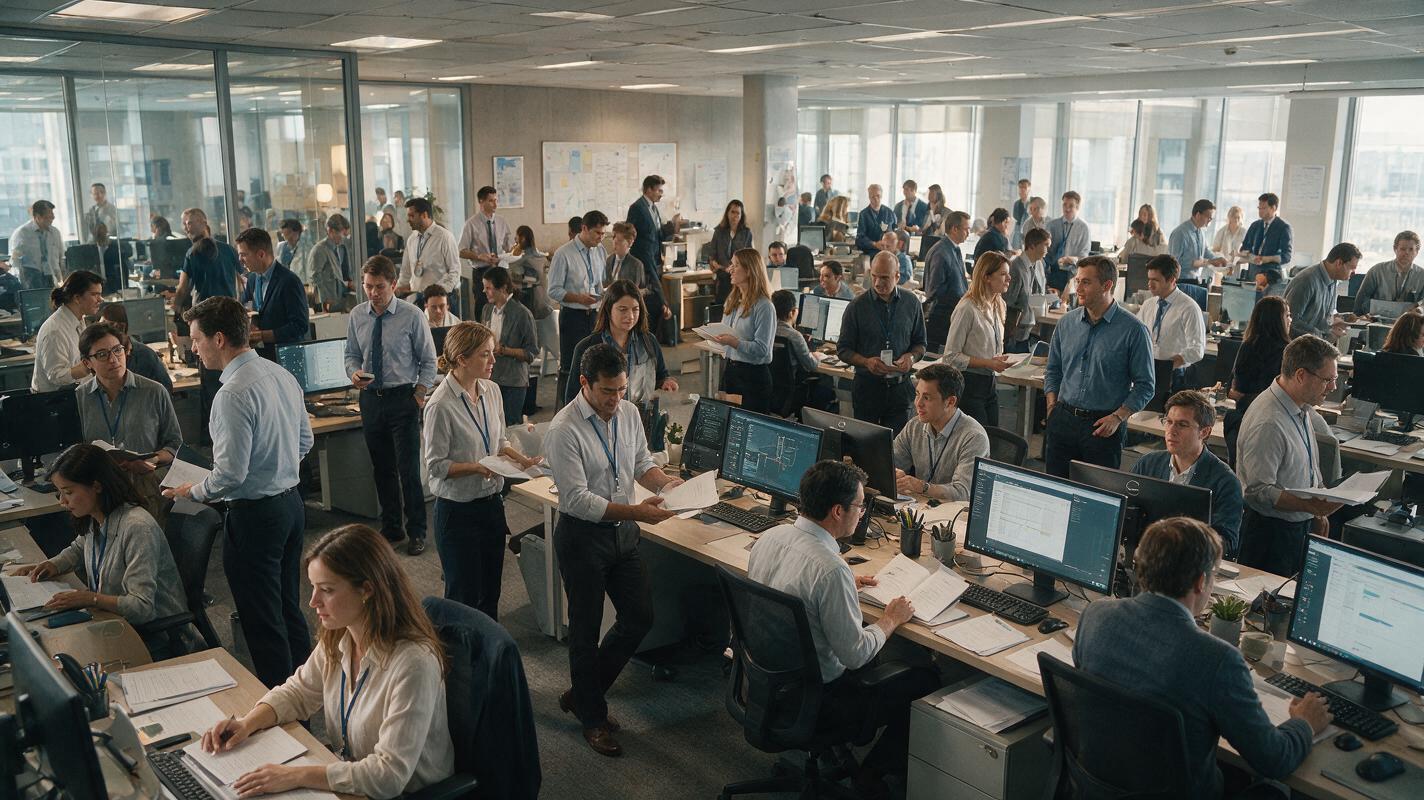
Table of contents
AI News · October 9, 2026
Claude Managed Agents Reported With 1,000 Sub-AgentsThe reported scale shifts attention from what one AI agent can produce to how large groups of agents can be coordinated, reviewed, and trusted.
Claude Managed Agents Reaches a New Scale
Claude Managed Agents was associated with a reported deployment involving 1,000 sub-agents on October 9, 2026. The headline puts Anthropic’s Claude at the center of a much larger orchestration model: rather than relying on a single agent to handle an entire assignment, a managed system can distribute work across a substantial collection of subordinate agents.
The available report identifies the product name and the 1,000-sub-agent figure. It does not specify pricing, general availability, the exact tasks assigned to those agents, benchmark results, operating limits, or whether every sub-agent ran simultaneously. Those unknowns matter because agent count alone does not establish output quality, speed, cost efficiency, or reliability.
Even with those details unresolved, the scale is notable. A system coordinating 1,000 sub-agents represents a different operational challenge from a conventional one-prompt, one-response interaction. Task routing, context consistency, duplicate work, error propagation, and final review all become central questions.
For content teams, the immediate lesson is not that every production should use hundreds of agents. It is that AI creation is moving toward coordinated systems in which planning, drafting, visual development, checking, and revision may be divided among specialized processes.
Confirmed by the supplied news entry: Claude Managed Agents is linked to 1,000 sub-agents.
Not specified: availability, pricing, task design, benchmark performance, duration, concurrency, or production results.
Why 1,000 Sub-Agents Changes the Conversation
Large agent groups introduce potential parallelism, but they also multiply coordination demands. If many agents interpret the same brief differently, more output can create more editorial work instead of less. If every agent inherits an inaccurate assumption, the resulting volume can amplify that mistake.
The useful metric is therefore not the number of active agents by itself. Production teams need to consider whether the overall system delivers coherent, reviewable work that advances a defined objective.
| Operational question | Why it matters | What remains unknown |
|---|---|---|
| Task allocation | Clear boundaries can reduce duplicated or conflicting work. | The reported entry does not describe how assignments were distributed. |
| Shared context | Agents need consistent goals, terminology, and constraints. | No context-management design is identified. |
| Quality control | High output volume requires practical review and approval controls. | No evaluation method or accuracy result is provided. |
| Production value | Useful output matters more than the headline agent count. | No cost, speed, or usable-output comparison is included. |
A thousand parallel outputs are not automatically a thousand finished assets. Coordination and editorial judgment determine whether scale becomes leverage or noise.
What This Means for AI Content Production
Content creation already contains work that can be separated conceptually: researching a subject, exploring angles, outlining a narrative, writing scenes, developing visual directions, checking continuity, and preparing revisions. Managed agent systems could make that division more explicit, but every branch still needs a shared brief and a clear approval boundary.
More Output Raises the Cost of Inconsistency
A large agent group can produce many alternatives, yet alternatives are valuable only when they remain aligned with the same audience, tone, factual boundaries, and visual identity. Content teams should treat the central creative brief as a source of truth rather than allowing each generated branch to redefine the project.
This is particularly relevant when an ai script generator feeds later production work. A contradiction introduced during planning can carry into scenes, voiceovers, storyboards, and promotional assets. Human approval between major production phases can prevent an early mismatch from spreading.
Review Capacity Becomes a Real Bottleneck
Agent orchestration can increase the amount of material generated before a person sees it. That makes filtering as important as generation. Teams need concise selection criteria: factual accuracy, relevance to the brief, continuity, originality, brand alignment, and suitability for the intended channel.
The 1,000-sub-agent headline also highlights a broader distinction in AI news. Technical scale describes system capacity; it does not guarantee that a content team will receive a better script, stronger visual sequence, or more compelling final video.
From Agent Orchestration to Visual Creation
Large managed-agent systems and creative AI tools address different layers of production. Agents can help organize or divide intellectual work, while generation tools turn approved concepts into assets. The bridge between those layers must remain deliberate.
For example, a team might preserve a selected concept as a structured package containing the approved premise, audience, visual references, scene descriptions, prohibited claims, and continuity notes. That package can then guide an ai video generator without requiring every draft or rejected branch to enter production.
This separation protects creative focus. It also makes it easier to compare outputs across AI tools because each model receives the same approved materials. A model change does not have to erase the underlying script, shot logic, reference images, or editorial decisions.
Why Multi-Model Access Still Matters
Claude Managed Agents and its reported 1,000-sub-agent scale show how quickly AI products can develop in distinct directions. Some systems emphasize orchestration, while others concentrate on image, video, voice, music, or script generation. No single headline establishes that one model is the best choice for every production task.
A multi-model environment lets teams match tools to the asset being created while keeping the broader project organized. It can also reduce dependence on one product’s availability or operating model. That resilience matters when AI tools evolve rapidly and detailed access conditions may not yet be public.
- Keep approved inputs portable: retain briefs, scripts, prompts, references, and selected outputs outside any single agent session.
- Separate exploration from approval: generated options should remain drafts until an editor selects them.
- Evaluate completed assets: compare usable results rather than relying only on model scale or agent count.
- Maintain human ownership: assign responsibility for factual checks, continuity, and final publication.
Key Takeaways
- Claude Managed Agents was reported in connection with 1,000 sub-agents on October 9, 2026.
- The supplied entry does not provide pricing, availability, benchmarks, task details, or operating limits.
- Large agent groups make orchestration, shared context, filtering, and human review more important.
- For content production, coherent approved assets matter more than raw generation volume.
- Portable project materials and multi-model access can support continuity as AI systems change.
Build a More Flexible AI Creation Workflow
MagicBoat brings creative AI capabilities into one account, helping teams move from approved ideas to scripts, images, and video without building the entire workflow around a single model announcement. Explore the platform and try these models for free.
Keywords: Claude Managed Agents, Claude sub-agents, multi-agent AI, Anthropic Claude, AI tools, AI news, AI content creation