Google Gemini 4 Argon Launches Globally for Pro, Ultra and Developers
Google Gemini 4 Argon launches globally for Pro and Ultra subscribers and developers, expanding access less than two weeks after its September 30 debut.
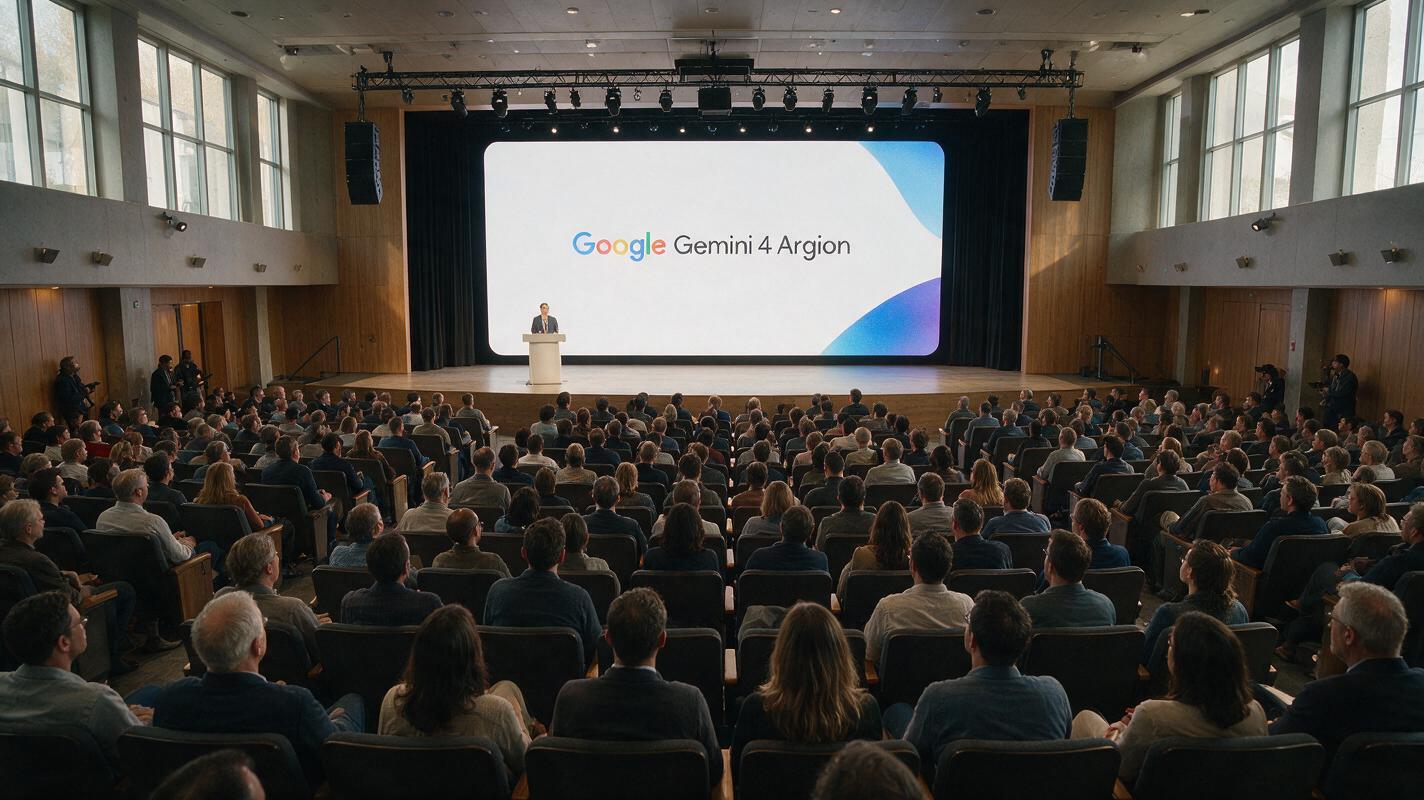
Table of contents
AI model news
Google Gemini 4 Argon Launches Globally for Pro, Ultra and DevelopersGoogle has expanded Gemini 4 Argon worldwide, moving the frontier model beyond its initial debut and into broader subscriber and developer access.
Published November 6, 2026
Gemini 4 Argon Moves Into Global Availability
Google launched Gemini 4 Argon globally on October 14, 2026, opening the model to Pro and Ultra subscribers as well as developers. The worldwide rollout arrived less than two weeks after the model’s September 30 debut, making the interval between initial release and wider availability notably short.
The September 30 release had introduced Gemini 4 Argon with support for up to one million output tokens. Google also reported a 77.9% result on DeepSWE v1.1 and a first-place score of 51.3% on Zapier AutomationBench. The stated input price was $2 per million tokens, while the model was initially available through Fairwind for cybersecurity defenders.
The October 14 expansion changes the practical status of the release. Gemini 4 Argon is no longer framed only around its initial access path: Pro and Ultra users can now reach it globally, while developers gain broader access for applications and automated workflows.
For AI video and image creators, the important news is not a newly announced visual-generation feature. It is the widening availability of a model that can potentially sit around creative production as a planning, analysis and workflow component. Google did not state in this entry that Gemini 4 Argon is a dedicated AI video model, so its role should not be confused with direct media generation.
What Google Has Confirmed About Gemini 4 Argon
The launch combines a small set of clearly stated model facts with a much broader distribution announcement. Keeping those two categories separate is essential when evaluating the news.
| Launch detail | Confirmed information | Practical significance |
|---|---|---|
| Global rollout | Launched globally on October 14 | Availability expanded beyond the initial debut |
| User access | Available to Pro and Ultra subscribers | Subscriber access is no longer limited to the original release channel |
| Developer access | Opened to developers | The model can be considered for application and workflow integration |
| Output capacity | Up to one million output tokens | Provides a stated capacity for unusually large outputs |
| DeepSWE v1.1 | 77.9% | A reported software-engineering benchmark result |
| Zapier AutomationBench | First place with 51.3% | A reported result connected to automation performance |
| Input price | $2 per million tokens | A stated cost reference for model input |
Global availability matters because model performance has limited practical value when the intended audience cannot reliably access the model.
The rollout does not establish that every subscriber receives identical limits, nor does it provide new claims about image generation, video generation or media-editing quality. Those details should not be inferred from the global launch alone.
Why the Fast Expansion Matters
The interval between Gemini 4 Argon’s September 30 debut and its October 14 global launch was under two weeks. That pace suggests that access can change almost as quickly as model announcements themselves.
This is relevant in a market that also includes GPT-6 and Claude Opus model families. Creative teams may hear about a new benchmark, context limit or pricing figure before they can actually use the model in their preferred region, subscription or development environment. A global rollout narrows that gap between announcement and practical evaluation.
Access Is Part of Model Performance
Benchmark results are useful reference points, but production decisions also depend on whether a model is available to the relevant account and workflow. A strong model that cannot be accessed consistently offers little immediate value to a team working under a publishing deadline.
Gemini 4 Argon’s expansion therefore deserves attention even without a new benchmark attached to the October 14 announcement. Distribution is itself an operational change.
Long Output Does Not Automatically Mean Better Media
The stated maximum of one million output tokens is an eye-catching specification, but it should be interpreted in context. Large output capacity may be relevant to extensive written material, code or structured planning. It does not by itself demonstrate better results for text to video, animation or image rendering.
Creators should distinguish between a general model’s planning capacity and a dedicated generation tool’s ability to produce the final visual asset. The two can complement each other, but they are not interchangeable.
Where Gemini 4 Argon Fits in a Creative Workflow
Based on the confirmed information, the safest creative interpretation centers on the model’s broader access, large stated output capacity and automation-related benchmark result. These details make Gemini 4 Argon relevant to the organizational layer surrounding media production.
Possible areas for evaluation include long-form project planning, maintaining extensive written production material, reviewing structured information and supporting automated processes. These are workflow interpretations rather than newly announced Gemini 4 Argon features, and teams should test them against their own requirements.
Keep Planning and Generation Distinct
A general frontier model may help organize a campaign concept, production brief or asset list. A dedicated ai image generator is the more direct category for producing visual assets. Treating those roles separately makes model selection clearer and reduces the risk of reading unsupported capabilities into a launch announcement.
This distinction becomes more important as model names multiply. Gemini 4, GPT-6 and Claude Opus may attract attention through pricing, benchmarks or access changes, while media-focused tools address different parts of production. A practical workflow can use more than one model category rather than expecting a single release to handle every task.
The Case for a Multi-Model Creative Environment
Global launches broaden choice, but they also make creative tool stacks more complicated. Every model can carry its own access conditions, pricing structure, strengths and intended audience. Those conditions may change after a workflow has already been designed.
A one-account multi-model platform such as MagicBoat can reduce the friction of moving between planning and media-generation needs. Instead of tying an entire production process to one release, creators can select tools according to the asset being made and retain alternatives when model access or availability changes.
This approach is especially useful when a newly accessible model is strong in one part of a project but has no confirmed dedicated capability in another. Gemini 4 Argon can be evaluated on the specifications Google has disclosed, while specialized image and video tools remain available for visual production.
Key Takeaways
- Google launched Gemini 4 Argon globally on October 14, 2026.
- The expansion covers Pro and Ultra subscribers as well as developers.
- The global rollout arrived less than two weeks after the September 30 debut.
- Previously stated specifications include up to one million output tokens and input pricing of $2 per million tokens.
- Google reported 77.9% on DeepSWE v1.1 and first place at 51.3% on Zapier AutomationBench.
- The announcement does not identify Gemini 4 Argon as a dedicated image or video generation model.
- Creative teams should evaluate access, workflow fit and production continuity alongside headline specifications.
Explore a Flexible AI Creation Workflow
Gemini 4 Argon’s worldwide expansion adds another option to a rapidly changing model market. Keep your production process adaptable by choosing dedicated tools for each creative task rather than relying on a single release.
try these models for free and explore a multi-model environment for AI image and video creation.
Keywords: Gemini 4 Argon, Gemini 4 global launch, Google AI model, GPT-6, Claude Opus, AI video model, multi-model platform