What Is ESPN's Pay-TV Subscriber Decline? Linear TV Shift & AI Impact | MagicBoat
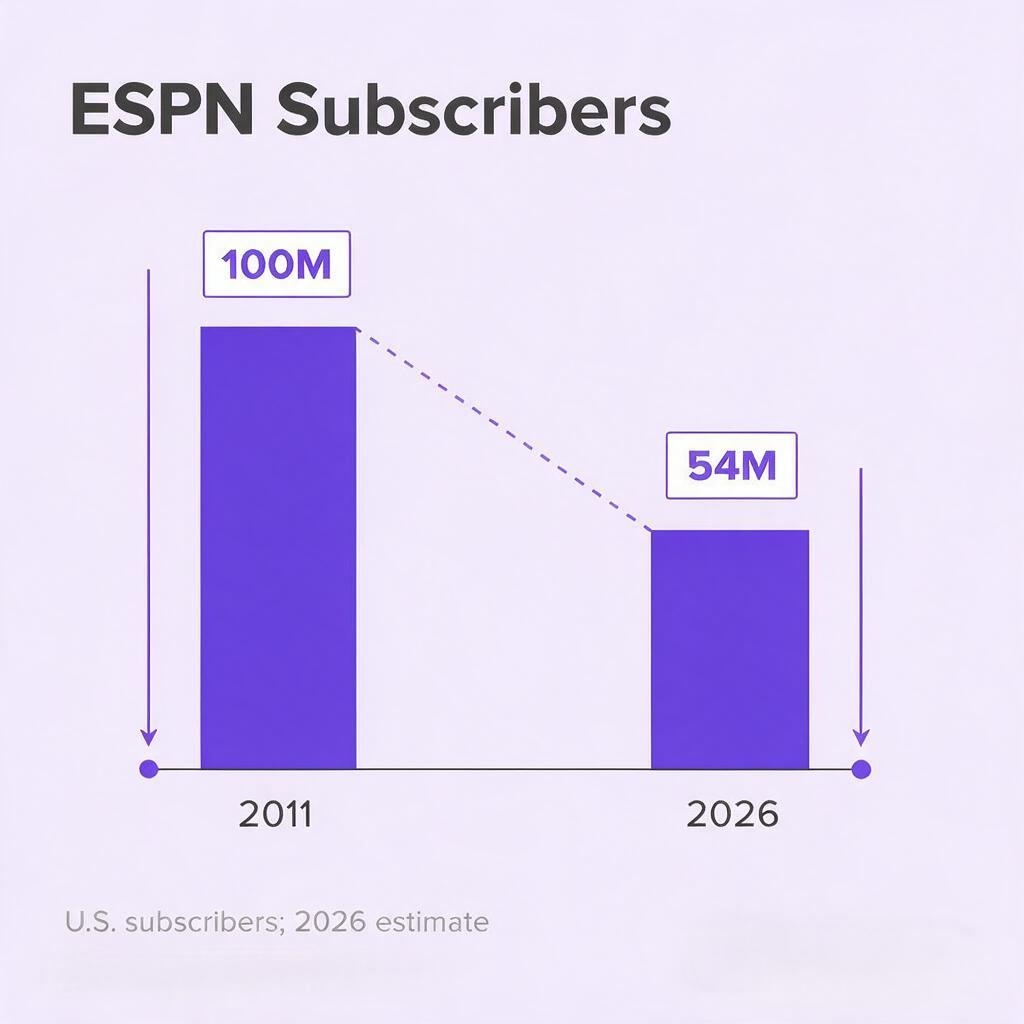
ESPN's U.S. pay-TV subscriber base has fallen to roughly 54 million, less than half its 2011 peak of 100 million, marking a key milestone in the ongoing decline of linear television. The shift is pushing media groups toward streaming and consolidation, creating new opportunities for independent creators using AI video tools to meet growing content demand.

Table of contents
What You Need to Know About ESPN's Subscriber Decline
ESPN's U.S. pay-TV subscriber count has fallen to roughly 54 million, less than half its 2011 peak of 100 million, according to Deadline reporting cited in November 2026 industry updates. The drop is a defining milestone in the decades-long erosion of linear television, and it is accelerating a broader shift among media groups toward streaming services and industry consolidation.
For AI content creators, this shift is more than industry news: it signals a growing demand for fast, cost-effective video content that can fill programming gaps across streaming platforms and social media. AI-powered production tools are increasingly the bridge between shrinking linear budgets and the need for fresh, personalized content at scale.
What Happened With ESPN's Subscriber Count
Once a core driver of pay-TV subscription value, ESPN has lost nearly half its U.S. subscriber base over 15 years. The 2026 figure of roughly 54 million subscribers marks the first time the network's reach has fallen below half its 2011 peak of 100 million.
The decline is part of a wider linear TV downturn that the November 2026 update notes is pushing media groups toward streaming and consolidation as they adapt to changing viewer habits. Even as live sports remain a popular content category, shifting viewer preferences for on-demand and a la carte access are reshaping how audiences access their favorite programming.
Key Figures From the Report
- Current U.S. pay-TV subscriber count: ~54 million (Deadline, November 2026)
- 2011 peak subscriber count: 100 million (Deadline, November 2026)
- Total decline from peak: 46%, leaving the network with less than half its peak reach
The scale of the decline underscores the pressure on traditional linear TV business models, as viewers move away from all-inclusive cable packages toward more targeted streaming options.
Why This Shift Matters for the Media Landscape
ESPN's subscriber losses are a high-profile example of a trend affecting the entire linear TV ecosystem. Media companies of all sizes are rethinking their distribution strategies and revenue models, with many prioritizing direct-to-consumer streaming services that can attract and retain subscribers with niche, on-demand content.
Consolidation is another expected outcome of the shift, as smaller media players struggle to compete with shrinking linear ad revenue and rising content costs. Larger groups may acquire smaller networks or production studios to bulk up their content libraries and reduce costs through economies of scale.
Both trends create new openings for independent content creators who can produce high-quality video efficiently. Streaming services need a constant supply of fresh content to keep subscribers engaged, and they are increasingly open to working with outside creators and using AI tools to speed up production timelines.

What This Means for AI Content Creators
The linear TV decline and streaming boom are creating tangible opportunities for creators who leverage AI automation in their workflows. As media companies look to produce more content at lower costs, AI-powered tools are becoming a core part of production pipelines for everything from short-form social clips to long-form analysis.
For creators focused on sports, commentary, or niche analysis — categories that have long been dominated by linear TV networks — the shift to streaming lowers barriers to entry. Instead of needing a cable distribution deal, creators can build an audience directly on streaming platforms and social media, using ai video generator tools to produce polished content quickly without large production teams.
AI workflow tools also make it easier to repurpose content across multiple platforms. A single long-form analysis piece can be cut into short highlight clips, social media reels, and promotional graphics, all with the help of AI editing, voiceover, and ai image generator tools for thumbnails and social assets. This multiplies the value of each piece of content and helps creators reach wider audiences.
Creators who build flexible, AI-powered production workflows are well-positioned to partner with streaming platforms looking for cost-effective content, or to build their own direct-to-consumer brands as linear TV's share of viewership continues to shrink. You can try these models for free on MagicBoat to test how AI tools can speed up your own content production pipeline.
Key Takeaways
- ESPN's U.S. pay-TV subscriber base has fallen to roughly 54 million, less than half its 2011 peak of 100 million, per Deadline reporting from November 2026.
- The decline is part of a broader linear TV downturn that is pushing media groups toward streaming services and industry consolidation.
- For independent creators, the shift to streaming increases demand for fast, cost-effective video content, which AI automation tools are uniquely positioned to support.
- Building a flexible AI video workflow lets creators capitalize on growing content demand across streaming and social platforms, without relying on traditional linear TV distribution.
Keywords
linear tv decline, ai video workflow, ai content creation, streaming media, ai video generator, media consolidation, ai automation