Leaked EU Digital Fairness Act Targets AI Systems and Dark Patterns
A leaked draft of the EU Digital Fairness Act, set to be tabled on November 11, proposes rules for AI systems that simulate relationships, bans 10 dark patterns, and imposes penalties of up to 6% of global turnover. The regulation could reshape how creators use AI tools for audience engagement and how platform algorithms surface content.

Table of contents
The Leaked EU Digital Fairness Act: What We Know So Far
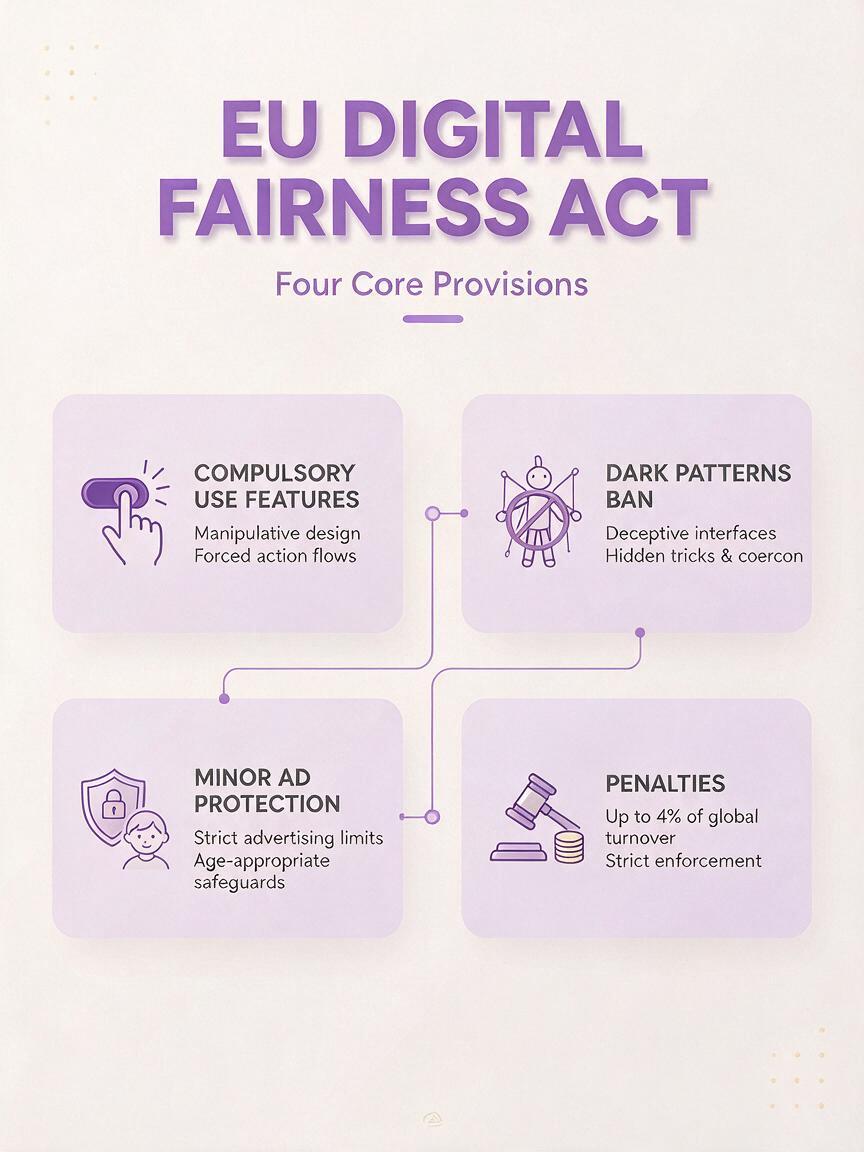
A leaked draft of the upcoming EU Digital Fairness Act has emerged ahead of its scheduled tabling by European Commissioner Michael McGrath on November 11. The draft proposes sweeping new rules for digital platforms, targeting compulsive use features, deceptive design practices, and targeted advertising to minors, with penalties that exceed existing GDPR maximums.
Under the proposed legislation, digital platforms would be required to allow adult users to disable a list of features identified as drivers of compulsive use. That list includes autoplay, notifications unrelated to a user’s own activity, streak rewards, and AI systems that “simulate relationships” — a category that could encompass AI chatbots, virtual companions, and interactive agent experiences designed to foster ongoing user engagement.
The draft also includes a blacklist of 10 so-called dark patterns, defined as deceptive design practices that manipulate users into taking actions they may not have intended. Named examples of banned dark patterns include making cancellation processes more difficult than sign-up flows and hiding auto-renewal terms in fine print. Additional provisions include a full ban on personalized advertising targeted at minors, and a requirement for platforms to disclose how many units of a product are available at the advertised price when using dynamic pricing systems.
Penalties for violations of the Digital Fairness Act would reach up to 6% of a company’s global annual turnover, a higher maximum than the 4% threshold set under the EU’s General Data Protection Regulation (GDPR). The draft text is not final and still requires negotiation with EU member states and the European Parliament before it can become law, a process that typically takes months or years.
What This Means for Content Creators
While the Digital Fairness Act is primarily targeted at platform operators, its provisions will have ripple effects for independent content creators who rely on digital platforms to reach audiences and monetize their work. The most direct impact will likely come from changes to compulsive use features, many of which are powered by AI recommendation algorithms that drive content discovery on social media and video platforms.
If autoplay and algorithmic feed optimization are scaled back or made opt-in only, creators may see shifts in how their content is surfaced to new audiences. Reach that was previously driven by platform algorithms designed to maximize watch time could decline, forcing creators to prioritize content that builds direct, loyal audience relationships over content optimized for viral algorithmic amplification.
The rules around AI systems that simulate relationships may also affect creators who use AI agents or chatbots to engage with their audience. Virtual influencers, AI-powered community managers, and interactive fan experiences that use conversational AI to build personal connections could fall under the new rules, requiring clear opt-out options for users and potentially limiting how these tools can be deployed in the EU market.
Creators who use subscription models or digital product sales will also need to comply with the dark pattern rules, ensuring their sign-up and cancellation processes are equally accessible and that all pricing terms — including auto-renewals — are clearly disclosed upfront. The dynamic pricing disclosure rule will apply to creators who use variable pricing for digital products, courses, or memberships.

Adapting Your Content Strategy for a Changing Regulatory Landscape
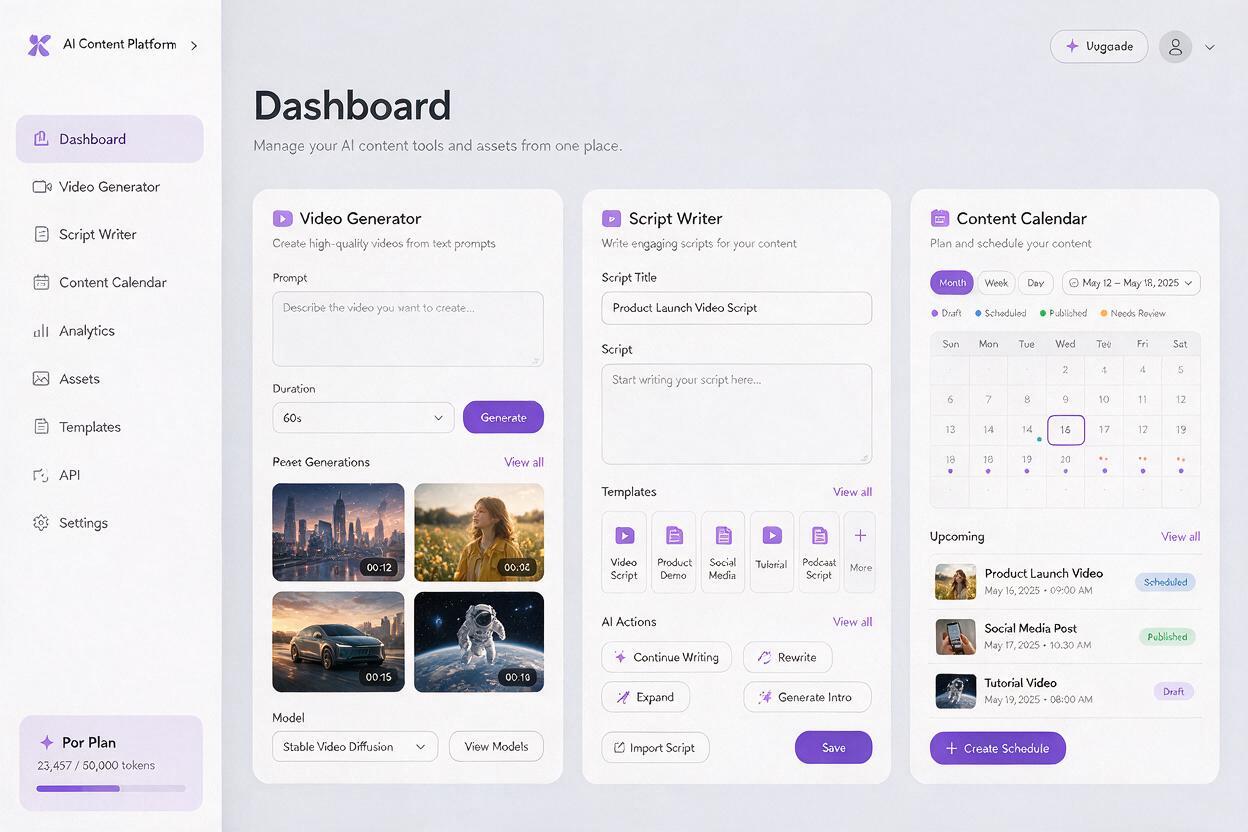
As digital regulations evolve around AI and platform design, creators can build more resilient content workflows by diversifying their content formats and reducing reliance on any single platform’s algorithmic reach. Using a multi-model AI platform like MagicBoat gives creators the flexibility to experiment with different content types and distribution strategies without being locked into a single tool or ecosystem.
For example, creators can use an ai video generator to produce short-form educational content, behind-the-scenes clips, and community-focused updates that encourage direct audience engagement rather than passive scroll-based consumption. Pairing video content with written updates, email newsletters, and community forums helps build loyal audiences that follow creators across platforms, reducing vulnerability to algorithm changes driven by new regulations.
An ai script writer can help creators plan content calendars focused on value-driven storytelling rather than clickbait or algorithm-optimized hooks, ensuring content resonates with audiences on its own merits. This approach not only aligns with the spirit of new regulations targeting manipulative design, but also builds stronger, more sustainable audience relationships over time.
If you’re ready to build a more resilient, regulation-ready content workflow, you can try these models for free and explore how multi-model AI can support your creative goals.
Key Takeaways
- The leaked EU Digital Fairness Act draft, set for tabling on November 11, targets compulsive use features including AI systems that simulate relationships, with penalties up to 6% of global turnover.
- Provisions include a ban on 10 dark patterns, a ban on personalized ads to minors, and dynamic pricing disclosure requirements.
- Creators may see shifts in algorithmic content discovery and new rules for AI-powered audience engagement tools.
- Diversifying content formats and building direct audience relationships can help creators adapt to changing regulatory and platform landscapes.
- Multi-model AI platforms provide flexible tools to create diverse, audience-focused content without relying on single-platform algorithms.
Keywords
eu digital fairness act, ai regulation, dark patterns, ai agent, content creation, ai video generator, ai workflow