What Is the Fed’s Hawkish October Shift? AI Funding Impact | MagicBoat
Federal Reserve October minutes reported on November 18, 2026 took a hawkish turn as Waller floated a 50-basis-point hike, the 10-year Treasury yield moved above 5%, and gold fell 3.5%. The shift matters to AI because higher funding costs can put additional pressure on debt-heavy data centers and the cloud services supporting creative AI workflows.
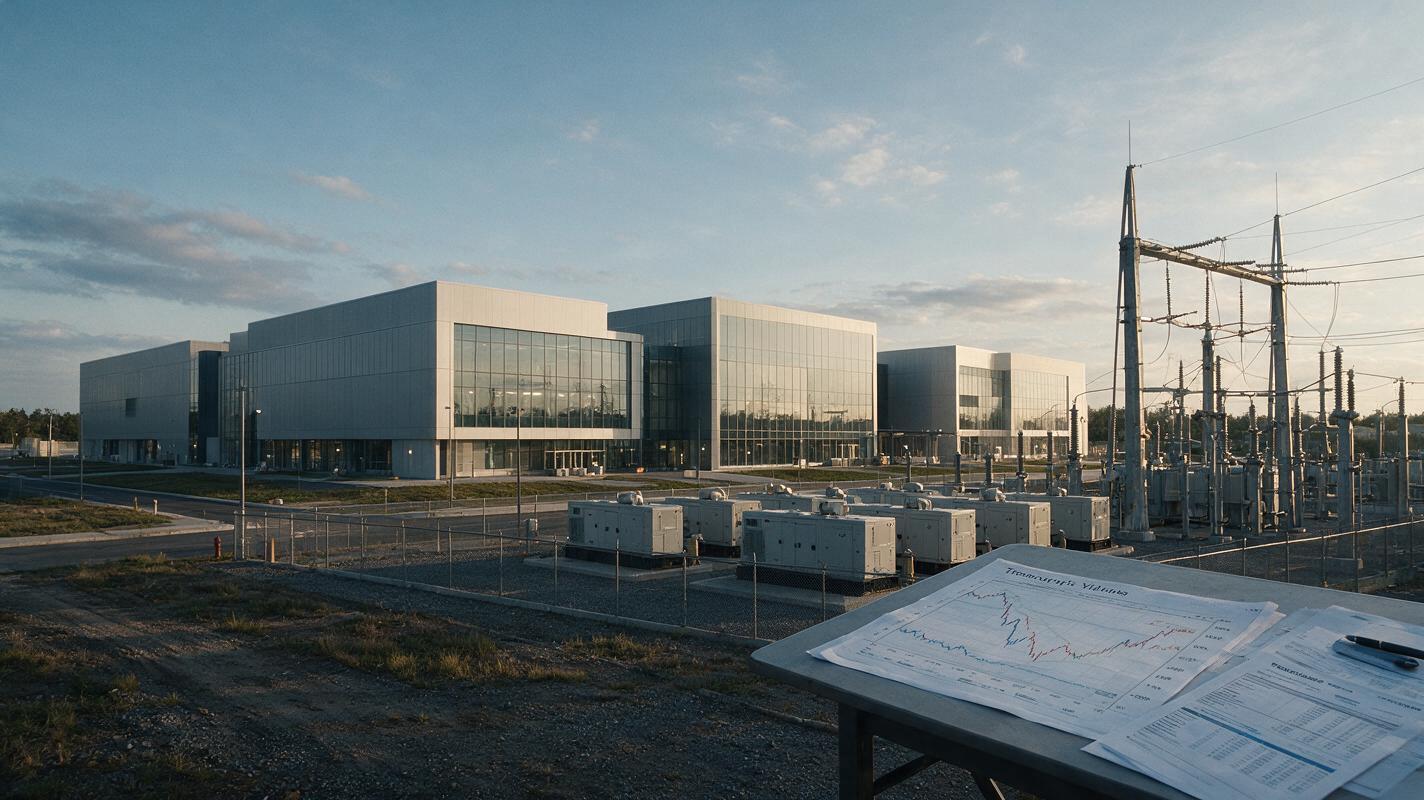
Table of contents
The Answer in Brief
The Federal Reserve’s October minutes turned notably hawkish when reported on November 18, 2026: Waller floated a 50-basis-point interest-rate hike, the 10-year Treasury yield topped 5%, and gold fell 3.5%, according to cnstock and FX168. The significance for AI is direct: a higher-rate environment can intensify the funding-cost squeeze on debt-heavy data centers that provide the computing capacity behind cloud models and AI automation.
This is not a new model launch or an AI assistant update, but it could influence how quickly AI infrastructure expands and how aggressively providers price access to compute. For video and image creators, the practical concern is continuity: an AI video workflow becomes more resilient when it is portable across models rather than dependent on one provider’s infrastructure economics.
What Happened in the Fed October Minutes
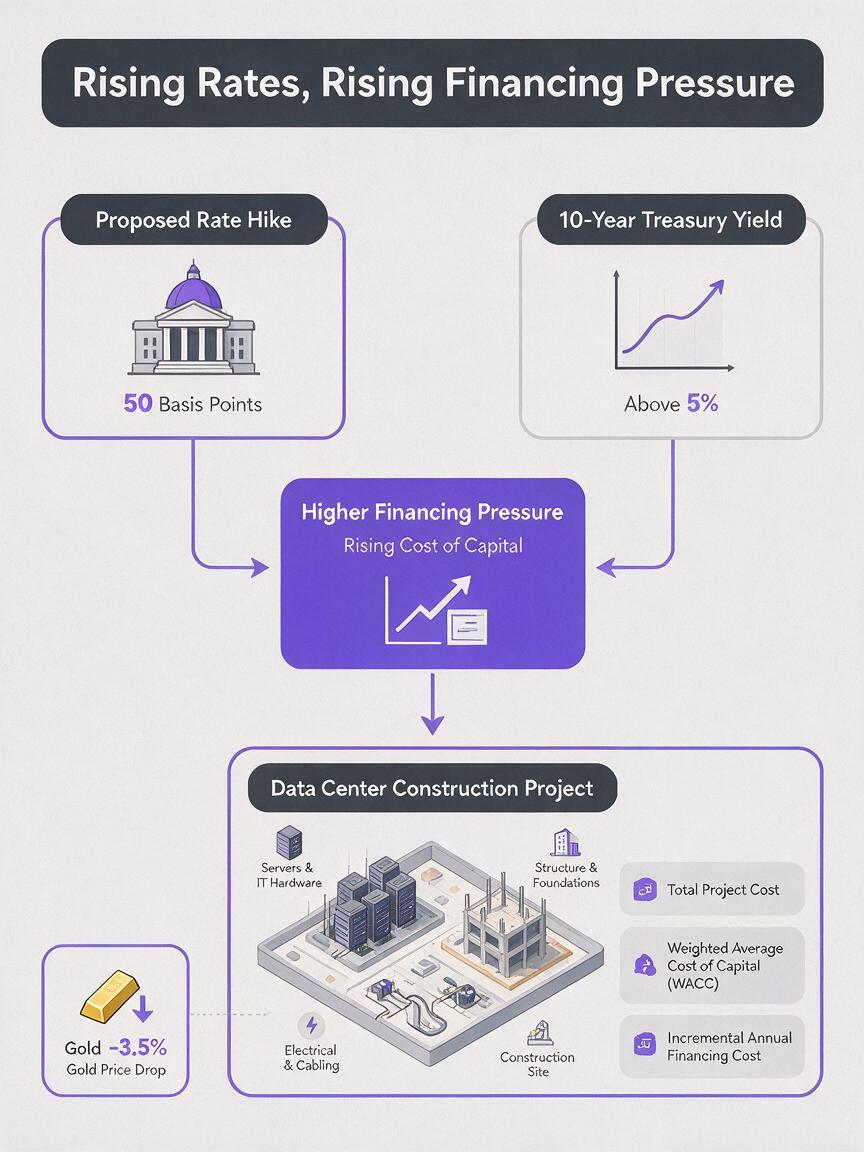
On November 18, 2026, reporting from cnstock and FX168 characterized the Federal Reserve’s October minutes as hawkish. The central headline was that Waller floated a 50-basis-point hike, while the benchmark 10-year Treasury yield moved above 5% and gold declined 3.5%.
A 50-basis-point move equals half a percentage point. The source material describes the increase as something Waller floated, not as an approved Federal Reserve decision. It does not disclose a confirmed implementation date, a final vote, or a new target-rate range.
The 10-year yield crossing 5% is especially relevant to capital-intensive AI infrastructure. Treasury yields serve as a broad reference point for financial markets, so a sustained increase can make investors demand higher returns from other forms of financing. For data-center projects already dependent on substantial borrowing, that can make planned capacity more expensive to fund or harder to justify.
The core AI implication: the November 18, 2026 figures reported by cnstock and FX168 point to a tougher financing backdrop at the same time that AI services continue to require large amounts of physical computing infrastructure.
Key Figures and What Was Not Disclosed
| Indicator | Reported figure | Source and date | Why it matters |
|---|---|---|---|
| Potential rate move | 50 basis points | Waller proposal reported by cnstock and FX168 on November 18, 2026 | Signals a potentially more restrictive rate environment |
| 10-year Treasury yield | Above 5% | cnstock and FX168, November 18, 2026 | Raises the market reference point against which long-term financing may be evaluated |
| Gold movement | Down 3.5% | cnstock and FX168, November 18, 2026 | Shows the immediate cross-asset reaction accompanying the hawkish interpretation |
| Named data-center debt exposure | Not disclosed | No project-level figure in the November 18 source material | The report identifies sector pressure without naming a specific borrower |
| Confirmed rate decision | Not disclosed | No final Federal Reserve action stated in the source material | Waller’s 50-basis-point figure should not be treated as an enacted policy change |
The distinction between a floated increase and an implemented increase is important. The November 18 reporting provides a clear signal about policy sentiment, but it does not establish that a 50-basis-point hike will occur. Likewise, the 3.5% gold decline and Treasury yield above 5% capture the reported market reaction, not a guaranteed long-term trajectory.
Why Higher Rates Put Pressure on AI Data Centers
AI data centers require extensive physical infrastructure, and the November 18, 2026 entry specifically identifies debt-heavy facilities as vulnerable to the funding-cost squeeze. When market yields rise, the financial hurdle for building or refinancing capital-intensive facilities can also rise. That does not mean AI computing demand has disappeared; it means the cost of supplying that compute can become more consequential.
The pressure can emerge through several connected channels:
- New construction: projects relying heavily on borrowed capital may face more demanding financing economics.
- Existing debt: facilities that need refinancing can become more sensitive to prevailing market rates.
- Capacity expansion: providers may reassess the timing or scale of infrastructure commitments when capital becomes more expensive.
- Service economics: cloud and model providers ultimately have to account for infrastructure, energy, hardware, and financing expenses in their operating decisions.
These are financial transmission mechanisms rather than a prediction that any particular AI service will raise prices or lose availability. The November 18 source material does not disclose a price increase, canceled data-center project, or reduction in model access. It identifies a risk to the funding structure underneath the industry.
What This Means for AI Creators
Most creators will not finance a data center, but they can still feel the consequences of infrastructure concentration. A production process tied to one cloud model can become vulnerable when that provider changes availability, queue behavior, usage limits, or commercial terms. None of those changes was announced in the November 18 Fed report, but higher capital costs make workflow portability more valuable as a general operating principle.
Creators can respond by separating the creative plan from the underlying model. Scripts, shot descriptions, reference images, aspect-ratio requirements, and approval criteria should remain reusable even when the generation engine changes. That makes it easier to move an ai video generator task or an ai image generator task to another suitable option without rebuilding the whole campaign.
A practical multi-model workflow can also divide work by function. Early ideation may use one model, visual exploration another, and final video generation another. This is not only about chasing output quality; it reduces dependence on a single infrastructure and funding chain.
Reliability Becomes Part of Model Selection
Creators often compare models by visual style, prompt adherence, speed, and output consistency. The November 18, 2026 rate story adds another consideration: the stability of the infrastructure and business model delivering the service.
A stable one-account, multi-model platform such as MagicBoat can help creators keep more of the production process in one place while retaining model flexibility. If the economics or availability of one option changes, a portable workflow can be redirected without abandoning the creative concept.

What to Watch Next
The immediate figure to monitor is the 50-basis-point increase floated by Waller in the November 18 reporting. Because the source material does not identify it as a final Federal Reserve decision, subsequent policy communication will determine whether it remains a signal or becomes part of an enacted rate path.
The second figure is the 10-year Treasury yield, reported by cnstock and FX168 above 5% on November 18, 2026. A brief move and a sustained period above that level would carry different implications for long-duration infrastructure financing, but the supplied report does not disclose how long the yield remained there.
Creators should also watch for actual provider-level evidence rather than assuming an immediate effect. Relevant evidence would include announced price changes, altered usage terms, delayed infrastructure projects, or changes in model availability. None was disclosed in this Fed-minutes entry, so claims about specific platform consequences would be premature.
Bottom Line
The Federal Reserve’s hawkish October minutes, reported on November 18, 2026 by cnstock and FX168, combined three notable signals: Waller floated a 50-basis-point hike, the 10-year Treasury yield exceeded 5%, and gold fell 3.5%. For AI, the central issue is that higher funding hurdles can put greater pressure on debt-heavy data centers even when demand for AI compute remains strong.
For creators, the sensible response is not to forecast interest rates. It is to make the creative process less dependent on one model or provider. Keep prompts and production assets portable, evaluate reliability alongside output quality, and try these models for free when building a more flexible content pipeline.
Creator Resilience Checklist
- Keep scripts, prompts, references, and shot plans reusable across models.
- Evaluate model availability and workflow reliability alongside visual quality.
- Avoid making an entire production pipeline dependent on one generation provider.
- Distinguish Waller’s floated 50-basis-point hike from a confirmed Federal Reserve decision.
- Watch for disclosed provider changes instead of assuming immediate price or access effects.
Keywords
fed october minutes, ai data centers, ai funding costs, treasury yields, ai infrastructure, ai workflow, ai video workflow