FTC Civil Subpoenas Target OpenAI and Anthropic in AI Regulatory Push
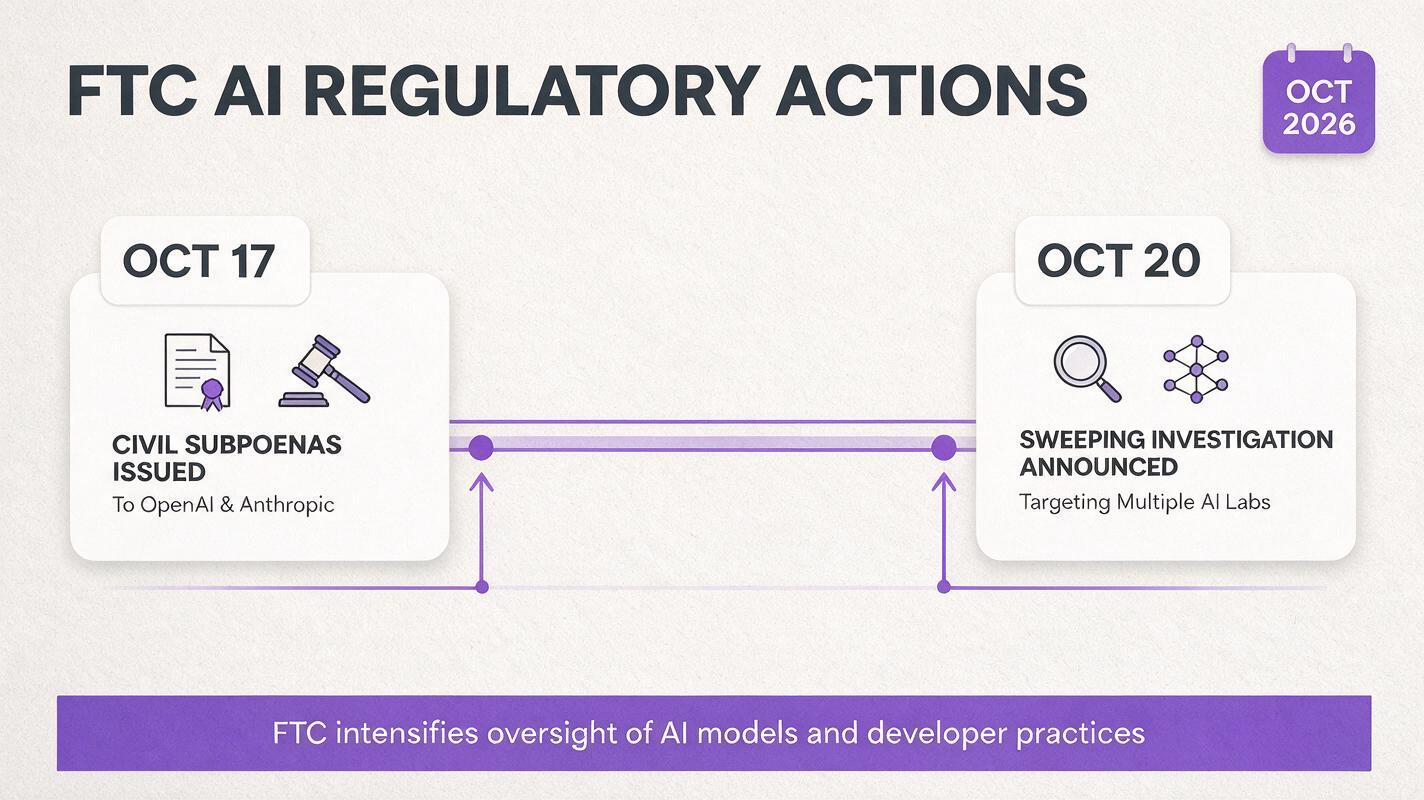
On October 17, 2026, reports emerged that the U.S. Federal Trade Commission has issued civil subpoenas to OpenAI and Anthropic, two leading frontier AI developers. The action marks a notable escalation in federal scrutiny of AI providers, coming three days before a broader FTC sweeping probe of multiple AI labs announced on October 20. For AI content creators, the subpoenas highlight the importance of diversified, multi-model workflows to mitigate potential disruptions from regulatory changes.
Table of contents
Breaking Down the October 17 FTC Civil Subpoenas
On October 17, 2026, reports emerged that the U.S. Federal Trade Commission (FTC) has issued civil subpoenas to two of the world’s leading frontier AI developers: OpenAI and Anthropic. Civil subpoenas are formal regulatory requests for information, typically used by government agencies to gather documents, testimony, or other data as part of an inquiry into potential compliance issues or industry practices.
The action comes amid a rapidly evolving regulatory landscape for AI providers. Just three days later, on October 20, the FTC announced a sweeping probe of Anthropic, OpenAI, and additional AI labs, signaling a broader expansion of scrutiny across the frontier AI sector. While the specific focus of the October 17 subpoenas has not been publicly detailed, their issuance marks a notable escalation in federal oversight of companies developing the most advanced AI systems.
For context, both OpenAI and Anthropic offer widely used AI models that power a broad range of consumer and enterprise tools, including content creation platforms, coding assistants, and customer service agents. Any regulatory action that impacts model availability, feature rollouts, or service terms could have ripple effects across the millions of users and businesses that depend on these tools.
Why This Matters for AI Content Creators
For independent creators and creative teams that rely on AI tools to produce content, regulatory actions targeting major AI providers introduce tangible workflow risks. Many creators build their production pipelines around a single provider’s models, using them for everything from script drafting and voiceover generation to visual asset creation and video editing. If a provider faces regulatory constraints that lead to service disruptions, feature removals, or access restrictions, those creators can face costly delays or even complete breakdowns in their workflow.
This risk is not limited to long-term regulatory changes. Even temporary information requests or investigative steps can lead providers to pause new feature launches, adjust model behavior, or limit access to certain capabilities while they respond to regulators. For creators working on tight deadlines, even a short period of reduced functionality can mean missed launch dates, lost revenue, or disappointed audiences.
Creators who use AI for video production face particularly high stakes. An ai video generator that relies on a single underlying model could suddenly lose key features like long-form generation, style consistency, or audio sync if that model is adjusted or taken offline. Teams that have invested hours into refining prompts, building template libraries, or training custom workflows on a single provider’s tools may find those assets useless if they have to switch providers abruptly.
The issue goes beyond just video creation. Text-based tools for scriptwriting, social media captions, and blog content, image generators for thumbnails and promotional assets, and audio tools for voiceovers and music all face similar risks if their underlying providers are targeted by regulatory action. For creators who run their entire business on AI tools, overreliance on a single provider is a significant operational vulnerability.

Building Resilient Creative Workflows With Multi-Model Platforms
The most effective way for creators to mitigate the risk of regulatory disruptions is to build diversified, multi-model workflows that don’t depend on a single AI provider. Multi-model platforms give creators access to a range of AI tools from different developers, all through a single interface and account. This means if one provider faces regulatory issues, creators can switch to an alternative model without rebuilding their entire workflow or losing access to their project files and assets.
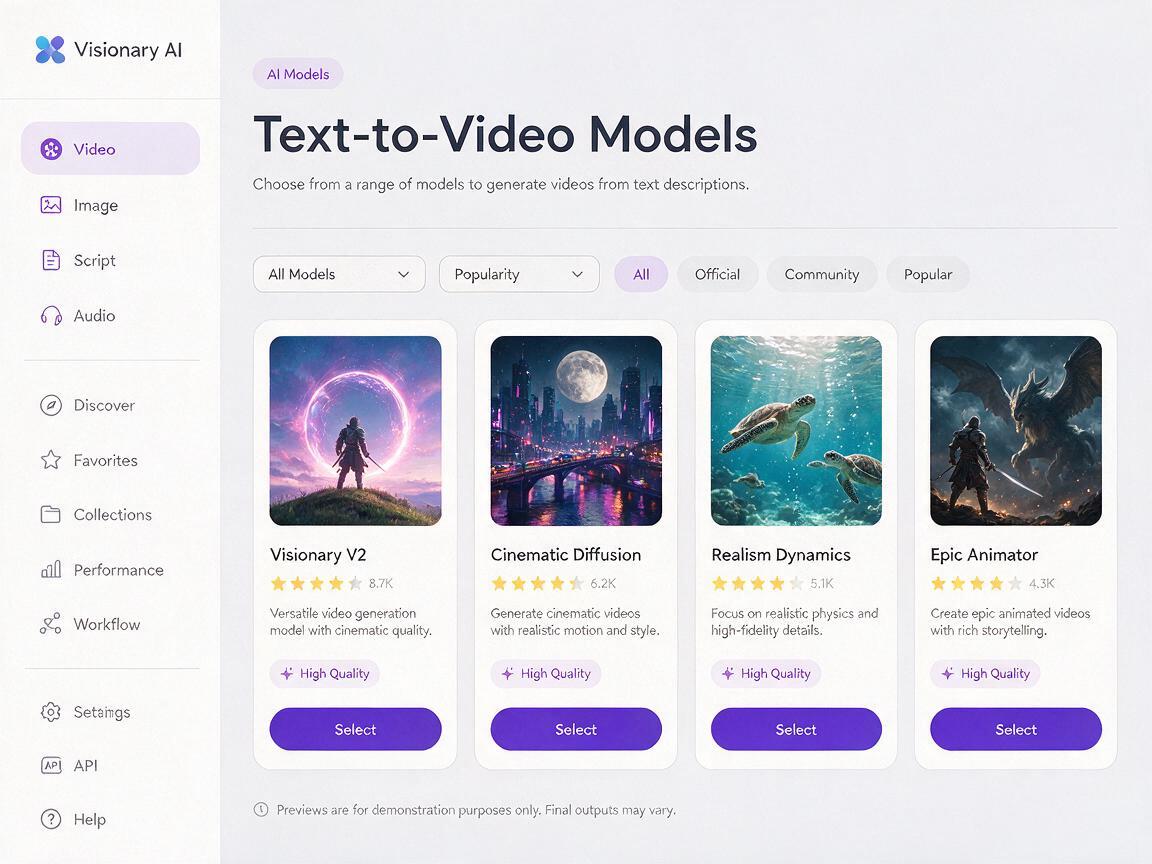
For video creators, for example, a platform that supports multiple text to video models lets users compare output quality, pick the best model for each specific project, and switch providers seamlessly if one becomes unavailable. This flexibility also extends to image generation, voiceover, scriptwriting, and other creative tasks, ensuring that no single regulatory action can bring production to a halt.
Beyond risk mitigation, multi-model platforms offer practical creative benefits. Different models excel at different tasks: one may produce more photorealistic video, another may handle complex narrative scripts better, and a third may offer faster generation speeds at a lower cost. Having access to multiple models in one place lets creators choose the right tool for each job, rather than forcing every project to fit the capabilities of a single provider.
Another key advantage is portability. When creators use a unified platform, their project files, prompt libraries, and creative assets are stored in a single environment that works across all supported models. This means switching between providers doesn’t require reformatting assets, reworking prompts, or learning a new tool from scratch. Teams can maintain consistent brand voice, visual style, and production efficiency even as they shift between underlying AI models.
MagicBoat is one such multi-model AI creative platform, offering a full suite of content creation tools powered by multiple leading AI providers. The platform includes video generation, image creation, scriptwriting, voiceover, and lipsync capabilities, all accessible through a single account. This structure ensures that creators have the flexibility to adapt to regulatory changes, provider updates, or shifting creative needs without disrupting their workflow.
If you’re looking to reduce your reliance on a single AI provider and build a more resilient creative workflow, you can try these models for free to see how a multi-model approach fits your production process.
Key Takeaways
- The FTC issued civil subpoenas to OpenAI and Anthropic on October 17, 2026, as part of growing federal scrutiny of frontier AI providers.
- Regulatory actions targeting AI providers can cause service disruptions, feature changes, or access restrictions that impact creators relying on single-provider tools.
- Multi-model AI platforms reduce operational risk by giving creators access to multiple providers through a single interface and account.
- Diversified workflows offer creative benefits too, including access to specialized models for different tasks and more consistent output quality.
- Portable creative assets and unified project management make switching between models fast and low-effort, even on tight deadlines.
Keywords
ai news, ftc subpoenas, openai, anthropic, ai tools, ai regulation, ai video generator