FTC Issues Civil Subpoenas to OpenAI and Anthropic
On October 17, 2026, the U.S. Federal Trade Commission issued civil subpoenas to OpenAI and Anthropic as part of an ongoing examination of AI industry practices. The action precedes the agency’s broader October 20 sweeping probe of multiple AI labs, signaling escalating federal regulatory scrutiny of frontier AI developers. For creators, the development underscores the importance of diversified, multi-model AI workflows to mitigate provider-specific disruption risks.
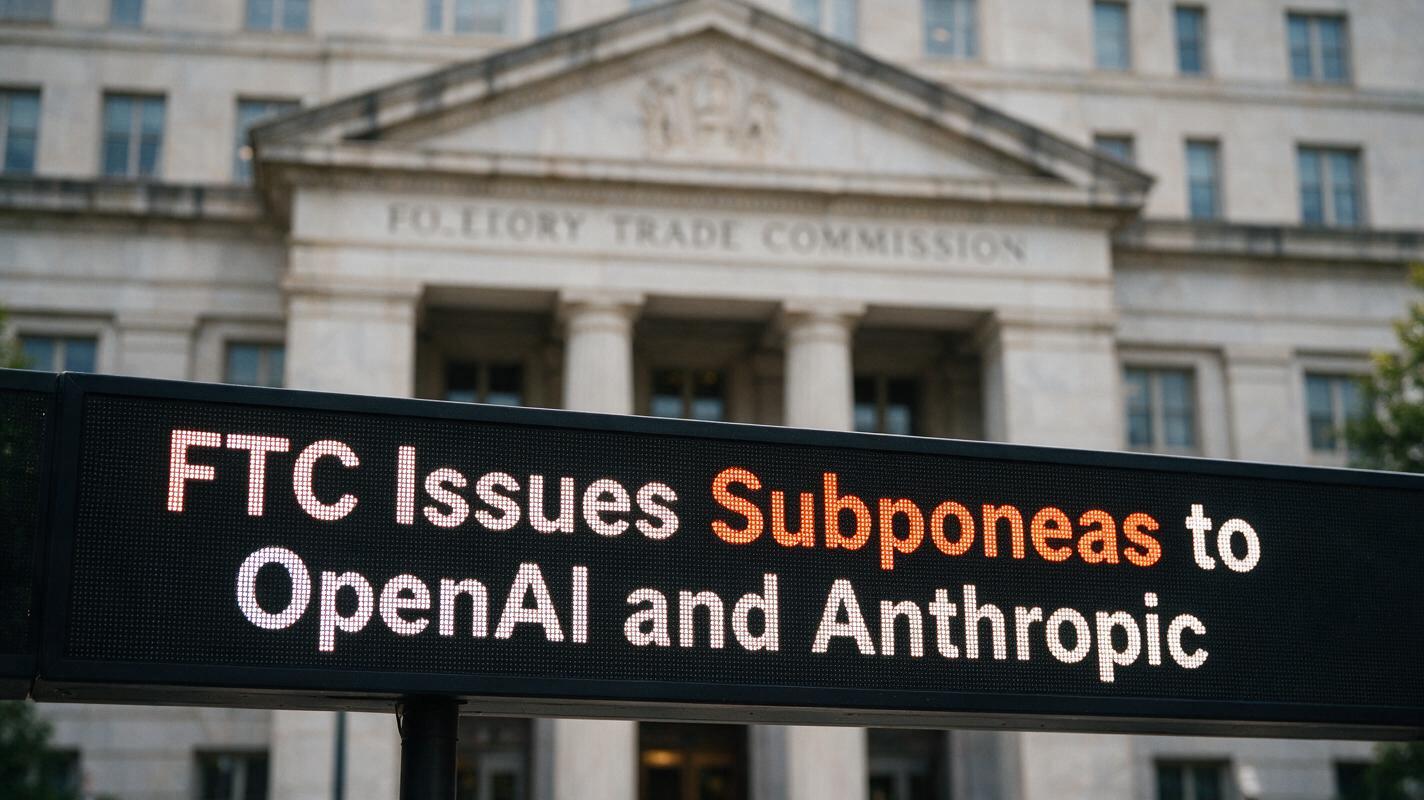
Table of contents
October 17 FTC Civil Subpoenas: What Happened
On October 17, 2026, the U.S. Federal Trade Commission issued civil subpoenas to two of the leading frontier AI developers: OpenAI and Anthropic. The subpoenas represent a formal step in the agency’s examination of competitive practices, safety protocols, and consumer impacts within the rapidly growing AI industry. While the full scope of the document requests has not been publicly disclosed, civil subpoenas of this type typically seek internal records, communications, and data related to product development, pricing, safety procedures, and market positioning.
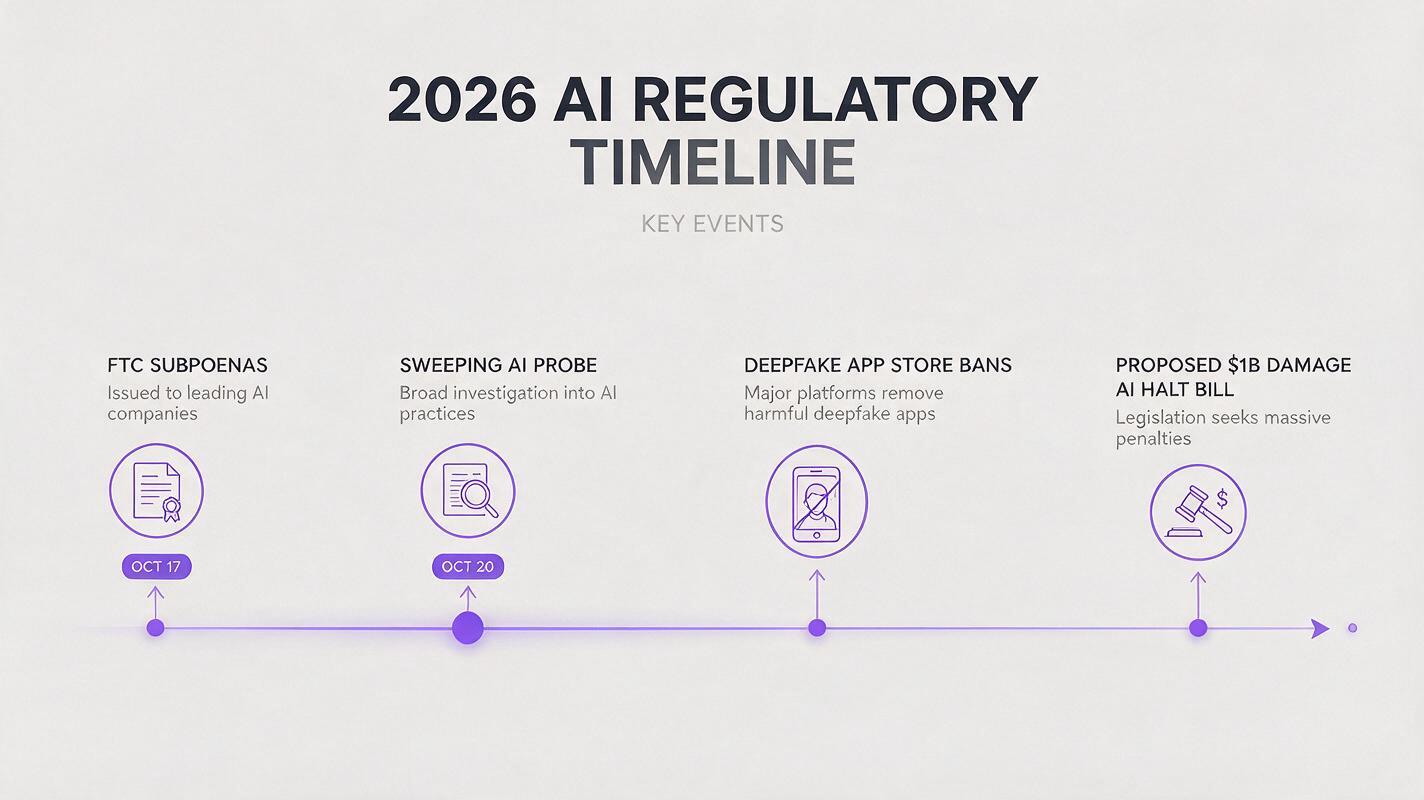
The October 17 subpoenas preceded a broader, industry-wide action: on October 20, the FTC announced a sweeping probe of Anthropic, OpenAI, and other AI labs, expanding its scrutiny beyond the two initial targets. The timeline suggests the earlier subpoenas were part of preliminary information-gathering that led to the larger investigation. Neither OpenAI nor Anthropic has issued a formal statement confirming the specific contents of the subpoenas, though both companies have previously stated their commitment to cooperating with regulatory reviews.
For creators who depend on AI tools built on these platforms, the escalating regulatory action raises legitimate questions about long-term model availability, service stability, and potential changes to product features or pricing.

How the Subpoenas Fit Into 2026’s Broader AI Regulatory Landscape
The FTC’s October 17 action is not an isolated event. It is part of a wave of regulatory scrutiny facing the AI industry throughout 2026, as policymakers and enforcement agencies grapple with the rapid advancement of frontier models and their growing impact on consumers, businesses, and democratic processes.
Other recent regulatory developments include a proposed bill that would allow judicial halts to AI development linked to $1 billion or more in damages, expanded election-related security programs from major AI providers, and new restrictions on deepfake tools in app stores. The FTC’s subpoenas and subsequent sweeping probe signal that federal enforcement agencies are moving from preliminary observation to active, document-backed investigation of the largest AI players.
Regulators have raised concerns across multiple areas, including consumer protection, data privacy, competitive fairness, and the potential for AI systems to cause widespread harm. For AI developers, this means increased compliance costs, potential changes to product roadmaps, and the risk of enforcement actions that could restrict access to certain features or models.
What This Means for Creators Using Frontier AI Tools
For content creators who rely on AI tools powered by OpenAI, Anthropic, or other frontier models, the growing regulatory landscape introduces several key risks worth planning for. First, sudden policy changes or enforcement actions could lead to temporary or permanent restrictions on model access, feature rollbacks, or price increases as providers pass on compliance costs.
Second, regulatory scrutiny can slow product development, as engineering teams shift focus to compliance tasks instead of new features that creators depend on. Third, providers may make sweeping changes to content policies or usage rules to avoid regulatory pushback, which could disrupt existing creative workflows that rely on specific model capabilities.
These risks are not hypothetical. Recent months have seen rapid shifts in model availability, pricing, and features across the AI industry, often with little advance notice. Creators who build their entire workflow around a single AI provider face the greatest disruption if that provider’s services change or become unavailable.
Many creators use ai video generator and text to video tools to produce content at scale, and relying on a single underlying model can leave those workflows vulnerable to provider-specific changes.
Building Resilient Creative Workflows Amid Regulatory Uncertainty
The good news is that creators can take proactive steps to reduce their exposure to provider-specific regulatory risks, without giving up the speed and efficiency of AI-powered content creation. The most effective strategy is to diversify the AI tools and models you use, so that a change or disruption from one provider does not halt your entire workflow.
If you’re looking to diversify your AI toolset and reduce reliance on any single provider, you can try these models for free on MagicBoat and explore how a multi-model approach can strengthen your creative workflow.
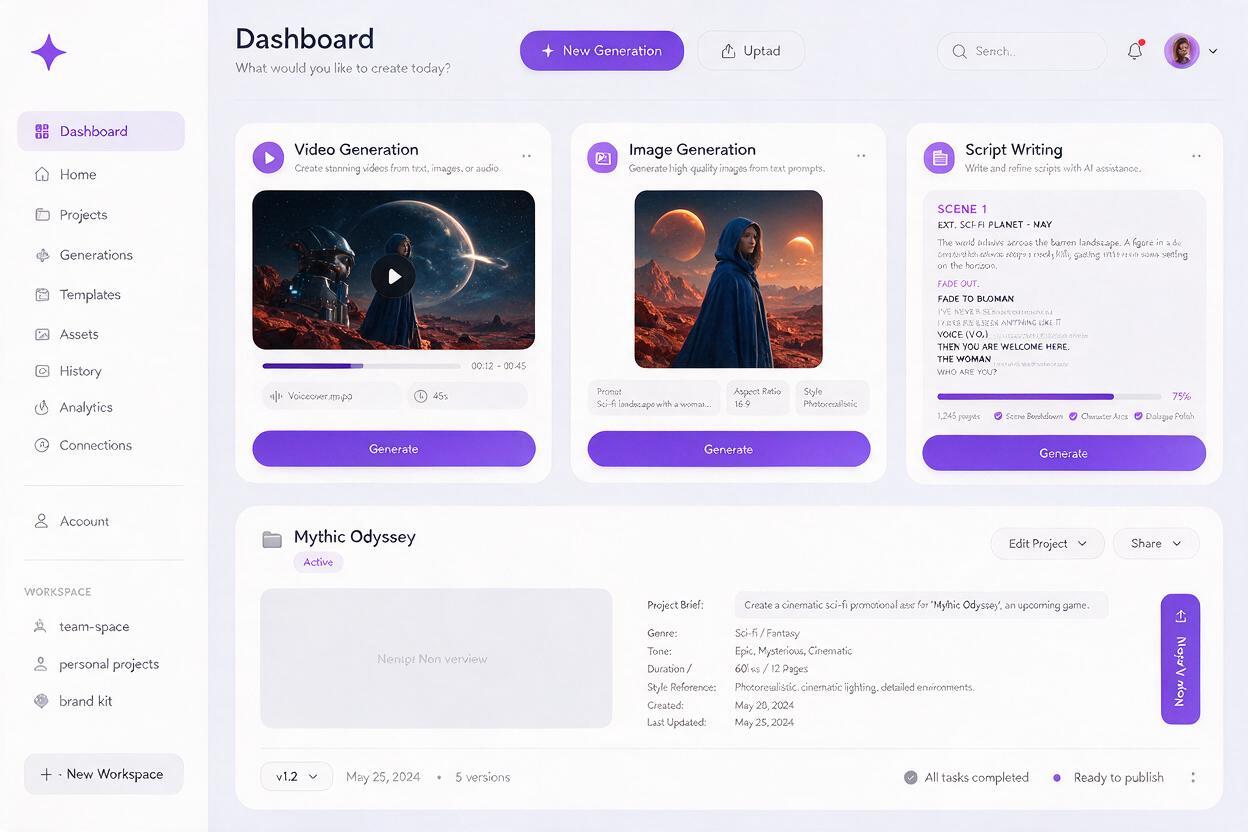
A multi-model AI platform like MagicBoat gives creators access to a wide range of leading AI models and creative tools through a single account, making it easy to switch between providers, test different models for specific tasks, and preserve your creative assets in a portable format. This flexibility means that if one model faces regulatory restrictions or changes its policies, you can shift to an alternative without rebuilding your entire workflow from scratch.
Beyond model diversity, look for platforms that let you save prompts, templates, and project files in a format you can export, so you retain control over your creative work regardless of what happens to individual providers. Prioritize tools that support human review at every stage of the creation process, as this not only improves content quality but also helps you comply with evolving regulatory expectations around AI-generated content disclosure and accountability.
Key Takeaways
- The FTC issued civil subpoenas to OpenAI and Anthropic on October 17, 2026, as part of a broader examination of AI industry practices.
- The subpoenas preceded the FTC’s October 20 sweeping probe of multiple AI labs, signaling escalating federal regulatory scrutiny of frontier AI developers.
- Creators relying on single-provider AI tools face risks of service disruption, feature changes, or price shifts amid regulatory uncertainty.
- Diversifying across multiple AI models and platforms through a unified service reduces workflow vulnerability to provider-specific regulatory changes.
- Portable creative assets and human review processes further strengthen resilience against industry shifts.
Keywords
ftc civil subpoenas, openai, anthropic, ai regulation, ai news, ai tools, ai roundup