FTC Issues Civil Subpoenas to OpenAI and Anthropic Over Consumer Harm Risks
On October 17, 2026, the U.S. Federal Trade Commission issued civil subpoenas to OpenAI and Anthropic as part of an investigation into potential consumer harms from AI systems, marking a formal shift from voluntary self-regulation to evidence-based regulatory oversight. The action precedes a later expanded sweeping probe announced on October 20 that includes additional AI labs. For AI video and image creators, the investigation raises questions about future model access, feature changes, and workflow stability.
Table of contents
Background of the FTC Civil Subpoenas
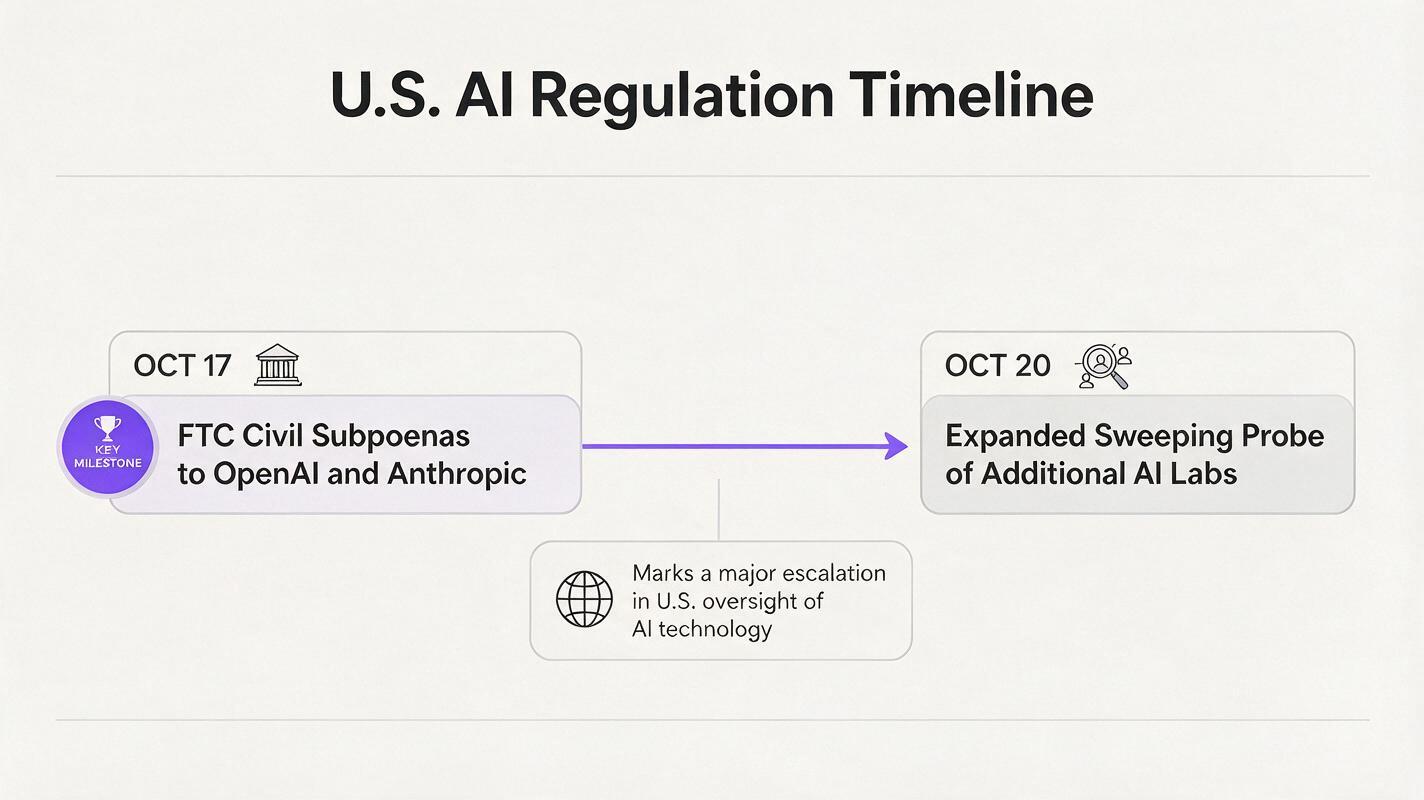
On October 17, 2026, the U.S. Federal Trade Commission (FTC) issued civil subpoenas to both OpenAI and Anthropic as part of an investigation into potential consumer harms posed by advanced AI systems. The action, first reported via Meridian Magazine’s business wire, marks a notable turning point in U.S. AI governance: prior to the subpoenas, regulatory discussions had largely centered on voluntary self-regulation frameworks and industry-led safety commitments, with little formal evidence gathering from leading AI labs.
The civil subpoenas require the two companies to produce detailed records related to their AI model development, safety practices, consumer-facing product disclosures, and handling of user data. While the FTC has not publicly outlined specific allegations of wrongdoing, the investigation focuses on whether AI systems developed by the labs may cause measurable consumer harm, including issues related to misinformation, privacy violations, deceptive marketing, or unanticipated risks from autonomous agent behavior.
This October 17 action sets the stage for a broader regulatory escalation: three days later, on October 20, the FTC announced an expanded sweeping probe that extends beyond OpenAI and Anthropic to include additional AI labs, building on the evidence gathered through the initial civil subpoenas. The rapid progression from targeted subpoenas to a sector-wide probe underscores the growing urgency of AI regulatory oversight in the U.S.
Why This Regulatory Shift Matters for AI Creators
For AI video and image creators who rely on platforms like ChatGPT, Claude, and integrated ai video generator tools, formal FTC investigations carry tangible workflow and access risks that extend far beyond policy circles. Regulatory action can lead to sudden changes in model availability, feature rollbacks, increased pricing to cover compliance costs, or temporary service disruptions as labs adjust their practices to meet regulatory demands.
Creators who build their entire production pipeline around a single AI provider face the greatest vulnerability. For example, if a probe leads to restrictions on ai image generator capabilities or limits on the speed of gpt-6 or claude opus API responses, creators with single-provider workflows may face missed deadlines, lost productivity, or the need to completely rebuild their creative processes on short notice.
Even free ai tools are not immune to regulatory impact. Many free tiers are subsidized by premium subscriptions or data collection practices that may come under FTC scrutiny. Changes to data usage policies or feature limits on free tiers could force creators who rely on low-cost or no-cost tools to either pay for upgraded access or seek alternative solutions.
Beyond immediate access risks, regulatory investigations can also slow the rollout of new features that creators rely on, such as improved text to video quality, more accurate image to video conversion, longer context windows for script generation, or advanced reasoning capabilities from models like gemini 4. Labs may prioritize compliance over innovation during active investigations, delaying updates that would otherwise benefit creative professionals.
Mitigating Regulatory Risk for Creative Workflows
The most effective way for creators to protect their workflows from regulatory disruption is to diversify their AI toolset across multiple providers and model families. A multi-model platform lets creators switch between different systems seamlessly if one provider experiences service changes, feature limits, or access restrictions due to regulatory action.
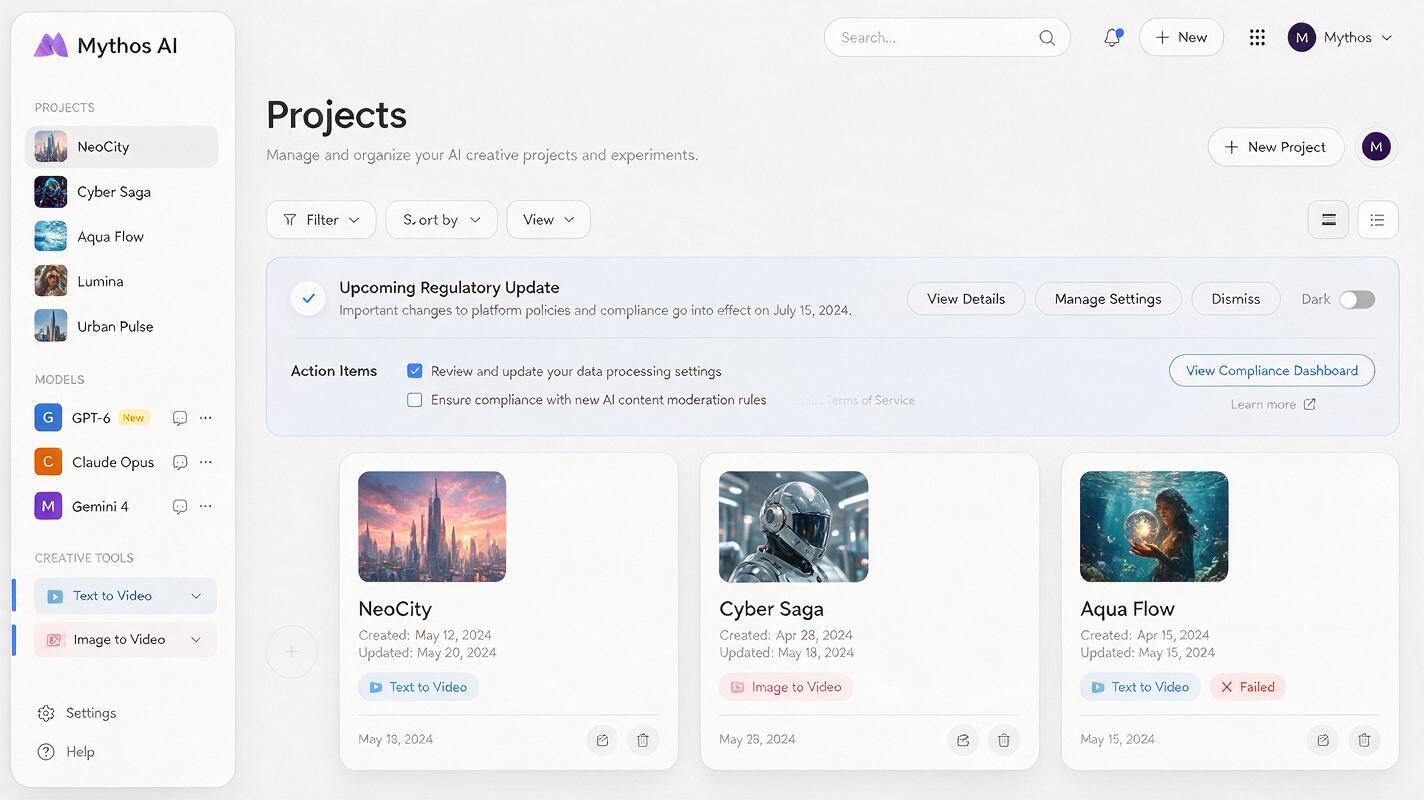
MagicBoat integrates a wide range of leading AI models and creative tools into a single, unified interface — including gpt-6, claude opus, gemini 4, and specialized visual generation models — so creators don’t have to manage separate accounts, billing, or workflow pipelines for each provider. Whether you need to generate visual assets, edit footage, or draft script concepts, you can access the tools you need from one dashboard, reducing downtime if any single model is affected by regulatory changes.
You can try these models for free to test how a multi-model workflow fits your creative process, without the risk of being locked into a single provider that may face future regulatory constraints. Building redundancy into your pipeline now can save hours of rushed troubleshooting later if regulatory developments impact your go-to tools.
Key Takeaways
- The FTC issued civil subpoenas to OpenAI and Anthropic on October 17, 2026, launching a formal investigation into potential consumer harms from advanced AI systems.
- The action marks a shift from voluntary AI self-regulation to formal evidence-based regulatory oversight, with a broader sector-wide probe announced three days later.
- AI video and image creators may face risks including model access changes, feature rollbacks, pricing increases, and delayed innovation as a result of regulatory action.
- Diversifying your AI toolset across multiple providers via a unified platform is the most reliable way to mitigate workflow disruption from regulatory changes.

Keywords
ftc openai anthropic civil subpoenas, gpt-6, claude opus, gemini 4, ai video model, text to video, image to video, free ai tools