Gemini 4 Argon Hits 97.5% on ARC-AGI-3 Benchmark
An October 19, 2026 report places Google’s Gemini 4 Argon at 97.5% on the ARC-AGI-3 benchmark, marking a key milestone in the rapidly evolving frontier AI market. The result aligns with recent industry analysis showing that Google and Meta’s combined AI push has ended the previous absolute lead of OpenAI and Anthropic. For creators, this growing competitive landscape highlights the value of flexible, multi-model platforms that simplify access to top-tier AI tools.

Table of contents
What the Gemini 4 Argon ARC-AGI-3 Benchmark Result Means
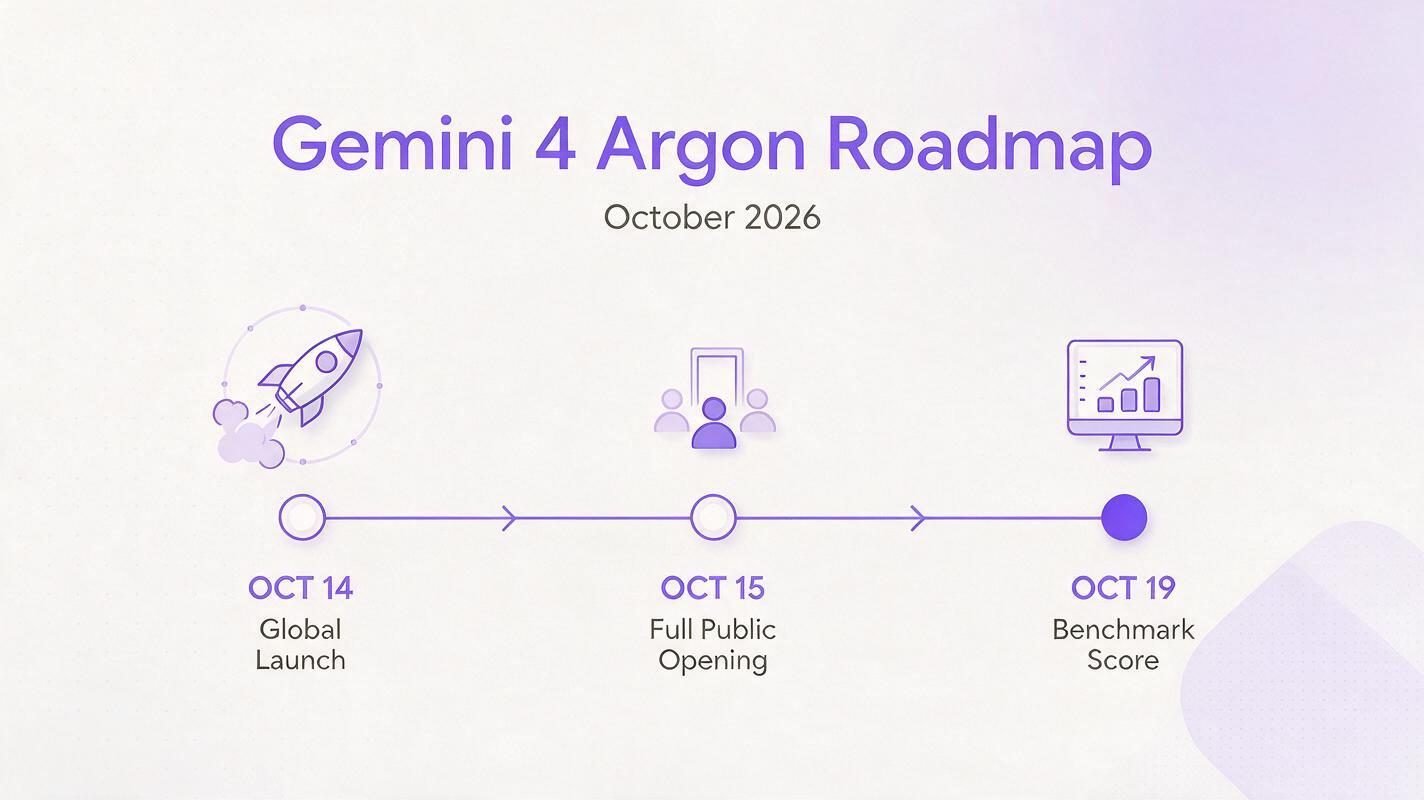
Google’s Gemini 4 Argon has hit a 97.5% score on the ARC-AGI-3 benchmark, according to an October 19, 2026 report, marking a major milestone in the competitive frontier AI race. The result comes on the heels of a rapid rollout for Gemini 4 Argon through October 2026, including a global launch for Pro and Ultra subscribers and developers on October 14, followed by a full public opening on October 15 with promotional pricing of $2 per million input tokens and $10 per million output tokens, plus a new Task Mode feature.
This benchmark score aligns with broader industry analysis from October 16, which concluded that Google and Meta’s combined frontier AI push has ended the absolute market lead previously held by OpenAI and Anthropic. As more providers release models with top-tier performance, the AI landscape is shifting from a two-horse race to a more competitive field with multiple high-performing options for users.
Why Frontier Model Performance Matters for Content Creators
For content creators, higher benchmark scores translate to more capable tools for a wide range of creative tasks, from brainstorming video concepts and drafting scripts to refining visual assets and troubleshooting production challenges. A model that performs well on general reasoning benchmarks can handle more complex prompts, follow nuanced creative direction, and produce more consistent, high-quality output across different use cases.
A higher-performing model can help with specific tasks like generating detailed scene descriptions for a short film, refining dialogue to match a character’s voice, or troubleshooting technical issues in post-production by explaining complex editing concepts in plain language. This reduces the time spent on iterative revisions and lets creators focus more on the creative vision behind their projects, rather than working around the limitations of a less capable tool.
As the number of high-performing models grows, though, creators face a new challenge: navigating a fragmented ecosystem of separate platforms, pricing plans, and account management systems. Jumping between providers to access the best model for each task can waste time, disrupt workflows, and make it harder to track costs across projects.
This is where integrated platforms add tangible value. Instead of managing multiple logins and billing cycles, creators can access a range of leading models and creative tools from a single dashboard. For video-focused creators, an ai video generator built into a multi-model platform lets you test different model outputs for the same project without leaving your workspace.

Building a Flexible Creative Workflow in a Multi-Frontier Era
With multiple models now competing at the frontier of AI performance, the most resilient creative workflows are those that don’t rely on a single provider. Diversifying your toolset means you can adapt quickly to changes in model availability, pricing shifts, or regulatory developments that might impact any one platform.
For example, if you primarily use AI for video production, you can pair text to video workflows with image generation tools and scriptwriting support to build an end-to-end creative pipeline that pulls from multiple models. This approach lets you pick the best tool for each specific step of your process, rather than forcing every task to fit the strengths of a single model.
Regulatory shifts add another reason to prioritize flexibility. The FTC’s sweeping probe of Anthropic, OpenAI, and other AI labs, announced October 20, underscores the potential for industry changes that could affect model access, pricing, or feature sets for individual providers. A workflow that spans multiple models and platforms is less vulnerable to disruptions from any single provider’s changes.
Key Takeaways
- Gemini 4 Argon scored 97.5% on the ARC-AGI-3 benchmark in an October 19, 2026 report, adding to a string of recent Google AI updates through October.
- The result supports industry analysis that Google and Meta’s frontier AI push has ended the previous absolute lead of OpenAI and Anthropic, creating a more competitive market.
- Higher-performing models reduce time spent on iterative revisions, letting creators focus more on creative vision and less on tool limitations.
- Creators benefit from flexible, multi-model workflows that let them leverage the strongest tools for each specific creative task.
- A unified platform eliminates the overhead of managing multiple provider accounts, pricing plans, and login credentials.
- You can try these models for free on MagicBoat to build a resilient, multi-model creative workflow.
Keywords
gemini 4 argon, arc-agi-3, ai benchmark, frontier ai models, ai news, ai tools, google ai