Gemini 4 Argon Scores 97.5% on ARC-AGI-3, Highlighting Harness System Effects
Google’s Gemini 4 Argon has scored 97.5% on the ARC-AGI-3 benchmark using a Provider Adapter harness, making Google the second AI lab after OpenAI to surpass the 95% threshold on the assessment. The model posted just 49.8% on the standard ARC-AGI-3 harness, revealing a massive performance gap driven by model-plus-tool system effects rather than raw model capability alone. For AI video and image creators, these results underscore the value of flexible, multi-model platforms that let users build custom workflow harnesses tailored to their creative needs.
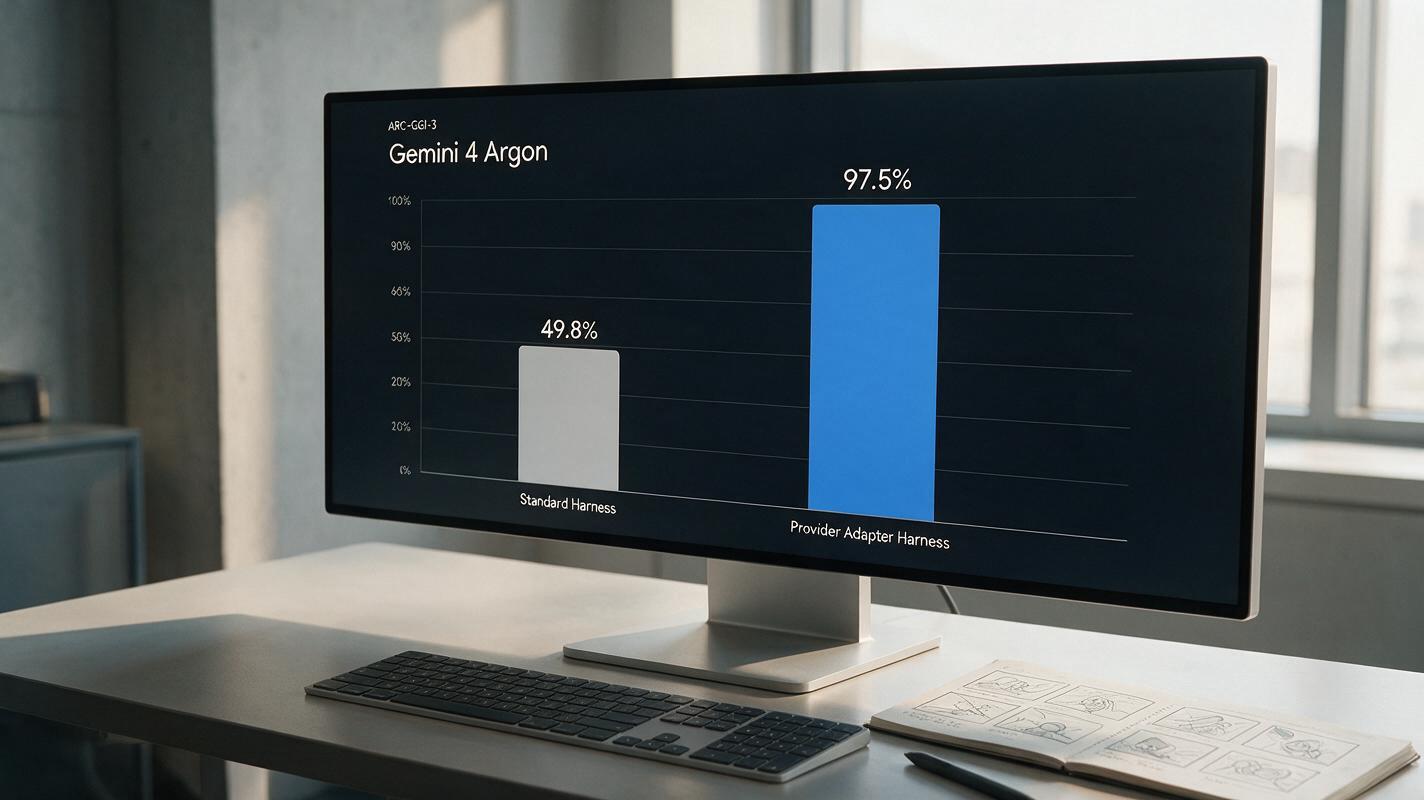
Table of contents
Gemini 4 Argon’s latest benchmark results are rewriting how we think about AI model performance — and it’s not just the base model that’s doing the heavy lifting.
On October 19, 2026, new ARC-AGI benchmark results placed Google’s Gemini 4 Argon among the top-performing frontier AI models, but only when paired with a specialized evaluation harness. The model scored 97.5% on ARC-AGI-3 using a Provider Adapter harness, a run that cost roughly $4,800, making Google only the second AI lab after OpenAI to cross the 95% threshold on that assessment. With the same adapter setup, Gemini 4 Argon also posted 98.5% on ARC-AGI-1 and 91.3% on ARC-AGI-2.
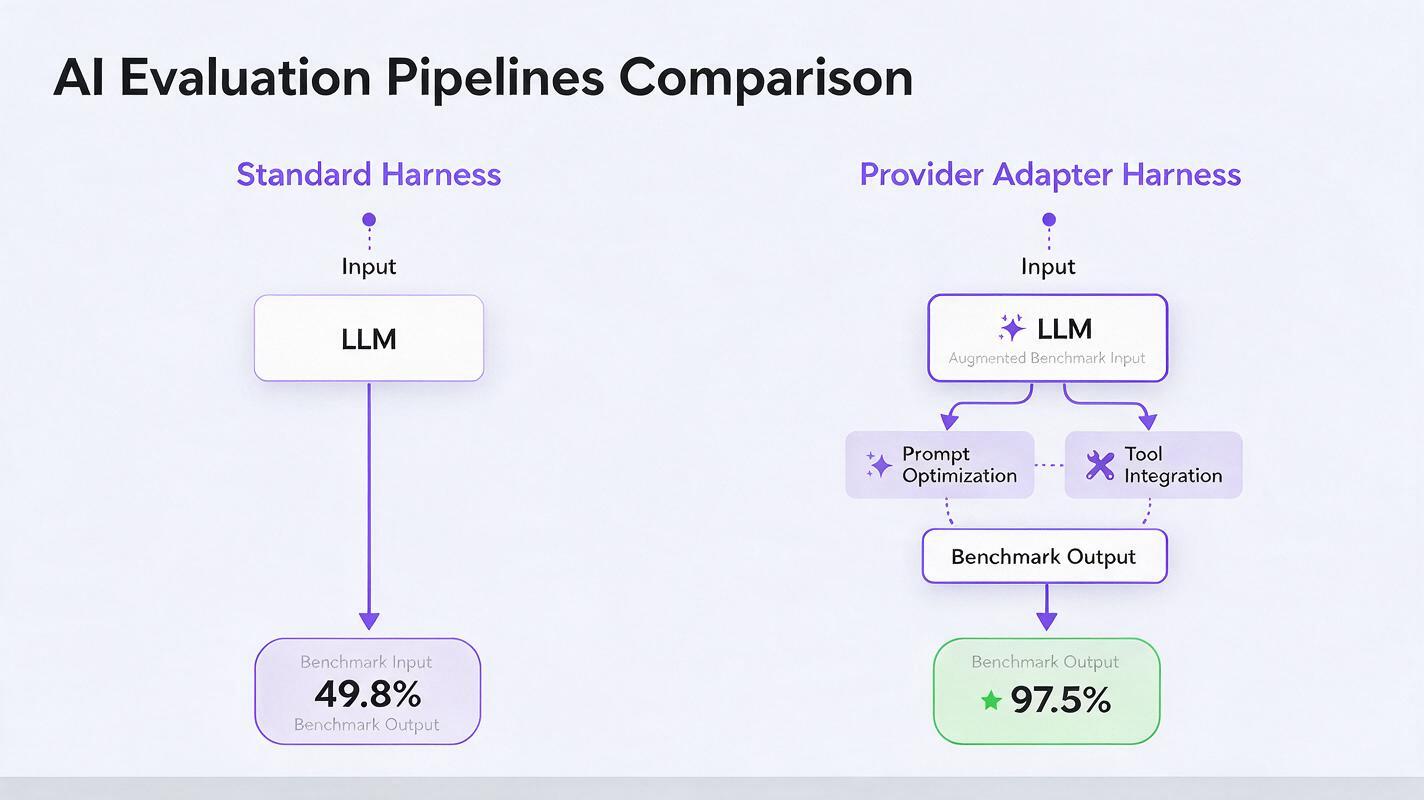
Those numbers drop dramatically without the adapter, however. On the standard ARC-AGI harness, Gemini 4 Argon scored just 49.8% on ARC-AGI-3 — less than half the score of the adapter-augmented run. The gap highlights what researchers call “system effects”: the principle that a model’s real-world performance depends as much on the tools, wrappers, and supporting infrastructure around it as it does on the model’s raw built-in capabilities.
Why the Harness Gap Changes AI Performance Benchmarks
The ARC-AGI benchmark series is designed to test abstract reasoning and problem-solving skills, often cited as a proxy for general AI capability. Standard benchmark runs use a uniform, minimal harness to ensure fair comparisons between models, but these controlled settings rarely reflect how people actually use AI in practice.
In real-world use, almost no one interacts with a raw, unmodified AI model. Users rely on prompt templates, tool integrations, custom code wrappers, and workflow pipelines to shape model output for specific tasks — all of which act like the Provider Adapter harness in the benchmark, amplifying (or in some cases limiting) a model’s effective performance. The 47.7 percentage point gap between Gemini 4 Argon’s standard and adapter-augmented scores shows just how large this impact can be.
This doesn’t mean the benchmark results are “inflated” or unfair. Instead, they highlight a shift in how we should evaluate AI capability: the most effective AI systems are combinations of models and supporting tools, not standalone models. A model that scores lower on a standard benchmark might outperform a higher-scoring competitor when paired with the right tools for a specific use case.
What This Means for AI Video and Image Creators
For creators working with text to video or image to video tools, the harness effect is already a daily reality, even if you don’t refer to it by that name. When you use a prompt assistant to refine your input, pair a language model with a visual generation model, or use a workflow tool that breaks a complex video project into sequential model calls, you’re building your own custom “harness” that amplifies the base model’s capabilities.
The Gemini 4 Argon benchmark results drive home a key point for creative professionals: choosing the right AI tool for your work isn’t just about picking the model with the highest base benchmark score. It’s about finding a platform that lets you combine models, tools, and workflows in a way that fits your specific creative process. A model that doesn’t top general reasoning charts might be the best choice for generating consistent character designs, or for editing video clips to a beat, when paired with the right supporting tools.
Workflow Resilience Through Flexible Model Access
Another critical takeaway for creators is the risk of relying on a single model or a single provider’s toolchain. If a provider changes their API, removes a feature, raises prices, or experiences service disruptions, your entire creative harness can break overnight. Multi-model platforms solve this problem by letting you swap out base models while keeping your workflow intact — just like switching out a model in a benchmark harness to see which one performs best for your specific task.
This flexibility is especially valuable for creators working on tight deadlines or with specific stylistic requirements. If one model struggles with a particular type of shot or visual style, you can test another without rebuilding your entire workflow from scratch.
How Multi-Model Platforms Support Creative Harness Building
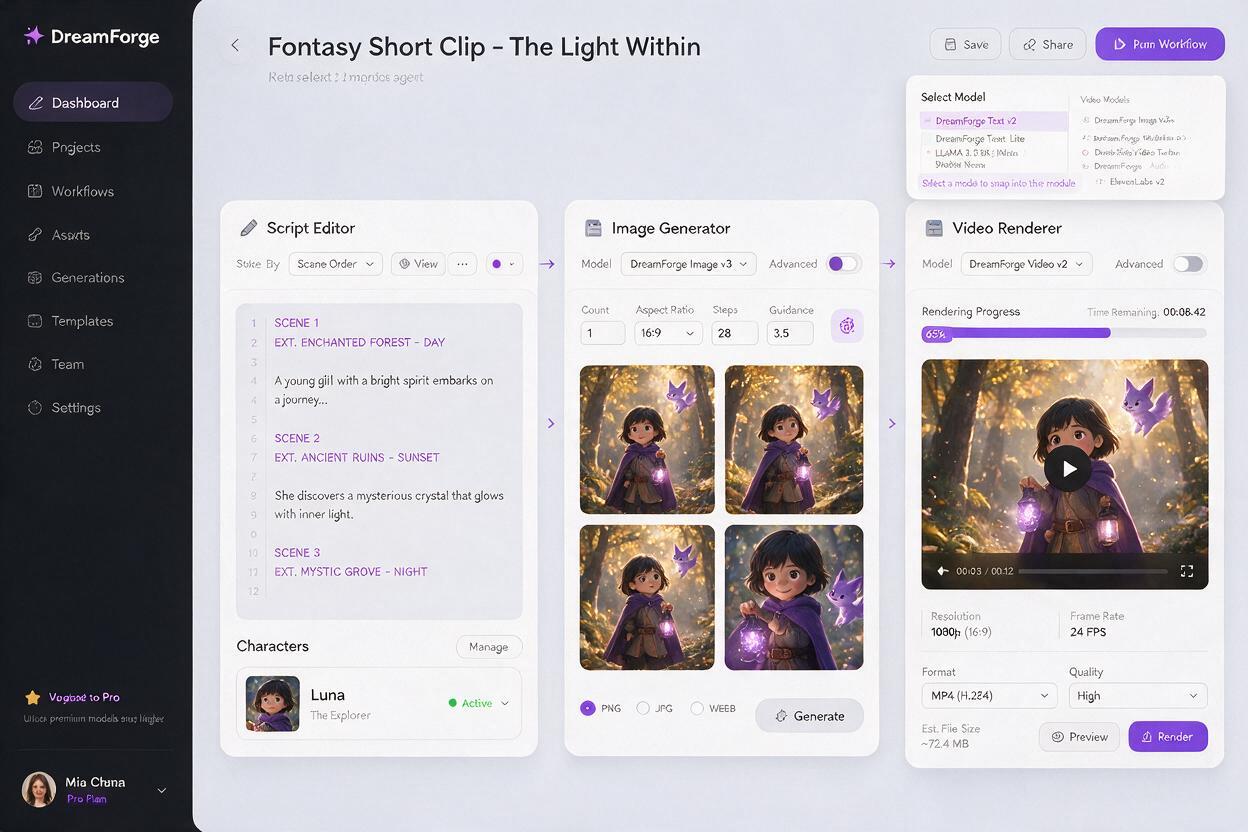
Platforms like MagicBoat are designed to let creators build custom creative harnesses without the need for complex coding or multiple separate accounts. You can mix and match language models for scriptwriting, visual models for concept art, and video generation tools for final output, all within a single integrated workspace.
This approach lets you prioritize what works best for your project, not just what a single provider offers. You might find that a mid-tier language model paired with a specialized visual model produces better results for your animated short than a single top-tier general model used for every step of the process.
If you want to test how different model combinations work for your creative projects, you can try these models for free on MagicBoat, with access to a full suite of visual and language tools in one place.
Key Takeaways
- Gemini 4 Argon scored 97.5% on ARC-AGI-3 with a Provider Adapter harness, making Google the second AI lab after OpenAI to cross the 95% threshold on the benchmark.
- The model scored just 49.8% on the standard ARC-AGI-3 harness, a 47.7 percentage point gap that highlights the massive impact of model-plus-tool system effects on real-world performance.
- For AI video and image creators, base benchmark scores are only part of the story — the tools and workflows you pair with a model often have a bigger impact on the quality of your final output.
- Multi-model platforms give creators the flexibility to build custom creative harnesses and switch between models as needed, reducing workflow risk and improving output quality.
Keywords
gemini 4, arc-agi benchmark, ai model evaluation, ai video model, text to video, image to video, ai workflow