Gemini 4 Argon Launches Globally for Pro, Ultra and Developers
Gemini 4 Argon launches globally for Pro and Ultra subscribers and developers, expanding access to Google’s frontier AI model.
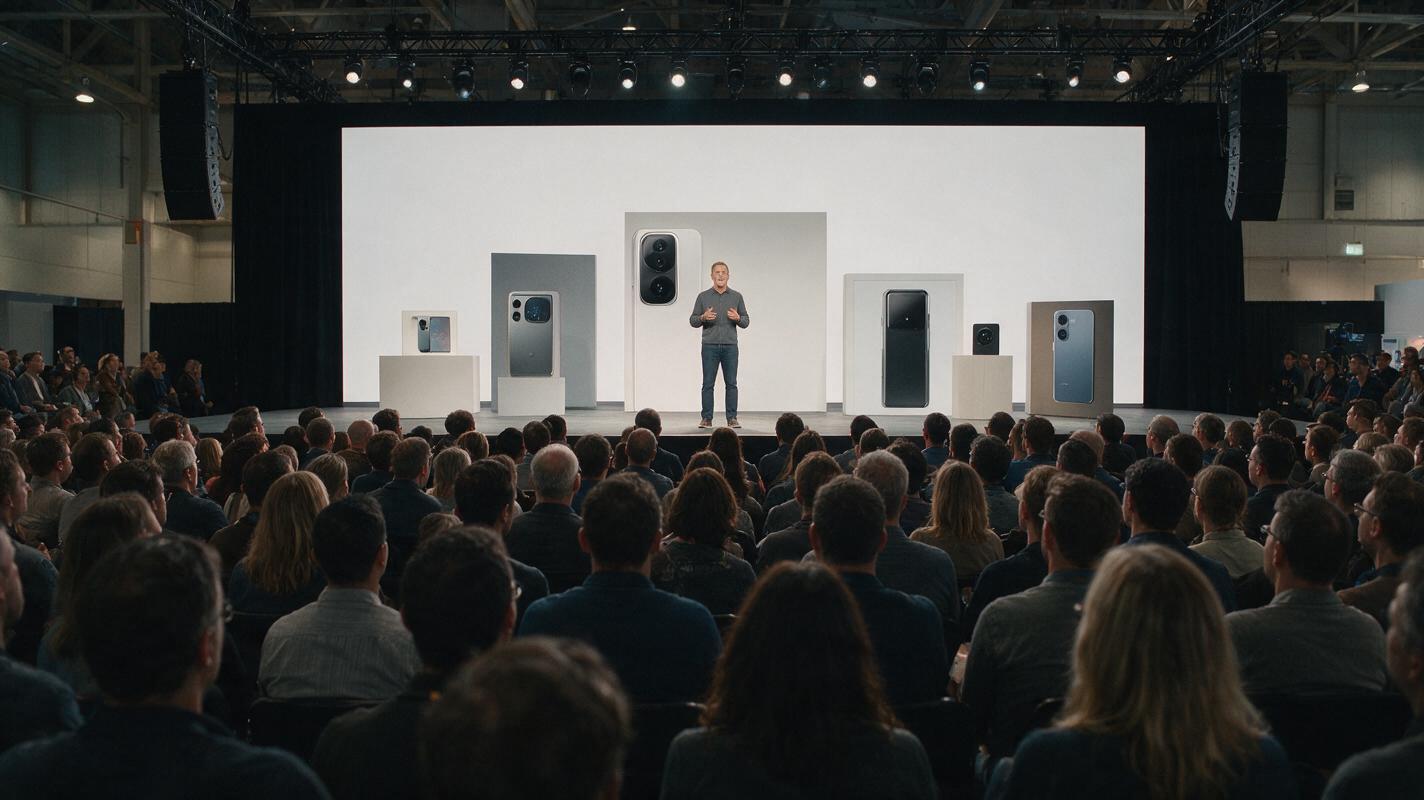
Table of contents
AI News
Gemini 4 Argon Launches Globally for Pro, Ultra and DevelopersGoogle’s Gemini 4 Argon has moved into a global launch spanning paid subscribers and the developer community, making access—not a benchmark headline—the central news.
Gemini 4 Argon Reaches a Global Audience
Gemini 4 Argon launched globally on October 14, 2026, according to the reported announcement. The rollout covers Google’s Pro and Ultra subscribers as well as developers, bringing the model to both subscription users and people building with AI.
The global scope is the defining detail. This is not merely a model preview or a limited hint about future availability: the report identifies an international launch and names the audiences receiving access. Pro and Ultra subscribers represent the user-facing side of the rollout, while developer availability extends Gemini 4 Argon into experimentation and application development.
Confirmed launch details:
- The model is named Gemini 4 Argon.
- The reported global launch occurred on October 14, 2026.
- Access includes Pro subscribers.
- Access includes Ultra subscribers.
- The launch also includes developers.
The initial report does not supply pricing, benchmark scores, context limits, usage quotas or detailed creative capabilities. Those details should not be inferred from the global-launch headline alone. The immediate story is broader availability across distinct user groups.
For content teams, that broader access creates another model option to evaluate. It also reinforces a practical reality of modern AI production: new models and access tiers can arrive quickly, so creative workflows benefit from remaining portable rather than depending entirely on one release.
Why the Pro, Ultra and Developer Rollout Matters
The audience named in the launch indicates that Gemini 4 Argon is relevant in more than one usage context. Subscribers can consider it as part of their direct AI toolset, while developers can assess whether it belongs in products, internal systems or automated workflows.
| Launch audience | What the announcement confirms | What remains unspecified |
|---|---|---|
| Pro subscribers | Included in the global Gemini 4 Argon launch | Limits, pricing details and included capabilities |
| Ultra subscribers | Included in the global Gemini 4 Argon launch | Differences from Pro access |
| Developers | Developer access is part of the rollout | API terms, rates, quotas and integration requirements |
This distinction matters because subscriber access and developer access answer different needs. A direct user may care about the quality and consistency of individual outputs. A development team may also need to consider repeatability, integration effort, operational reliability and how easily a workflow can adapt when model access changes.
A global model launch expands the field of available AI tools, but availability alone does not determine which model is best for a particular creative task.
Gemini 4 Argon therefore enters a market where evaluation should be based on the actual production brief. A model may be considered for ideation, analysis or drafting, while specialized visual systems may be assessed separately for image and video production. The launch adds choice; it does not eliminate the need for direct comparison.
What the Launch Means for AI Content Production
Creative production rarely depends on a single output. A campaign can involve concept development, scripts, visual references, still images, motion, narration and final review. As another globally available model enters the mix, teams have an additional reason to separate their reusable assets from the model used to process them.
Prompts, scripts, scene descriptions, approved reference images and brand notes can be stored in portable formats. That makes it easier to compare results without rebuilding an entire project whenever a new model launches or an access tier changes.
Direct testing remains more useful than assumptions
The Gemini 4 Argon announcement confirms who can access the model, but it does not establish how the model will perform for every creative brief. A useful evaluation keeps the input stable and examines whether the output meets the project’s real requirements.
- Instruction handling: Does the output retain all essential constraints from the brief?
- Consistency: Can the system produce usable results across repeated attempts?
- Editability: Can the result move cleanly into the next production phase?
- Reliability: Is access dependable enough for deadlines and recurring work?
- Workflow fit: Does the model complement the other tools required by the project?
These questions apply across AI news cycles. A launch can be significant without automatically becoming the best fit for every output type. Teams working with text to video, for example, should evaluate the complete visual result rather than assuming a general model announcement answers every production requirement.
Multi-Model Access Reduces Launch-Day Friction
Gemini 4 Argon’s global release highlights the accelerating pace of model availability. That pace can benefit creative teams, but only when new options can be assessed without destabilizing work already in progress.
A one-account, multi-model environment such as MagicBoat helps place model choice inside a broader creative workflow. Rather than treating every AI release as a reason to reconstruct a production pipeline, teams can focus on the required result and use suitable capabilities for each asset.
That approach is especially valuable when a project crosses media formats. A concept can begin as a written brief, move into an ai image generator for visual development and continue into video production. The underlying creative direction remains portable even when the model or capability changes.
Model availability is part of production planning
Quality remains important, but it is not the only selection factor. Access level, reliability and continuity also matter when work must be delivered on schedule. The inclusion of Pro, Ultra and developer audiences in the Gemini 4 Argon launch makes access central to the story.
Creative teams can respond by keeping approved materials organized and maintaining alternatives for important tasks. A flexible workflow does not reject new models; it makes them easier to test responsibly while protecting ongoing production from sudden changes in availability.
Key Takeaways From the Gemini 4 Argon Launch
- Gemini 4 Argon reportedly launched globally on October 14, 2026.
- The rollout includes Pro subscribers, Ultra subscribers and developers.
- The report does not specify pricing, limits, benchmarks or detailed creative features.
- Broader model access gives teams another option to evaluate against real production briefs.
- Portable prompts, scripts and visual references make model comparison more efficient.
- Multi-model workflows can reduce dependence on the availability of any single system.
Explore a Flexible AI Creation Workflow
New global launches make model choice more dynamic. Keep your creative assets portable, compare suitable capabilities and try these models for free with MagicBoat.
Keywords: Gemini 4 Argon, Gemini global launch, Google AI, AI news, AI tools, AI roundup, multi-model platform