Gemini 4 Argon Scores 97.5% on ARC-AGI-3
Gemini 4 Argon reportedly scored 97.5% on ARC-AGI-3. The result warrants closer examination, but unspecified testing conditions and methodology mean creative teams should still evaluate models using real production tasks.
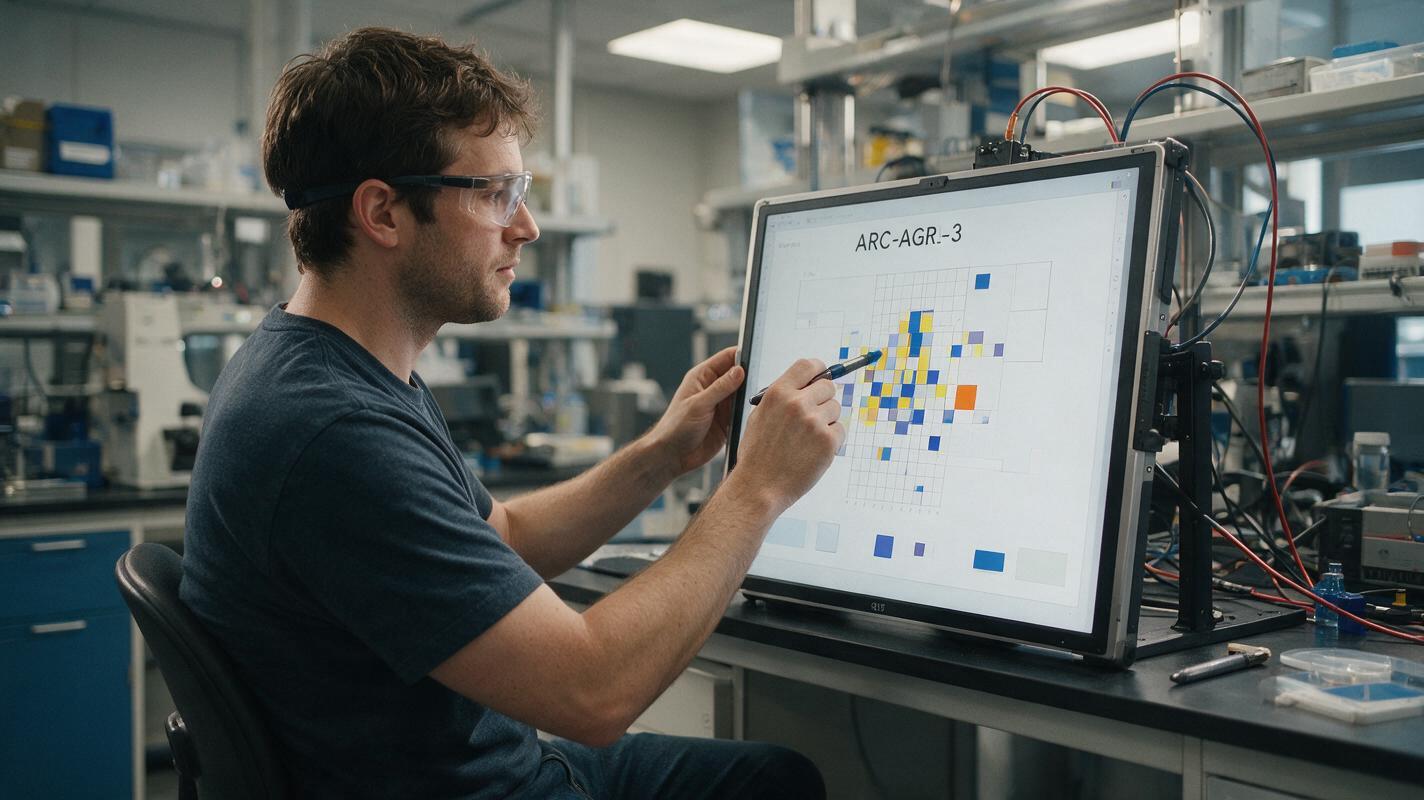
Table of contents
AI News Analysis
Gemini 4 Argon Scores 97.5% on ARC-AGI-3The reported ARC-AGI-3 result puts a striking number beside Gemini 4 Argon, while leaving important evaluation and production questions open.
The Gemini 4 Argon Benchmark News
Gemini 4 Argon reportedly achieved a score of 97.5% on ARC-AGI-3, according to an October 19, 2026 AI news entry. The report identifies the model, the benchmark and the headline result, making the score the central confirmed detail of the announcement.
The available report does not specify the evaluation configuration, scoring methodology, number of attempts or conditions under which the result was obtained. It also does not provide a comparison table showing how other models performed on the same benchmark under equivalent conditions. Those omissions do not erase the reported figure, but they limit how confidently readers can translate it into a broader ranking of AI systems.
For creative teams, the immediate significance is less about treating one benchmark as a universal verdict and more about recognizing the rapid pace of model development. A strong reasoning result can justify closer testing, but practical content production still depends on output quality, consistency, availability and suitability for the exact medium being produced.
Confirmed headline: Gemini 4 Argon reportedly scored 97.5% on ARC-AGI-3.
Not specified: evaluation conditions, comparative scores, pricing, benchmark methodology and the direct relationship between this result and creative media performance.
What the 97.5% Result Does—and Does Not—Show
The ARC-AGI-3 score is a notable data point because it gives evaluators a concrete figure to investigate. It can help direct attention toward Gemini 4 Argon and encourage independent examination of the model’s reasoning behavior.
However, a benchmark score is not automatically a measurement of every capability that matters in an AI workflow. The reported result alone does not establish how well the model writes a screenplay, maintains character continuity, interprets a visual brief or supports a complete video project. None of those production qualities is quantified in the headline.
| Question | What the report establishes | What remains open |
|---|---|---|
| Which model was evaluated? | Gemini 4 Argon | The exact evaluation configuration is not stated |
| Which benchmark was cited? | ARC-AGI-3 | The detailed testing methodology is not provided |
| What score was reported? | 97.5% | Equivalent comparative results are not included |
| What does it mean for media production? | The result supports further evaluation | Creative quality must still be tested in real projects |
A high benchmark score is a reason to investigate a model, not a substitute for evaluating the outputs an audience will actually see.
Why Creative Production Needs Broader Evaluation
Creative work combines several distinct demands. A model may need to understand a brief, preserve facts, organize a narrative and revise material without losing the original intent. Visual production adds composition, motion and continuity requirements that cannot be inferred from the reported ARC-AGI-3 percentage alone.
That distinction matters when selecting AI tools. The most useful model for research or structural reasoning may not be the preferred option for every visual or narrative task. Teams therefore benefit from judging models against their actual deliverables rather than assuming that a single score predicts the quality of every output category.
Production criteria beyond a headline benchmark
- Brief adherence: whether the output follows the requested subject, format and constraints.
- Consistency: whether repeated generations remain aligned with the same project direction.
- Revision quality: whether targeted changes preserve the parts that already work.
- Visual continuity: whether scenes, subjects and motion remain coherent across generated assets.
- Operational reliability: whether the chosen capability remains accessible when a deadline approaches.
For teams working with an ai video generator, these production criteria are often more actionable than an isolated reasoning score. The same applies to image to video projects, where movement, framing and continuity directly shape the final result.
The Multi-Model Implication
The Gemini 4 Argon report arrives in an AI market where new models, benchmark claims and availability changes appear frequently. That pace makes model choice increasingly dynamic. Teams may want to examine a newly reported system without rebuilding an entire production process around one announcement.
A multi-model environment offers a practical response. It allows creative teams to compare outputs while keeping the underlying project concept, script and visual direction portable. This is especially valuable when a benchmark leader is strong in one category but another model produces a more suitable result for a specific scene or format.
MagicBoat brings AI creation capabilities into one account so users can move from an idea toward visual production without treating every model announcement as a forced platform migration. The value is not a claim that one tool or score wins every assignment. It is the ability to keep experimenting as the AI landscape changes.
A more durable way to read AI news
- Record the exact claim: Gemini 4 Argon, ARC-AGI-3 and 97.5%.
- Separate confirmed information from details that were not supplied.
- Evaluate the model against a representative creative brief.
- Compare visible output quality rather than relying on reputation alone.
- Keep scripts, prompts and source assets portable across models.
What to Watch After the ARC-AGI-3 Headline
The most useful follow-up information would clarify how the 97.5% result was produced and how it compares with other systems evaluated under the same conditions. Reproducibility, methodology and comparable results would provide more context than the headline percentage alone.
Creative users will also need direct evidence from realistic assignments. A reasoning benchmark can attract attention, but output evaluation remains essential for scripts, storyboards, generated images and video sequences. This is where an AI roundup becomes actionable: industry news identifies what deserves testing, while project work determines what deserves continued use.
The broader signal is clear even with limited details. AI models are advancing quickly, and benchmark reports are becoming part of everyday selection decisions. Flexible workflows are better positioned to absorb that pace than pipelines built around a single provider or a single score.
Key Takeaways
- Gemini 4 Argon reportedly scored 97.5% on ARC-AGI-3 on October 19, 2026.
- The headline does not specify evaluation conditions, comparative results or methodology.
- The score supports further investigation but does not establish performance across every creative task.
- Real project testing should consider adherence, consistency, revision quality and operational reliability.
- A multi-model workflow can make new AI news easier to evaluate without disrupting production.
Explore AI Creation in One Place
Benchmark news can point toward promising technology, but the most useful comparison is the one made with your own brief and desired output. Visit MagicBoat to try these models for free and explore a flexible environment for AI-assisted visual storytelling.
Keywords: Gemini 4 Argon, ARC-AGI-3, AI news, AI tools, AI roundup, AI video generator, image to video