Gemini 4 & Muse Wonder End OpenAI-Anthropic Absolute Frontier Lead: Analysis
An October 2026 Charmloop analysis finds Google and Meta’s rapid frontier model releases have ended OpenAI and Anthropic’s long-held absolute lead in top-tier AI performance. The report identifies pricing, model openness, and ecosystem integration as the new key competitive levers replacing raw benchmark scores. For AI video and image creators, this shift brings more choice, lower costs, and greater workflow flexibility.
Table of contents
What the New Frontier AI Analysis Finds
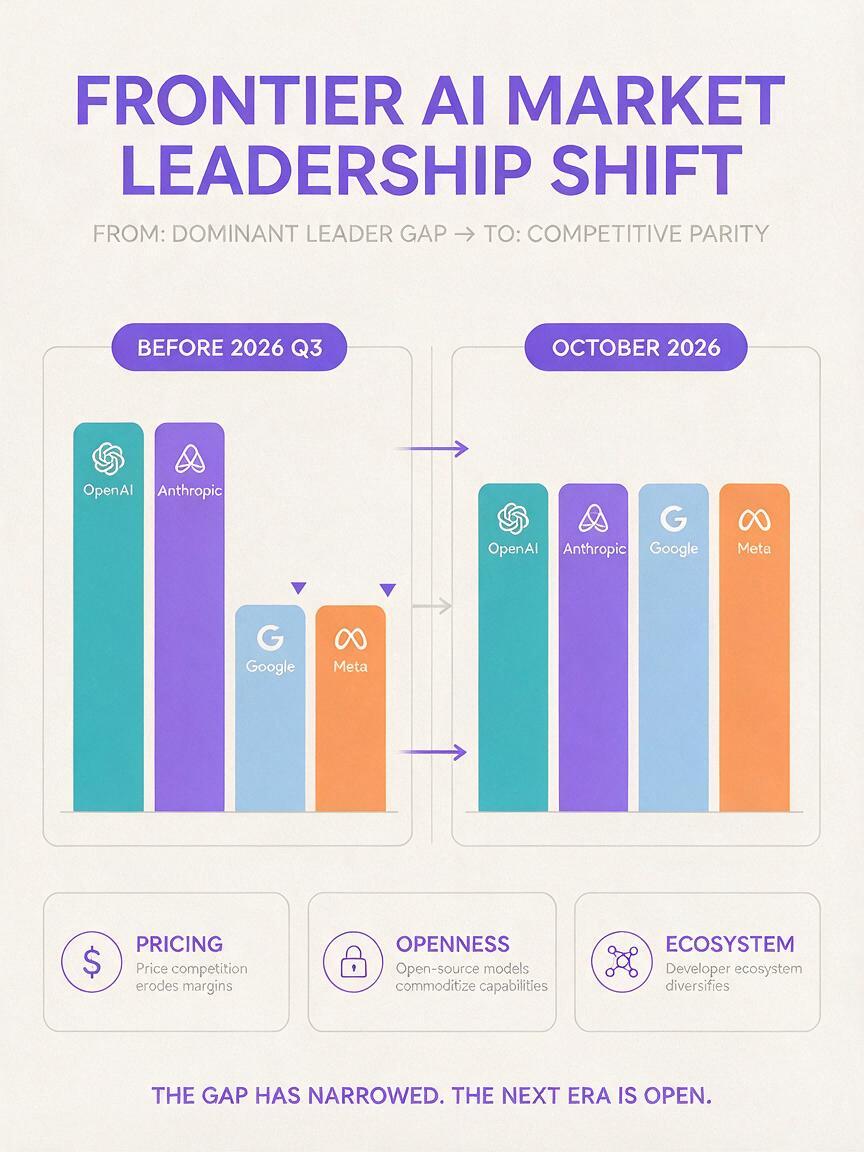
On October 16, 2026, industry analysis firm Charmloop released a report marking a major shift in the global AI landscape: Google and Meta’s rapid rollout of frontier-class models have ended OpenAI and Anthropic’s long-held absolute lead in top-tier AI performance. For the first time since the launch of GPT-4, no single pair of labs holds an unchallenged advantage in raw benchmark capability, according to the analysis.
The report points to two recent releases as the primary catalysts for the shift: Google’s Gemini 4 Argon, which launched on September 30 and rolled out globally on October 14, and Meta’s Muse Wonder, which debuted on October 12 with claims of matching or exceeding some benchmarks from OpenAI’s GPT-6 Astra and Anthropic’s Claude Opus 5.5. These launches follow a year of steady gains from Google and Meta, narrowing what was once a wide performance gap.
“For the first time since the generative AI boom began, OpenAI and Anthropic no longer hold an absolute performance lead at the frontier. The next phase of competition won’t be won on benchmark scores alone—it will be decided by pricing, model openness, and ecosystem integration.” — Charmloop Analysis, October 2026
While OpenAI’s GPT-6 family and Anthropic’s Claude line remain strong performers, the analysis argues that the era of a clear “top two” is over, and creators and enterprises now have multiple viable options for frontier-class AI work.
Why the Shift Away from Benchmark Dominance Matters
For years, raw benchmark performance was the primary metric by which AI models were ranked and chosen. Labs invested billions in pushing model sizes and training datasets higher, with each new release touting better scores on reasoning, coding, and multimodal tests. That dynamic created a clear hierarchy, with OpenAI and Anthropic consistently at the top.
Now that multiple providers offer frontier-class performance, the competitive landscape is shifting to factors that directly impact day-to-day users—especially creators who rely on AI for video, image, and content production. The Charmloop report identifies three key levers that will define the next phase of AI competition:
Pricing and Cost Efficiency
As performance gaps narrow, price becomes a far more important differentiator. Already, the past six months have seen significant price drops across top models: GPT-6 Sol and Luna launched at roughly 50% below GPT-5.6 promotional pricing, Claude Opus 5.5 costs around 40% less than its predecessor, and open-weight models offer even lower costs for teams that can self-host. For creators running multiple iterations of text to video prompts or generating dozens of concept images, even small per-token price cuts can add up to substantial savings.
Model Openness and Customization
Open-weight models—once seen as trailing behind closed frontier systems—are now delivering near-frontier performance, giving creators the ability to fine-tune models for specific styles, deploy them locally for privacy, or modify their behavior for specialized workflows. Meta’s Muse Spark Open, an 81.6B-parameter open-weight multimodal model, and OpenAI’s recent GPT-OSS releases are prime examples of this trend, offering creators far more control than closed, API-only alternatives.
Ecosystem Integration
How well a model works with the tools creators already use is becoming as important as the model itself. Integrations with video editing software, design tools, project management platforms, and multi-model creation hubs can drastically reduce workflow friction. Labs that build or partner with robust ecosystems will have a significant advantage, even if their raw benchmark scores are slightly lower than competitors.

What This Means for AI Video and Image Creators
For creators working with AI video, image generation, and multi-step content pipelines, this shift is immediately tangible. Instead of being locked into a single provider’s ecosystem for every task, you can pick the best model for each stage of your workflow—whether that’s drafting a tight script with a high-performance language model, generating consistent concept art with an ai image generator, or animating static assets into dynamic clips.
This expanded choice also reduces workflow risk. If a provider raises prices unexpectedly, changes its terms of service, or experiences service outages, creators can switch to a comparable alternative without sacrificing output quality. For independent creators and small studios operating on tight budgets and timelines, that flexibility is invaluable.
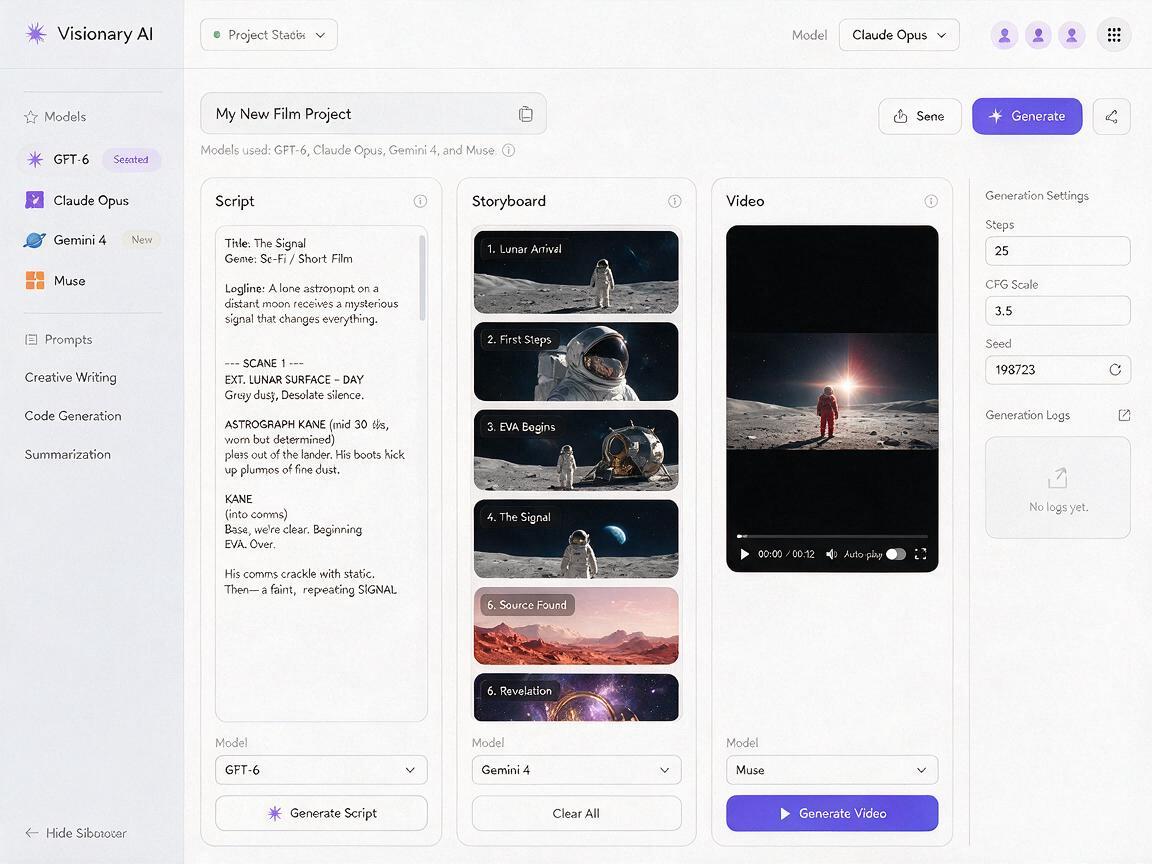
Multi-model platforms like MagicBoat streamline this new workflow by bringing top frontier and specialized models together in a single interface, eliminating the need to manage multiple subscriptions, API keys, or billing accounts. You can try these models for free to test which combination works best for your creative projects, from short social clips to full storyboarded films.
Competition is also driving improvements in free ai tools, as providers expand free tiers to attract users. Many frontier models now offer free or low-cost access tiers that are powerful enough for hobbyist creators or early-stage project prototyping, lowering the barrier to entry for AI-powered content creation.
Adapting Creative Workflows for a Multi-Frontier AI Market
With multiple frontier-class models available, creators can build more flexible, efficient, and resilient workflows by following a few core practices:
- Diversify your model toolkit: Test multiple models for each task in your workflow, rather than relying on a single provider for everything. Different models excel at different types of creative work—for example, one may produce more photorealistic images while another generates more natural-sounding voiceover scripts.
- Prioritize task-specific performance: Instead of chasing overall benchmark scores, evaluate models based on how well they perform the exact tasks you need. A model that ranks slightly lower on general reasoning tests may still be the best choice for image to video conversion or style-specific art generation.
- Use unified platforms to reduce friction: Working with a single platform that integrates multiple models cuts down on administrative work and makes it easier to switch between tools mid-project. Look for platforms that support both top frontier models and specialized creative tools.
- Stay informed about new releases: The AI landscape is evolving quickly, with new model releases and price drops happening every month. Setting aside a small amount of time each month to test new tools can help you find better, cheaper ways to produce your work.
To help contextualize the current landscape, here’s a quick comparison of the four leading frontier AI models referenced in the Charmloop analysis:
| Model | Provider | Key Details |
|---|---|---|
| GPT-6 Family | OpenAI | Sol & Luna updates opened to all ChatGPT users October 8; GPT-6.1 Sol offers professional/coding performance at roughly half the price of GPT-6 Astra; 1,050,000 token max context |
| Claude Opus 5.5 | Anthropic | Released September 22; ~40% lower cost than Claude Opus 5; up to 2.5x faster in fast mode |
| Gemini 4 Argon | Launched September 30, global rollout October 14; up to 1M output tokens; $2 per million input tokens; top score on Zapier AutomationBench | |
| Muse Wonder | Meta | Launched October 12; $20/$100 subscription tiers; claims some benchmarks exceed Claude Opus 5.5 and GPT-6 Astra |
Key Takeaways
- Google and Meta’s recent frontier model releases have ended OpenAI and Anthropic’s long-held absolute lead in top-tier AI performance, according to an October 2026 Charmloop analysis.
- Competitive focus is shifting away from raw benchmark scores and toward three key levers: pricing, model openness, and ecosystem integration.
- AI video and image creators benefit from this shift through more choice, lower costs, and greater workflow flexibility, with more free ai tools available than ever before.
- Multi-model creation platforms like MagicBoat help creators navigate the expanding AI landscape by providing access to top models in a single, unified interface.
Keywords
gemini 4, gpt-6, claude opus, ai video model, text to video, free ai tools, frontier ai