Gemini 4 Neon: Pricing, Benchmarks, and Creator Use Cases | MagicBoat
Google launched Gemini 4 Neon on November 18, 2026, a mid-tier coding and agent model positioned between Gemini 4 Carbon and Hydrogen with a 1 million-token context window and vendor-reported leading performance on coding agent benchmarks. For AI video and image creators, the model offers a cost-effective option for automating workflow tasks, generating creative prompts, and streamlining content production pipelines.

Table of contents
What Is Gemini 4 Neon?
Google officially launched Gemini 4 Neon on November 18, 2026, expanding its Gemini 4 family of large language models with a new mid-tier option positioned between the high-end Gemini 4 Carbon and the everyday Gemini 4 Hydrogen. The launch adds another granular tier to Google’s model lineup, giving users a more precise balance of performance and cost for coding and agentic workloads. For AI video and image creators, the model’s combination of a large context window and mid-range pricing opens up new opportunities to automate repetitive tasks and streamline creative workflows without paying top-tier model prices.
The rollout comes amid a broader trend of AI providers expanding their model portfolios to cover more price-performance points, as competition intensifies between Google, OpenAI, and Anthropic to capture workloads across coding, creative, and enterprise use cases.
Key Specs and Pricing
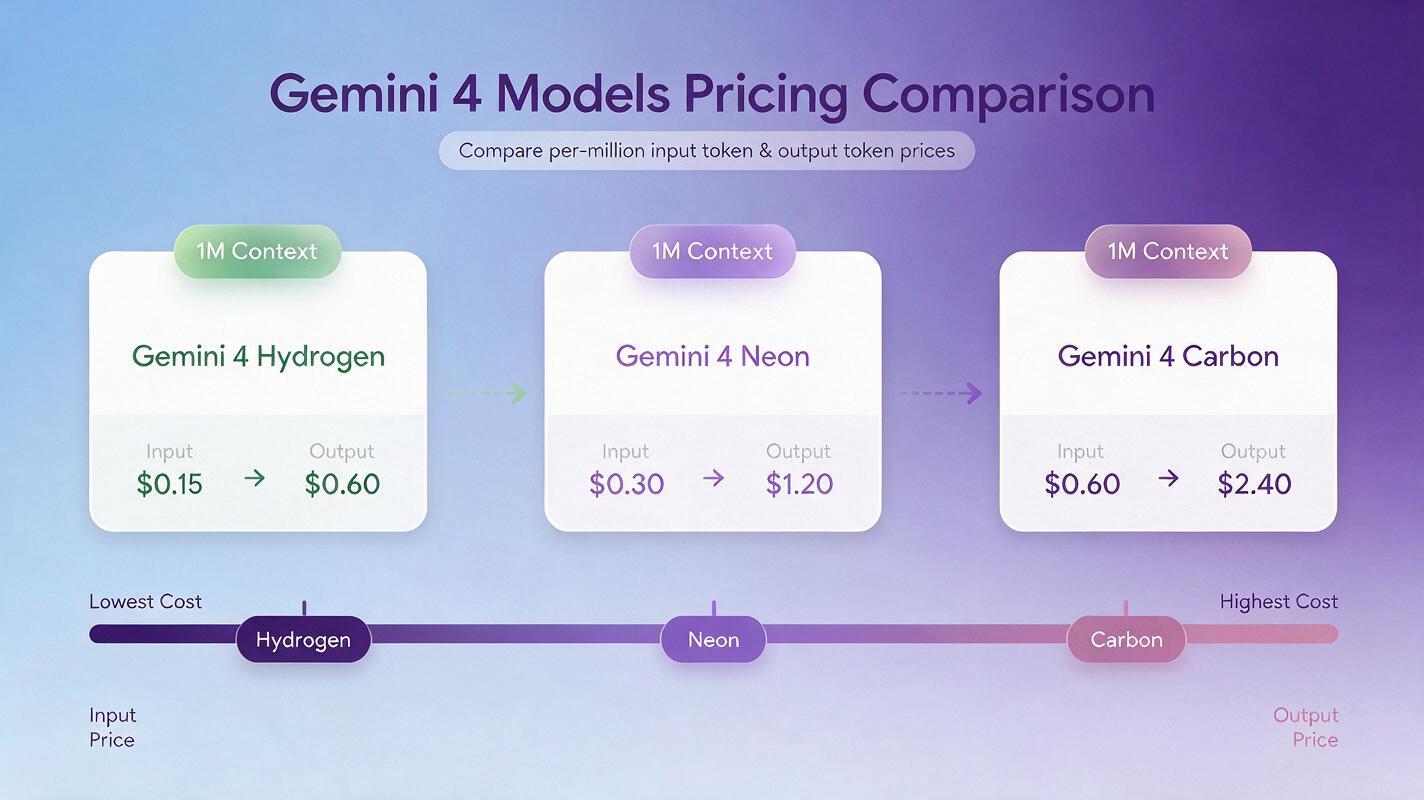
Gemini 4 Neon comes with a 1 million-token context window, matching the context size of other models in the Gemini 4 family like Hydrogen. This large context window lets users process long documents, full project briefs, or extensive reference materials in a single prompt, without needing to split content across multiple requests or rely on external memory tools.
Pricing for Gemini 4 Neon is set at $3 per million input tokens and $15 per million output tokens, with cached input tokens priced at $0.15 per million. This places it firmly between Gemini 4 Carbon — which had promo pricing of $2 input / $10 output per million tokens before rising to $4/$20 on December 1 — and Gemini 4 Hydrogen, which is priced at $1.50 input / $7.50 output per million tokens.
The low cached input pricing makes repeated requests with large base context (like brand style guides, project templates, or past content libraries) significantly cheaper, a direct benefit for creators working on consistent content series or managing multiple client accounts with fixed brand guidelines.
Benchmark Performance
Google claims Gemini 4 Neon ranks No.1 on the Artificial Analysis Coding Agent Index with a score of 58.6, and achieves 65.2% on Terminal-Bench 4.1. The company also states that the model delivers 32% lower cost per task than Gemini 4 Carbon at default high quality settings, making it a more efficient choice for many standard coding and agent workflows.
All of these performance and cost claims are vendor-reported, not independently verified. As with any model benchmark, real-world performance can vary widely depending on the specific task, prompt quality, and workflow setup. Creators testing the model should run their own trials with their actual use cases to get an accurate picture of performance and cost efficiency for their unique needs.
What This Means for AI Video and Image Creators
While Gemini 4 Neon is positioned primarily as a coding and agent model, its capabilities translate directly to tangible benefits for AI video and image creators looking to work faster and more efficiently. The model’s strong agent performance means it can handle multi-step, tool-connected tasks that previously required more expensive frontier models, lowering the barrier to automated workflows for creators of all sizes.
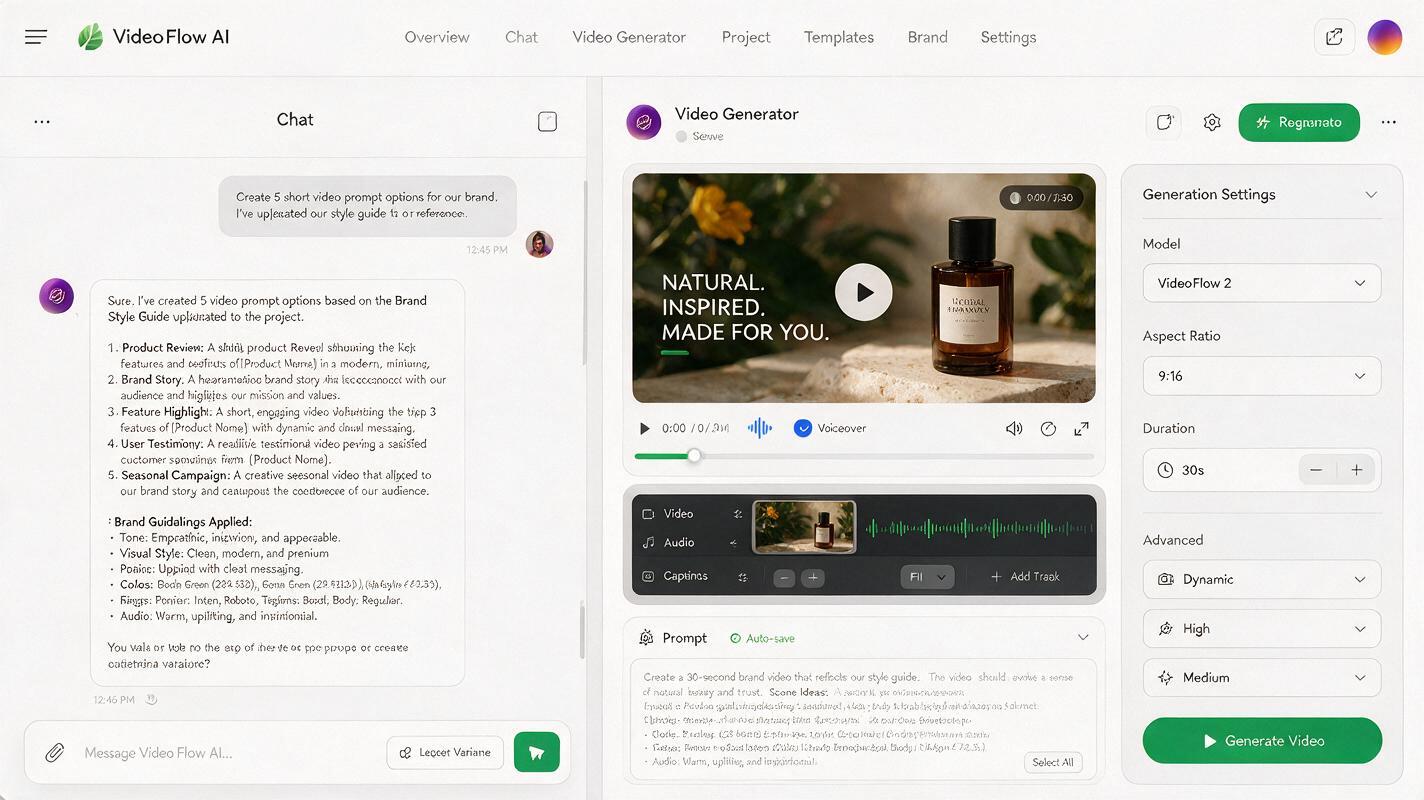
One of the most immediate use cases is generating and refining prompts for creative tools. With a 1 million-token context window, you can feed entire style guides, reference image descriptions, past successful prompts, and brand guidelines into Gemini 4 Neon, then ask it to generate consistent, on-brand prompts for an ai video generator or text to image projects. This is especially valuable for creators producing large volumes of content for brands or ongoing series, where consistency across assets is critical to maintaining audience recognition.
For creators working with video, the model can help automate pre-production and post-production tasks. It can draft full video scripts, voiceover copy, shot lists, and social media captions tailored to specific platforms, all while adhering to your brand voice and content guidelines stored in the context window. For more technical creators, Gemini 4 Neon’s coding capabilities can be used to write custom scripts for video editing software, automate batch processing of image assets, or build simple internal tools to manage your content library and metadata.
Agentic models like Gemini 4 Neon also shine at workflow automation. You can set up the model to handle repetitive administrative tasks like renaming files, generating SEO metadata, organizing asset folders, or even drafting content calendars based on your publishing schedule. When paired with specialized creative platforms like MagicBoat, you can create an end-to-end pipeline where Gemini 4 Neon generates prompts and manages workflows, and you use those prompts to produce final assets with tools like image to video generation, all in one connected flow.
As model pricing continues to drop across the industry, mid-tier options like Gemini 4 Neon make AI-powered workflow automation accessible to more creators, not just large studios with big budgets. Even solo creators can now afford to offload hours of repetitive work each week, freeing up time to focus on the creative parts of their job that have the biggest impact on output quality and audience engagement.
If you’re curious about how AI tools can streamline your creative workflow, you can try these models for free on MagicBoat, where you’ll find a full suite of video and image generation tools built for creators of all sizes.
Availability and Access
Google has not disclosed full availability details for Gemini 4 Neon in its initial launch announcement. The company typically rolls out new Gemini models across its ecosystem over time, including the Gemini API, Google AI Studio, and consumer and enterprise Gemini app tiers. Creators interested in testing the model should monitor Google’s official announcements for the latest information on access, rollout timelines, and any promotional pricing for early users.
Sources
Key Takeaways
- Gemini 4 Neon is Google’s new mid-tier Gemini 4 model, positioned between the higher-end Carbon and everyday Hydrogen models, with a 1 million-token context window.
- Pricing is set at $3 per million input tokens, $15 per million output tokens, and $0.15 per million cached input tokens, making it a cost-effective middle option for coding and agent tasks.
- Google claims the model ranks No.1 on the Artificial Analysis Coding Agent Index and delivers 32% lower cost per task than Carbon, but these figures are vendor-reported and not independently verified.
- For AI video and image creators, Gemini 4 Neon offers an affordable way to automate workflows, generate consistent creative prompts, and scale content production when paired with specialized creative tools.
- Full availability details have not been disclosed yet, but Google typically rolls out new models across its API, studio, and consumer app tiers over time.
Keywords
gemini 4, gemini 4 neon, ai video generator, text to video, image to video, ai image generator, coding agent