Gitea 28.2 Ships With Fixes for 9 Security Vulnerabilities
Gitea 28.2 shipped on October 18 with fixes for nine security vulnerabilities, including several remotely exploitable issues. The release highlights why teams connecting repositories to AI agents and content-production systems need secure infrastructure, controlled access and portable creative workflows.
Table of contents
Gitea 28.2 Addresses Nine Security Vulnerabilities
Gitea 28.2 shipped on October 18 with fixes for nine security vulnerabilities. Several of the corrected issues were identified as remotely exploitable, making the release especially relevant to organizations that expose development services to networks or connect repositories with other systems.
The central news is the security scope of the release: one Gitea update resolves nine vulnerabilities rather than delivering only routine maintenance changes. The presence of several remotely exploitable issues gives administrators a clear reason to treat the new version as a security release and review their existing deployments accordingly.
For content teams, the implications extend beyond conventional software development. Repositories can sit behind an ai workflow, storing scripts, configuration files, prompt libraries and production records used by an ai agent or ai assistant. Security problems in that layer can therefore affect the reliability of the broader creative process.
Gitea 28.2 is a reminder that creative AI reliability depends on the infrastructure surrounding the model, not only on the model itself.
Why Remotely Exploitable Issues Demand Attention
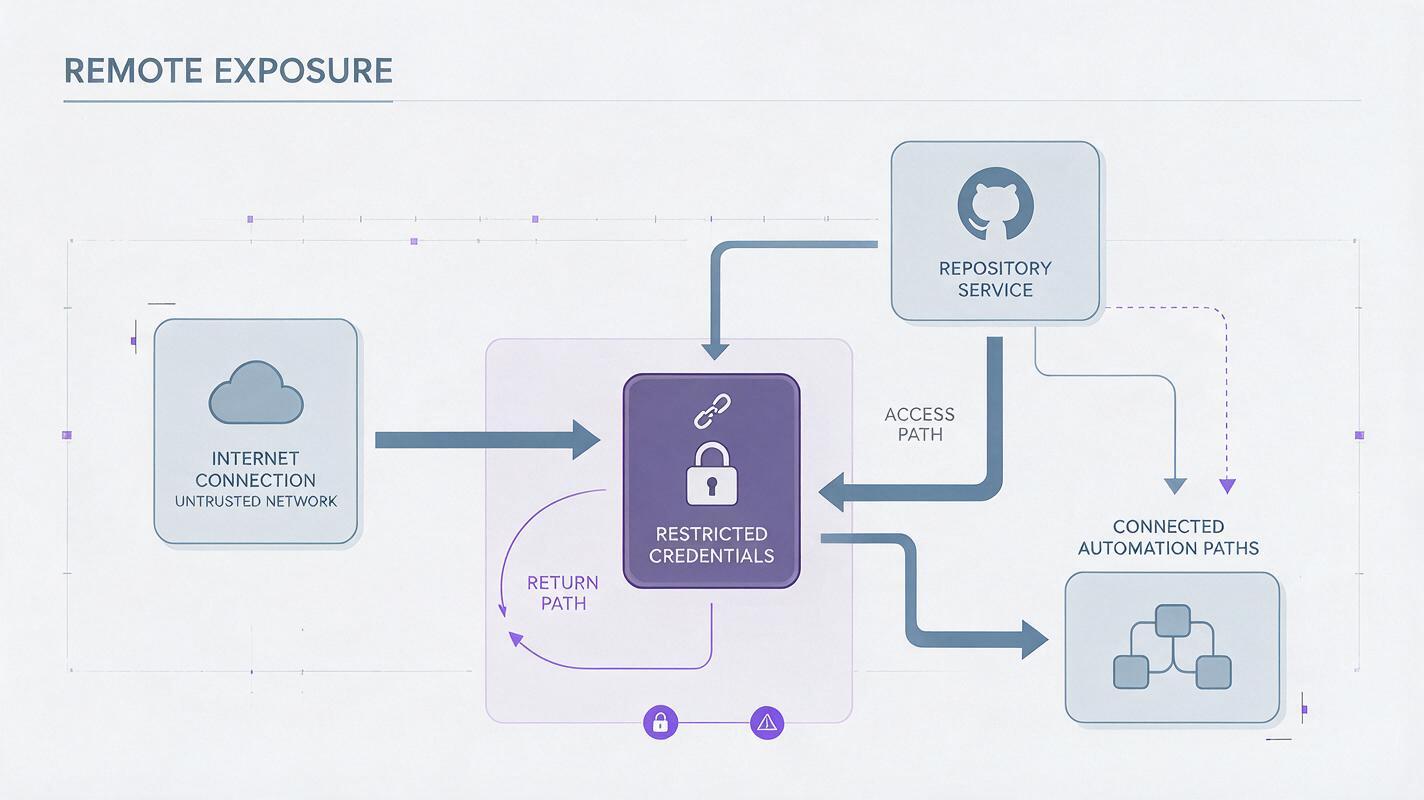
A remotely exploitable vulnerability can potentially be targeted through network access rather than requiring someone to interact physically with the affected machine. The source material does not assign identical behavior or severity to all nine issues, but it explicitly identifies several as remotely exploitable. That distinction makes exposure and access controls important parts of the response.
Teams should first establish whether Gitea is present in their environment and whether the affected deployment is reachable from public or internal networks. They should also identify what depends on it, including automated jobs, connected services and any ai automation that reads from or writes to repositories.
The release also illustrates why security updates should be interpreted in context. A repository service may contain more than source code. Depending on how a team works, it can hold:
- Prompt templates and reusable creative instructions
- Scripts that move text, images or video assets between tools
- Configuration files for an ai agent or ai assistant
- Editorial records, project notes and approval history
- Automation logic supporting an ai video workflow
These examples do not change what Gitea 28.2 fixes, but they show why repository security can become content-operations security when technical and creative systems converge.
Repository Security Is Part of AI Workflow Security
Modern AI production often involves multiple connected components. A model may generate a draft, an automation may retrieve reference material, a repository may preserve configuration, and a publishing system may deliver the result. Weakness in any connected component can undermine the integrity of the complete workflow.
This is especially important when an ai agent is permitted to take actions rather than simply return text. Connections between models, repositories and automation services should be narrowly defined. Human approval remains valuable around sensitive changes, while access should be limited to what each task actually requires.
Gitea 28.2 does not, by itself, define how every organization should structure those controls. Its nine fixes nevertheless provide a timely reason to inspect dependencies and verify whether automation has accumulated broader permissions than intended.
| Workflow area | Security question | Creative continuity concern |
|---|---|---|
| Repository access | Which people and connected services can reach it? | Unauthorized changes could disrupt shared production material. |
| Automation credentials | Are credentials restricted to necessary actions? | Overly broad access can expand the effect of a compromised connection. |
| Prompt and configuration files | Are important revisions recorded and reviewed? | Teams need a reliable reference when creative behavior changes. |
| Publishing connections | Does a human approve sensitive output or configuration changes? | Editorial control should remain clear even when production is automated. |
Protecting Creative Continuity During Security Updates
Security maintenance can affect active production, so teams benefit from knowing which creative processes depend on the service being updated. A concise dependency record can identify connected automations, responsible owners and the production material that must remain available.
Portable project context is equally useful. Prompts, scripts, visual references and approval notes should not exist only inside one automated connection. Keeping organized copies makes it easier to preserve work if a repository, integration or model becomes temporarily unavailable.
A practical review around the Gitea 28.2 release can include:
- Confirming the deployed Gitea version
- Reviewing network exposure and connected services
- Checking credentials used by automated processes
- Preserving current prompts, scripts and configuration records
- Testing essential production connections after maintenance
- Retaining human approval for sensitive changes and final publication
This approach treats security as part of operational quality. The goal is not merely to keep a service running, but to preserve trustworthy inputs, traceable changes and consistent output.
Where MagicBoat Fits Into a Resilient Production Setup
The Gitea 28.2 release concerns repository security, while MagicBoat addresses the creative production layer. Keeping those responsibilities distinct can make an AI setup easier to reason about: secure the systems that hold code and configuration, then use a focused platform for generating and refining content.
For example, a team can preserve an approved brief and use ai image generator capabilities to explore visual directions without embedding every creative activity inside repository automation. The same source material can then support ai video generation as the project moves from static concepts to motion.
This separation also reduces dependence on a single fragile connection. If maintenance affects one part of the technical environment, organized creative context remains available for continued work. A one-account, multi-model platform can support that continuity while teams retain human control over briefs, references and publication decisions.

What the Gitea 28.2 Release Signals
Gitea 28.2 is notable because it fixes nine security vulnerabilities, with several described as remotely exploitable. That combination places the release firmly in the category of updates that administrators and workflow owners should examine rather than ignore.
For AI content operations, the larger lesson is that model output is only one part of reliability. Repositories, credentials, integrations and approval practices all shape whether an ai workflow remains secure and dependable. Strong creative systems pair useful automation with maintained infrastructure and clear human authority.
Once the technical foundation is reviewed, teams can try these models for free and build a more flexible production workflow in MagicBoat.
Final Checklist
- Identify: Confirm whether Gitea is used and which version is deployed.
- Review: Examine network exposure, integrations and automation credentials.
- Preserve: Keep portable copies of prompts, scripts and approved creative context.
- Validate: Test critical production connections after maintenance.
- Control: Maintain human review for sensitive changes and publication.
- Diversify: Keep the creative layer flexible rather than tying every task to one integration.
Keywords
gitea 28.2, gitea security, security vulnerabilities, remotely exploitable issues, ai agent, ai workflow, ai automation