Gitea 28.2 Fixes 9 Security Vulnerabilities Including Remotely Exploitable Flaws
Gitea 28.2 has been released, addressing nine security vulnerabilities including multiple remotely exploitable flaws that could put self-hosted instances at risk. The update is critical for teams using Gitea for code collaboration, including those building AI agents and automated content workflows. For AI content creators, the patch highlights the security risks of managing disjointed self-hosted tools and the value of unified, managed AI platforms.

Table of contents
What the Gitea 28.2 Update Covers
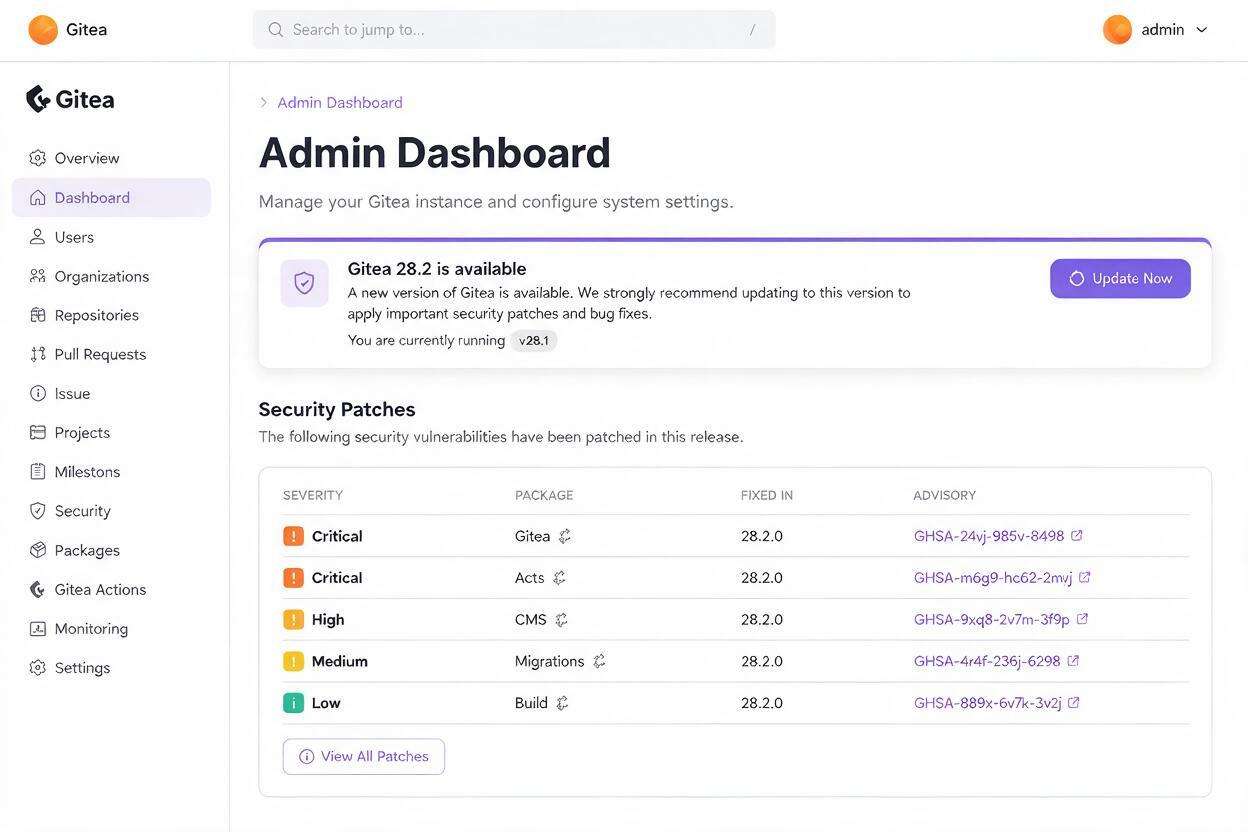
Gitea version 28.2 has been released, addressing nine security vulnerabilities across the self-hosted Git collaboration platform, including several remotely exploitable flaws. The update, reported on October 18, 2026, patches issues that could allow unauthorized access, data exfiltration, or code execution on vulnerable instances.
Gitea is a widely used open-source platform for code hosting, version control, CI/CD pipeline management, and team collaboration, adopted by both small teams and large organizations for on-premise or cloud-deployed development workflows. The remotely exploitable vulnerabilities are particularly concerning for teams running internet-facing Gitea instances, as attackers could potentially exploit them without prior local access to the server.
While full details of the individual flaws are being disclosed responsibly to allow patching, the Gitea team has categorized the fixes as critical for any organization running self-hosted instances, especially those with public access or sensitive code repositories.
Who Is Most at Risk From Unpatched Gitea Instances
The highest risk falls on teams running outdated Gitea versions with public internet access, particularly those storing proprietary code, sensitive project data, or access credentials for connected services. This includes a growing number of AI development teams and content creators who use self-hosted Gitea instances to manage ai video generator pipeline scripts, AI agent code, prompt libraries, and automated content production workflows.
For creators building custom ai automation tools, a breach of their code repository could expose proprietary prompt engineering techniques, custom model fine-tuning code, and content scheduling logic that forms the backbone of their production process. In some cases, compromised repositories could also give attackers access to API keys or service credentials linked to other tools in the creator's workflow, expanding the scope of a breach.
Small teams and independent creators are often disproportionately affected by such vulnerabilities, as they may lack dedicated security staff to monitor for patches and maintain self-hosted infrastructure regularly.
Implications for AI Content and Agent Workflows
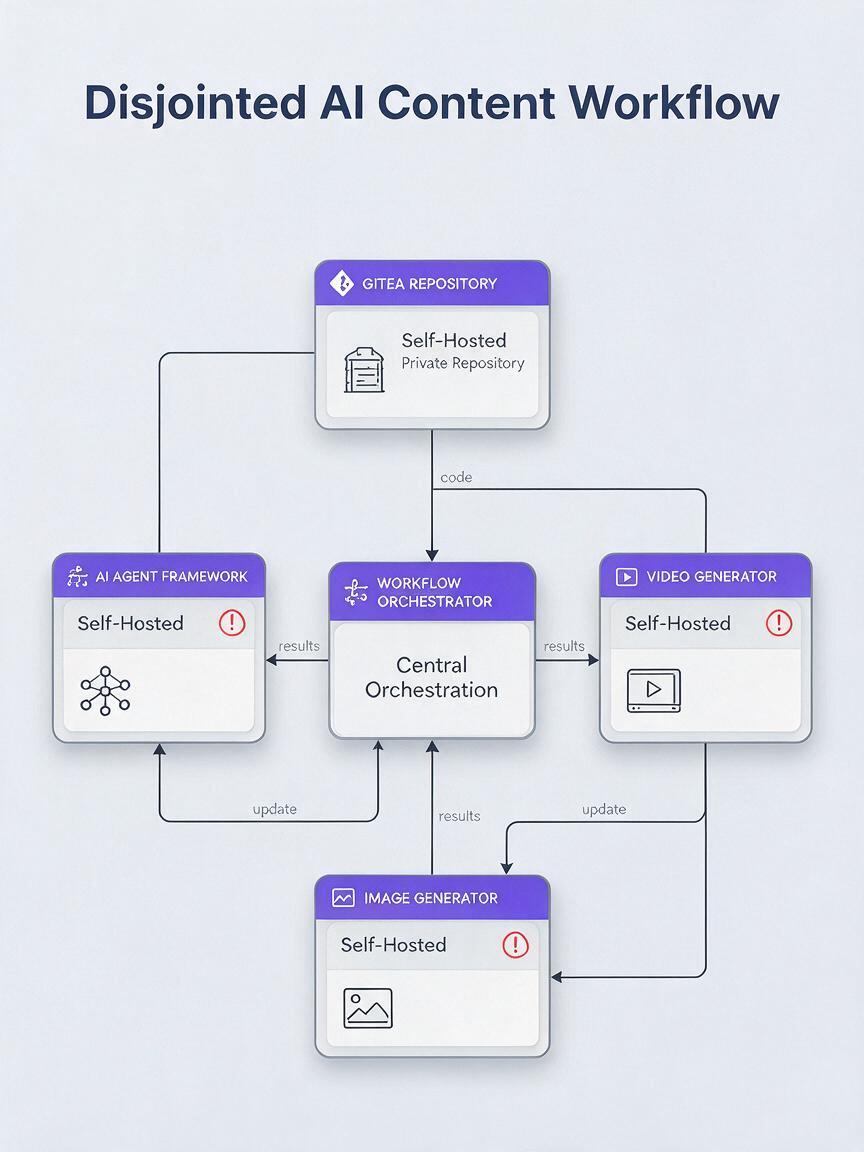
The Gitea 28.2 security update highlights an often-overlooked risk in modern AI content creation: the security of the underlying toolchain that powers ai workflow automation. Many creators assemble custom workflows using a mix of self-hosted code repositories, open-source agent frameworks, and third-party AI APIs, assuming that self-hosting provides greater security than managed platforms.
In practice, disjointed self-hosted toolchains create multiple attack surfaces, each requiring regular patching, access control management, and security monitoring. A single unpatched vulnerability in a core tool like a code repository can compromise an entire content production pipeline, from script writing to final asset export.
For teams building or deploying ai agent tools for content creation, the risk is even higher: a breached code repository could allow attackers to modify agent behavior, insert malicious logic into automation scripts, or steal training data used to fine-tune custom models.
How Managed AI Platforms Reduce Security Overhead
For creators focused on producing content rather than managing infrastructure security, unified managed AI platforms offer a way to reduce risk while maintaining access to powerful AI tools. Platforms like MagicBoat handle all underlying infrastructure maintenance, security patching, and access control, so creators don't have to monitor for vulnerabilities in self-hosted tools or spend hours applying patches across disjointed services.
MagicBoat integrates a full suite of AI content tools, from ai image generator capabilities to video production and script writing tools, all in a single secure environment. This eliminates the need to manage multiple self-hosted services or share sensitive credentials across third-party tools, reducing the overall attack surface for content workflows.
Creators can build and iterate on content projects without worrying about server security, patch management, or vulnerability disclosures for their toolchain, freeing up time to focus on creative work instead of infrastructure upkeep.
Key Takeaways
- Update all self-hosted Gitea instances to version 28.2 immediately to patch nine security vulnerabilities, including several remotely exploitable flaws.
- Restrict public access to Gitea instances where possible, and enforce strong authentication measures like multi-factor authentication for all user accounts.
- Audit your AI content workflow toolchain regularly for unpatched vulnerabilities, especially if you rely on multiple self-hosted open-source tools.
- Consider using a unified managed AI platform to reduce security overhead and minimize attack surfaces for content production.
- try these models for free to explore a secure, integrated AI content workflow platform.
Keywords
gitea 28.2, security vulnerabilities, ai workflow, ai agent, code repository security, ai automation, remotely exploitable flaws