GitHub Copilot Retires 6 Models, Switches to Newer GPT, Gemini, Grok Versions
GitHub Copilot retired six underlying AI models effective October 19, 2026, replacing older GPT, Gemini, and Grok versions with newer iterations including GPT-5.6 Sol, GPT-5.6 Luna, Gemini 3.8 Flash, and Grok 4.6. Enterprise and Business plan users will be automatically migrated to replacement models with no required action. The update highlights the rapid pace of AI model iteration and the importance of flexible, multi-model workflows for AI video and image creators who rely on coding assistants for custom production pipelines.
Table of contents
GitHub Copilot’s October Model Retirement: What You Need to Know
On October 19, 2026, GitHub Copilot officially retired six underlying AI models, replacing them with newer, more advanced iterations across its coding assistant platform. The change impacts both standard and mini-tier models from OpenAI, Google, and xAI, with automatic migrations rolled out to Enterprise and Business plan users. The refresh follows a broader industry trend of rapid AI model iteration, as labs push out performance updates and retire older versions at an accelerating pace.
First reported by QCode.cc, the retirement affects four GPT models, one Gemini model, and one Grok model, with replacements aligned to each provider’s current mid-tier and lightweight lineups. No disruption to core Copilot features has been announced, though users may notice differences in code generation speed, accuracy, and response style for certain use cases.
Full Breakdown of Retired and Replacement Models
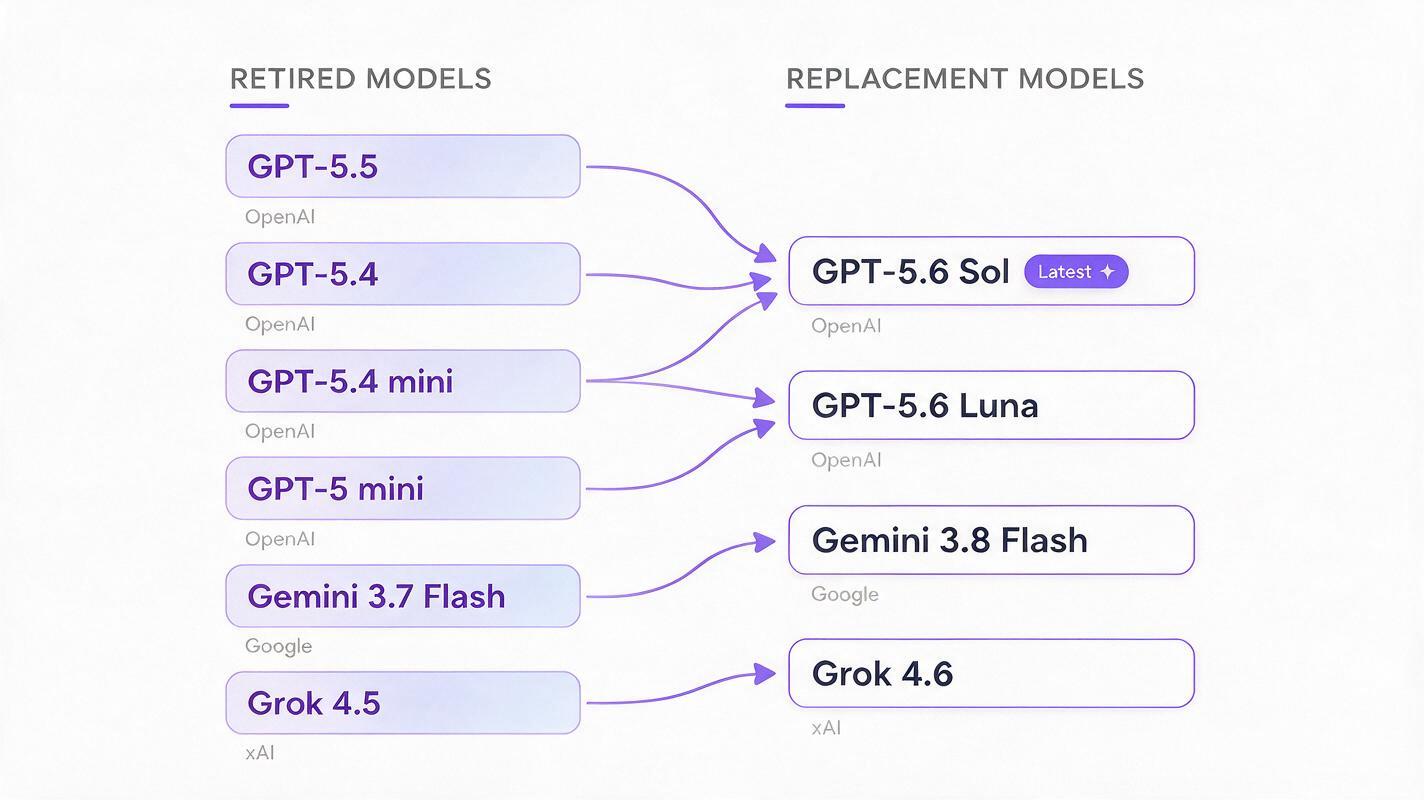
The six retired models and their direct replacements are mapped below, with shifts consistent across GitHub Copilot’s paid plan tiers:
| Retired Model | Replacement Model | Provider |
|---|---|---|
| GPT-5.5 | GPT-5.6 Sol | OpenAI |
| GPT-5.4 | GPT-5.6 Sol | OpenAI |
| GPT-5.4 mini | GPT-5.6 Luna | OpenAI |
| GPT-5 mini | GPT-5.6 Luna | OpenAI |
| Gemini 3.7 Flash | Gemini 3.8 Flash | |
| Grok 4.5 | Grok 4.6 | xAI |
Enterprise and Business plan subscribers will be automatically switched to the replacement models with no manual action required. GitHub has not announced changes to pricing or feature limits tied to the model swap, framing the update as a behind-the-scenes performance upgrade for all supported Copilot workflows.
What This Means for AI Video and Image Creators
While GitHub Copilot is primarily known as a developer tool, AI video and image creators increasingly rely on AI coding assistants to streamline custom production workflows. Many independent creators and small studios use coding tools to automate repetitive tasks, reducing manual work and freeing up time for creative decision-making.
Custom Creative Workflow Impacts
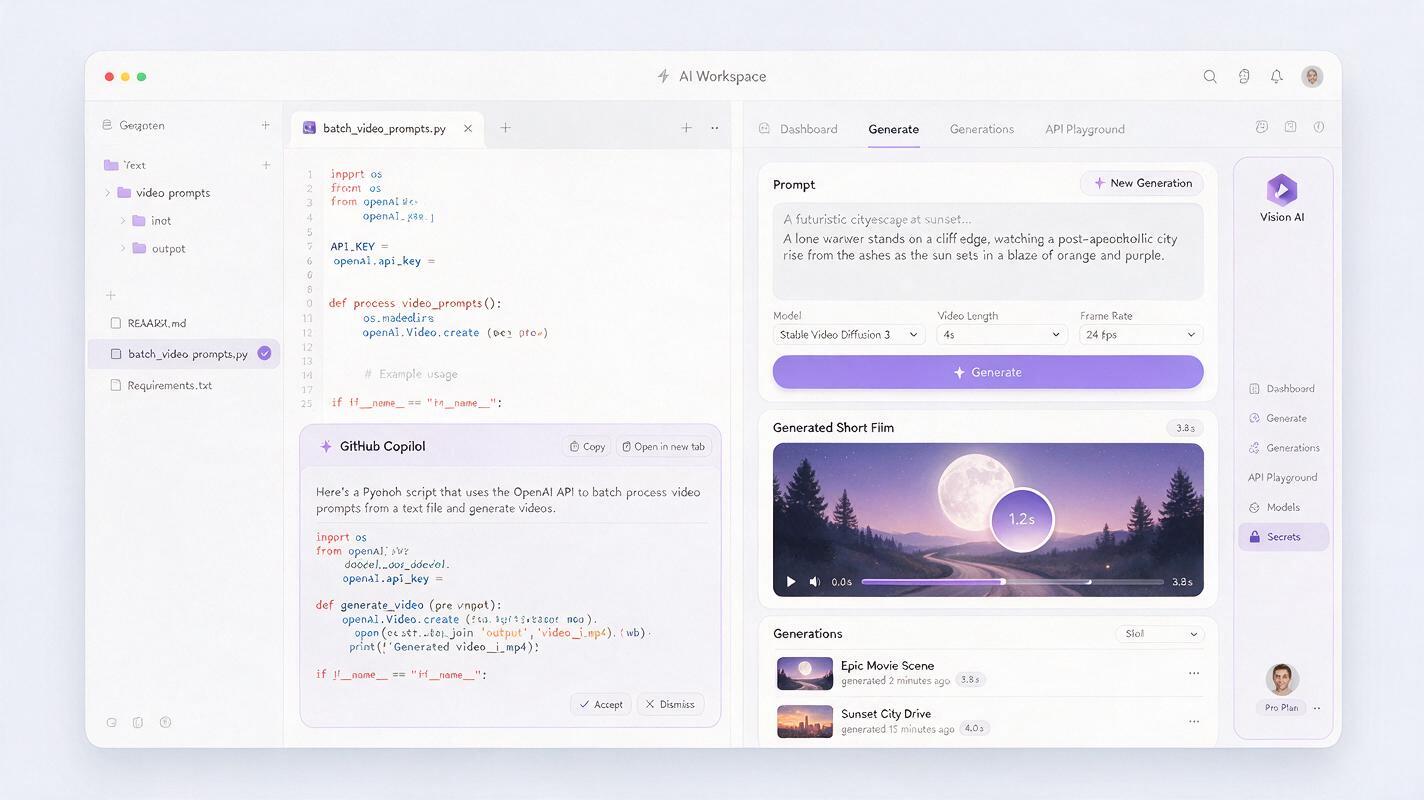
Creators building custom pipelines for text to video projects often use AI coding assistants to write scripts for batch prompt generation, asset organization, and post-processing automation. A shift in underlying models can change how well the coding assistant understands creative-specific requirements, such as generating scripts that integrate with AI video generator APIs or handle custom media file formats. For teams that have fine-tuned their Copilot prompts for creative coding tasks, the new models may require minor adjustments to maintain consistent output.
Similarly, those working with ai image generator tools use custom code to batch produce asset variations, resize visuals for social media formats, or apply consistent style presets across hundreds of images. Faster or more accurate coding models can speed up these tasks, but unexpected changes in model behavior can temporarily break automated workflows if teams don’t test the new versions early.
Broader Industry Trend: Faster Model Iteration, Less Long-Term Stability
The GitHub Copilot model refresh is the latest example of a broader industry pattern: AI model lifecycles are shrinking, with providers retiring older versions just months after launch to make room for newer, more capable iterations. This trend applies not just to coding models, but to creative models for image, video, and audio generation as well.
For creators who depend on specific model versions to maintain consistent brand style or production quality, sudden retirements can create workflow disruptions. Relying on a single provider’s ecosystem increases the risk of unexpected changes that delay projects or force costly reworks.
Building Resilient Creative AI Workflows
To navigate frequent model updates and retirements across both coding and creative tools, creators can take proactive steps to keep their workflows flexible and portable:
- Diversify your tool stack: Use multiple platforms and model providers for core creative tasks, so a single model retirement doesn’t halt production.
- Test new model versions early: When providers announce updates, run small test projects to gauge changes in output quality, speed, and compatibility with your existing workflow.
- Document custom workflows: Keep clear records of prompt structures, script parameters, and model settings so you can replicate results across different tools if needed.
- Prioritize portable solutions: Choose web-based, multi-model platforms that let you switch between models without rebuilding your entire production pipeline.
Multi-model creative platforms like MagicBoat are designed to address this exact challenge, giving creators access to a range of top-tier AI models for video, image, story, and audio production in a single unified interface. Instead of managing separate accounts and subscriptions for each provider, you can test, compare, and switch between models as they’re updated or retired, keeping your workflow stable even as the AI landscape shifts. try these models for free to see how a multi-model approach can streamline your creative process.
Key Takeaways
- GitHub Copilot retired six AI models on October 19, 2026, replacing them with newer GPT-5.6 Sol, GPT-5.6 Luna, Gemini 3.8 Flash, and Grok 4.6 versions.
- Enterprise and Business plan users are automatically migrated to replacement models, with no required action or announced pricing changes.
- The model refresh impacts AI creators who use coding assistants to automate custom text to video, image generation, and asset management workflows.
- Rapid model iteration across the AI industry makes workflow resilience critical for creators; multi-model platforms reduce the risk of disruptions from single-provider changes.
Sources
Keywords
github copilot, gpt-5.6 sol, gpt-5.6 luna, gemini 3.8 flash, grok 4.6, ai coding tools, model iteration