GitHub Copilot Retires 6 Models Oct 19: GPT-5.5, Grok 4.5 Phased Out
GitHub Copilot will retire six underlying AI models on October 19, 2026, with confirmed replacements for OpenAI GPT-5.5, xAI Grok 4.5, and Google Gemini 3.7 Flash. The update highlights the accelerating pace of AI model iteration and the risk of workflow disruption for creators who rely on single-provider AI tools. Multi-model platforms like MagicBoat help creators build resilient workflows by centralizing access to dozens of AI tools across multiple providers.
Table of contents
GitHub Copilot’s October 19 Model Retirement: What We Know
GitHub Copilot, the widely used AI coding assistant, will retire six of its underlying AI models on October 19, 2026, in one of the largest simultaneous model updates the platform has rolled out to date. The retirement affects models from three major AI providers, with older versions being phased out in favor of newer, more advanced iterations.
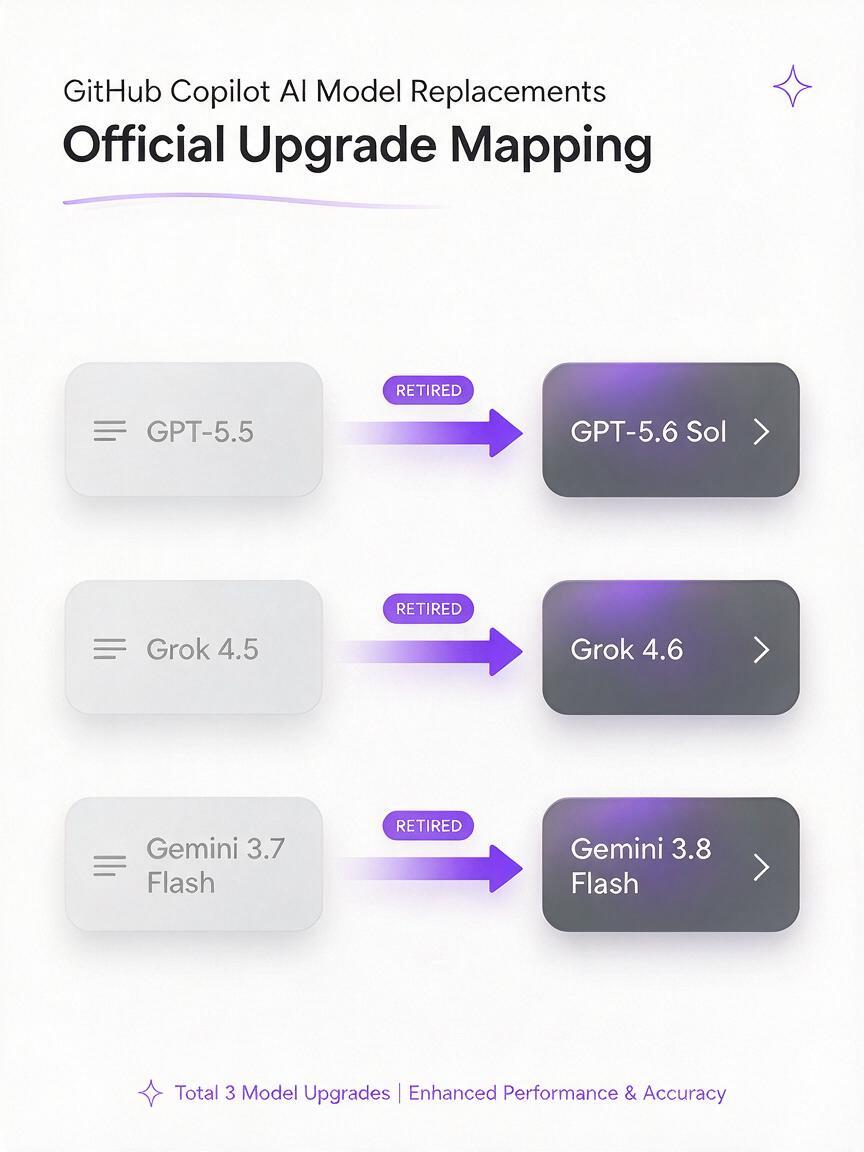
Confirmed replacement pairs include OpenAI’s GPT-5.5 being succeeded by GPT-5.6 Sol, xAI’s Grok 4.5 replaced by Grok 4.6, and Google’s Gemini 3.7 Flash swapped for Gemini 3.8 Flash. The remaining three retiring models have not been named in initial public reports, and GitHub has not yet released full performance benchmarks or change logs for the incoming model versions.
What the Model Update Includes
The October 19 retirement impacts six models across GitHub Copilot’s model roster, spanning three of the biggest AI labs in the industry. Each retiring model is being replaced with a newer version from the same provider, with the goal of improving code generation accuracy, reasoning speed, and compatibility with modern development workflows.
OpenAI’s GPT-5.5, a mid-tier model widely used for complex coding tasks and debugging, will be replaced by GPT-5.6 Sol, the latest iteration of OpenAI’s coding-optimized model line. xAI’s Grok 4.5, known for its fast response times and handling of unconventional code patterns, makes way for Grok 4.6. Google’s Gemini 3.7 Flash, the lightweight model powering most of GitHub Copilot’s real-time inline suggestions, will be succeeded by Gemini 3.8 Flash, which is expected to deliver faster response times and improved support for niche programming languages.
Why Rapid Model Iteration Creates Workflow Risk
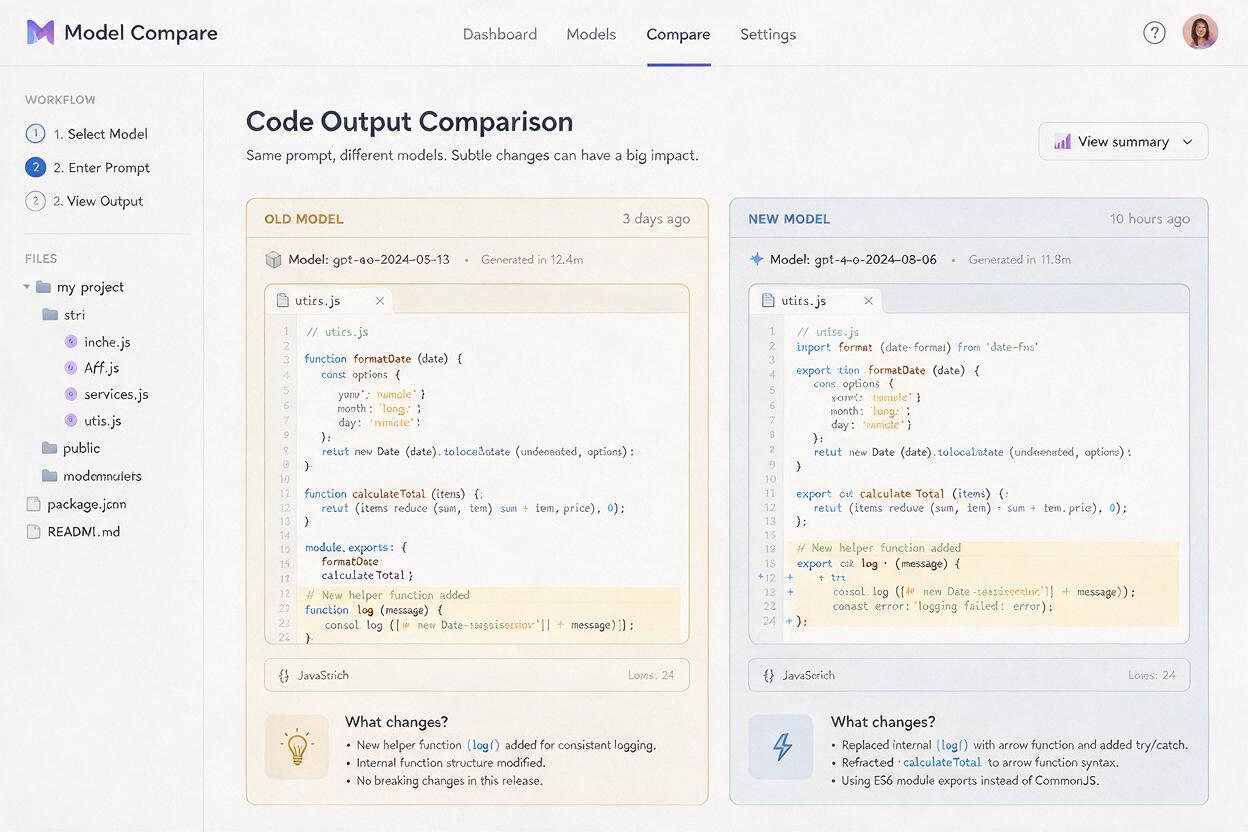
While model updates often bring performance improvements, they also introduce significant risk of workflow disruption for regular users. AI model outputs can vary subtly (or dramatically) between versions, even when given the exact same prompt. For developers and creators who have fine-tuned their prompts and workflows to work with specific model behaviors, a sudden swap can break existing automation, reduce output consistency, or require hours of retesting and adjustment.
This risk is not unique to GitHub Copilot. Across the AI industry, model release cycles have shrunk from years to months, with labs rolling out new versions and retiring older ones at an accelerating pace to stay competitive. For users who depend on a single AI tool or provider for critical parts of their workflow, these changes can create unexpected downtime, missed deadlines, and inconsistent output quality.
What This Means for Content Creators
For content creators who integrate AI tools into every stage of their workflow—from scripting and asset generation to post-production and custom automation—GitHub Copilot’s model retirement is a timely reminder of the risks of relying on single-provider tools. Even tools that feel stable and reliable can undergo major underlying changes with little warning, potentially disrupting the consistent output creators need to meet client deadlines and maintain brand voice.
A multi-model AI platform like MagicBoat mitigates this risk by centralizing access to dozens of AI tools across multiple providers, all under one account. You can use an ai video generator for visual content, an ai script writer for narrative planning, and a range of coding and automation tools without being tied to a single provider’s update cycle. If one model is retired or updated, you can easily switch to an alternative that fits your workflow, without losing access to your projects or having to rebuild your entire toolset. You can try these models for free today to build a more resilient, flexible creative workflow.
Key Takeaways
- GitHub Copilot will retire six underlying AI models on October 19, 2026, with confirmed replacements for GPT-5.5, Grok 4.5, and Gemini 3.7 Flash.
- Rapid AI model iteration creates workflow disruption risk for creators who rely on single-provider tools for coding, content generation, or automation.
- Multi-model AI platforms give creators flexible access to a range of tools, reducing dependence on any single provider’s update schedule.
- Testing alternative tools ahead of model retirements helps minimize downtime and maintain consistent output quality.
Keywords
github copilot, ai tools, ai news, model updates, ai coding tools, ai roundup, ai content creation