Godzilla Minus Zero Opens No. 1 in North America With $31.6M Debut
Godzilla Minus Zero, directed by Takashi Yamazaki, debuted at No. 1 at the North American box office with $31.6 million over the Nov 6-8 weekend, beating the $92 million studio animation The Cat in the Hat. The record-breaking opening marks a win for low-budget auteur-driven imported IP, offering actionable lessons for independent AI content creators building genre projects with text to video and AI film tools.
Table of contents
Godzilla Minus Zero’s No. 1 North American Debut
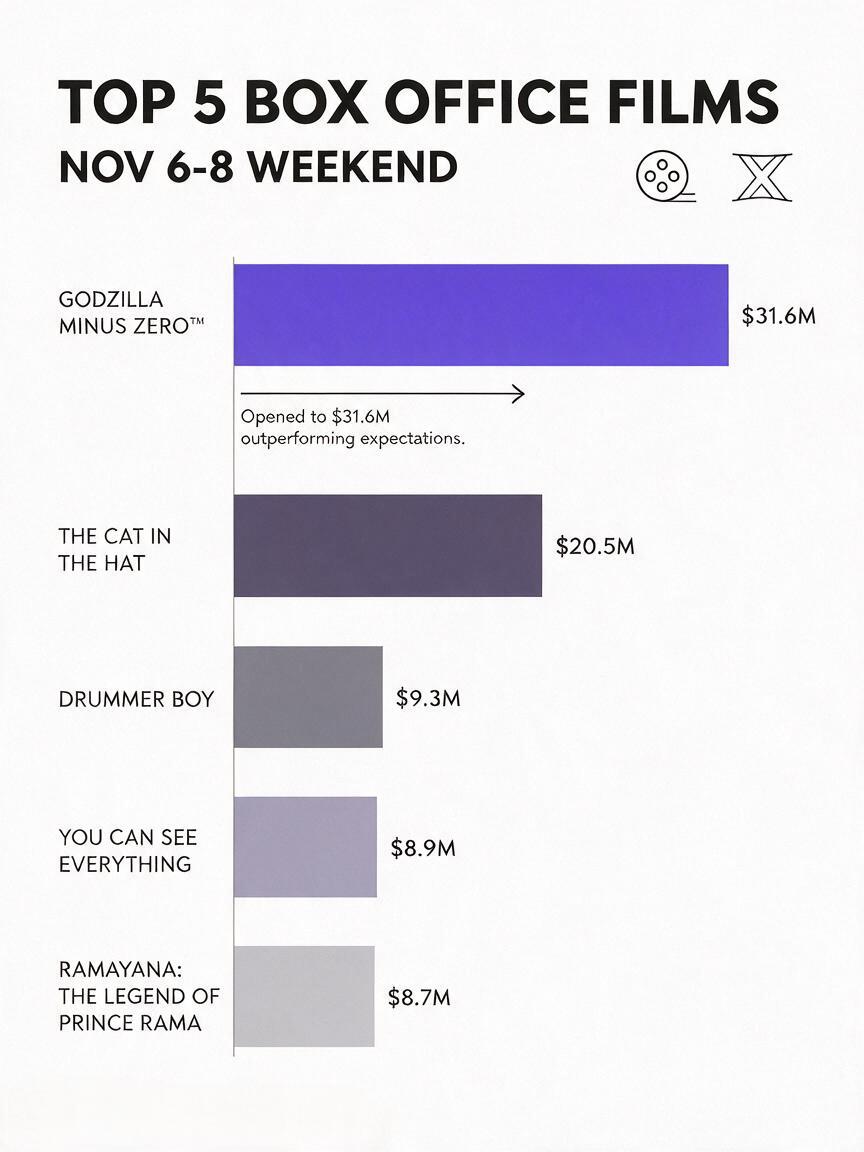
Godzilla Minus Zero, the latest kaiju film from director Takashi Yamazaki, opened at No. 1 at the North American box office with $31.6 million in ticket sales over the Nov 6-8 weekend. The debut, called record-breaking by AP, outperformed a slate of new and holdover releases, including Warner Bros.’ $92 million animated The Cat in the Hat, which landed at No. 2 with $20.5 million.
Rounding out the top five were Angel Studios’ Drummer Boy at $9.3 million, A24’s You Can See Everything at $8.9 million in its fourth weekend (pushing its domestic total to $79.8 million on a $7 million budget), and Sony’s Ramayana: The Legend of Prince Rama at $8.7 million.
The total North American weekend box office hit $121.7 million, according to THR, up roughly 98% from the Halloween-depressed prior frame and 45% year over year. 2026’s total North American gross now stands at $8.625 billion, up 20.6% from the same point last year.
Most notably, the result marks a clear win for low-budget, auteur-driven imported IP over big-budget studio animation. Godzilla Minus Zero’s strong debut comes as part of a broader trend of international genre films finding sizable audiences in North America, even when competing with well-known domestic IP.
Why This Debut Matters for Genre Filmmaking
Godzilla Minus Zero’s success isn’t just a win for the Godzilla franchise — it’s a signal about what audiences are craving from genre entertainment right now. The film’s ability to outdraw a $92 million Dr. Seuss adaptation, built on one of the most recognizable children’s IPs in the world, suggests that audiences are hungry for distinct, vision-driven genre work even when it comes from outside the Hollywood studio system.
Yamazaki’s take on the Godzilla mythos has been praised for its practical effects style, emotional core, and tight storytelling — elements that don’t always make it into big-budget franchise fare designed to appeal to the broadest possible audience. The film’s performance also reinforces that established global IP can still feel fresh when paired with a strong creative voice, rather than relying solely on brand recognition to carry ticket sales.
For independent creators, this trend is particularly meaningful: it shows that there’s an audience for genre content that prioritizes vision and tone over massive production budgets, as long as it delivers on the core promise of the genre.
Lessons for AI Content Creators Building Genre Projects
The same dynamics that pushed Godzilla Minus Zero to the top of the box office can be applied to AI-assisted content creation, especially for independent creators working with limited budgets. Whether you’re building short-form genre clips, a full ai short drama, or a feature-length concept, the lessons from this debut translate directly to how you develop and position your work.
First, lean into distinct creative vision over generic IP imitation. Godzilla Minus Zero didn’t succeed just because it’s a Godzilla movie — it succeeded because Yamazaki brought a specific, recognizable tone and style to the material. For creators using text to video tools, that means leaning into your unique thematic interests and visual style rather than chasing the latest viral trend. A distinct voice will help your work stand out far more than a generic take on a popular genre.
Second, prioritize genre fundamentals over flashy effects. The film’s praised practical-style effects serve the story, not the other way around. When working with an ai film generator, it’s easy to get caught up in generating impressive-looking visuals, but the most engaging AI content is built on a solid foundation of story, character, and genre stakes. Start with a tight script and clear tonal direction, then use AI tools to bring that vision to life rather than letting the tools dictate the creative direction.
Third, target underserved genre audiences. Godzilla Minus Zero found a dedicated audience of kaiju fans and genre film enthusiasts who turned out to support a vision-driven take on a beloved franchise. For AI creators, that means identifying niche genre communities — whether it’s cosmic horror, retro sci-fi, or kaiju action — and making content that speaks directly to their tastes. You don’t need a massive mainstream audience to build a sustainable following; a dedicated niche audience can carry your work just as it carried this indie import to the top of the box office.
If you’re ready to start building your own vision-driven genre content with AI, try these models for free on MagicBoat and turn your concept into finished footage without a Hollywood-sized budget.
Key Takeaways
- Godzilla Minus Zero opened at No. 1 in North America with $31.6 million, beating the $92 million studio animation The Cat in the Hat.
- The debut signals strong audience demand for auteur-driven, distinct genre content, even from international import pipelines.
- AI content creators can apply these lessons by prioritizing creative vision, genre fundamentals, and niche audience targeting when using text to video and AI film tools.
- Independent creators don’t need massive budgets to make resonant genre work — a clear voice and targeted audience focus can deliver outsized results.
Keywords
godzilla minus zero, north american box office, ai film, text to video, ai content creation, genre filmmaking, independent creators