Google Gemini 4 Argon Launches Globally for Subscribers and Developers
Google launched Gemini 4 Argon globally for Pro and Ultra subscribers and developers on October 14, 2026, less than two weeks after its September 30 debut.
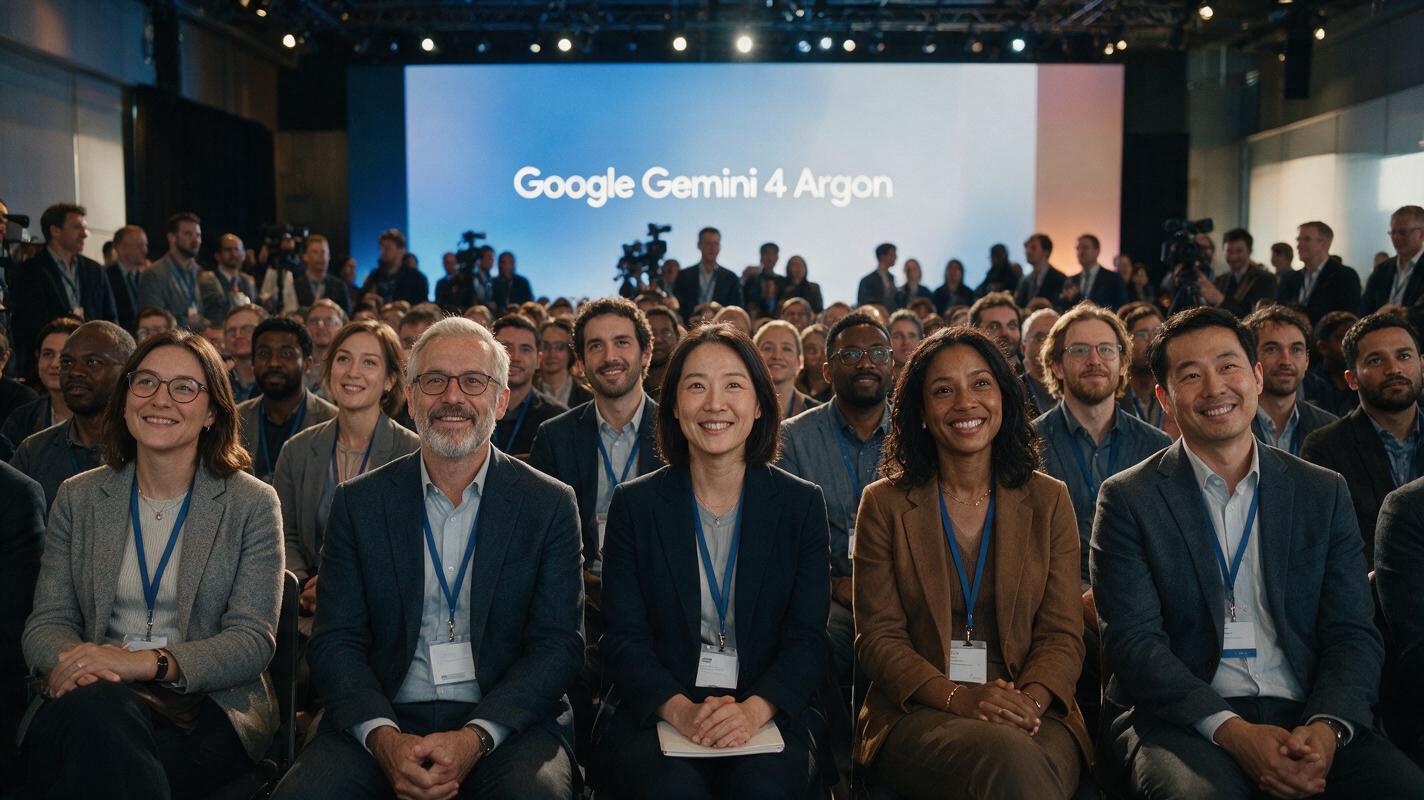
Table of contents
AI Model News · October 14, 2026
Google Gemini 4 Argon Launches Globally for Subscribers and DevelopersGemini 4 Argon moved from its initial debut to a broader international release in less than two weeks, extending access to Google subscribers and developers.
Google launched Gemini 4 Argon globally on October 14, 2026, opening the model to Pro and Ultra subscribers as well as developers. The expansion arrived less than two weeks after Argon made its initial debut on September 30, marking a notably rapid transition from introduction to wider availability.
The original September 30 release positioned Gemini 4 Argon with support for as many as 1 million output tokens. Google also reported a 77.9% result on DeepSWE v1.1 and a first-place score of 51.3% on Zapier AutomationBench. At debut, the model was initially available through Fairwind for cybersecurity defenders, with input pricing listed at $2 per million tokens.
The October 14 announcement is important because it changes the practical reach of the model. Argon was no longer limited to its initial release channel: Google was making it available across subscriber access and developer use, broadening the group able to evaluate it in real workflows.
The central news: Gemini 4 Argon launched globally for Google Pro and Ultra subscribers and developers on October 14, less than two weeks after its September 30 debut.
For people producing AI-assisted images and videos, wider model availability can influence research, planning, prompt development, and production-tool selection. It also reinforces a broader market trend: creative teams increasingly need workflows that can adapt as access, pricing, and leading models change quickly.
What Changed With the Global Gemini 4 Argon Launch
The global launch is principally an access story. It does not establish that Gemini 4 Argon is an AI video model, nor does the announcement claim native text-to-video or image-to-video generation. Its relevance to visual production comes from how general-purpose frontier models may support the surrounding reasoning and organizational work—not from capabilities that were not stated in the announcement.
| Release detail | Confirmed information |
|---|---|
| Global launch | October 14, 2026 |
| Eligible access | Pro subscribers, Ultra subscribers, and developers |
| Initial debut | September 30, 2026 |
| Output capacity | Up to 1 million tokens |
| DeepSWE v1.1 | 77.9% |
| Zapier AutomationBench | First place with 51.3% |
| Debut input price | $2 per million tokens |
The short interval between debut and global expansion also illustrates the current pace of frontier-model distribution. A model can move from a limited introductory channel to subscriber and developer availability before production teams have completed a full evaluation cycle.
Why the 1 Million-Token Output Limit Stands Out
Among the confirmed specifications, the allowance of up to 1 million output tokens is the clearest differentiator. The figure describes output capacity, but it does not by itself prove quality, consistency, speed, or suitability for every project. Those qualities still need to be assessed against the intended workload.
For a visual production team, long outputs may be relevant to projects containing extensive written material: campaign variations, serialized story concepts, scene documentation, asset descriptions, or continuity notes. However, the release information does not claim any particular performance on those creative tasks, so the specification should be treated as capacity rather than a guaranteed production result.
A large token allowance expands what may fit into a model interaction, but creators still need to judge whether the resulting material is accurate, coherent, economical, and usable in production.
The two reported benchmarks provide additional context, although neither measures image or video generation. DeepSWE v1.1 and Zapier AutomationBench evaluate areas distinct from visual fidelity, motion quality, or cinematic consistency. Their results therefore should not be presented as evidence that Argon outperforms a dedicated visual-generation system.
What Gemini 4 Argon Means for AI Content Production
Creative work rarely depends on one model operation. A production may involve interpreting a brief, developing a narrative, organizing scenes, drafting prompts, generating visual assets, reviewing alternatives, and preparing revisions. A general-purpose model can be considered for the language and reasoning portions of that chain, while dedicated tools handle visual output.
That distinction matters when evaluating Gemini 4 Argon. The global launch gives more teams an opportunity to test where the model fits, but it does not remove the need for specialized creation services. Someone moving from written concepts to text to video, for example, still needs a generation environment designed for that medium.
Likewise, a production that needs concept frames, character references, environments, or promotional artwork may benefit from an ai image generator. The effective question is not whether one newly released model replaces every creative tool. It is whether each model or capability can be assigned to the part of the workflow where it offers the most value.
Access Is Now Part of Model Evaluation
The global rollout highlights availability as a selection factor alongside benchmark scores and token limits. A powerful model has limited production value when a team cannot access it under the required account, region, subscription, or developer arrangement.
Creative teams evaluating Argon should separate several considerations:
- Availability: whether the relevant subscriber or developer access is available to the team.
- Capacity: whether the stated output allowance matches the scale of the project.
- Economics: whether usage costs remain appropriate at production volume.
- Task fit: whether the model is being used for a capability actually supported by the release information.
- Continuity: whether the workflow can continue if access conditions or model preferences change.
The Case for a Multi-Model Creative Workflow
Gemini 4 Argon enters a market that also includes the GPT-6 family, Claude Opus 5.5, Meta Muse models, and other rapidly changing options. The October 14 launch does not establish that one of these models is universally superior. It does show why teams may prefer to preserve flexibility rather than constructing an entire production process around a single provider.
A multi-model platform can reduce the operational friction of switching between planning, image creation, video generation, and other creative functions. It can also make experimentation more practical: teams can compare outputs and select tools according to the current project instead of treating one model choice as permanent.
MagicBoat brings multiple AI creation capabilities into one account, helping users move from an idea toward visual production without assuming that every part of the process must come from the same model. This approach is especially useful while frontier releases such as Gemini 4 Argon continue to change the competitive landscape at a rapid pace.
Key Takeaways
- Google launched Gemini 4 Argon globally on October 14, 2026.
- The expanded audience includes Pro and Ultra subscribers as well as developers.
- The global release came less than two weeks after the model’s September 30 debut.
- Confirmed specifications include up to 1 million output tokens and debut input pricing of $2 per million tokens.
- Google reported 77.9% on DeepSWE v1.1 and 51.3% on Zapier AutomationBench.
- The announcement does not claim that Argon natively generates images or videos.
- For visual production teams, access, task fit, cost, and workflow portability remain as important as headline specifications.
Explore a Flexible AI Creation Workspace
As Gemini 4, GPT-6, Claude Opus, and other model families evolve, keeping creative production flexible can be more practical than relying on one release. Visit MagicBoat to try these models for free and explore image and video creation capabilities in one workspace.
Keywords: Gemini 4 Argon, Gemini 4 global launch, Google AI model, GPT-6, Claude Opus, AI video model, multi-model AI platform