Google, Meta Frontier AI Push Ends OpenAI-Anthropic Absolute Lead: Analysis
An October 2026 industry analysis concludes that Google and Meta’s accelerated frontier AI development has ended the absolute lead previously held by OpenAI and Anthropic. The shift reflects growing competition across the AI landscape, with more models gaining traction for creative and enterprise use cases. For content creators, the expanded field brings more choice while underscoring the value of flexible, multi-model AI workflows.
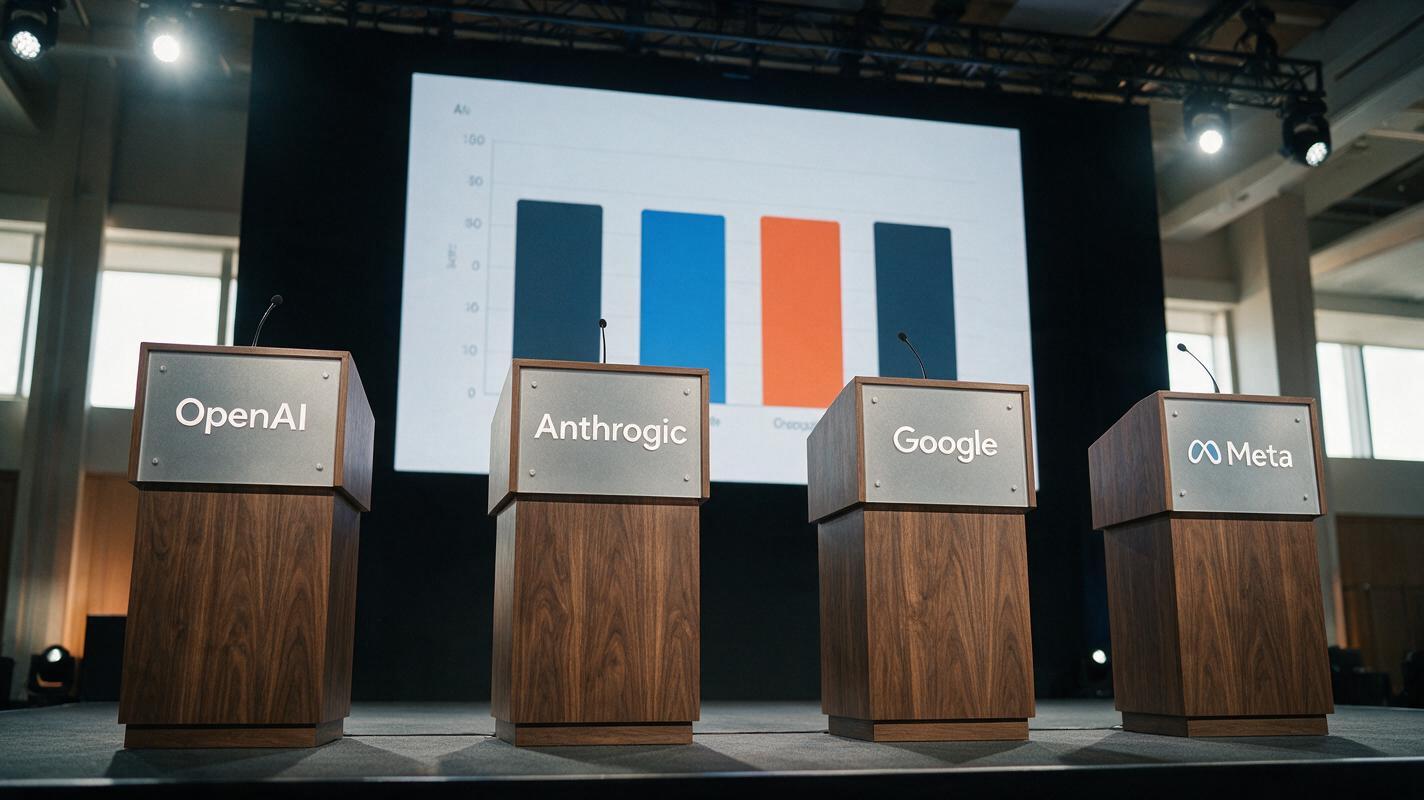
Table of contents
A new industry analysis is reshaping the narrative of who leads the global frontier AI race, marking the end of a multi-year period of undisputed dominance by two major labs.
On October 16, 2026, a widely cited analysis concluded that Google and Meta’s coordinated push into frontier AI has ended the absolute lead previously held by OpenAI and Anthropic. The report frames the shift as a structural change in the AI landscape, rather than a temporary blip, as both Google and Meta have rolled out high-performance models and expanded access to developers and creators in recent months.
While specific details of the analysis — including the research firm behind it, exact benchmark metrics, and quantitative measurements of the remaining capability gap — have not been disclosed in initial reports, the conclusion aligns with a string of recent product launches and industry data points that point to a more competitive frontier AI market.
What the Analysis Signals About the Frontier AI Landscape
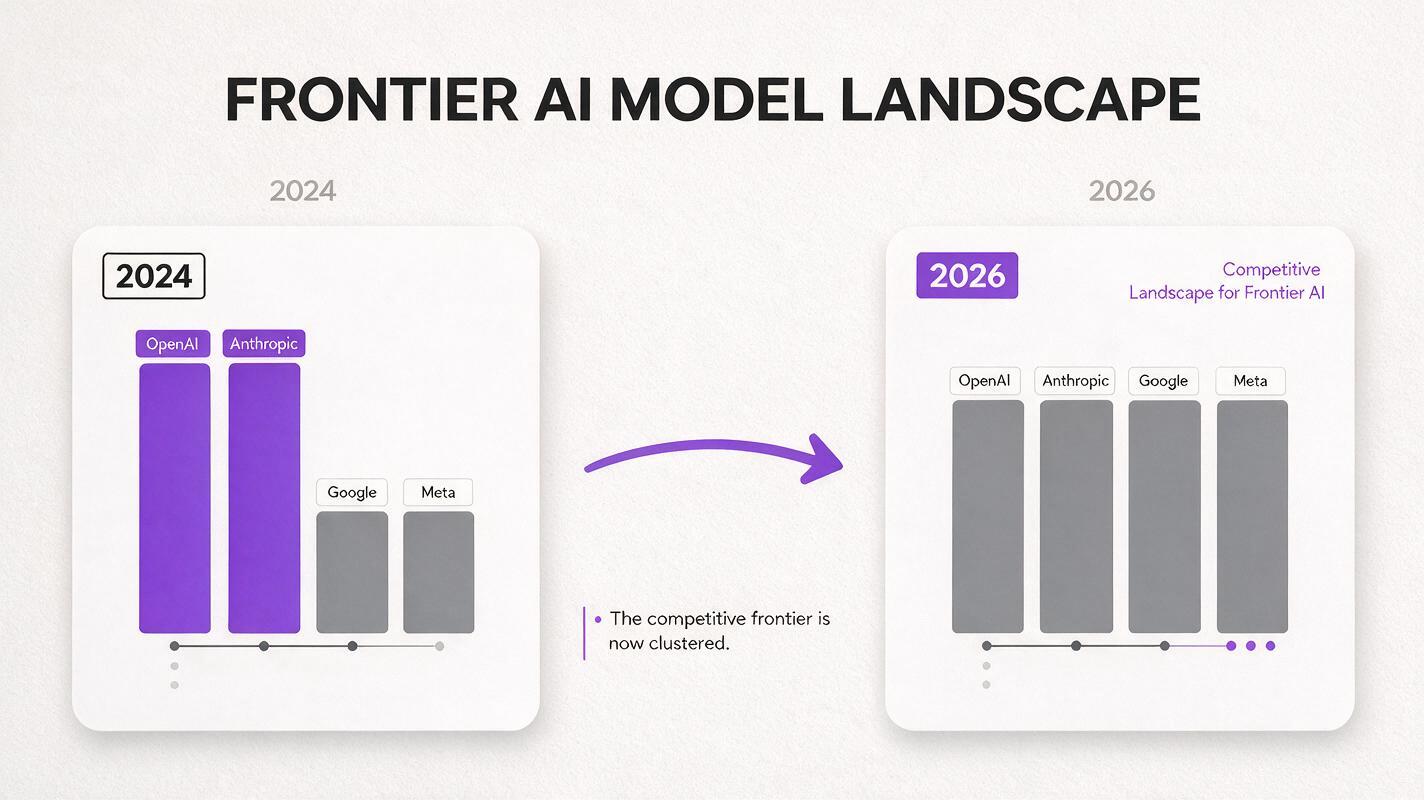
For years, OpenAI and Anthropic were broadly viewed as the clear front-runners in frontier AI, with models like GPT-6 and Claude Opus consistently outperforming competitors on core reasoning, coding, and creative benchmarks. The new analysis suggests that gap has narrowed to the point where no single pair of labs holds an absolute lead across all use cases.
Several recent announcements and data points support this shifting dynamic:
- Meta’s open-weight frontier model: On October 16, 2026, Meta unveiled Muse Spark Open, an 81.6-billion-parameter open-weight mixture-of-experts (MoE) model, alongside a partnership with Apple to bring the model to Mac devices.
- Google’s high-scoring Gemini model: Google’s Gemini 4 Argon reportedly scored 97.5% on the ARC-AGI-3 benchmark as of October 19, 2026, putting it in line with top-tier frontier models from OpenAI and Anthropic.
- Spreading model usage: Data from OpenRouter shows that the share of API calls going to the top 10 models dropped from 55% to 14% in late 2026, indicating that developers and creators are spreading their usage across a wider range of models instead of concentrating on a handful of leading options.
- Meta’s leadership claims: On October 13, 2026, Meta CEO Mark Zuckerberg stated that the company has “caught up” at the AI frontier and plans to challenge OpenAI and Anthropic directly in the coming quarters.
The analysis frames this shift as a maturing of the AI industry, where competition is driving faster innovation and more diverse model offerings tailored to specific use cases, from coding and research to creative content production.
What the Competitive Shift Means for Content Creators
For AI content creators, the end of OpenAI and Anthropic’s absolute lead brings both new opportunities and new operational considerations.
On the opportunity side, a more competitive market means more model options for different creative tasks. Whether creators are working on scriptwriting, image generation, or video production, they can choose from a growing pool of specialized models that may offer better quality, lower cost, or faster speeds for specific workflows. An ai video generator from one provider might excel at stylized animated content, while another might be better for photorealistic clips, giving creators more flexibility to match the tool to the project.
Competition is also likely to put downward pressure on pricing, as providers fight to attract and retain users. This could reduce production costs for independent creators and larger teams alike, making it easier to scale AI-powered content operations.
However, the shift also comes with challenges. With more models launching every month, creators face the burden of testing new tools, managing multiple accounts and API keys, and adjusting workflows to account for differences in model output style, context limits, and reliability. Model turnover can also disrupt established workflows if a favorite model is retired, updated, or changes pricing terms overnight.

How Multi-Model Platforms Simplify the New AI Landscape
As the number of viable frontier AI models grows, working with a multi-model platform like MagicBoat can help creators navigate the crowded market without adding operational complexity.
Instead of setting up separate accounts, billing, and API integrations for every AI provider, creators can access a curated selection of top-tier text, image, and text to video models from a single dashboard. This makes it easy to test new models as they launch, compare output quality side by side, and switch between providers for different tasks — all without disrupting existing workflows or reworking entire production pipelines.
Multi-model platforms also reduce the risk of workflow disruption from single-provider changes, whether that’s a price hike, a model retirement, or a temporary service outage. If one model experiences issues, creators can simply switch to another comparable option on the same platform, keeping projects on track.
For creative teams producing video content, this flexibility is especially valuable. Different models excel at different aspects of video production — from generating initial concepts and scripts to creating visuals and adding voiceover — and having access to multiple tools in one place streamlines the entire production process.
Key Takeaways
- An October 16, 2026 analysis finds that Google and Meta’s frontier AI push has ended the absolute lead previously held by OpenAI and Anthropic.
- The shift is supported by recent product launches, benchmark results, and usage data showing a more spread-out AI model market.
- Creators benefit from more choice and potential cost savings, but face increased complexity from a faster-growing model ecosystem.
- Multi-model AI platforms help creators navigate the competitive landscape by providing centralized access to multiple tools and reducing single-provider risk.
Ready to explore how multi-model access can improve your creative workflow? try these models for free and see which tools work best for your next project.
Keywords
ai news, frontier ai, google meta ai, openai anthropic, ai tools, ai video generator, ai roundup