Google Launches TPU 8tx and TPU 8i Max Eighth-Gen TPUs
On November 9, 2026, Google launched the TPU 8tx and TPU 8i Max, its fourth and fifth eighth-generation TPU releases of the year, built on existing silicon with optimized packaging and software. The 8tx introduces hardware-level confidential computing for encrypted in-use model weights, while the 8i Max doubles compute and memory for long-context agent decoding, alongside an open-source software stack with agent tool integrations. For AI video and image creators, the launches signal faster, more secure inference for Google-backed models like Gemini 4, and reinforce the value of multi-model platforms that aggregate the latest AI tools in one place.
Table of contents
Google’s New TPU 8tx and 8i Max: What You Need to Know
Google’s latest eighth-generation TPU launches bring hardware-level security and doubled long-context performance without a new silicon tape-out, signaling a shift toward optimizing existing AI chip designs for real-world agent and multimodal workloads.
On November 9, 2026, Google unveiled two new additions to its eighth-generation TPU lineup: the TPU 8tx and TPU 8i Max. The releases mark Google’s fourth and fifth eighth-gen TPU launches of the year, and notably, neither chip requires a new silicon tape-out — instead, both use existing 8th-gen TPU dies with optimized packaging, pairing, and software to target specific high-demand workloads.
The launches come as AI labs and cloud providers increasingly prioritize long-context agent workflows and secure inference for enterprise and government clients, with performance gains that will eventually trickle down to consumer-facing AI tools used by video and image creators.
Key Hardware Specs for TPU 8tx and TPU 8i Max
The two new TPUs serve distinct use cases, with hardware tuned to separate priority areas for modern AI workloads:
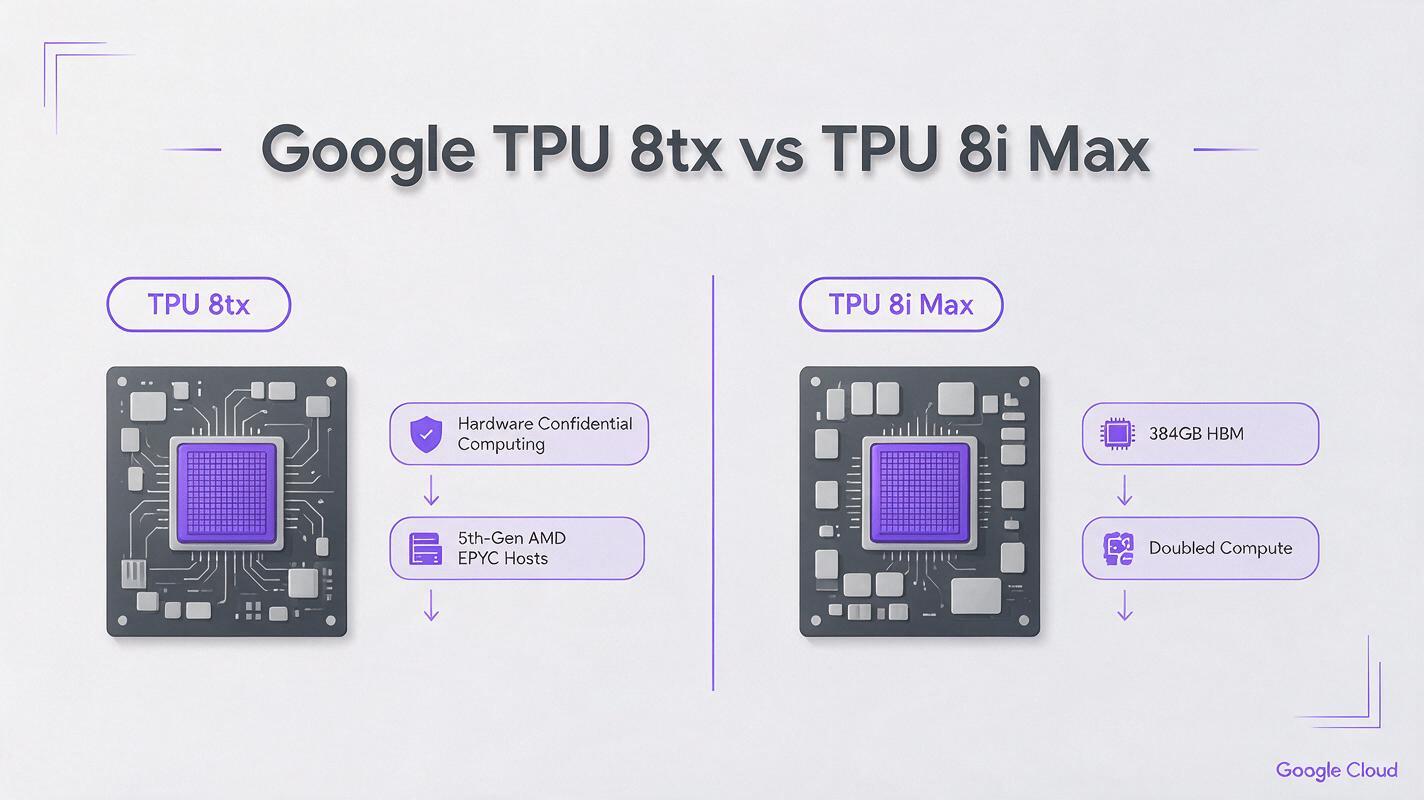
TPU 8tx: Hardware Confidential Computing
The TPU 8tx is Google’s first TPU with built-in hardware confidential computing, designed to keep model weights encrypted even during active inference. Key details include:
- Paired with 5th-generation AMD EPYC host processors
- Uses PCIe link encryption, cryptographic attestation, and secure memory enclaves to protect weights and data end-to-end
- Delivers up to half the latency of the existing TPU 8t, with near-zero security overhead from the encryption features
This makes the 8tx well-suited for enterprise and government use cases where sensitive data or proprietary model weights must remain protected during processing.
TPU 8i Max: Doubled Long-Context Performance
The TPU 8i Max is built for long-context agent decoding, a workload that has grown in demand as AI models handle longer prompts, multi-step agent tasks, and large multimodal inputs. Key specs include:
- Packages two 8i dies in a single unit, doubling compute, on-die SRAM, and HBM bandwidth
- 384GB of HBM memory with 17.2TB/s of bandwidth
- 768MB of on-die SRAM for fast access to frequently used data
The doubled memory and bandwidth reduce bottlenecks when processing long context windows, which is critical for agent workflows that pull from large document sets or generate extended outputs.
Open-Source Software Stack and Agent Workflow Optimizations
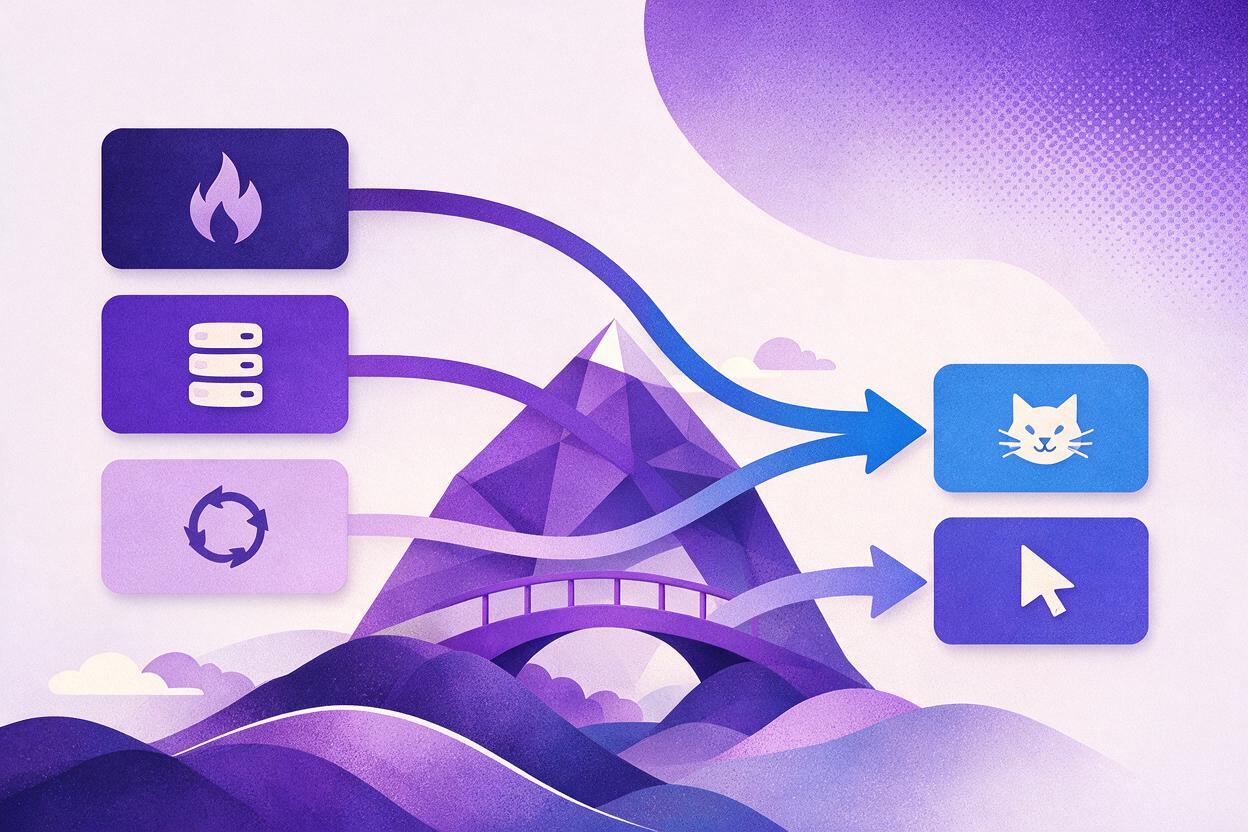
Alongside the new hardware, Google announced an expanded open-source software stack optimized for agent and high-throughput inference workloads, designed to make it easier for developers to run models on TPUs:
- TorchTPU: An open-source PyTorch integration for TPUs, simplifying model deployment for teams already using PyTorch workflows
- TPU Agent Suite: Pre-built integrations for popular agent tools including Claude Code, Cursor, and Antigravity
- XLA Serving Engine: An open-source serving layer optimized for TPU inference
- TPU Sync: A technology that claims 90%+ lower KV-transfer and first-token latency, a critical metric for responsive agent and multimodal interactions
Google cites close to 100 external TPU customers, with shipments of the new 8tx and 8i Max models expected in 2027. No pricing or general availability dates have been announced as of the launch.
What This Means for AI Video and Image Creators
While TPU hardware runs behind the scenes of cloud AI services, the improvements in the 8tx and 8i Max will have tangible impacts for creators using Google-backed AI tools, including models like Gemini 4 that run on Google’s TPU infrastructure.
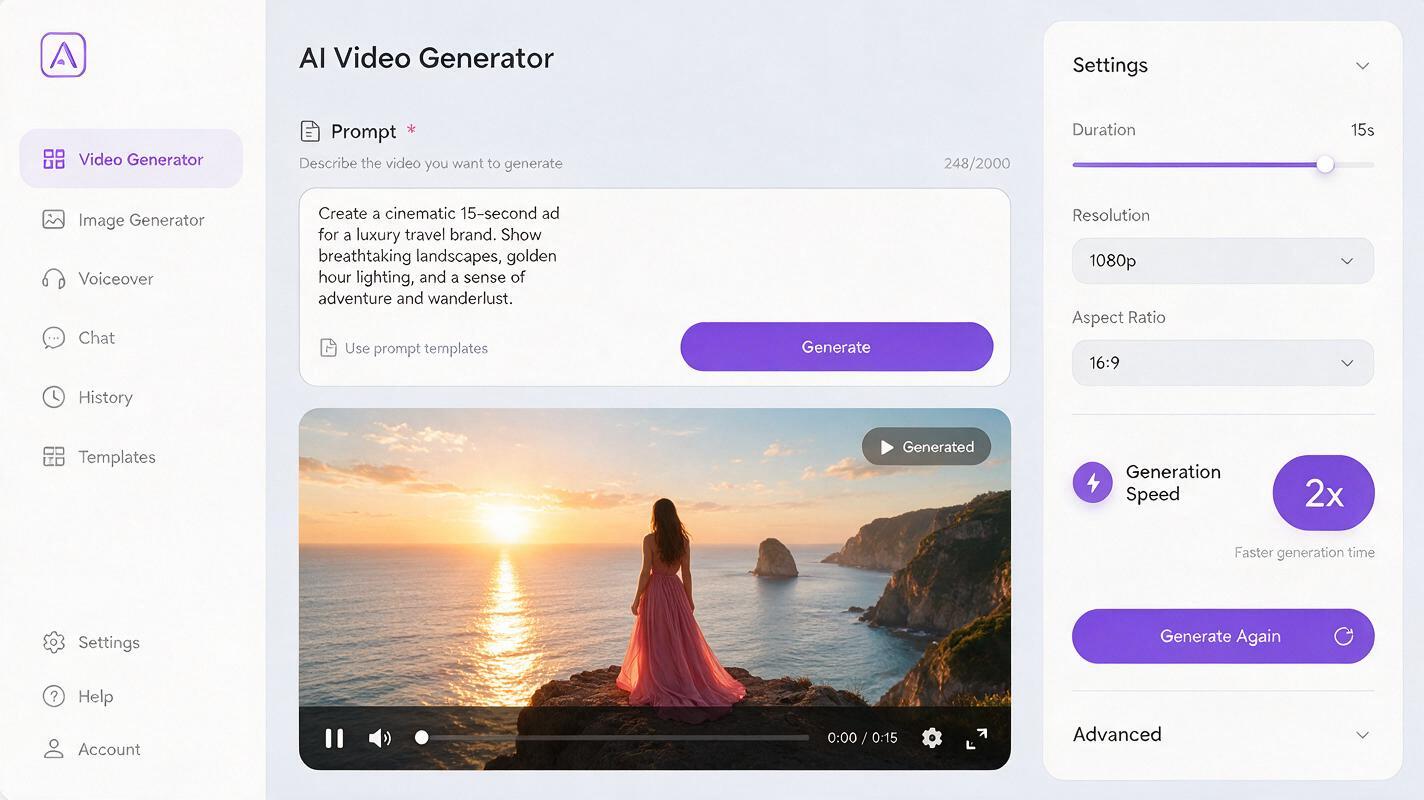
Faster first-token latency, enabled by TPU Sync and the 8i Max’s expanded memory, means shorter wait times when starting generation for text to video or image-to-image workflows. For creators iterating on multiple versions of a clip or image, faster generation starts translate to more rounds of feedback and refinement in the same amount of time.
Longer context support from the 8i Max also unlocks more complex creative workflows: processing full feature-length scripts for storyboarding, generating extended video clips with consistent visual style across minutes of footage, or analyzing large reference libraries of brand assets to ensure output matches guidelines. As Google rolls out the new TPUs to its cloud and consumer services, these performance gains will become available to anyone using an ai video generator built on Google’s model stack.
The confidential computing features of the 8tx are particularly relevant for professional creators and studios working with unreleased IP, brand campaigns, or sensitive client assets. Running generation on encrypted hardware reduces the risk of proprietary assets being exposed during inference, adding an extra layer of security for high-stakes creative projects.
For creators who use multiple AI tools across different providers, these hardware-driven performance gains highlight the value of a unified multi-model platform. Instead of tracking performance updates and pricing changes across half a dozen individual AI services, a platform like MagicBoat lets you access the latest models from Google, OpenAI, Anthropic and more from a single account, so you can take advantage of speed and quality improvements as soon as they roll out.
What to Expect Next
With 2027 shipments planned and no pricing announced yet, the full impact of the TPU 8tx and 8i Max will unfold over the next year. Enterprise and government customers will likely get access first, with performance gains trickling down to consumer-facing AI tools over the course of 2027.
Google’s focus on agent workloads and long-context decoding aligns with broader trends in AI content creation, where multi-step agent workflows are increasingly used to handle end-to-end tasks like scriptwriting, storyboarding, voiceover generation, and video editing. As TPU hardware improves to support these longer, more complex workflows, creators can expect more capable AI tools that handle larger portions of the production pipeline.
More efficient inference hardware also typically leads to lower pricing for model access over time, which could reduce costs for AI video and image generation tools — especially for high-volume creators who generate dozens or hundreds of assets per month.
Key Takeaways
- Google launched the TPU 8tx and TPU 8i Max on November 9, 2026, its fourth and fifth eighth-generation TPU releases of the year, with no new silicon tape-out required.
- The TPU 8tx adds hardware-level confidential computing to keep model weights and data encrypted during use, with up to half the latency of the TPU 8t.
- The TPU 8i Max doubles compute, memory, and bandwidth for long-context agent decoding, with 384GB of HBM and 17.2TB/s of bandwidth.
- An open-source software stack with agent tool integrations and 90%+ lower first-token latency will make it easier for developers to build fast, responsive AI tools on TPUs.
- For AI video and image creators, the launches mean faster generation, longer context support, and better security for Google-backed models like Gemini 4 in the coming year.
- try these models for free on MagicBoat to access the latest AI creative tools across multiple providers from a single account.
Keywords
google tpu 8tx, google tpu 8i max, gemini 4, ai video model, text to video, image to video, ai inference hardware