Google Wallet Launches Traveler QR Payments on Alipay+
Google Wallet has launched Traveler QR for overseas payments through the Alipay+ network, initially supporting Malaysia, Indonesia and the Philippines. The release adds customer-scanned and merchant-scanned payment modes while signaling a major change in how Google is approaching cross-border acceptance.
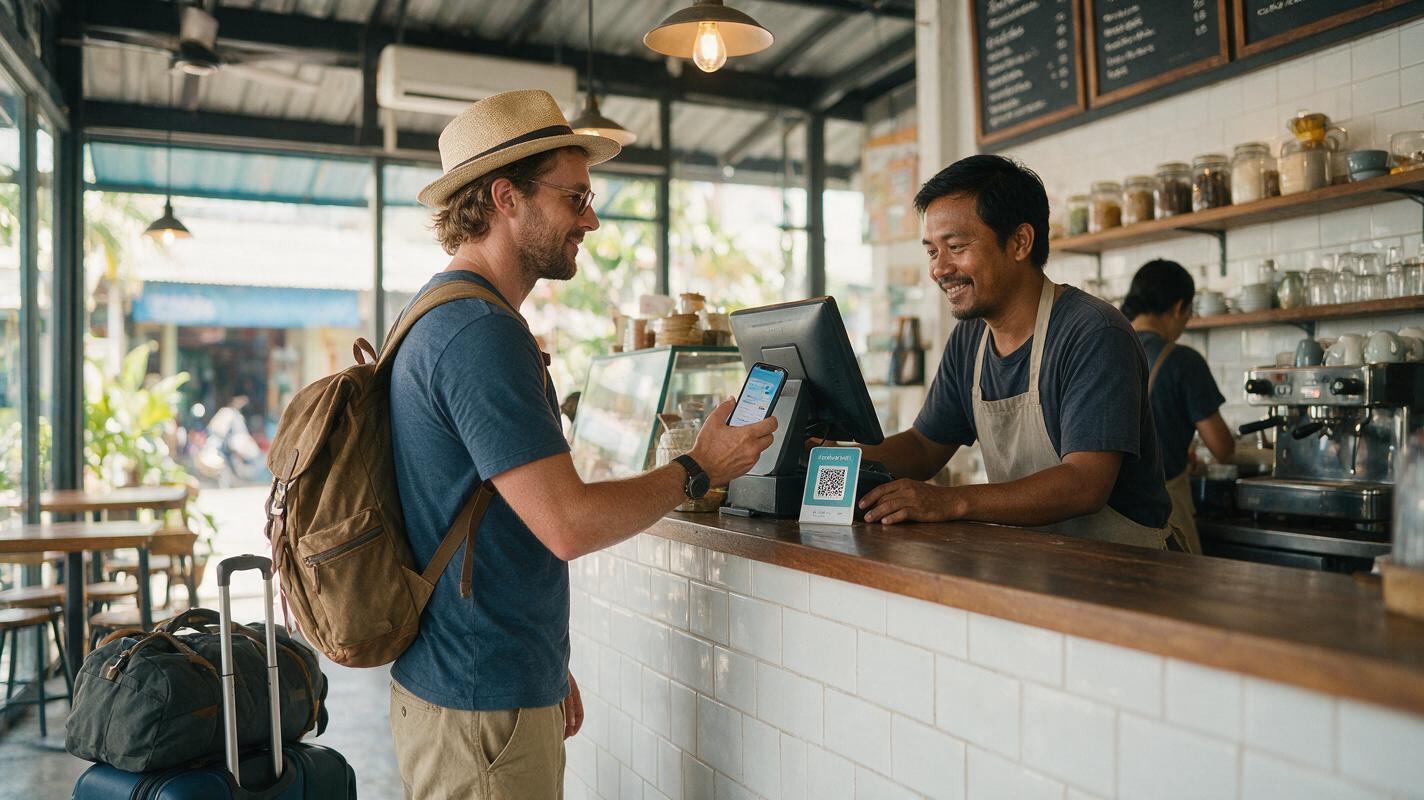
Table of contents
Google Wallet Brings Traveler QR Payments Abroad
Google Wallet launched Traveler QR for overseas QR payments on November 10, 2026, introducing support through Google Play services 26.44. The feature works with the Alipay+ acceptance network and initially covers Malaysia, Indonesia and the Philippines.
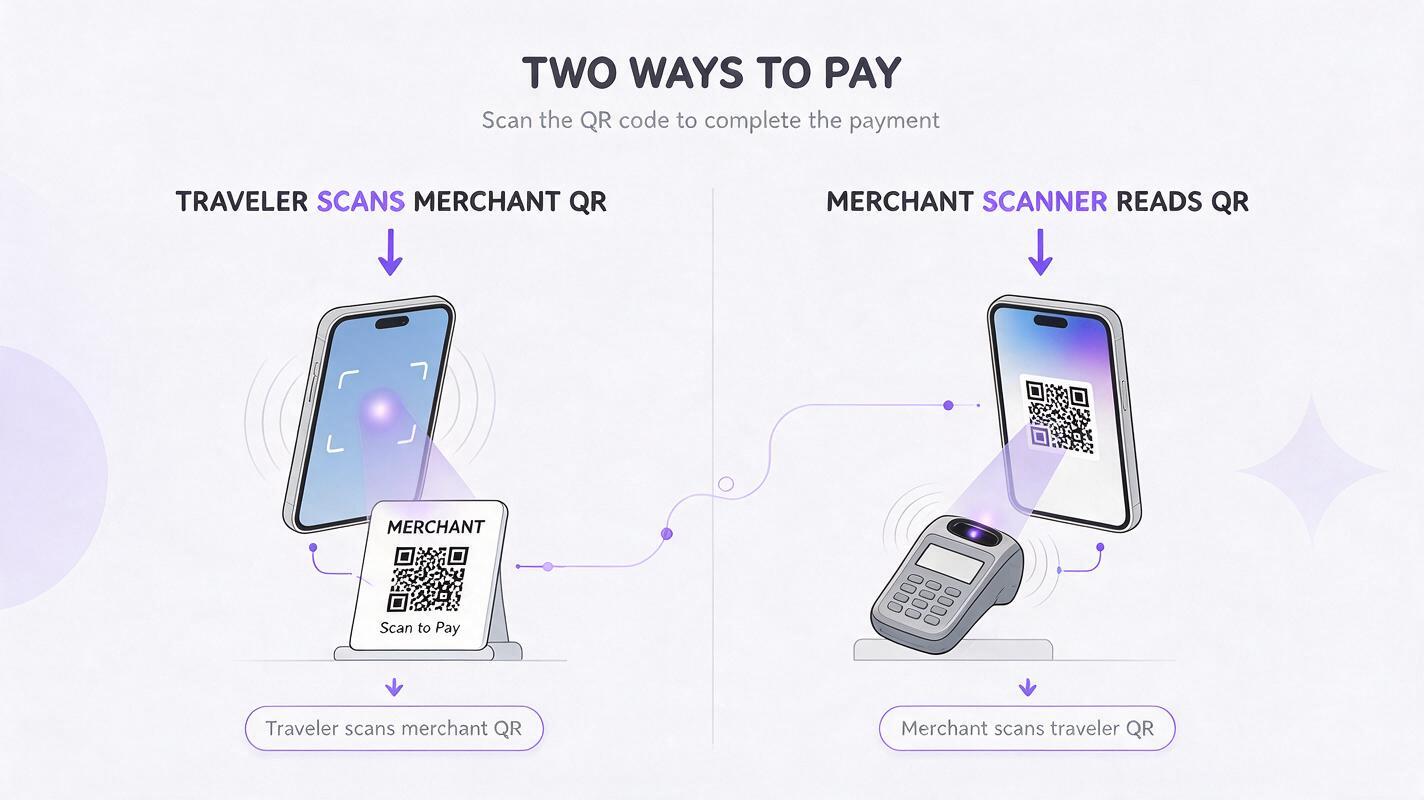
Traveler QR supports the two transaction patterns commonly encountered at QR-enabled merchants. A customer can scan a code displayed by a store, or a merchant can scan a code presented by the customer. Google Wallet can surface the overseas payment option through a geofence when a traveler arrives in a supported market. Users can also find it manually under Overseas QR payments.
The strategic detail is larger than the interface change. This is Google's first large-scale reliance on a China-led cross-border acceptance network rather than building coverage by negotiating separately with acquiring partners in each country. The announcement did not disclose transaction fees or the terms governing settlement currencies.
For content teams, the release creates an immediate need for precise, localized communication. Travel publishers, payment explainers and brand social teams must distinguish between confirmed market coverage, the two supported scanning modes and financial details that remain undisclosed.
Why the Alipay+ Connection Matters
Traveler QR gives Google Wallet a route into markets where QR codes are already a visible part of physical commerce. Instead of treating every destination as an isolated integration project, Google is using Alipay+ as the cross-border acceptance layer for the initial rollout.
That approach changes the story from a narrow wallet update into a platform-distribution development. Google controls the Wallet experience, while the acceptance footprint depends on the Alipay+ network. The arrangement illustrates how consumer platforms can expand through an existing regional network without negotiating country by country.
The defining news is not simply that Google Wallet can display or scan a QR code. It is that Google has chosen a shared cross-border network to support the initial overseas rollout.
Careful wording is essential. The confirmed launch markets are Malaysia, Indonesia and the Philippines. Broader availability was not specified in the supplied announcement, and neither fees nor settlement-currency arrangements were disclosed. Content should not turn an initial release into a claim of universal acceptance.
Two QR Payment Modes, One Travel Feature
The release supports both sides of the typical QR interaction. In a customer-scanned transaction, the traveler uses Google Wallet to scan the merchant's displayed code. In a merchant-scanned transaction, the traveler presents a code that the merchant reads.
| Payment mode | What happens | Confirmed status |
|---|---|---|
| Customer-scanned code | The traveler scans a QR code presented by the merchant. | Supported by Traveler QR |
| Merchant-scanned code | The traveler presents a QR code for the merchant to scan. | Supported by Traveler QR |
| Automatic discovery | A geofence can surface the feature after arrival in a supported market. | Available as an activation path |
| Manual discovery | The user opens the Overseas QR payments area. | Available as an activation path |
This distinction is valuable in editorial coverage because a generic statement such as “Google Wallet supports QR payments” leaves out how the product works at the point of sale. A useful news graphic or short-form video can show the two interactions side by side without speculating about exchange rates, payment limits or merchant coverage.
What Remains Undisclosed
The announcement leaves two commercially important questions unanswered: fees and settlement-currency terms. Those omissions matter because travelers often evaluate payment methods by looking beyond convenience to the complete cost and the currency used to settle a purchase.
Publishers should therefore separate verified functionality from unanswered pricing questions. It is accurate to say that Traveler QR operates through Alipay+ in the three initial markets and supports both scanning directions. It is not accurate to publish a specific fee, exchange-rate policy or settlement mechanism without additional confirmed information.
This boundary also offers a strong editorial angle. A headline can focus on the rollout and its platform significance, while the body clearly identifies the commercial details that Google has not disclosed. That approach is more useful than filling the gaps with assumptions.
What This Means for AI Content Workflows
Payment and travel news moves quickly across formats. One announcement may need to become a news article, a destination-specific social post, a visual comparison and a short explainer video. An AI workflow can help adapt the same verified facts for different audiences, but human review remains important when the subject involves financial terms or geographic availability.
For a visual report, teams can use an ai image generator to develop a realistic travel-payment scene showing a phone, a merchant QR placard and a checkout counter. The visual should avoid invented fee screens, unsupported country lists or fabricated wallet controls.
An ai video generator can help turn the two confirmed payment modes into a concise comparison: one scene in which the traveler scans the merchant's code and another in which the merchant scans the traveler's code. The factual captions should remain limited to Play services 26.44, Alipay+ support and the three initial countries.
Localization Requires More Than Translation
Malaysia, Indonesia and the Philippines should not be presented as interchangeable markets. Even when the verified product facts remain identical, headlines, examples and visual environments should be adapted carefully for each audience. The goal is to preserve the same factual core while avoiding generic imagery that makes every destination look the same.
A multi-model platform can make this production process easier to manage from one account. Teams can compare outputs, maintain a consistent fact sheet and move among text, image and video formats without building the entire campaign around one AI assistant or one isolated tool.
The Broader Platform Signal
Traveler QR shows how major platforms can extend their reach through external infrastructure. Google is not merely adding another button to Wallet; it is using a cross-border acceptance network to enter multiple markets under one initial framework.
That pattern is relevant beyond payments. AI automation and agent-based services also depend on partnerships, permissions and infrastructure that may sit outside the visible consumer interface. A smooth user experience can conceal a layered platform relationship underneath it.
For publishers, the durable angle is therefore ecosystem strategy. The feature itself is useful, but the more consequential signal is Google's decision to rely on Alipay+ for its first large-scale cross-border QR acceptance push.
What to Watch Next
- Geographic expansion: whether Google identifies additional supported destinations beyond the three initial markets.
- Commercial terms: whether transaction fees and settlement-currency details are published.
- Merchant communication: how clearly supported payment modes are explained at physical checkouts.
- Product discovery: how the geofence and manual Overseas QR payments entry coexist for travelers.
Teams producing timely travel, commerce or technology coverage can try these models for free and turn the verified announcement into coordinated text, image and video assets.
Key Takeaways
- Google Wallet launched Traveler QR with Google Play services 26.44.
- The initial markets are Malaysia, Indonesia and the Philippines.
- Both customer-scanned and merchant-scanned QR transactions are supported.
- The feature can appear through a geofence or be opened manually under Overseas QR payments.
- Alipay+ supplies the cross-border acceptance network.
- Fees and settlement-currency terms were not disclosed.
Keywords
google wallet traveler qr payments, alipay+, overseas qr payments, cross-border payments, google play services 26.44, ai workflow, content localization