Hidden Recording Devices Found in OpenAI Office; Employee Arrested
Hidden recording devices were reportedly found inside an OpenAI office on October 15, 2026, and an employee was arrested. The incident highlights security, reliability, and continuity concerns across AI production workflows.
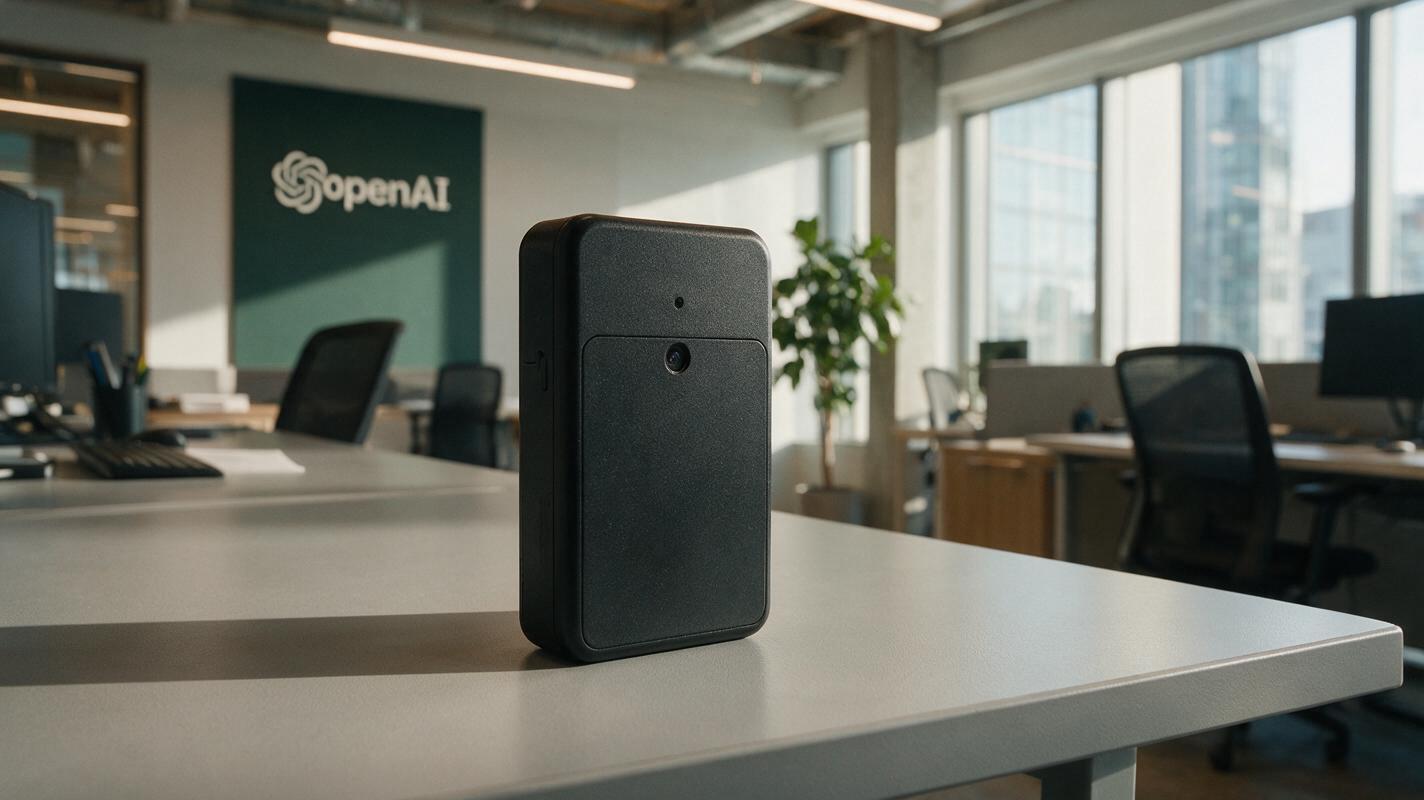
Table of contents
A reported security incident inside an OpenAI workplace puts physical access, confidential conversations, and operational reliability in focus.
What Happened at the OpenAI Office
Hidden recording devices were reportedly found inside an OpenAI office on October 15, 2026, and an employee was arrested in connection with the incident. The report identifies the location as an OpenAI office and confirms the discovery of more than one recording device, making this a physical workplace-security event rather than a newly disclosed model behavior or online account breach.
The available report does not identify the employee, state where in the office the devices were located, describe what they may have captured, or specify how long they had allegedly been present. It also provides no detail about the type of recording equipment, the circumstances of the discovery, the reason for the employee’s arrest, or any formal allegation beyond the reported arrest itself.
No information was supplied about whether confidential product discussions, model research, safety work, business negotiations, or employee conversations were recorded. There is also no confirmed account of data exposure, service disruption, customer impact, or changes to OpenAI model availability. Those unanswered questions matter because the known facts establish a serious incident while leaving its operational scope unclear.
Confirmed in the October 15 report: hidden recording devices were found in an OpenAI office, and an employee was arrested.
Not specified: the employee’s identity, the office location, the contents of any recordings, the devices’ placement, the duration of the alleged activity, and any effect on OpenAI services.
For people producing content with AI tools, the immediate lesson is not that a particular OpenAI model has failed. It is that model selection also depends on the security, availability, and institutional reliability of the organizations operating those models.
Why a Physical Security Event Matters in AI
Frontier AI development is often discussed in terms of model benchmarks, training infrastructure, product pricing, and safety evaluations. Yet offices remain part of the security boundary. Meetings, whiteboards, prototypes, internal reviews, and spoken conversations can all contain information that never appears in a public product interface.
A hidden recording device can therefore create a different category of concern from a software vulnerability. It may affect conversations and physical environments that conventional account controls do not cover. In an AI company, that distinction can be especially important because technical, commercial, and safety decisions may be discussed before they are documented or publicly announced.
The report confirms a discovery and an arrest, but it does not establish what was recorded or whether any model, customer account, or production service was affected.
That boundary should remain clear. Treating every security headline as proof of a wider compromise would go beyond the disclosed facts. At the same time, dismissing a physical recording incident because no online outage has been reported would overlook the role workplace security plays in protecting sensitive AI development.
Known Facts and Open Questions
| Area | What the report says | What remains unknown |
|---|---|---|
| Date | October 15, 2026 | The discovery timeline and the period during which the devices may have been present |
| Location | An OpenAI office | The city, building, room, or work area involved |
| Equipment | Hidden recording devices | The device type, quantity, storage method, and recorded material |
| Personnel | An employee was arrested | The person’s identity, role, and any formal accusation |
| Operational impact | No impact was described | Whether internal work, model access, or services were affected |
This division between verified information and unanswered questions is essential for responsible AI news coverage. An arrest is not a conviction, and the discovery of recording equipment does not by itself reveal what information was captured. Additional verified reporting would be required before drawing conclusions about motive, exposure, or organizational impact.
Reliability Is Broader Than Model Performance
Creative teams commonly compare AI systems by output quality, speed, visual consistency, and cost. Security events add another dimension: continuity. A highly capable model can still become a production risk when access changes, organizational events trigger restrictions, or a provider’s operating environment becomes uncertain.
This does not mean teams should abandon a model whenever its provider appears in a security report. It means production planning should avoid making every deliverable dependent on one account, one model family, or one route to generation. Prompts, scripts, reference images, approved outputs, and review notes are more useful when they remain portable.
Practical continuity signals for creative teams
- Availability: whether the selected model remains accessible during a production window.
- Consistency: whether repeated generation produces output suitable for the same campaign or story.
- Portability: whether prompts and source assets can move to another model without rebuilding the project.
- Reviewability: whether humans can inspect generated material before publication.
- Provider diversity: whether an alternative remains available if one service changes unexpectedly.
What This Means for AI Content Production
Model-provider security and creative production may appear separate, but they meet at the point of dependency. A campaign can involve scripts, still images, motion generation, voice work, and many revisions. If every part of that chain relies on one provider, any disruption can delay the entire project.
A multi-model environment gives teams more room to compare output and maintain continuity. Within MagicBoat, a producer can move from an ai image generator workflow into text to video production while keeping the larger creative process in one account. The value is not a claim that one platform eliminates every provider risk; it is the ability to avoid tying the whole production pipeline to a single model route.
That flexibility is useful when AI news concerns security rather than a product launch. New models can be evaluated for quality, while provider reliability can be evaluated separately. Teams can preserve approved assets and maintain alternate generation options without treating an unconfirmed consequence as established fact.
Key Takeaways
- Hidden recording devices were reportedly found in an OpenAI office on October 15, 2026.
- An employee was arrested, but the report does not identify that person or specify a formal allegation.
- The available information does not say what was recorded or whether OpenAI models, accounts, or services were affected.
- Physical workplace security is part of the wider reliability picture surrounding frontier AI providers.
- Creative teams can reduce production dependency by retaining portable assets and access to multiple model options.
Keep AI Production Flexible
Security headlines can change the risk picture without immediately changing model performance. Maintain adaptable prompts, reusable source material, and alternative generation routes so production does not depend entirely on one provider.
try these models for free and build a more flexible workflow for images, video, scripts, and AI storytelling.
Primary keyword: OpenAI office recording devices
Related keywords: OpenAI security, AI news, AI tools, AI video generator, text to video, AI roundup