Huawei Chip Breakthrough Threatens Apple China Market Share, CNBC Reports
CNBC’s October 2026 weekly tech report highlights Huawei’s latest chip breakthrough as a growing threat to Apple’s market share in China, while drawing increased scrutiny from Washington over technology control policies. The development signals shifting competitive dynamics in the global semiconductor and consumer AI device space, with tangible implications for content creators relying on Apple hardware and AI tools. Cloud-based multi-model AI platforms offer creators a flexible alternative that reduces reliance on local hardware amid market volatility.

Table of contents
A new Huawei chip advance is shaking up Apple’s China position and drawing U.S. regulatory attention, with ripple effects across the AI device and content ecosystem.
What the CNBC Weekly Report Details
On October 18, 2026, CNBC’s weekly tech analysis flagged a recent chip breakthrough from Huawei as an emerging threat to Apple’s market share in China, one of the world’s largest consumer technology markets. The report also notes the development has caught the attention of Washington policymakers, who are examining the implications for existing technology control frameworks designed to restrict advanced semiconductor access.
Specific technical details of the chip breakthrough were not outlined in the weekly report, but its potential to shift competitive dynamics in China’s premium smartphone and device segment is significant enough to warrant both industry and regulatory scrutiny. Apple has long held a strong position in China’s high-end device market, with the iPhone lineup serving as a core revenue driver for the company’s Greater China segment.
Why This Matters for the Broader AI Industry
The competitive pressure from Huawei’s chip advance comes at a pivotal moment for Apple’s AI strategy in China. As noted in earlier October 2026 reports, Apple recently received approval to launch its Apple Intelligence beta in China, built on Alibaba’s Qwen large language model. The initial rollout, expected later in October, includes live translation, writing tools, and photo cleanup features, though Siri AI functionality is not included in the first batch of releases.
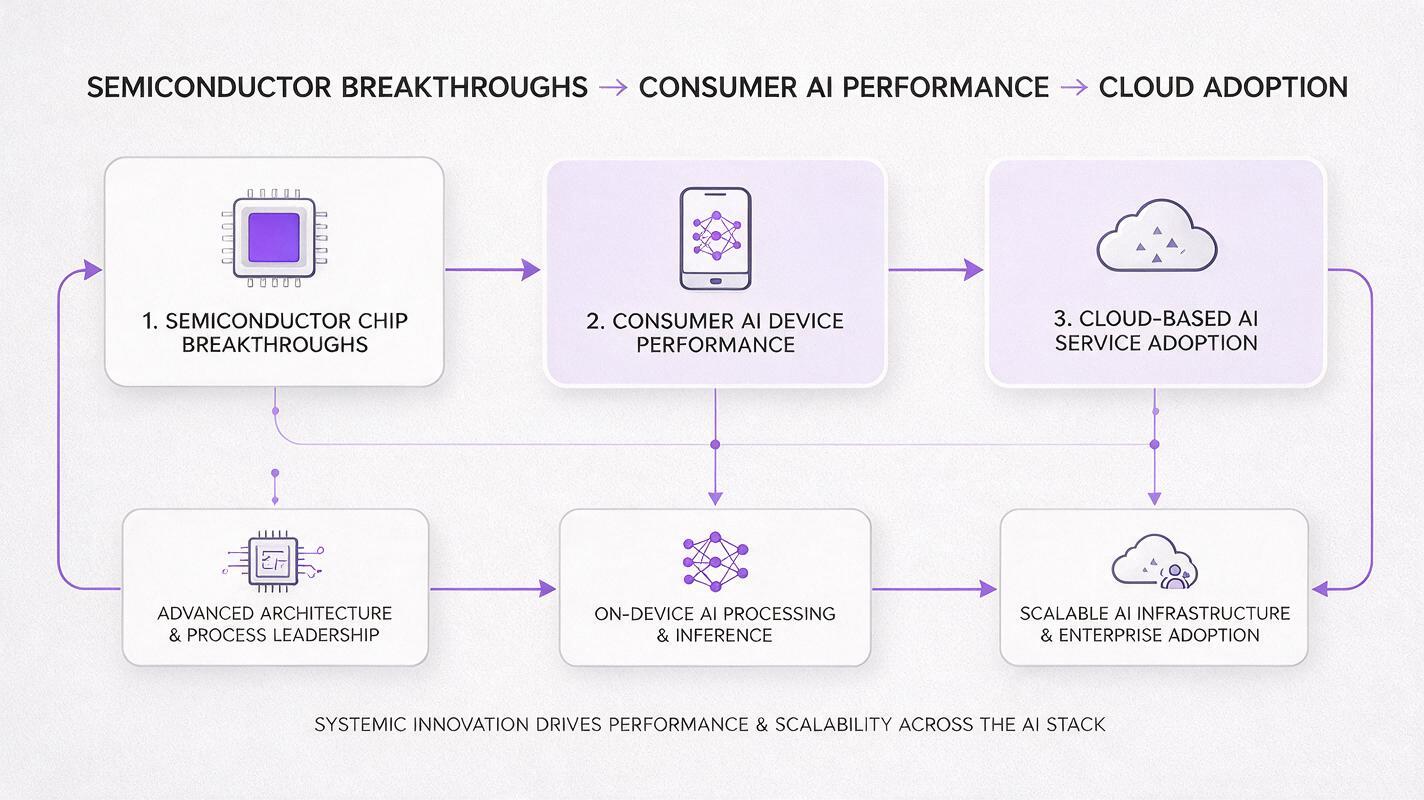
Apple is counting on on-device and cloud-integrated AI features to drive upgrade cycles and retain market share in China, but a competitive chip breakthrough from Huawei could erode that advantage by delivering comparable or superior AI performance on domestic devices at lower price points. This dynamic is part of a larger global shift in semiconductor capability that is reshaping where AI capital expenditure flows, as both cloud and device vendors invest heavily in custom silicon to power next-generation AI workloads.
Industry estimates from earlier in the quarter project that the world’s five largest cloud giants will see AI capital expenditure grow more than 50% to $1.2 trillion in the coming year, as demand for AI compute continues to surge. Shifts in semiconductor supply chains and regulatory policy could redirect a portion of that spending, as companies adjust their infrastructure plans to account for new geopolitical and competitive realities.
Implications for Content Creators and Content Teams
For content creators and small content teams, shifts in the consumer device and semiconductor market may feel distant at first, but they carry tangible impacts for workflow costs, tool availability, and audience reach. Many creators rely on Apple hardware for core production tasks, from video editing and graphic design to local AI model inference. A shift in Apple’s market position could affect product pricing, feature rollout timelines, and long-term support for creative workflows.
Supply chain disruptions and regulatory changes tied to technology controls could also drive up costs for high-performance hardware, making it harder for independent creators to invest in the local compute power needed for advanced AI content creation. This is where cloud-based multi-model AI platforms offer a critical buffer: instead of relying on local chip performance, creators can access state-of-the-art AI tools directly through a browser, with no expensive hardware upgrades required.
MagicBoat’s platform includes access to ai image generator tools for visual content, text to video capabilities for short-form and long-form video production, and a full suite of audio, script, and storyboarding tools. You can try these models for free to test how cloud-based AI can reduce your reliance on local hardware and keep your workflow flexible amid market shifts.

Navigating Shifting AI Hardware Dynamics
As the global AI hardware landscape continues to evolve, creators can take several practical approaches to protect their workflows and budgets from supply chain and market volatility.
First, prioritize cloud-based AI tools that work across any device, so you’re not locked into a single hardware ecosystem or vulnerable to price hikes from supply chain disruptions. Multi-model platforms let you switch between tools and models based on your specific project needs, without purchasing new hardware for each new capability.
Second, diversify your content distribution strategy to account for shifting device market share. If Huawei gains ground in China, for example, optimizing content for Huawei device formats and AI assistant integrations could help you reach new audiences that may be less accessible through Apple’s ecosystem.
Third, focus on cost-per-output rather than upfront hardware investment when evaluating AI tools. Cloud-based platforms typically operate on a pay-as-you-go or subscription model, which makes it easier to scale your usage up or down based on project demand, rather than tying up capital in expensive hardware that may become outdated quickly as chip technology advances.

Key Takeaways
- CNBC’s October 2026 weekly report identifies Huawei’s latest chip breakthrough as a growing threat to Apple’s market share in China.
- The development is drawing increased scrutiny from Washington policymakers, with potential implications for global technology control policies and semiconductor supply chains.
- Apple is counting on its Apple Intelligence beta, built on Alibaba’s Qwen model, to drive device upgrades in China, but competitive pressure from Huawei could erode that advantage.
- Shifts in the AI hardware market can impact creator costs, tool availability, and audience reach, making flexible, cloud-based workflows more valuable than ever.
- Multi-model AI platforms like MagicBoat reduce reliance on local hardware, giving creators access to state-of-the-art tools without expensive upfront investments.
Keywords
ai industry, ai capital expenditure, huawei chip breakthrough, apple china market share, technology controls, semiconductor ai, consumer ai devices