Netflix Releases Hunting Gary Glitter and Love Is Blind Season 11
Netflix released the three-part crime docuseries Hunting Gary Glitter alongside Love Is Blind Season 11 on October 14. The contrasting releases show how clearly defined formats can sharpen campaign messaging and inspire more coherent AI-assisted entertainment projects.
Table of contents
What Netflix Released on October 14
Netflix added two notably different titles to its lineup on October 14: Hunting Gary Glitter, presented as a three-part crime docuseries, and Love Is Blind Season 11. One arrives as a compact documentary package with a clearly stated episode count, while the other continues a title that has reached its eleventh season.
The news is less about a single dominant premiere than the breadth of programming Netflix can place before viewers on the same day. A three-part crime docuseries communicates a contained commitment and a defined editorial scope. A season-numbered release carries a different message: continuity, familiarity and another installment in an established format.
Those distinctions matter before anyone watches either program. The title, format and season information already tell audiences what kind of viewing commitment is being offered. For people working in AI content creation, this release pairing is a useful reminder that a project becomes easier to explain when its format is visible from the beginning.
Why the Two Releases Create a Useful Format Contrast
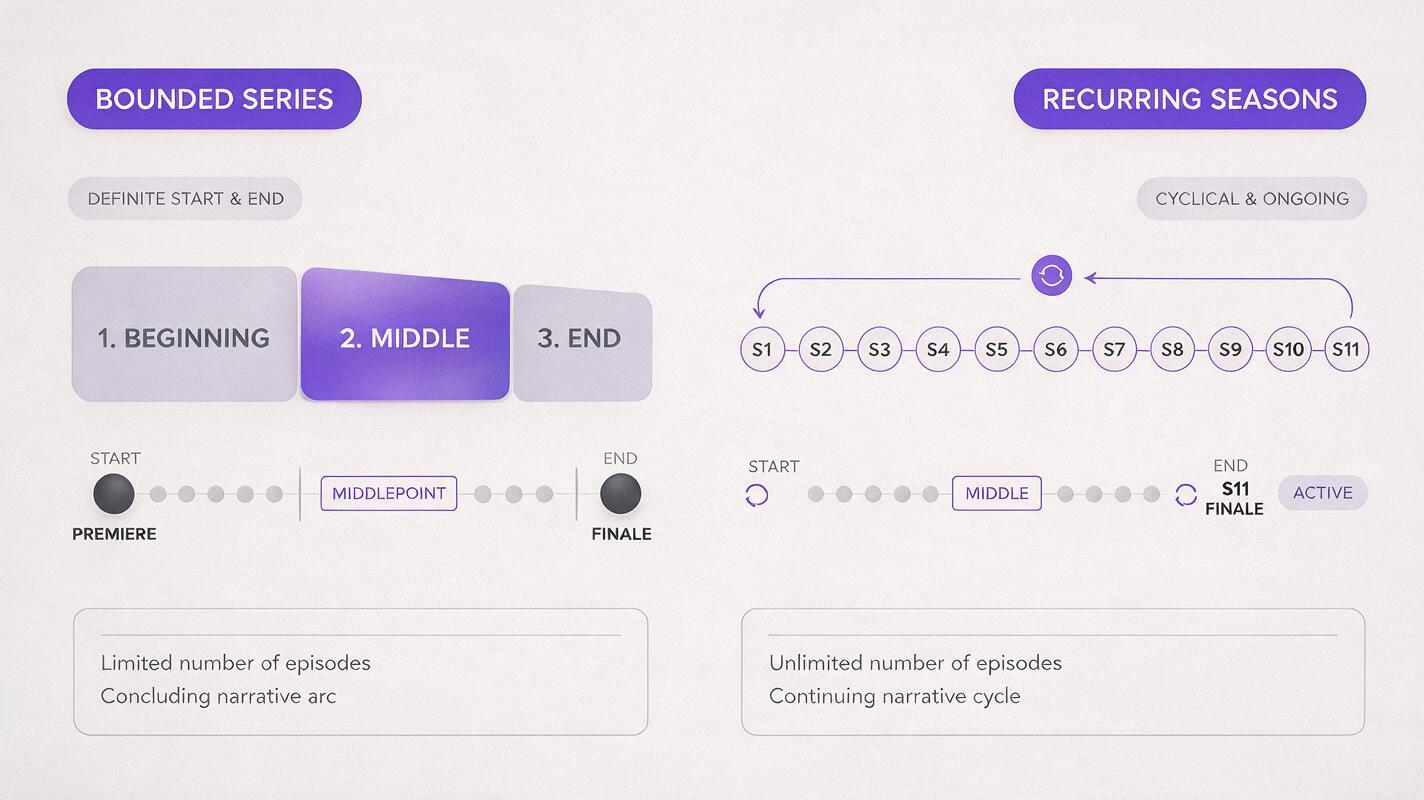
The October 14 pairing highlights two different ways to package serialized entertainment. The available facts do not establish which title performed better, and they do not support assumptions about audience response. What they do provide is a clear structural contrast.
| Release | Confirmed format detail | Immediate positioning signal |
|---|---|---|
| Hunting Gary Glitter | Three-part crime docuseries | A bounded documentary package |
| Love Is Blind Season 11 | Eleventh season | Continuity within a recurring title |
A fixed three-part structure can help a campaign emphasize concentration and completion. A season label can emphasize continuation and recognition. Neither approach is automatically stronger; each creates a different expectation that promotional materials should support consistently.
A clear format is part of the story. Audiences should be able to understand whether a release is compact, continuing or designed for repeated viewing before they commit their time.
The Packaging Lesson for AI Content Creation
Independent producers often begin with a premise, visual mood or character but postpone the format decision. That can produce disconnected assets: a poster suggesting a feature, a teaser resembling an episodic series and a description that never states what viewers will receive.
The Netflix pairing points toward a more disciplined alternative. A compact documentary-style project should communicate its limited scope across the synopsis, key art and trailer. A recurring fictional format should establish repeatable elements that can survive across episodes without making every installment look identical.
This is especially relevant to an original ai short drama. The production may be brief, but it still benefits from a declared identity. A creator can frame it as a self-contained story, a small collection of connected chapters or an ongoing serial. That decision affects pacing, visual continuity and promotional language.
Campaign Architecture for a Compact Series or Returning Format
The distinction between a bounded series and a continuing title can guide the kinds of campaign assets developed around an original project.
For a compact documentary-style project
- State the scope clearly: Make the number of installments part of the core description when that information helps define the experience.
- Give each installment a distinct question: Individual chapters should contribute to one central editorial theme without repeating the same promise.
- Keep the visual system unified: Typography, framing and color can connect the package while each chapter receives its own focal image.
- Protect factual boundaries: Documentary-inspired AI work should distinguish verified information from reconstruction, interpretation or purely fictional material.
For a recurring entertainment format
- Preserve recognizable elements: Repeated visual motifs can help viewers identify the larger series.
- Introduce a fresh campaign hook: A new installment needs a reason to feel current rather than merely repeated.
- Maintain character and setting continuity: Promotional images should not contradict one another when they represent the same fictional world.
- Design reusable assets: Title cards, episode frames and teaser layouts can form a consistent campaign family.
These principles do not require copying either Netflix release. They translate the structural lesson into original work with its own characters, setting and editorial purpose.
From Release Concept to AI Video Assets
Once the format is defined, AI-assisted production becomes more focused. A concise creative brief can specify whether the material belongs to a closed three-part narrative or a recurring series. That brief can then govern the script, storyboard, key images and trailer concepts.
For example, a fictional three-chapter mystery could use one visual object across all promotional scenes while changing the location and emotional emphasis. A recurring drama could retain the same setting and character relationships while giving every installment a different conflict. Using text to video within that framework can help explore original teaser concepts without losing sight of the larger package.
The strongest AI video campaign is not simply a collection of attractive clips. It is a coordinated set of assets that communicates the same promise. Visual experimentation remains valuable, but the format should determine which experiments belong together.
Editorial Care Around Crime-Related Material
The crime-docuseries label attached to Hunting Gary Glitter also raises an important creative boundary. When real people or allegations are involved, visual impact cannot replace source discipline. AI-generated reconstructions, invented quotations and unsupported claims can blur the line between documented material and fabrication.
Original AI film projects can avoid that problem by separating factual documentary work from fictional crime storytelling. Fictional characters, invented locations and clearly original scenarios allow creators to explore suspense without implying that generated scenes are authentic records of real events.
Where factual material is used, provenance and context should remain visible. A polished image does not become evidence merely because it appears realistic. Responsible packaging should make the nature of every asset understandable to the audience.

What MagicBoat Adds to the Creative Workflow
MagicBoat gives filmmakers and digital storytellers a place to develop original ideas across scripting, visual planning and AI video production. The main advantage of a connected workflow is campaign coherence: the same central concept can guide a synopsis, storyboard, teaser and short-form promotional variation.
That makes the October 14 release lesson practical. Decide whether an original project is a compact package or a continuing format, establish its visual identity and keep that identity recognizable across every asset. To explore a new series concept, try these models for free and build a campaign around a clearly defined format rather than disconnected images.
Final Checklist
- Define whether the project is self-contained or recurring.
- Make the format clear in the title, synopsis and campaign copy.
- Keep key visual motifs consistent across related assets.
- Give every installment a distinct narrative purpose.
- Separate factual material from fictional or generated reconstruction.
- Review the complete campaign for conflicting promises before publication.
Keywords
hunting gary glitter netflix, love is blind season 11, netflix releases, ai content creation, ai short drama, text to video, ai film