What Is Jeff Bezos’s Role in Robert Pattinson’s Bond Casting? | MagicBoat
Jeff Bezos said on Nov. 18 that he was heavily involved in casting Robert Pattinson as James Bond, after Amazon MGM executives initially doubted the choice. His account adds a revealing executive layer to the Nov. 16 casting announcement and offers creators a lesson in testing unexpected talent against the needs of a character.
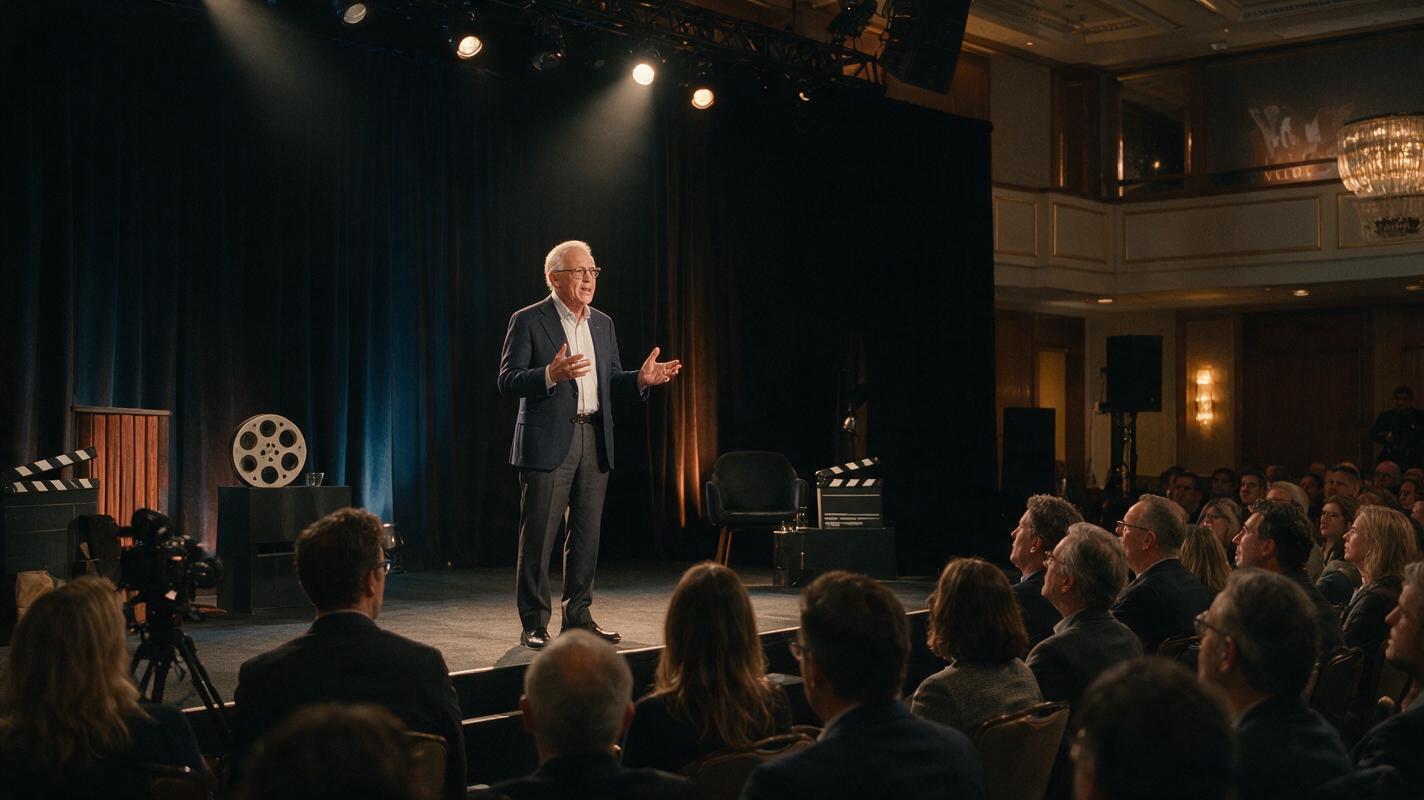
Table of contents
Jeff Bezos Says He Helped Choose the Next James Bond
Jeff Bezos said at a New York conference on Nov. 18, 2026, that he was “heavily involved” in casting Robert Pattinson as James Bond. According to Nov. 18 reporting from The Hollywood Reporter and Variety, Bezos also revealed that Amazon MGM executives were initially biased against Pattinson before ultimately deciding that he was right for the role.
The disclosure matters because it adds an unusually direct executive dimension to one of cinema’s most closely watched casting decisions. Pattinson’s selection had been formally announced on Nov. 16, 2026, with Denis Villeneuve attached to direct, according to the same trade coverage.
For filmmakers and AI content creators, the useful lesson is not to imitate Bond or reproduce protected franchise elements. It is to examine how an initially counterintuitive performer can become convincing when casting is evaluated through character, tone and screen presence rather than through a familiar public image alone.
What Happened at the New York Conference
Bezos discussed the Bond decision publicly on Nov. 18, two days after Robert Pattinson was formally announced as the next James Bond on Nov. 16. The Hollywood Reporter and Variety attributed the remarks directly to Bezos, who said he had been heavily involved in the casting process.
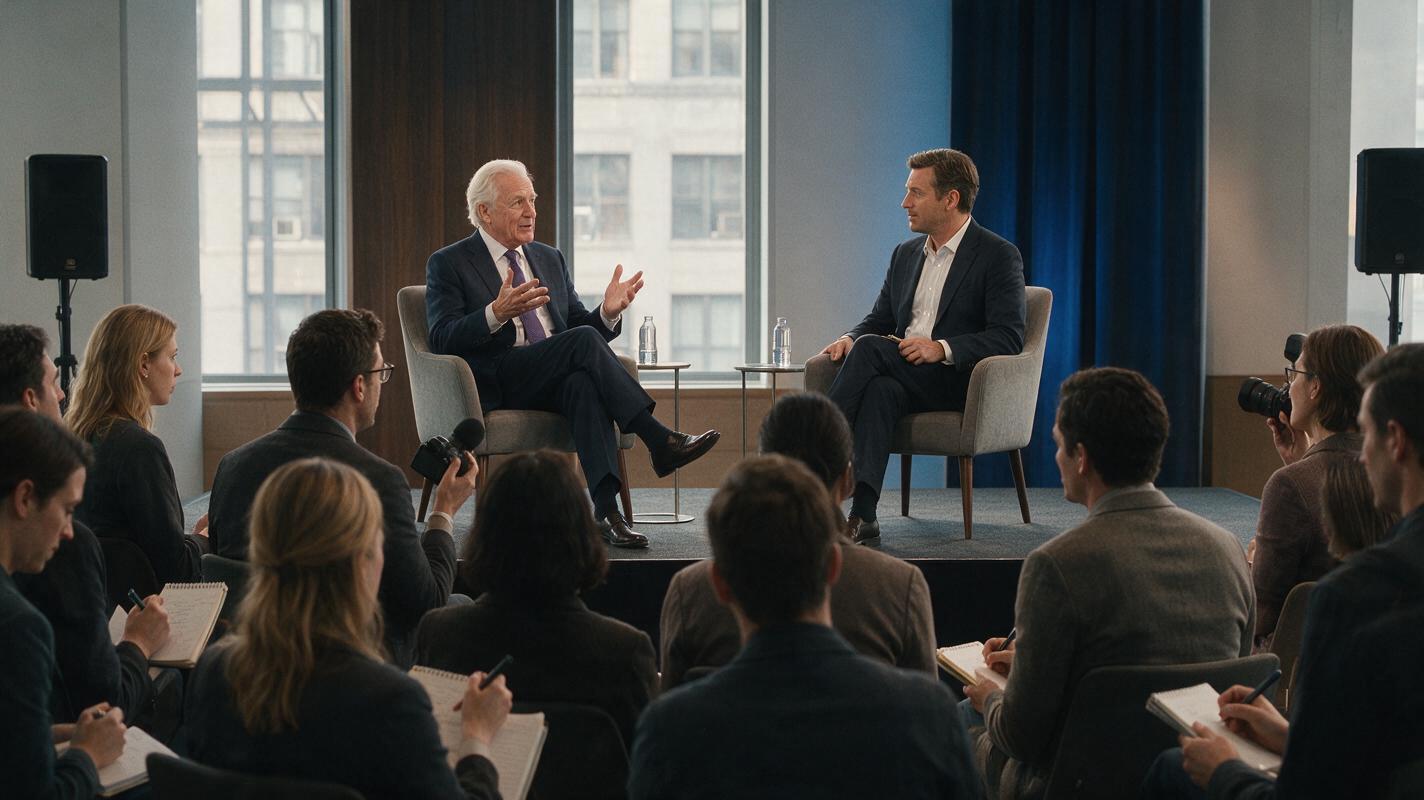
His most revealing comment concerned the internal reaction at Amazon MGM. Bezos said the company’s senior film leadership was initially biased against choosing Pattinson, although the reports did not disclose the specific nature of that bias, identify individual opponents or provide a detailed account of the deliberations.
Bezos said the executives eventually concluded that Pattinson was right for the role. That distinction is important: the available reporting describes a change in internal judgment, but it does not publish audition footage, voting records, evaluation criteria or a complete timeline of the decision.
The confirmed news is that Bezos described himself as heavily involved and said Amazon MGM leadership moved from initial resistance to support. The precise mechanics of his involvement were not disclosed.
No financial terms for Pattinson’s casting were reported in this Nov. 18 account. A production budget, filming schedule and release date were also not disclosed in the entry. Claims about those subjects would therefore go beyond the available information.
Why Robert Pattinson Was an Unexpected Choice Internally
The report does not explain why Amazon MGM executives initially resisted Pattinson, so any proposed reason would be speculation. What the public account does establish is that the first internal response was not the final decision.
That makes this more than a celebrity anecdote. Major franchise casting is often treated publicly as though one obvious candidate rises naturally to the top. Bezos’s Nov. 18 comments instead describe a process in which decision-makers reconsidered an early assumption before aligning behind the selected actor.
The timing also gives the remarks added weight. Amazon MGM formally announced Pattinson on Nov. 16, and Bezos discussed his participation on Nov. 18. The short interval turns the conference appearance into an immediate explanation of how leadership viewed the decision rather than a retrospective offered years later.
However, Bezos’s description remains his own public account. The supplied reporting does not contain separate statements from the initially skeptical executives, and it does not independently detail how much influence Bezos exercised at each point in the process.
What Is Confirmed About the New Bond Film
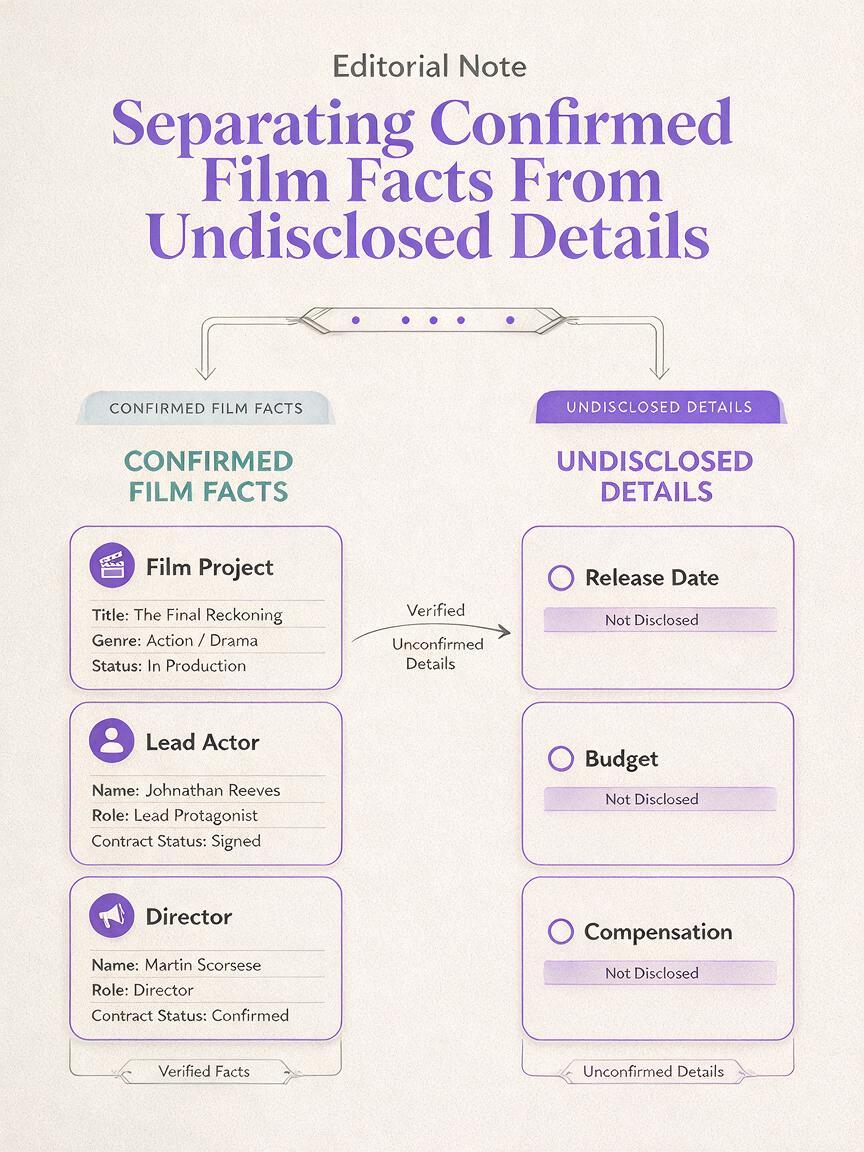
The Nov. 16 announcement confirmed Robert Pattinson as James Bond and Denis Villeneuve as director, according to The Hollywood Reporter and Variety. Those are the central creative facts connected to Bezos’s Nov. 18 remarks.
| Detail | Confirmed information | Source and date |
|---|---|---|
| James Bond actor | Robert Pattinson | Formal announcement reported Nov. 16, 2026 |
| Director | Denis Villeneuve | The Hollywood Reporter and Variety coverage |
| Bezos’s involvement | He said he was “heavily involved” in casting | Bezos remarks reported Nov. 18, 2026 |
| Initial executive reaction | Amazon MGM leadership was initially biased against Pattinson, according to Bezos | The Hollywood Reporter and Variety, Nov. 18 |
| Release date | Not disclosed in this report | Not disclosed |
| Production budget | Not disclosed in this report | Not disclosed |
| Pattinson’s compensation | Not disclosed | Not disclosed |
The missing details are significant. Pattinson’s casting and Villeneuve’s involvement are confirmed, but the report does not provide enough information to judge the film’s production scale, marketing calendar or commercial expectations.
What the Casting Reversal Means for Story Development
Creative teams frequently rely on fast mental associations when considering performers or character designs. A person’s best-known role, visual image or previous genre can make an unconventional choice feel wrong before the concept has been tested properly.
The Pattinson decision suggests a more useful creative question: does the candidate serve the intended interpretation of the character? That question is especially relevant during AI content creation, where creators can produce many visual directions quickly but may still carry the same assumptions into every variation.
An ai storyboard can help a team compare original character interpretations across different lighting, wardrobe, framing and emotional tones before committing to a final direction. The goal should be to test an original concept, not to copy Pattinson’s likeness, Bond imagery or other protected franchise material.
Creators can also use text to video for short, original screen tests built around contrasting character qualities. One version might present a protagonist as polished and controlled, while another emphasizes uncertainty, restraint or intensity. Comparing the results can reveal whether the seemingly unconventional option creates a stronger story.
A Practical Framework for Evaluating an Unexpected Lead
Separate reputation from the role
A performer or character concept should not be rejected solely because the audience associates it with a different genre. Bezos’s account indicates that Amazon MGM’s initial judgment changed, although the exact evaluation method was not disclosed.
Define the dramatic requirement
Before creating visuals, write down what the lead must communicate in the story: authority, vulnerability, danger, humor or another quality. This keeps the review centered on narrative function instead of familiarity.
Compare equivalent scenes
Test each original character direction in the same setting and dramatic moment. Changing the actor concept, location, dialogue and camera language simultaneously makes a fair comparison difficult.
Record why opinions change
If a skeptical reviewer becomes supportive, document what caused the shift. It may be a stronger silhouette, a more convincing emotional contrast or a better match between performance and world-building. That rationale is more valuable than a simple preference vote.
Unexpected casting works only when it strengthens the intended character. Surprise by itself is not a creative strategy.

What This Means for AI Video and AI Film Creators
The Bond story highlights the difference between rapid generation and informed selection. AI video tools can create more options, but creators still need clear criteria for deciding which option deserves further development.
For an original AI film or AI short drama, a productive review process can compare several lawful, fictional lead concepts without using a living actor’s likeness. Teams can evaluate whether each character remains recognizable across close-ups, action scenes and changes in costume or location.
MagicBoat brings multiple creation capabilities into one platform, allowing independent teams to move from early narrative ideas to visual tests without treating the first concept as final. That makes it easier to challenge assumptions before investing time in a complete sequence.
The larger lesson from Bezos’s Nov. 18 account is that initial resistance can contain useful information, but it should not automatically end an idea. A strong creative process gives an unconventional option enough evidence to succeed or fail on its actual storytelling value.
Bottom Line
Jeff Bezos said on Nov. 18 that he was heavily involved in selecting Robert Pattinson as James Bond and that Amazon MGM executives initially opposed the idea before deciding Pattinson was right. The comments followed the formal Nov. 16 announcement naming Pattinson as Bond and Denis Villeneuve as director.
The report does not disclose the film’s release date, production budget, casting compensation or the detailed mechanics of Bezos’s influence. Its clearest creative takeaway is narrower and more useful: early assumptions about casting can change when an unexpected candidate is evaluated against the needs of the character.
To explore original character directions, storyboards and screen-test concepts in one creative workspace, try these models for free.
Key Takeaways
- Jeff Bezos said on Nov. 18, 2026, that he was heavily involved in casting Robert Pattinson as James Bond.
- Bezos said Amazon MGM leadership was initially biased against Pattinson before deciding he was right for the role.
- Robert Pattinson’s casting was formally announced on Nov. 16, 2026.
- Denis Villeneuve was confirmed as director in the reported announcement.
- The release date, budget and Pattinson’s compensation were not disclosed in this report.
- Creators can use controlled visual tests to judge unconventional original characters on narrative fit rather than familiarity.
Keywords
Jeff Bezos James Bond, Robert Pattinson Bond, Amazon MGM, James Bond casting, AI content creation, AI video, AI film