Jensen Huang Resigns as Nvidia CEO After 33 Years
Jensen Huang resigned as Nvidia president, CEO and board member effective immediately after 33 years leading the company. CFO Colette Kress became interim CEO as Nvidia began a permanent leadership search and the market erased about $182 billion from its value in one session.
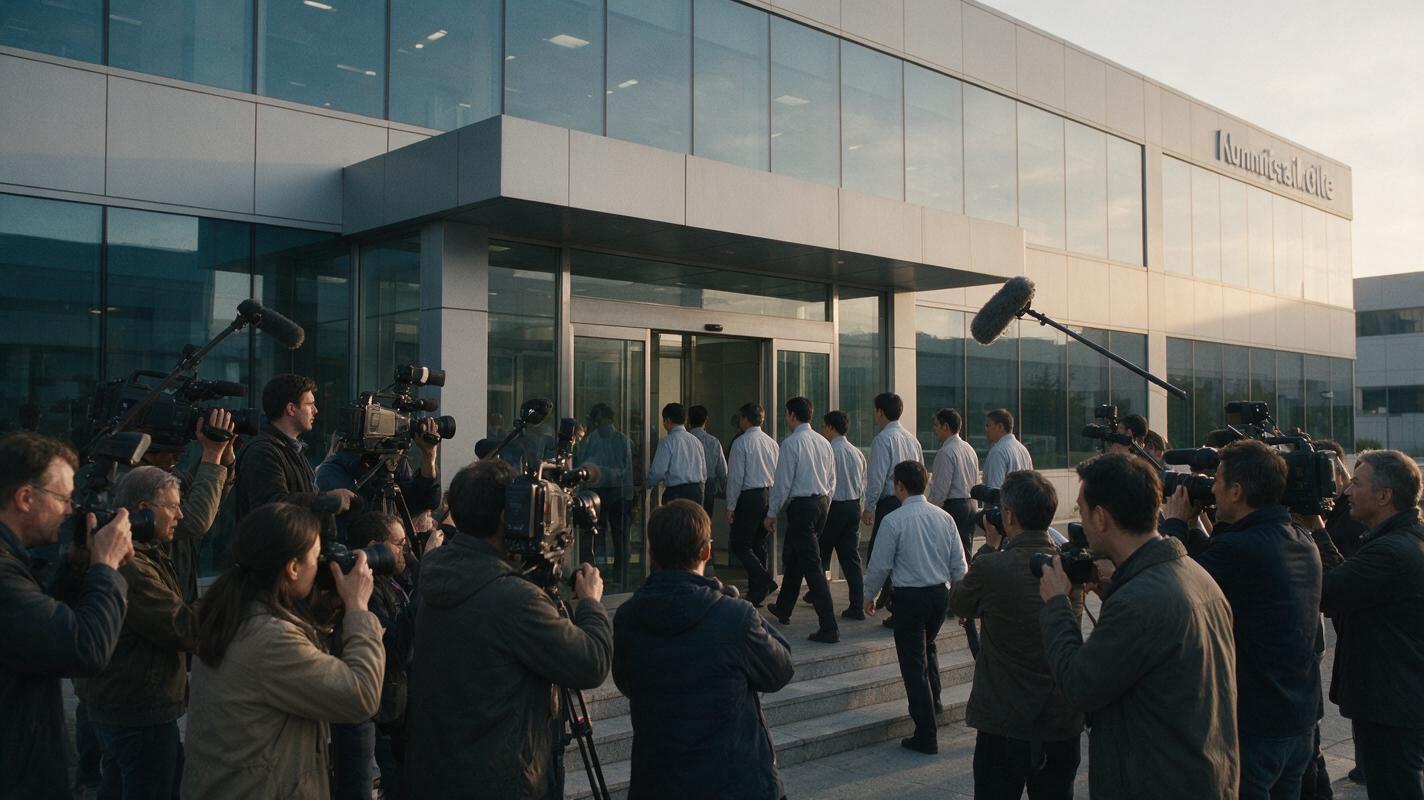
Table of contents
Nvidia Enters a New Leadership Era
Nvidia announced on November 12, 2026, that co-founder Jensen Huang had resigned as president, chief executive officer and board member effective immediately. His departure ends a 33-year tenure at the company’s helm and begins an unusually consequential leadership transition for one of the central companies in the AI infrastructure market.
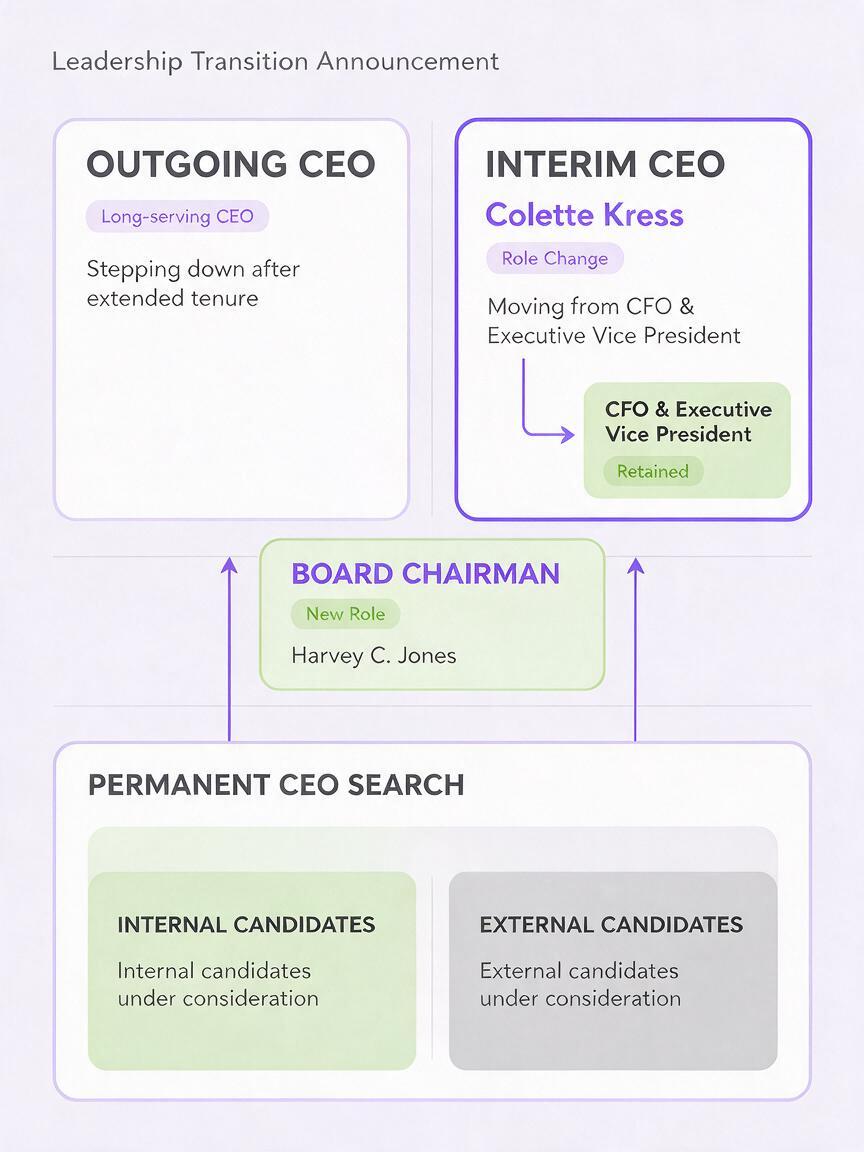
Executive vice president and chief financial officer Colette Kress was appointed interim CEO while retaining her existing responsibilities. Kress joined Nvidia in September 2013 and previously spent nearly 25 years in finance roles at Cisco and Microsoft. Nvidia’s board has started a permanent CEO search covering both internal and external candidates.
The board also named veteran director Harvey C. Jones as Nvidia’s first board chairman. Jones previously served as Synopsys CEO and executive chairman. The company still has an all-hands meeting scheduled for November 18, while quarterly earnings remain due after the market closes on November 17.
The market response was immediate. Nvidia shares fell as much as 13% to 14% at the open, briefly erasing approximately $500 billion in value and taking its market capitalization below $4 trillion for the first time since July 2025. The shares later recovered part of that decline and closed down 4.34% at $166.19, representing about $182 billion of market value lost during the session.
For people building AI content businesses, the central question is not short-term share-price direction. It is whether leadership change at a major infrastructure supplier could affect confidence, investment priorities and the reliability assumptions behind an AI workflow.
Colette Kress Takes Charge During the CEO Search
Kress enters the interim role with more than a decade of experience inside Nvidia and a long background in technology finance. Keeping her CFO and executive vice president responsibilities gives the company continuity, but it also concentrates several critical duties during the search for Huang’s permanent successor.
The search includes internal and external candidates, leaving open several possible outcomes. An internal appointment could emphasize continuity, while an external selection could signal a broader strategic or governance reset. Nvidia had not announced a permanent successor in the material available for this report.
| Leadership position | Named executive | Confirmed status |
|---|---|---|
| Interim CEO | Colette Kress | Retains CFO and executive vice president duties |
| Board chairman | Harvey C. Jones | Nvidia’s first board chairman |
| Permanent CEO | Not announced | Internal and external candidates under consideration |
The immediate leadership structure prioritizes continuity, but the November 17 earnings report and November 18 all-hands meeting will become early tests of how clearly Nvidia communicates through the transition.
Why Nvidia Shares Swung So Sharply
The initial 13% to 14% decline reflected the scale of the surprise and Huang’s unusually close association with Nvidia’s strategy. Although the stock recovered substantially before the closing bell, the final 4.34% decline still removed about $182 billion in market value.
Bloomberg reported that Huang will forfeit approximately $108 million in unvested equity. Meanwhile, competing chip companies moved in the opposite direction: AMD rose 5.86%, and Broadcom gained 5.54%. The broader market was also lower, with the Dow down 0.36%, the S&P 500 down 0.35% and the Nasdaq down 0.39%.
The macroeconomic setting added pressure. A December rate increase was priced at approximately 91%, while the 10-year Treasury yield stood at 5.1%. Those conditions make high-value technology companies more sensitive to uncertainty, even when the central news is company-specific.
The contrast between Nvidia’s intraday loss and its smaller closing decline is important. It shows that investors initially priced in an abrupt leadership shock, then reassessed the immediate effect once the interim structure became clearer. That recovery does not settle the longer-term question of who will lead the company permanently.

The Investigation Behind the Leadership Shock
Nvidia’s board opened an internal investigation on November 8. The New York Times and Financial Times reported a relationship involving Huang and former Singapore data-center executive Alice Huang, alongside an allegation that she worked for Chinese intelligence. China’s Foreign Ministry rejected what it called the spy narrative on November 12.
The New York Times also reported a second relationship involving healthcare vice president Kimberly Powell on November 11. WIRED, citing a single anonymous source, reported that the direct-report relationship and dealings involving Megaspeed may have mattered more to the board than the espionage allegation.
These remain attributed reports rather than findings established in the provided material. Semafor separately reported that multiple Department of Justice investigations touch Nvidia, including an antitrust matter and another involving Supermicro, while noting no sign of planned criminal charges against Huang. He also agreed to provide closed-door congressional testimony before Thanksgiving.
The political and industry reactions underscored the extraordinary attention surrounding the succession. Donald Trump floated Tim Cook as the only successor in a Truth Social post, while Elon Musk said hiring Huang would be an honor. Neither comment represents an Nvidia appointment or an announced part of the formal search.
What the Transition Means for AI Content Production
Nvidia’s leadership change does not mean that an image, video or AI assistant service will suddenly stop working. It does, however, illustrate why production teams should distinguish between a model’s output quality and the wider infrastructure, governance and business conditions supporting access to it.
An AI content pipeline may depend on several layers: computing infrastructure, model providers, application platforms and the tools used to assemble final media. A disruption or policy change at any layer can influence availability, pricing or production planning. The practical response is not speculation about Nvidia’s next CEO; it is reducing unnecessary dependence on a single route through the ecosystem.
For example, teams producing campaign visuals can keep ideation and asset development accessible through an ai image generator, while video teams can organize motion production around an ai video generator. A unified environment makes it easier to maintain an AI video workflow without rebuilding the entire process whenever the broader technology market shifts.
Model Choice Is Also a Reliability Decision
Model selection is often framed as a contest over output quality, but availability and operational stability matter just as much for commercial work. A strong result has limited value if a team cannot reproduce it, move the project forward or access an alternative when conditions change.
MagicBoat’s one-account approach is relevant in that environment because it supports a more flexible content process rather than tying every project decision to one company or one underlying technology path. The goal is not to predict which infrastructure provider will face the next disruption. It is to keep creative production adaptable when leadership, regulation, safety controls or capacity conditions change.

What to Watch Next at Nvidia
- November 17 earnings: Quarterly results remain scheduled after the market closes.
- November 18 all-hands: Employees may receive more clarity on interim leadership and the search process.
- Permanent CEO selection: Nvidia is considering both internal and external candidates.
- Board oversight: Harvey C. Jones now serves as the company’s first board chairman.
- Congressional testimony: Huang agreed to appear in a closed-door session before Thanksgiving.
- Investigation findings: The provided material does not establish a final public conclusion from the internal investigation.
Key Takeaways
- Jensen Huang resigned from all three Nvidia roles immediately after 33 years at the helm.
- Colette Kress is serving as interim CEO while retaining her finance and executive duties.
- Harvey C. Jones became Nvidia’s first board chairman.
- Nvidia closed 4.34% lower at $166.19 after a much steeper opening decline.
- The company’s permanent CEO search covers internal and external candidates.
- AI production teams can respond to ecosystem uncertainty by maintaining flexible, multi-tool workflows.
To build a more adaptable image, story and video production process from one account, try these models for free on MagicBoat.
Keywords
Jensen Huang resignation, Nvidia CEO, Colette Kress, Nvidia leadership, AI infrastructure, AI workflow, AI content creation