JPMorgan Refutes iPhone 18 Pro Order Cut Rumor, Raises Apple Target to $360
JPMorgan has publicly refuted widespread rumors of a 15%+ cut to iPhone 18 Pro production orders, raising Apple’s 12-month target price to $360 per share in a mid-October 2026 research note. The rebuttal counters earlier Fortune reports tied to an AI-driven memory chip shortage, offering clarity on Apple’s premium hardware sales trajectory. The update carries broader implications for the AI industry, including capital expenditure trends and workflow cost considerations for content creators.

Table of contents
The News: JPMorgan Pushes Back on iPhone 18 Pro Order Cut Rumors
JPMorgan has publicly refuted widespread rumors that Apple slashed iPhone 18 Pro production orders by 15% or more, raising the company’s 12-month target price to $360 per share in a research note covered by AppleInsider on October 13, 2026. The rebuttal comes roughly two days after a Fortune report claimed Apple had cut new iPhone Pro orders by at least 15%, citing an AI-driven memory chip shortage that was pushing component prices higher.
The order-cut rumor had weighed on Apple’s stock in early October, as investors worried that supply chain constraints tied to AI hardware demand would crimp sales of the company’s premium iPhone lineup, which is expected to include expanded on-device AI features. JPMorgan’s counterassessment offers a more bullish outlook, framing the earlier reports as unsubstantiated and reinforcing confidence in Apple’s near-term hardware sales trajectory.
The iPhone 18 Pro lineup is widely expected to be a key vehicle for Apple Intelligence, the company’s on-device AI platform that recently received regulatory approval for a beta launch in China built on Alibaba’s Qwen model. Initial rollout features include live translation, writing tools, and photo cleanup, with more advanced AI capabilities expected in future updates as Apple expands its edge AI portfolio.

Context: The AI-Driven Memory Chip Shortage Narrative
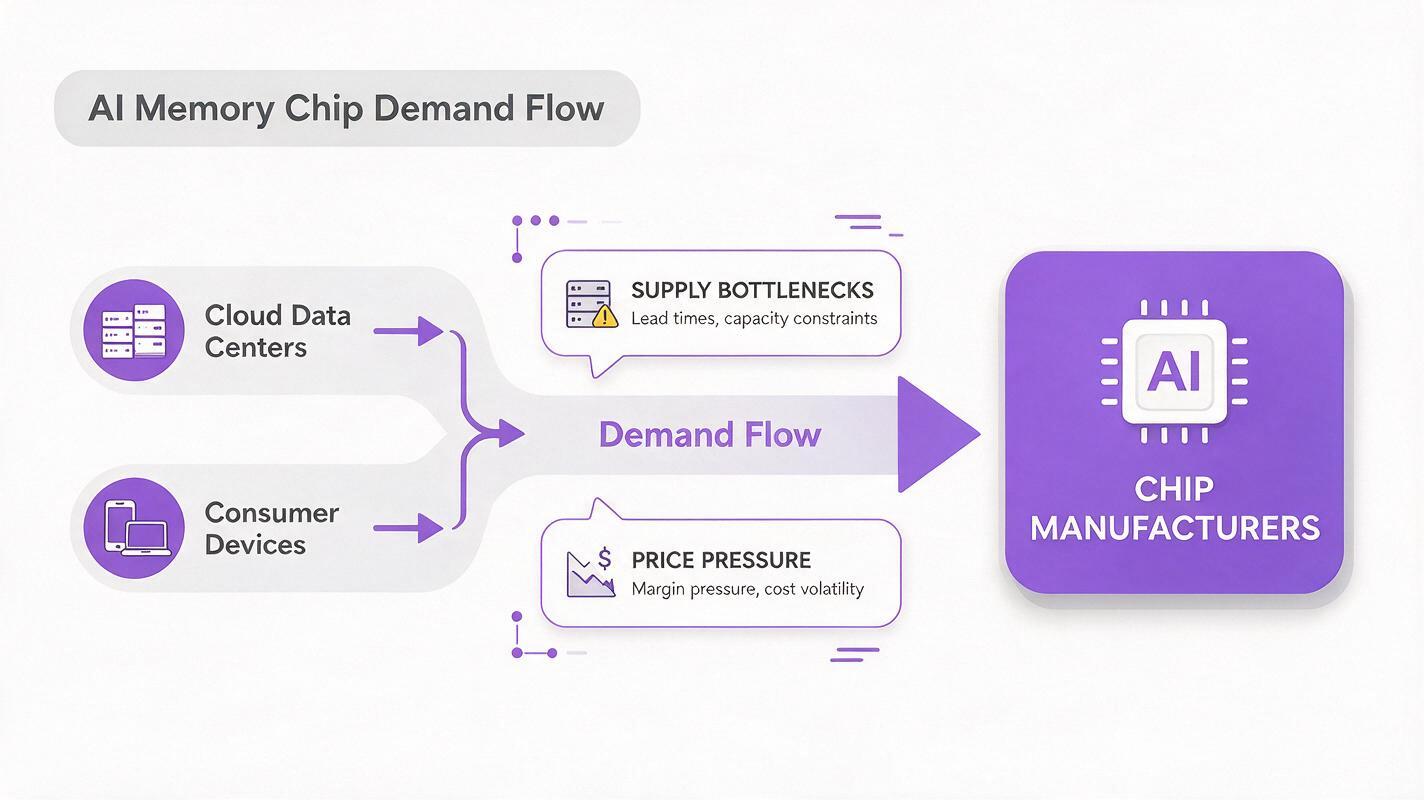
The original order-cut report from Fortune pointed to an AI-driven memory chip shortage as the primary driver of the supposed production cuts. As demand for AI-capable hardware surges — from cloud data centers to consumer devices — memory chip suppliers have struggled to keep pace with orders for high-bandwidth memory (HBM) and other specialized components used in AI processing.
This supply strain is unfolding against a backdrop of record AI capital expenditure across the tech industry. A late September 2026 analysis from Goldman Sachs estimated that five major cloud giants will grow their AI capex by more than 50% to $1.2 trillion next year, as companies race to build out the infrastructure needed to support generative AI tools, large language models, and AI-powered consumer features.
The shortage has not been limited to data center hardware. Consumer devices with advanced AI capabilities, including premium smartphones and laptops, also require higher-performance memory chips to run on-device AI models without relying on cloud connectivity. That dynamic had led some analysts to warn that Apple could face supply constraints for the iPhone 18 Pro, which is expected to feature more powerful on-device AI processing than previous generations.
Broader Implications for the AI Industry
JPMorgan’s refutation of the order-cut rumor has ripple effects beyond Apple’s stock price, offering signals about the health of the broader AI hardware ecosystem. If demand for the iPhone 18 Pro remains strong enough to avoid production cuts, it suggests that consumer appetite for AI-enabled devices is holding up even as some cloud data center projects face delays.
A mid-October report from the Financial Times found that at least 47 large U.S. data-center projects have been delayed, withdrawn, or blocked in 2026, with analysts at Bernstein estimating that only about 35% of planned U.S. data center projects have credible delivery prospects. Barriers include financing challenges, permitting holdups, power supply limitations, and community opposition.
The divergence between cloud infrastructure delays and steady consumer device demand highlights a growing split in the AI industry: while cloud-based AI scaling is hitting physical and regulatory bottlenecks, on-device AI adoption is accelerating as chipmakers integrate more AI processing power into consumer hardware. Apple’s M-series chips, including the recently leaked M5 Pro with a 15-core CPU and 48GB RAM in a 14-inch MacBook Pro prototype, are part of this on-device AI trend.
For the AI industry as a whole, this split means that growth will likely come from both cloud and edge devices in the coming years, rather than being concentrated solely in data centers. That could help ease some of the supply chain pressure on memory chips, as chipmakers balance production between data center-grade and consumer-grade components to serve both markets.
What This Means for AI Content Creators
For content creators and content teams, the back-and-forth over iPhone 18 Pro production and AI hardware supply underscores an important reality: relying on a single hardware ecosystem or a single AI tool can leave workflows vulnerable to supply chain shifts, price hikes, or feature delays.
On-device AI tools built into premium smartphones and laptops offer convenience and privacy benefits, making them useful for quick edits, on-the-go content creation, and sensitive projects. But they are limited by the hardware’s processing power, and upgrading to the latest devices requires significant upfront capital — a cost that can be prohibitive for independent creators or small teams, especially when supply shortages drive up prices.
Cloud-based multi-model platforms like MagicBoat offer a flexible alternative that complements on-device tools, giving creators access to a wide range of AI models without the need for constant hardware upgrades. For example, creators can use an ai image generator to produce visual assets directly in a browser, or leverage an ai video generator to edit and render short-form content without tying up local device resources.
This model also helps stabilize ai video cost and image generation costs, as creators pay only for the resources they use rather than investing in expensive hardware that may become outdated in a year or two. For teams working across multiple content formats, a single platform that combines text, image, video, and audio AI tools can also simplify billing and reduce administrative overhead.
The data center delays reported by the FT also make a strong case for using a platform that aggregates models from multiple providers, rather than relying on a single vendor’s infrastructure. If one provider faces capacity constraints, creators can switch to another model on the same platform without disrupting their workflow. To explore a full suite of AI content tools spanning images, video, audio, and scriptwriting, try these models for free on MagicBoat.

Key Takeaways
- JPMorgan has refuted rumors of a 15%+ cut to iPhone 18 Pro production orders, raising Apple’s target price to $360 per share.
- The original order-cut claim was tied to an AI-driven memory chip shortage affecting both data center and consumer hardware supply chains.
- Strong demand for AI-enabled consumer devices contrasts with growing delays in U.S. data center construction, highlighting a split between on-device and cloud AI growth.
- AI content creators can reduce exposure to hardware supply chain risks and upfront costs by using cloud-based multi-model platforms alongside on-device tools.
- Platforms that aggregate multiple AI models offer greater flexibility and reliability than single-vendor solutions, especially amid industry-wide infrastructure constraints.
Keywords
jpmorgan, iphone 18 pro, apple stock, ai memory chip shortage, ai capital expenditure, ai industry, apple target price