Meta Launches AI Tools for Natural Language Facebook Feed Customization
Meta has launched new AI tools that allow users to customize their Facebook feeds using natural language requests, marking the company’s latest integration of generative AI into core social media products. The rollout reflects broader AI industry trends of embedding AI into high-traffic user experiences, with potential implications for content distribution and creator strategies on the platform. This article breaks down the announced feature, its industry context, and how creators can build flexible workflows to adapt to evolving platform dynamics.

Table of contents
Meta’s New AI-Powered Facebook Feed Customization Tools
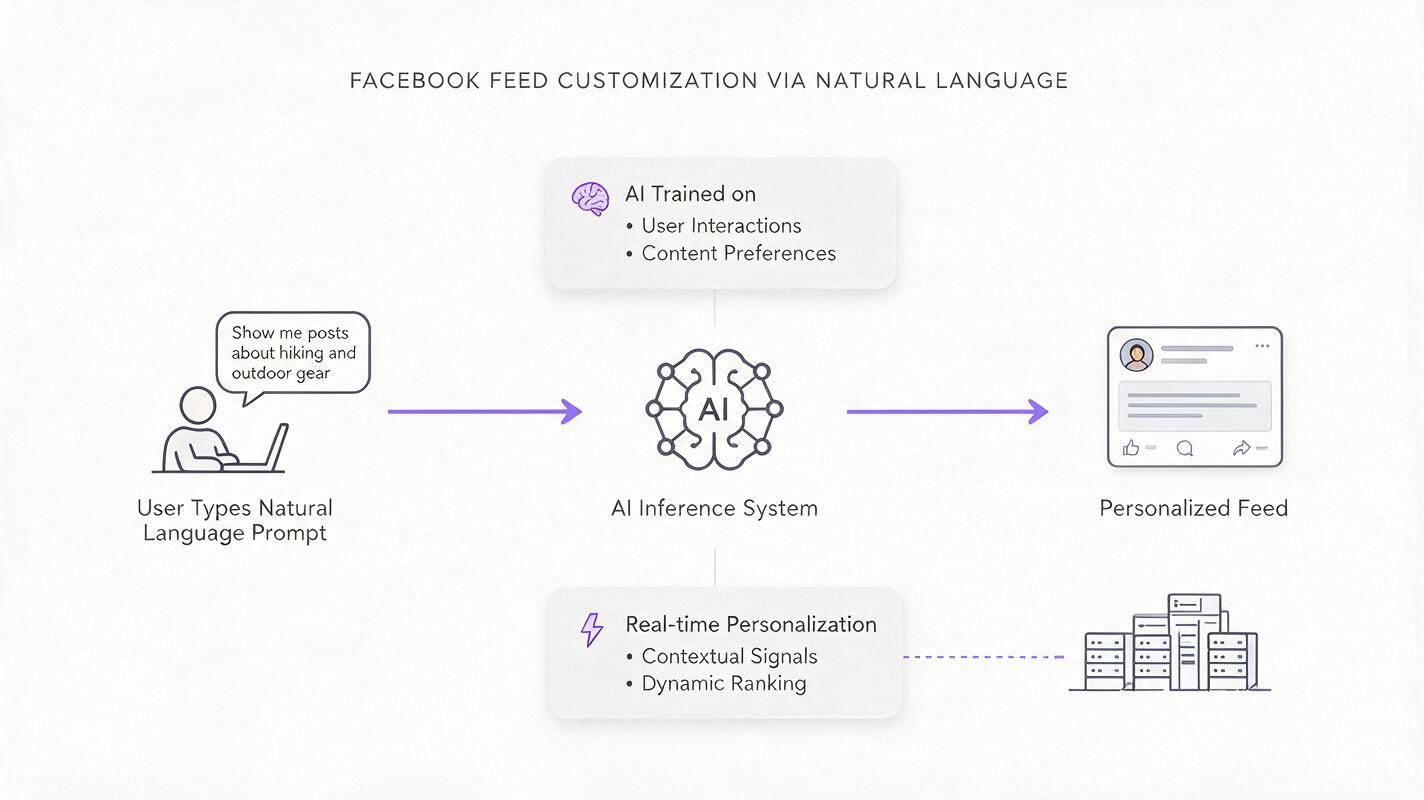
On October 15, 2026, Meta launched new AI tools that enable users to customize their Facebook feeds using natural language, according to a report from Jiemian News. The release marks the latest expansion of Meta’s consumer-facing AI feature set, integrating generative AI capabilities directly into one of the company’s most widely used core products.
The tool is designed to let users adjust their feed content preferences through conversational natural language input, offering a more intuitive alternative to traditional manual settings menus for feed personalization. Specific details on supported prompt types, rollout regions, and device compatibility have not been disclosed in the initial report.
The launch comes amid a broader wave of AI feature rollouts across Meta’s product ecosystem, including the Muse shopping assistant and third-generation AI-powered Ray-Ban Meta glasses, both of which have been key parts of the company’s 2026 AI product roadmap.
What This Signals for the AI Industry
The integration of natural language AI into Facebook’s feed system underscores a broader trend across the ai industry of embedding generative AI tools into high-traffic, everyday user experiences. Rather than confining AI to standalone chatbots or specialized creative tools, major vendors are building AI directly into core product interfaces to drive user engagement and retention.
This shift also aligns with rising ai capital expenditure across major tech firms, as companies invest in the inference infrastructure needed to support real-time AI features for hundreds of millions of daily active users. Meta has previously detailed its GW-scale data center AI strategy, which relies on a mix of custom and commercial chips to power its growing portfolio of AI workloads.
As more core platform features become AI-powered, the competitive landscape for both consumer tech and enterprise AI tools will continue to evolve, with increased focus on inference speed, cost efficiency, and user experience integration.
Implications for Content Creators
For social media content creators and content teams, AI-powered feed customization could shift how content is discovered and distributed on Facebook. If users can easily tailor their feeds to very specific interests using natural language, niche content may have more opportunities to reach highly targeted audiences, while broad, one-size-fits-all content may see reduced organic reach.
The change also means creators will need to adapt their content strategies to align with more granular user preferences, rather than optimizing solely for generalized algorithmic signals. This includes creating highly targeted content for specific interest segments, and using clear, descriptive language and metadata that AI systems can accurately match to user requests.
For creators who produce visual content for social media, this shift also highlights the value of high-quality, topic-specific imagery that aligns with niche user interests. ai image generator tools help creators rapidly produce custom, niche visual content tailored to specific audience segments, without requiring large design teams or extended production timelines.
Building a Flexible Content Workflow for Changing Platforms
As social media platforms continue to integrate AI into their core discovery and distribution systems, creators benefit from flexible, multi-tool content workflows that can adapt to shifting algorithmic and user behavior trends. Relying on a single platform or tool for content creation can leave creators vulnerable to sudden changes in reach, feature availability, or pricing.
A multi-model AI platform like MagicBoat gives creators access to a wide range of AI content tools in one place, making it easy to experiment with different content formats, iterate quickly, and adapt output to match evolving platform requirements. Whether you need to generate custom visual assets, draft social media copy, or turn content concepts into full video sequences, a centralized platform eliminates the need to manage multiple separate subscriptions and accounts.
For example, if you’re creating content for a niche outdoor travel audience to align with more granular Facebook feed preferences, you can use ai video generator tools to produce short-form travel clips, pair them with custom visuals from ai image generator tools, and draft matching captions — all within the same unified workflow.
Key Takeaways
- Meta launched AI-powered tools for natural language Facebook feed customization on October 15, 2026, per reporting from Jiemian News.
- The rollout reflects a broader ai industry trend of embedding generative AI into core user experiences, supported by growing ai capital expenditure in data center infrastructure.
- Content creators may see shifts in organic content distribution on Facebook, with new opportunities for niche, targeted content to reach specific audience segments.
- Flexible, multi-model AI workflows help creators adapt quickly to changing platform dynamics and user preferences without relying on a single tool or vendor.
Call to Action
Ready to build a flexible, adaptive AI content workflow that can keep up with evolving social media platform changes? try these models for free on MagicBoat to access a full suite of AI content creation tools in one centralized platform.
Keywords
meta ai, facebook feed customization, ai industry, social media ai, content distribution, ai image generator, ai capital expenditure