Meta Launches AI-Powered Facebook Feed Customization With Natural Language
Meta has launched new AI tools that allow users to customize their Facebook feeds using natural language commands, according to a October 2026 report from Jiemian News. The rollout expands Meta’s consumer-facing AI feature set and signals a broader shift toward user-controlled, AI-powered content personalization across social platforms. For content creators, the change creates new niche content opportunities while requiring more targeted, iterative production strategies.

Table of contents
The News: Meta’s AI-Powered Facebook Feed Customization
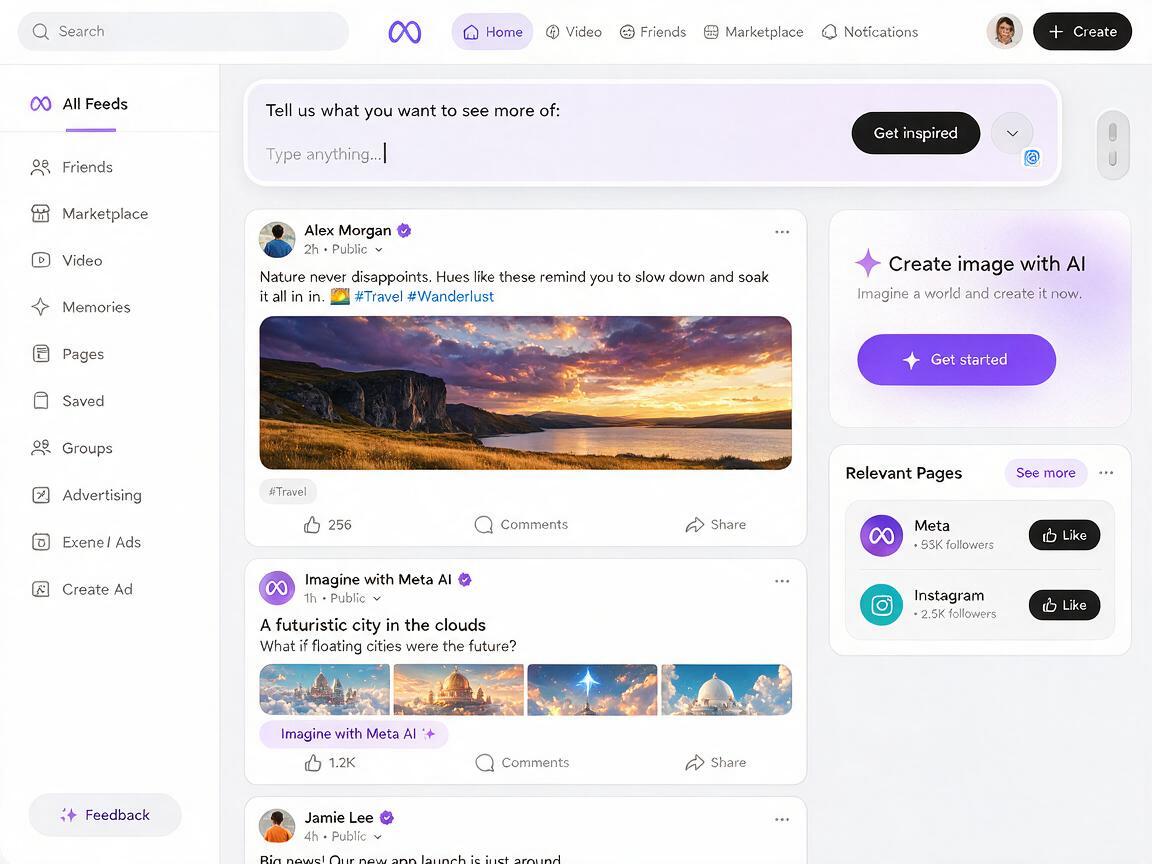
On October 15, 2026, Meta launched new AI tools that allow users to customize their Facebook feeds using natural language, according to reporting from Jiemian News. The release marks another expansion of Meta’s consumer-facing AI feature set, as the company continues to integrate generative and conversational AI across its core product lineup. While specific details about the tools’ exact controls and interface have not been fully detailed in initial reports, the core functionality lets users adjust their feed content through natural language input, rather than relying solely on the platform’s default algorithm or manual engagement signals to shape what they see.
The launch comes amid a broader race among major tech platforms to build AI-powered personalization tools, with companies betting that more granular user control over content will increase engagement and time spent on their services. For Meta, the feed customization tools also align with its ongoing investment in personal agent technology, including its Muse AI assistant, which analysts at Citi estimate could generate over $27 billion in annual revenue by 2030 as a leading entry point to online services.
Why This Matters for the Broader AI Industry
The rollout of natural language feed customization is a notable milestone for the ai industry, as it moves AI from behind-the-scenes algorithmic tuning to a front-and-center user-controlled feature. For years, social media feed algorithms have operated as largely black boxes, with users able to influence content only indirectly through likes, shares, follows, and limited preference settings. Natural language control makes feed customization more accessible and transparent, letting users articulate exactly what they want to see rather than guessing how algorithmic signals will interpret their behavior.
This shift also signals growing consumer demand for AI tools that put users in control of their digital experiences, rather than the other way around. As AI technology becomes more sophisticated, users are increasingly expecting personalized, adaptive experiences across all digital platforms — from social media to streaming services to productivity tools. For platform operators, meeting that demand requires ongoing investment in AI research, infrastructure, and product development, contributing to the broader surge in ai capital expenditure across the tech sector. Goldman Sachs has estimated that AI capital spending from five major cloud and tech giants will grow more than 50% to $1.2 trillion next year, as companies race to build out the capacity needed to power AI features at scale.
What This Means for Content Creators
For content creators and social media content teams, the shift to AI-powered, user-controlled feed customization has significant implications for content strategy and distribution. When users can actively shape their feeds with natural language requests, content discovery becomes more intentional and less dependent on broad viral trends or algorithmic whims. This creates new opportunities for creators with specialized, niche content, as users can explicitly seek out topics, formats, or creators that align with their specific interests, rather than only seeing what the default algorithm prioritizes.
At the same time, the change means creators can no longer rely on one-size-fits-all content strategies to reach wide audiences. Instead, they will need to understand the specific interests and preferences of their target audiences, and produce content that aligns closely with those needs. This may require creating more targeted content for different audience segments, testing different formats and topics, and iterating quickly based on feedback. For many creators, especially small teams or independent creators, scaling this level of targeted content production can be a challenge without the right tools.
The shift also highlights the growing importance of AI literacy for creators, as understanding how AI-powered discovery tools work will become a core skill for building and growing an audience on social platforms. Creators who can adapt their content to align with AI-driven personalization will be better positioned to reach their target audiences, even as platform algorithms and user behaviors evolve.

How Multi-Model AI Platforms Help Creators Adapt
As content demands become more targeted and production timelines tighten, many creators are turning to multi-model AI platforms to streamline their workflows and scale their output without increasing headcount or budgets. A unified platform gives creators access to a range of AI content tools in one place, making it easy to switch between different formats and experiment with new content types without managing multiple subscriptions or accounts.
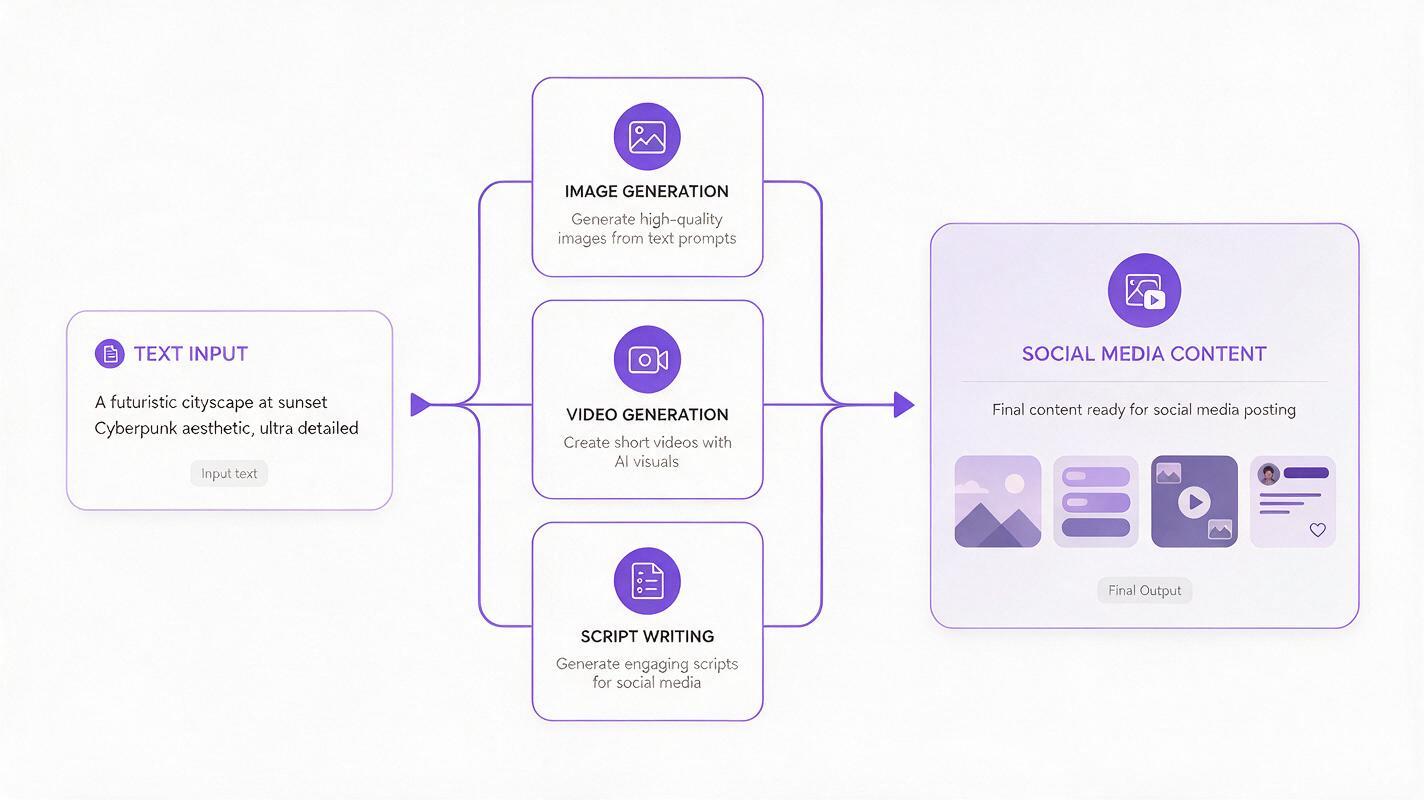
For example, an ai image generator can help creators quickly produce custom visuals, thumbnails, and social media graphics tailored to specific audience segments, in a fraction of the time it would take to create them manually. This makes it easy to test different visual styles and messaging for different niche audiences, without spending hours on design work.
Similarly, an ai video generator lets creators turn text ideas into short-form video content in minutes, significantly lowering ai video cost compared to traditional production and making it possible to produce multiple versions of content for different audience interests. Whether testing different hooks, topics, or formats, these tools let creators iterate quickly and affordably, so they can keep up with changing audience preferences and platform algorithms.
MagicBoat is one such platform that brings together a full suite of AI content creation tools — from image and video generation to script writing, voiceover, and more — in a single, easy-to-use interface. With access to multiple state-of-the-art AI models in one place, creators can produce high-quality, targeted content for social media, blogs, and other channels faster and more cost-effectively than ever before. If you’re looking to adapt your content strategy to the era of AI-powered personalization, you can try these models for free to see how they can streamline your workflow.
Key Takeaways
- Meta has launched new AI tools that let users customize their Facebook feeds using natural language, per an October 2026 report from Jiemian News.
- The rollout reflects a broader industry shift toward AI-powered personalization and user-controlled digital experiences, driven by growing consumer demand and massive investment in AI infrastructure.
- For creators, AI-tailored feeds create new opportunities for niche content, but also require more targeted, iterative content production strategies.
- Multi-model AI platforms like MagicBoat give creators the tools they need to scale targeted content production efficiently, without breaking their budgets.
Keywords
meta ai, facebook feed, ai industry, ai tools, natural language ai, content distribution, ai content creation, ai video cost