Meta Launches AI Tools for Natural-Language Facebook Feed Customization
Meta has launched new AI-powered tools that let users customize their Facebook feeds using natural language prompts, marking another major push into AI-driven personalization for the social platform. The move signals growing investment in generative AI interfaces across the ai industry, with implications for content creators who rely on Facebook for audience distribution.

Table of contents
Meta Rolls Out Natural-Language AI Tools for Facebook Feed Customization
Meta has launched new AI-powered tools that allow users to customize their Facebook feeds using natural language, according to a report dated October 15, 2026. The feature represents a significant expansion of Meta's AI integration across its core social products, giving users more direct control over the content they see without navigating layered settings menus or adjusting individual post preferences one at a time.
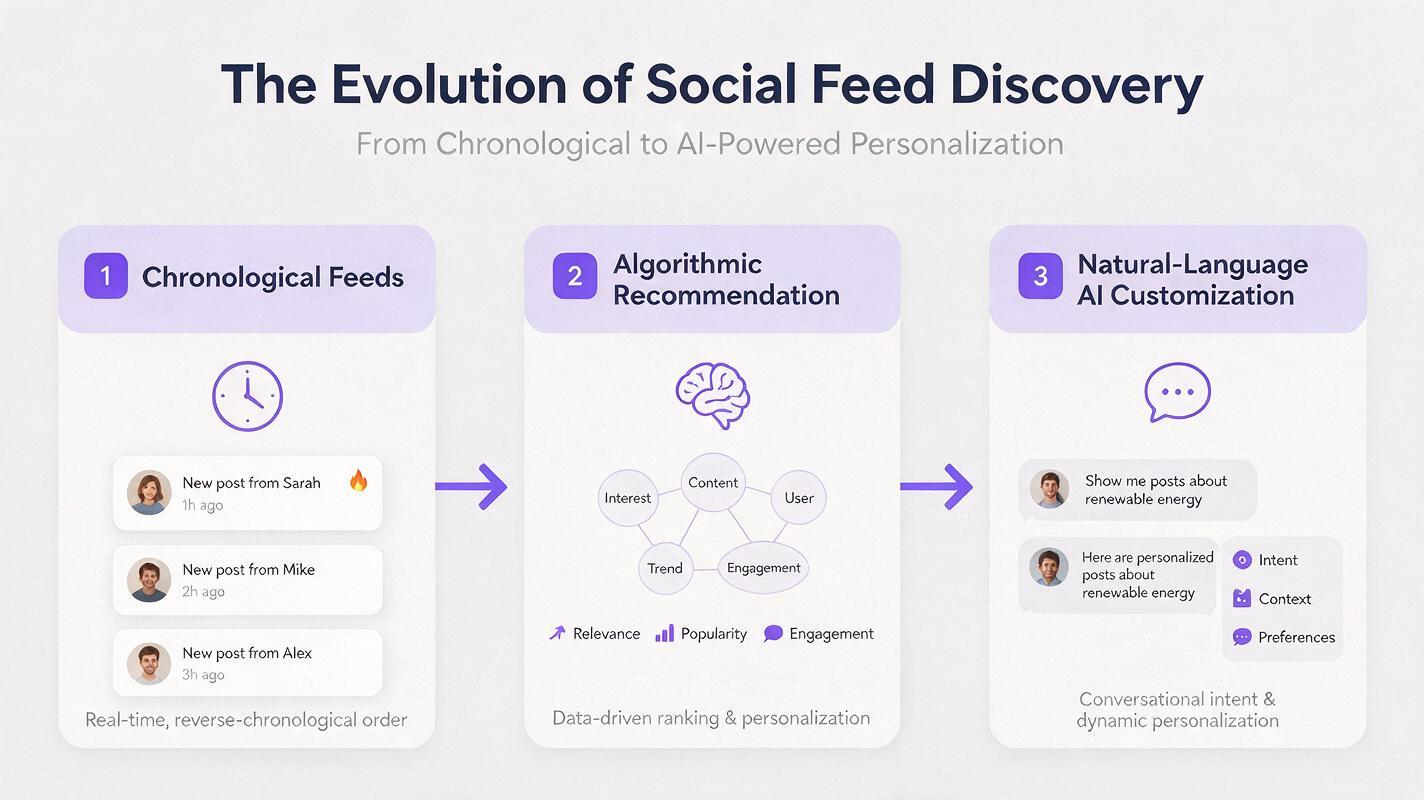
The natural-language feed customization tool lets users describe the type of content they want to see more or less of in plain conversational language. Instead of selecting from predefined categories or repeatedly tapping "see less" on individual posts, users can simply type requests like "show me more hiking content" or "fewer celebrity posts" and the AI adjusts the feed accordingly. This approach aligns with Meta's broader strategy of positioning AI as a universal interface layer across its family of apps and services.
The launch comes amid intensifying competition in the personal AI assistant space, where Meta's Muse AI assistant has already gained significant traction. Citi recently estimated that Muse could generate over $27 billion in revenue by 2030 as a leading "front door" to the internet in the personal-agent market. The Facebook feed customization tools represent another application of Meta's AI capabilities closer to its core advertising business, where content relevance directly drives engagement and ad revenue.
By embedding AI customization directly into the Facebook feed — one of the most heavily trafficked surfaces on the internet — Meta can reach billions of users without requiring them to adopt a separate app or service. This distribution advantage has been a recurring theme in Meta's AI rollout strategy, from AI-powered content creation tools to smart glasses and shopping agents.

What the New AI Feed Tools Mean for the AI Industry
The rollout of natural-language feed customization underscores a broader shift in the ai industry toward conversational interfaces for everyday digital experiences. Rather than navigating menus, toggles, and algorithmic black boxes, users increasingly expect to interact with platforms the same way they interact with people — through natural conversation. This expectation is reshaping product design across every category of software, from productivity tools to social media to creative applications.
For Meta specifically, the move ties directly to its massive ongoing investment in AI infrastructure. The company has detailed a GW-scale data-center AI strategy with a mix of custom and commercial chips, reflecting the kind of ai capital expenditure that has become standard across major technology platforms. Goldman Sachs recently projected that five cloud giants' AI capex will grow 50% or more to $1.2 trillion next year, a figure that includes Meta's substantial infrastructure buildout to support features like real-time feed customization at global scale.
The feed customization launch also signals Meta's intention to integrate AI deeply into existing high-traffic surfaces rather than confining it to standalone products. This distribution advantage — embedding AI into products already used by billions of people — is a key competitive differentiator as the ai industry evolves from model development to real-world deployment. New entrants and challenger models face the fundamental challenge of reaching users at scale, an advantage the largest platforms already possess.
The trend also has implications for ai funding dynamics. Startups building AI tools for content discovery and personalization face increasing competition from platform-native features, pushing them to differentiate through deeper specialization, cross-platform capabilities, or niche vertical focus. Investors are paying closer attention to distribution moats alongside model performance when evaluating ai funding opportunities.
Implications for Content Creators and Distribution
For content creators and content teams who publish on Facebook, AI-driven feed customization introduces both opportunities and considerations. When users can directly describe the content they want to see, the quality, relevance, and specificity of creative work becomes even more critical. Generic or low-effort content may struggle to surface in feeds where users have explicitly stated preferences for particular topics, formats, or styles.
At the same time, creators who produce content in well-defined niches may benefit from more accurate matching with interested audiences. Natural-language customization could help users find specialized content that traditional algorithmic sorting might not have surfaced effectively, creating new distribution opportunities for creators in specific verticals. A creator focused on woodworking tutorials, for example, may find that their content reaches a more engaged audience once users can explicitly request that type of content.
The shift also highlights the importance of diversifying creation workflows and distribution channels. As platform algorithms and interfaces continue to evolve rapidly, creators who rely on a single platform or content format face growing uncertainty. Building a flexible production stack that can adapt to changing platform dynamics is increasingly essential for long-term sustainability.
Many content teams are turning to multi-model AI platforms like MagicBoat to maintain that flexibility. With access to ai image generator tools, text to video capabilities, and script-to-video production pipelines all in one place, creators can quickly produce content in multiple formats for different platforms without managing dozens of separate subscriptions and accounts. This unified approach reduces overhead and makes it easier to pivot between formats as platform priorities shift.
Understanding ai video cost structures across different models and platforms also helps creators optimize their production budgets. Rather than committing to a single vendor's pricing, multi-model platforms let teams choose the most cost-effective tool for each specific task, from thumbnail generation to full video production.

Key Takeaways
- Meta's new AI tools let Facebook users customize their feeds using natural language prompts instead of manual settings navigation
- The launch reflects Meta's broader AI strategy of embedding conversational interfaces into its highest-traffic existing products
- For the ai industry, the move signals the continuing consumerization of AI and the shift from model development to real-world deployment at scale
- Content creators should focus on high-quality, niche-specific content as user-driven customization becomes more prevalent across social platforms
- Multi-model AI platforms like MagicBoat help creators adapt to changing platform dynamics with flexible, cost-effective production capabilities across multiple formats
- Diversifying distribution and production workflows reduces reliance on any single platform's algorithmic priorities
Ready to explore how a multi-model AI platform can enhance your content production workflow and help you adapt to changing platform dynamics? try these models for free and see how a unified creation stack can streamline your creative process across images, video, scripts, and more.
Keywords
meta ai, facebook feed, ai industry, ai content creation, ai image generator, natural language, content personalization