Meta Launches AI Tools for Natural Language Facebook Feed Customization
Meta has launched new AI-powered tools that let users customize their Facebook feeds using natural language prompts, marking another expansion of the company's consumer AI ecosystem. The rollout is part of Meta's broader AI strategy, which includes its Muse personal assistant and AI-powered smart glasses, as the company positions AI at the center of its social platform experience. For content creators, the shift highlights the growing importance of AI-driven content discovery and the need for flexible, multi-format content workflows.

Table of contents
Meta Launches Natural Language AI Tools for Facebook Feed Customization
Meta has rolled out new AI-powered tools that let users customize their Facebook feeds using natural language prompts, according to an October 15, 2026 report from Jiemian News. The launch marks the latest step in Meta’s aggressive push to embed AI across its core social platforms, as the company competes to define the next generation of consumer digital experiences. The feature adds to a growing suite of AI-driven products from Meta, ranging from personal assistants to AI-powered wearable devices.
The feed customization tool arrives at a time of intense momentum for Meta’s AI division. The company’s Muse personal AI assistant has already surpassed 3.4 million downloads, and financial analysts at Citi project Muse could generate over $27 billion in revenue by 2030, positioning it as the leading “front door” or entry point to the internet in the personal-agent market. Meta has also open-sourced its Muse Gadgets SDK, expanded its Ray-Ban Meta Gen 3 AI glasses to India, and invested heavily in data center infrastructure to support its AI workloads.
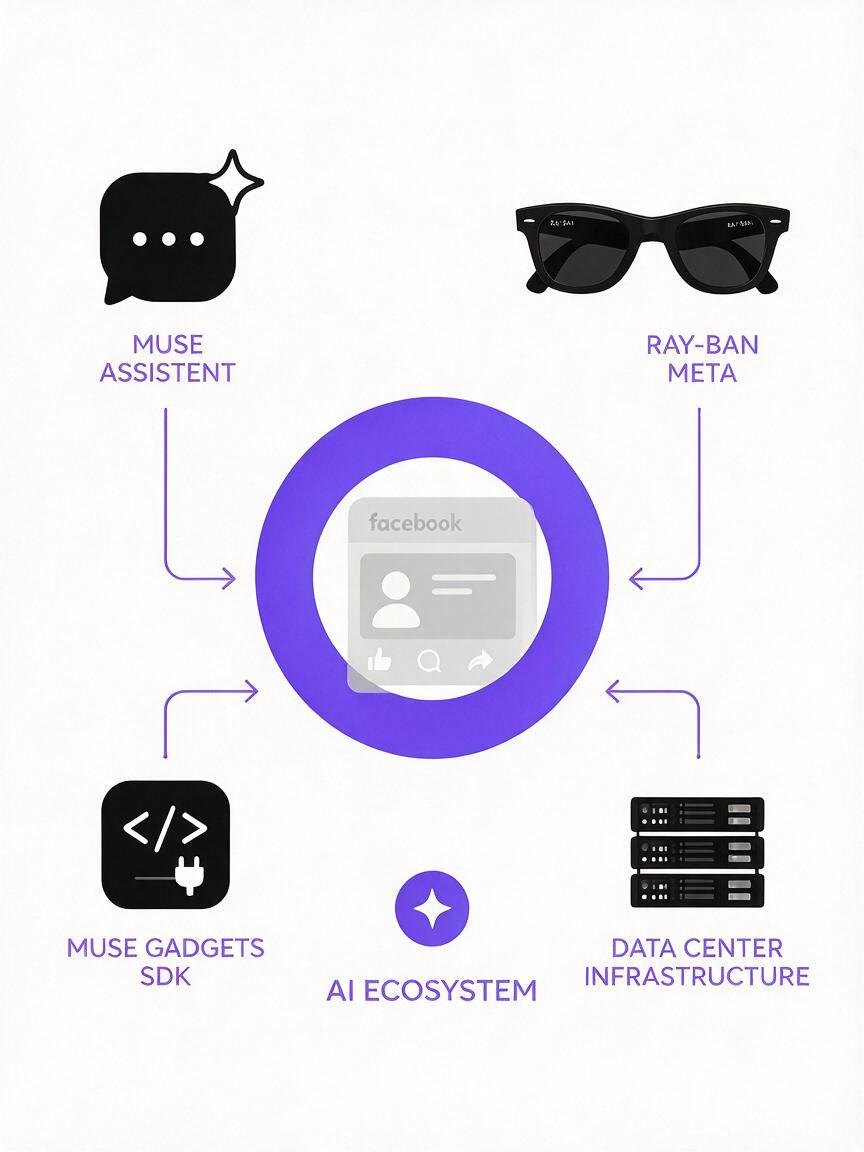
Where AI Feed Customization Fits in Meta’s Ecosystem Roadmap
Meta’s AI feed customization rollout is more than a standalone feature — it’s a key piece of the company’s broader strategy to make AI the primary interface for its entire ecosystem of apps and devices. By building natural language control directly into one of its most heavily used surfaces, Meta is normalizing AI-driven interaction for billions of daily active users, laying groundwork for a future where personal AI agents handle more digital tasks on behalf of users.
The company’s infrastructure investments support this expansion. Meta has detailed a data center AI strategy built around gigawatt-scale energy capacity and a mix of custom and commercial chips, designed to handle the growing compute demands of real-time AI features across its platforms. This infrastructure powers not just feed customization, but also the Muse assistant, AI photo and video editing tools, and on-device AI features for its wearable products.
Meta’s push also aligns with broader industry trends as tech companies compete to capture share of the fast-growing personal AI assistant market. With Muse positioned as a potential leading entry point to the internet, integrating AI customization into Facebook’s feed helps Meta keep users engaged within its ecosystem rather than turning to third-party AI tools for content discovery.
What This Shift Means for Content Creators
For content creators who rely on Facebook’s feed to reach audiences, the rise of AI-powered customization signals a meaningful shift in how content is discovered and distributed. When users can fine-tune their feeds with natural language requests, content relevance becomes even more critical to cutting through noise and reaching engaged viewers. Creators will need to produce content that aligns closely with specific audience interests, rather than relying on broad viral trends, to maintain visibility in highly personalized feeds.
This shift also makes it more important than ever for creators to have efficient, flexible ai video workflow processes that let them iterate quickly and test targeted content formats. An ai video generator can help creators produce multiple tailored video assets in less time, making it easier to test different messaging angles and content types for specific audience segments. An ai script writer can streamline the process of drafting captions, voiceovers, and short-form video scripts that are optimized for niche interest groups.
Platforms like MagicBoat bring these and other AI creation tools together in a single, unified interface, so creators don’t have to juggle multiple subscriptions or switch between services to build, edit, and publish content. Having access to a range of AI models in one place also makes it easier to adapt to changing platform algorithms and distribution trends, since creators can experiment with different content styles and formats without being locked into a single tool or ecosystem.
Creators looking to build more adaptive, AI-powered content workflows can try these models for free to see how they fit into their production process.
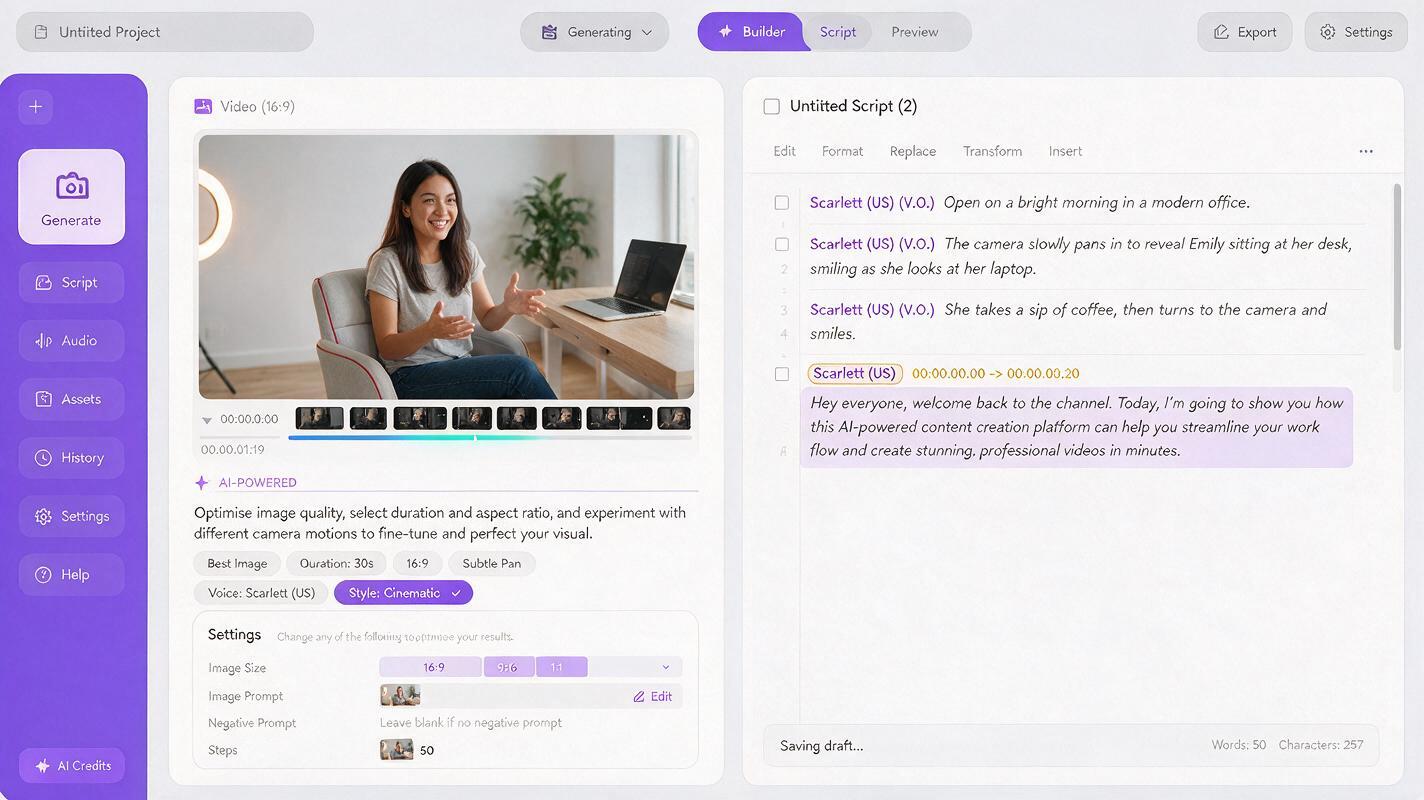
Building Resilient Content Workflows for an AI-Curated Future
The launch of AI feed customization is just one example of how AI is reshaping the relationship between creators and their audiences. As personal ai assistant tools become more common — with products like Meta’s Muse positioned as front doors to the internet — creators will increasingly need to optimize their content for discovery by AI systems, not just human users scrolling through feeds.
This evolving landscape makes workflow flexibility a critical asset for creators. Building a content workflow that isn’t tied to a single platform or tool lets creators adapt quickly to new distribution channels, whether that’s creating content optimized for AI-curated social feeds, building assets that personal AI agents can reference, or experimenting with new interactive AI content formats.
Multi-model AI platforms offer a way to build this resilience by centralizing a range of creation tools in one place, with access to multiple models that can handle different tasks from script writing to video generation to audio production. This approach reduces reliance on any single provider and gives creators the flexibility to choose the best tool for each specific project, rather than adapting their work to fit the limitations of a single AI system.
Key Takeaways
- Meta’s new AI tools allow users to customize their Facebook feeds using natural language prompts, expanding the company’s consumer AI feature set.
- The launch is part of Meta’s broader AI ecosystem push, which includes its Muse personal assistant, AI-powered smart glasses, and large-scale data center investments.
- AI-driven feed customization increases the importance of highly relevant, niche content for creators looking to reach engaged audiences on Facebook.
- Unified multi-model AI platforms help creators adapt to shifting distribution dynamics by centralizing content production tools and reducing reliance on single ecosystems.
- Creators can use AI production tools to scale tailored content creation and test new formats faster, positioning them to succeed in an AI-curated media landscape.
Keywords
meta ai tools, facebook feed customization, natural language ai, ai assistant, social media ai, ai content discovery, meta ai ecosystem