Meta Deletes AI-Training Web-Scraping Language From Commercial Terms
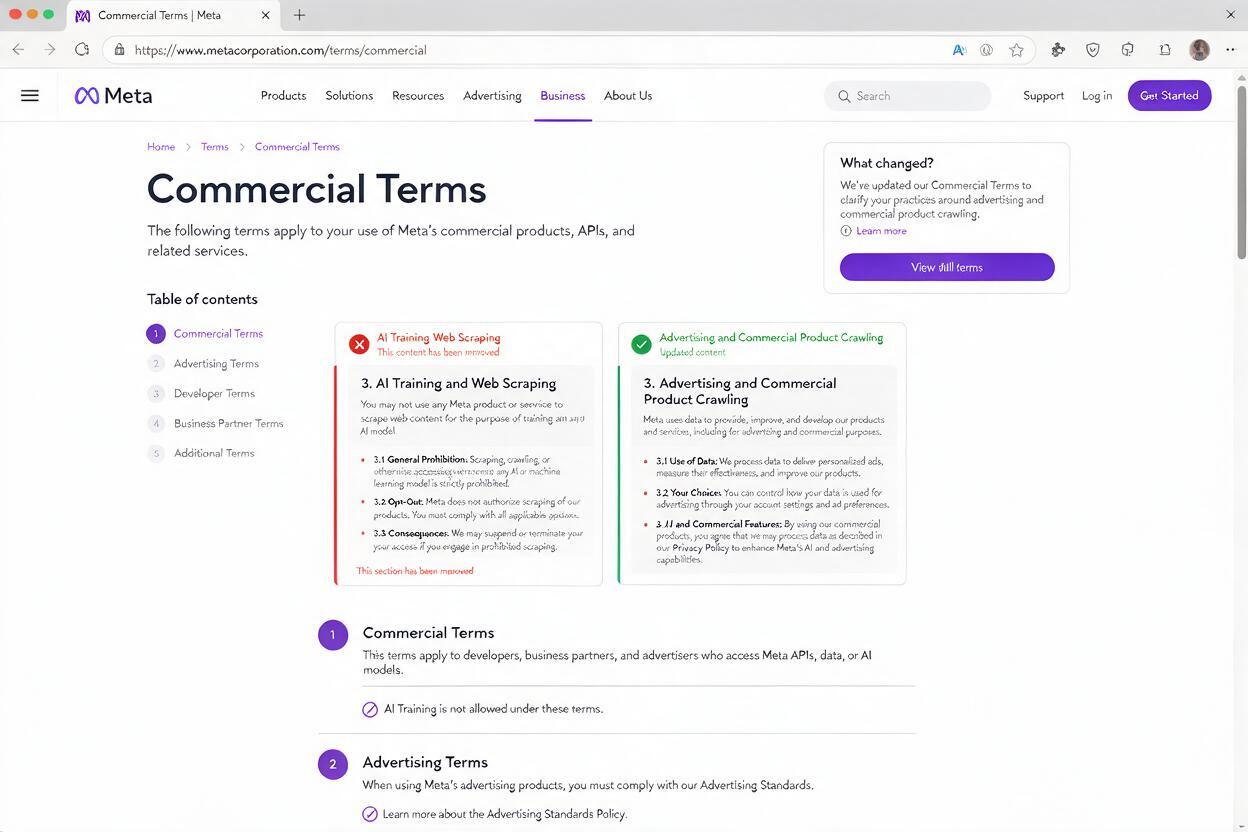
Meta has removed AI-training web-scraping language from its commercial terms, effective October 30, following protests from publishers and legal experts. The company states its web crawling was intended only for ads and commercial products, and that robots.txt protocols still govern access to public websites. The policy shift reflects growing industry scrutiny over AI training data practices and has implications for content creators and the broader AI ecosystem.

Table of contents
What Just Changed in Meta’s Commercial Terms
Meta has removed language referencing AI-training web scraping from its commercial terms, with the change set to take effect on October 30. The policy update follows widespread protests from publishers and legal experts, who raised concerns that the terms granted Meta overly broad rights to scrape web content for AI model development. The Verge first reported the change, noting that the removed language had been a point of contention for media organizations and copyright advocates.
In response to the backlash, Meta has clarified that its web crawling practices were never intended for AI training under the commercial terms, and that scraping was meant solely to support ads and other commercial products. The company also emphasized that robots.txt protocols still govern how its crawlers access public websites, allowing site owners to block or restrict access as they see fit.
Why This Shift Is Happening Now
The removal of the AI-training scraping language comes amid a broader wave of legal and regulatory pressure on AI companies over data sourcing practices. Publishers have increasingly pushed back against the use of their content to train generative AI models without compensation or explicit permission, leading to a string of lawsuits and policy debates across multiple jurisdictions.
Legal experts had flagged Meta’s commercial terms as particularly problematic, arguing that the broad wording could be interpreted as granting the company the right to use virtually any public web content for AI training, regardless of copyright or site owner preferences. The pushback forced Meta to clarify its position and revise the terms to avoid further controversy.
Broader Implications for the AI Industry
This policy shift is more than a single company’s update — it reflects a larger reckoning across the AI industry over data ownership and compliance. Even as ai capital expenditure surges, with Goldman Sachs estimating that five major cloud giants will see their AI spending grow more than 50% to $1.2 trillion next year, companies are facing growing constraints on how they source the data needed to train advanced models.
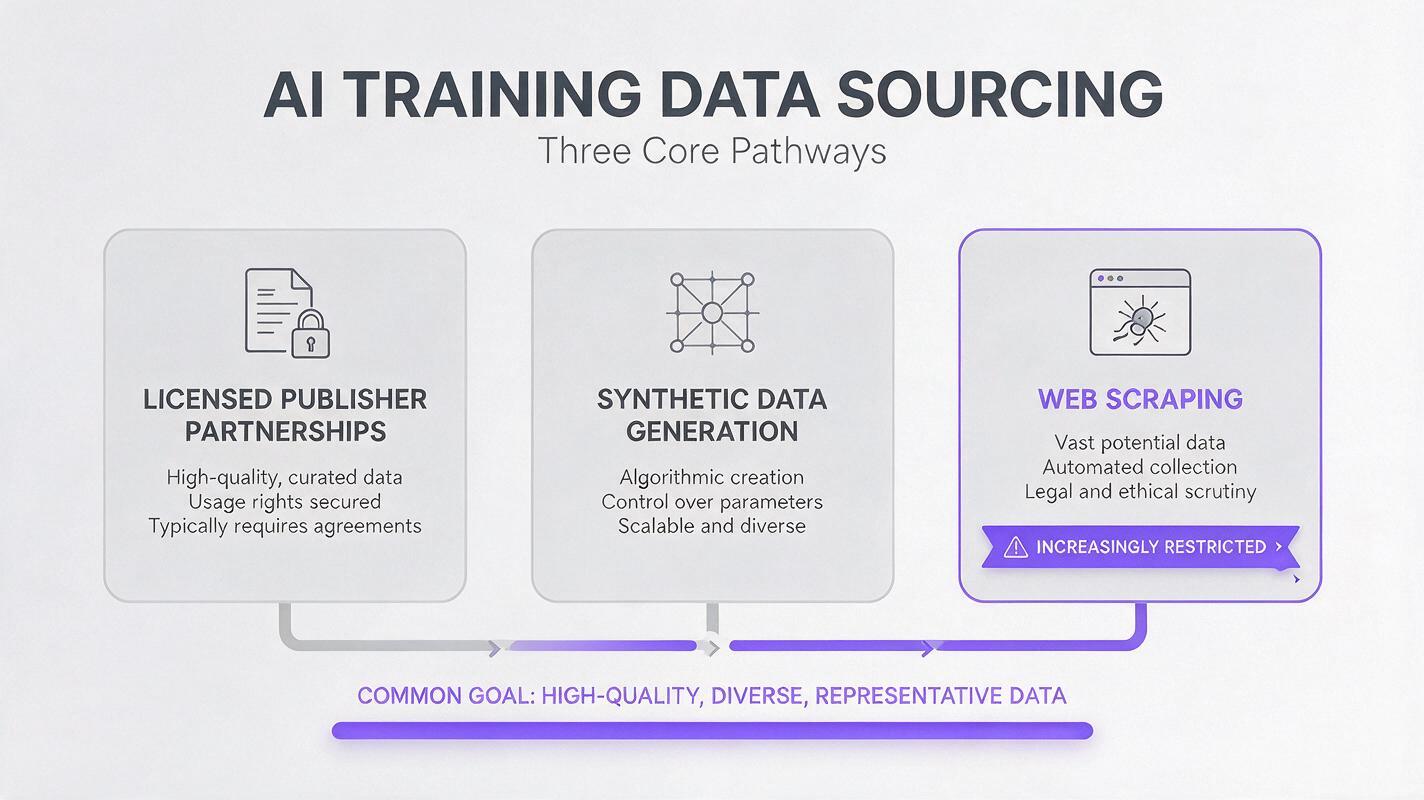
Fast-growing AI players like DeepSeek, which has reported annualized revenue of roughly $1 billion and is raising around $7.5 billion in ai funding at a $74 billion valuation, will also need to navigate these evolving rules. As regulatory scrutiny intensifies, AI providers may increasingly turn to licensed data partnerships, synthetic data generation, or on-device training to reduce reliance on web scraping.
For end users, these shifts could have tangible impacts on pricing and access. As data sourcing becomes more expensive, tools like ai image generator platforms and video generation services may see adjusted pricing models, which could raise ai video cost for independent creators and small content teams.
What This Means for Content Creators
For creators who publish original content online, Meta’s policy update is a small but meaningful win for content ownership. It signals that large tech companies are responsive to publisher concerns about AI training data, though it does not eliminate the risk of content being scraped by other AI providers or for unstated purposes.
Creators who rely on generative AI tools to produce content also face uncertainty as the industry adjusts. Shifts in data sourcing practices can lead to changes in model capabilities, pricing, or availability from individual vendors, which can disrupt established workflows. Using a multi-model platform helps mitigate this risk by giving creators access to a range of tools from different providers, all under a single account.
On MagicBoat, you can access ai image generator tools, text to video capabilities, and dozens of other AI creation features without being locked into a single vendor’s policies. If one provider changes its terms or pricing, you can seamlessly switch to another tool that fits your needs and budget. try these models for free to see how a multi-model platform can stabilize your creation workflow.

Key Takeaways
- Meta has removed AI-training web-scraping language from its commercial terms, with the change taking effect on October 30 following publisher and legal pushback.
- Meta states its web crawling was intended only for ads and commercial products, and that robots.txt protocols still govern website access.
- The policy shift reflects growing industry and regulatory scrutiny over AI training data practices, even as global AI capital expenditure continues to rise rapidly.
- Creators can reduce workflow disruption from vendor policy changes by using a multi-model AI platform with diverse tool options and flexible pricing.
Keywords
meta ai, ai training data, web scraping, ai industry, ai content creation, commercial terms, publisher rights