What Is Meta Muse Expansion? Terms, Partners & Availability | MagicBoat
On November 18, 2026, Meta published an update to its commercial terms of service approach and named Canadian retailer Loblaw as the first Muse retail partner in Canada, following the personal AI agent's launch in Australia on November 17. The country-by-country expansion and retail partnership mark key milestones in Meta's push to position Muse as a mainstream personal AI agent with commercial and shopping capabilities. For AI content creators, the growth of personal AI agents creates new content opportunities while increasing demand for efficient, scalable AI production tools.
Table of contents
Overview of Meta's November 2026 Muse Expansion
On November 18, 2026, Meta published an official update outlining its approach to revising commercial terms of service, while simultaneously announcing a major retail partnership for its personal AI agent, Muse. The same announcement named Canadian retail giant Loblaw as the first Muse retail partner in Canada, marking a key milestone in the agent's expansion into commercial and shopping use cases. The news comes just one day after Muse officially launched in Australia on November 17, as part of Meta's ongoing country-by-country global rollout of the AI assistant.
The expansion is a significant step for Meta's ambitions to position Muse as a leading entry point for internet users, moving beyond social media into proactive, agent-driven services. For the broader ai industry, the move signals growing competition in the personal AI agent space, with companies racing to lock in retail partnerships and global market share ahead of wider mainstream adoption.
Key Details of the Commercial Terms Update
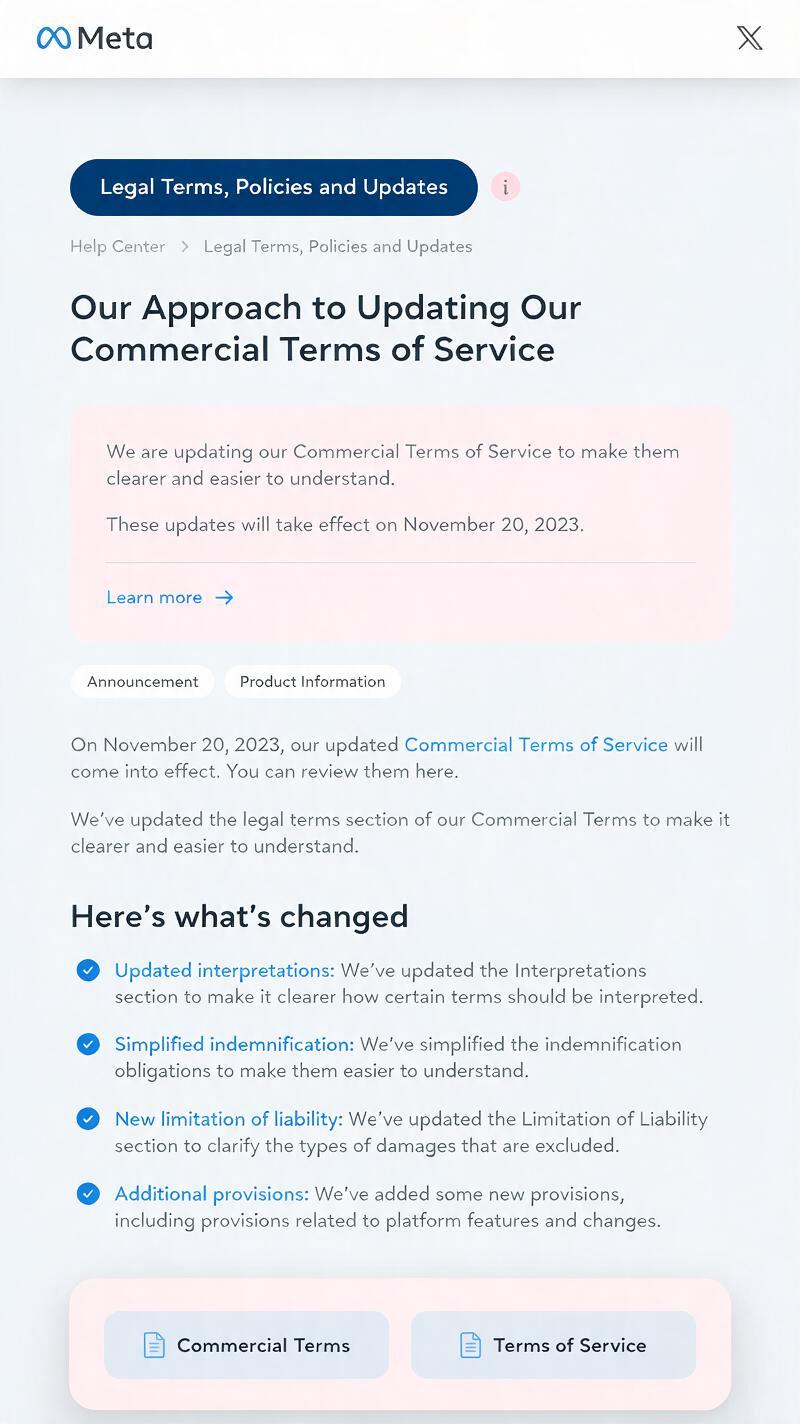
Meta's November 18 publication, titled Our Approach to Updating Our Commercial Terms of Service, was released alongside the retail partnership and expansion news, signaling that the terms updates are designed to support Muse's growing commercial use cases. The official post is hosted on Meta's about.fb.com domain, where the company outlines its framework for revising terms to align with new AI agent capabilities, retail integrations, and global expansion requirements.
While specific line-item changes to the commercial terms were not summarized in the initial announcement, the timing of the release ties directly to Muse's evolution from a limited personal assistant to a platform with retail partnerships and international availability. The update comes as other AI agents and platforms are also revising commercial terms to address new use cases like agentic shopping, content attribution, and third-party integrations.
Meta's approach to terms updates aligns with broader industry trends as personal AI agents move from experimental products to mainstream commercial tools. Earlier in 2026, Meta reported that over 10 million users in the U.S. and Canada had configured their own Muse agent in roughly six weeks following launch, according to Meta Q3 2026 earnings data, highlighting the rapid user adoption driving the need for updated commercial frameworks.
Muse's First Canadian Retail Partner: Loblaw
The November 18 announcement named Loblaw, Canada's largest retailer, as the first official Muse retail partner in the country. The partnership marks Meta's first retail integration for Muse in the Canadian market, as the company expands the agent's shopping and product recommendation capabilities beyond U.S. borders.
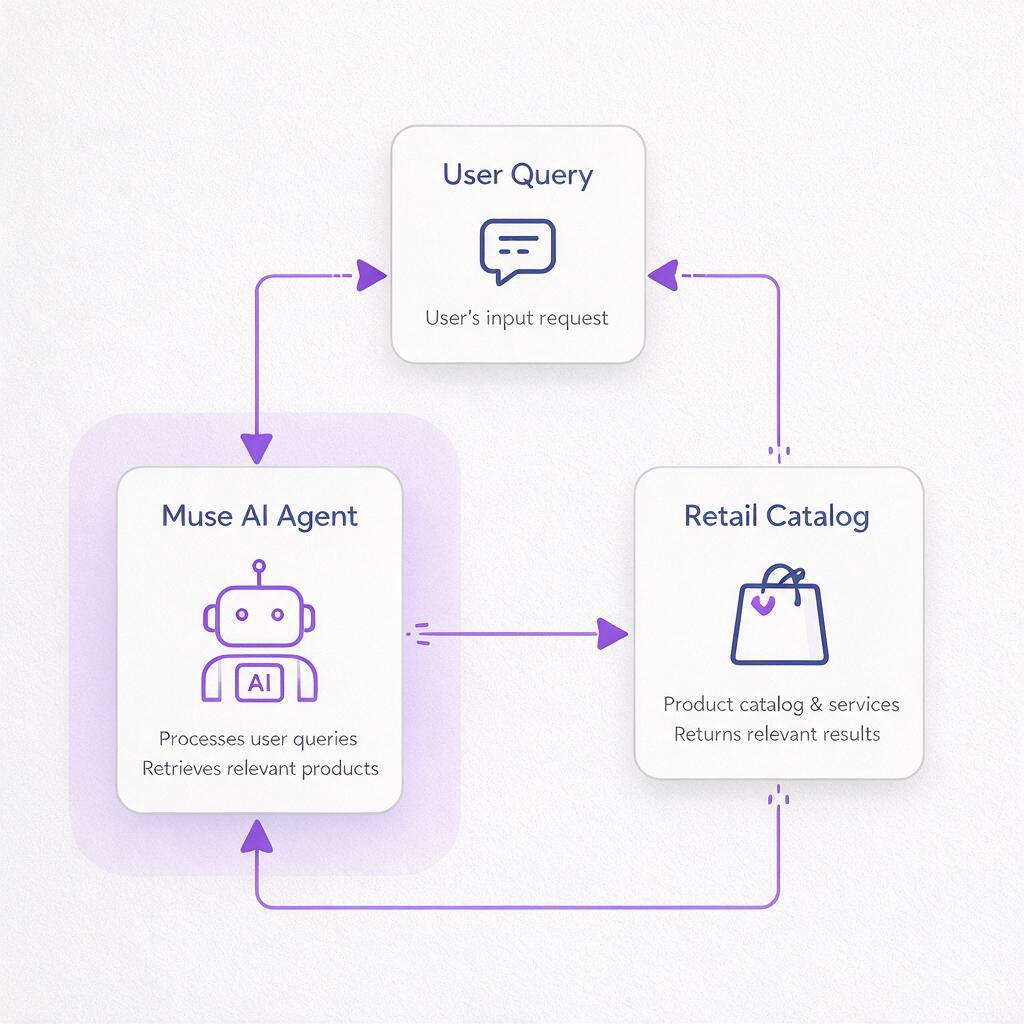
Retail partnerships are a critical component of personal AI agent value propositions, as they allow agents to pull real-time product information, pricing, and availability directly from retailer catalogs to answer user queries. For Meta, partnering with a dominant local retailer like Loblaw helps Muse compete in the Canadian market, especially as other AI shopping tools and agent platforms expand their own retail integrations.
The Loblaw partnership also comes against a backdrop of tensions between AI agents and major e-commerce platforms. In late September 2026, Amazon blocked Meta's Muse shopping agent from accessing its site with "unauthorized agent access" popups, according to industry reports, pushing Meta to build direct partnerships with regional retailers instead of relying on crawling major e-commerce sites. Direct retail partnerships give Muse more reliable access to product data and create a more controlled experience for users.
Citi has estimated that Meta's Muse could generate over $27 billion in revenue by 2030, positioning it as the leading "front door" or entry point to the internet in the personal agent market, with retail commerce expected to be a major driver of that revenue. The Loblaw partnership is an early step toward building out the retail ecosystem needed to support that projection.
Muse Australia Launch and Global Expansion Timeline
One day before the commercial terms and Loblaw announcements, on November 17, 2026, Meta officially launched Muse in Australia, marking the agent's first expansion into the Asia-Pacific region and a key milestone in its global rollout. Meta confirmed that Muse will continue expanding country by country, though no specific next markets or timelines were disclosed in the November 18 announcement.
The country-by-country expansion approach allows Meta to tailor Muse's capabilities to local markets, including regional retail partnerships, language support, and compliance with local data and consumer protection regulations. This approach is common for AI agent launches, as regulatory requirements and user expectations vary significantly across different countries and regions.
Australia's launch also aligns with Meta's broader strategy to expand its AI products internationally, following earlier rollouts of other AI tools across its social media platforms. The company has invested heavily in AI infrastructure and model development to support global Muse access, part of its $135 billion to $145 billion 2026 capital expenditure guidance focused heavily on AI, as outlined in its Q3 2026 earnings report.
What This Means for AI Content Creators
As personal AI agents like Muse expand globally and integrate with retail platforms, AI content creators and marketing teams face both new opportunities and new challenges. AI agents increasingly serve as intermediaries between users and content, pulling product information, educational content, and recommendations from across the web to answer user queries. This means creators who optimize their content for agent discovery can reach new audiences through agent-driven surfaces, while those who don't may see their content visibility decline.
For creators focused on e-commerce, product reviews, and lifestyle content, the rise of agentic shopping tools creates demand for new content formats tailored to AI agent summaries and recommendations. Short-form video, clear product imagery, and structured, factual content are more likely to be surfaced by AI agents to users asking for product advice or shopping help. Scaling production of these formats can be challenging, but tools like ai video generator and ai image generator can help creators produce more high-quality content at a lower ai video cost, without sacrificing creative control.
Working with a multi-model AI creative platform like MagicBoat also gives creators the flexibility to test different content formats and styles across multiple AI models, ensuring their content is optimized for a range of AI agent surfaces and search tools. Whether you're creating product demo videos, review imagery, or educational content, having access to a full suite of AI creative tools in one place streamlines workflows and reduces overhead. try these models for free to see how multi-model AI creation can fit into your content strategy.
Key Takeaways
- Meta published Our Approach to Updating Our Commercial Terms of Service on November 18, 2026, alongside news of Muse's retail and international expansion.
- Loblaw is the first official Canadian retail partner for Meta's Muse personal AI agent, supporting the agent's shopping and product recommendation capabilities.
- Muse launched in Australia on November 17, 2026, as part of Meta's ongoing country-by-country global rollout of the AI assistant.
- Personal AI agent growth creates new content opportunities for creators, especially in e-commerce and product-focused niches.
- Multi-model AI creative tools can help creators scale content production efficiently, keeping up with demand for agent-optimized formats at a lower cost.
Sources
Keywords
meta muse, ai agent, ai industry, retail ai, ai video cost, ai content creation, personal ai