Meta and Sierra Release Poppy v1.0 Personal-Agent Protocol
Sierra and Meta have reportedly released Poppy v1.0, a personal-agent protocol that uses a doorplate configuration file, OAuth authorization and HTTPS encryption to enable mutual trust between websites and personal assistants. The protocol is said to be live in Meta Muse, with Shopify auto-publishing Poppy files across its catalog, and pairs with complementary tools like ChatGPT Wallet and AWS Bedrock AgentCore. Core details come from second-hand Chinese industry digest reporting, with no official confirmation on Meta's public channels as of mid-November 2026.

Table of contents
What Is Poppy v1.0?
Chinese industry digests reported on November 15, 2026 that Sierra and Meta have released Poppy v1.0, a new personal-agent protocol designed to solve a core problem in the agent ecosystem: how websites and personal assistants can establish mutual trust before an agent interacts with a site. The reported release marks a notable step in the fast-growing personal agent space, as major platforms and developers work to standardize how automated agents identify themselves and access web services.
The protocol is said to already be live in Meta Muse, Meta’s personal assistant app, with Shopify auto-publishing Poppy configuration files across its entire merchant catalog. The launch lines up with a wave of agent infrastructure updates across the ai industry, including recent runtime and identity tools from major cloud providers.
How the Poppy Protocol Works
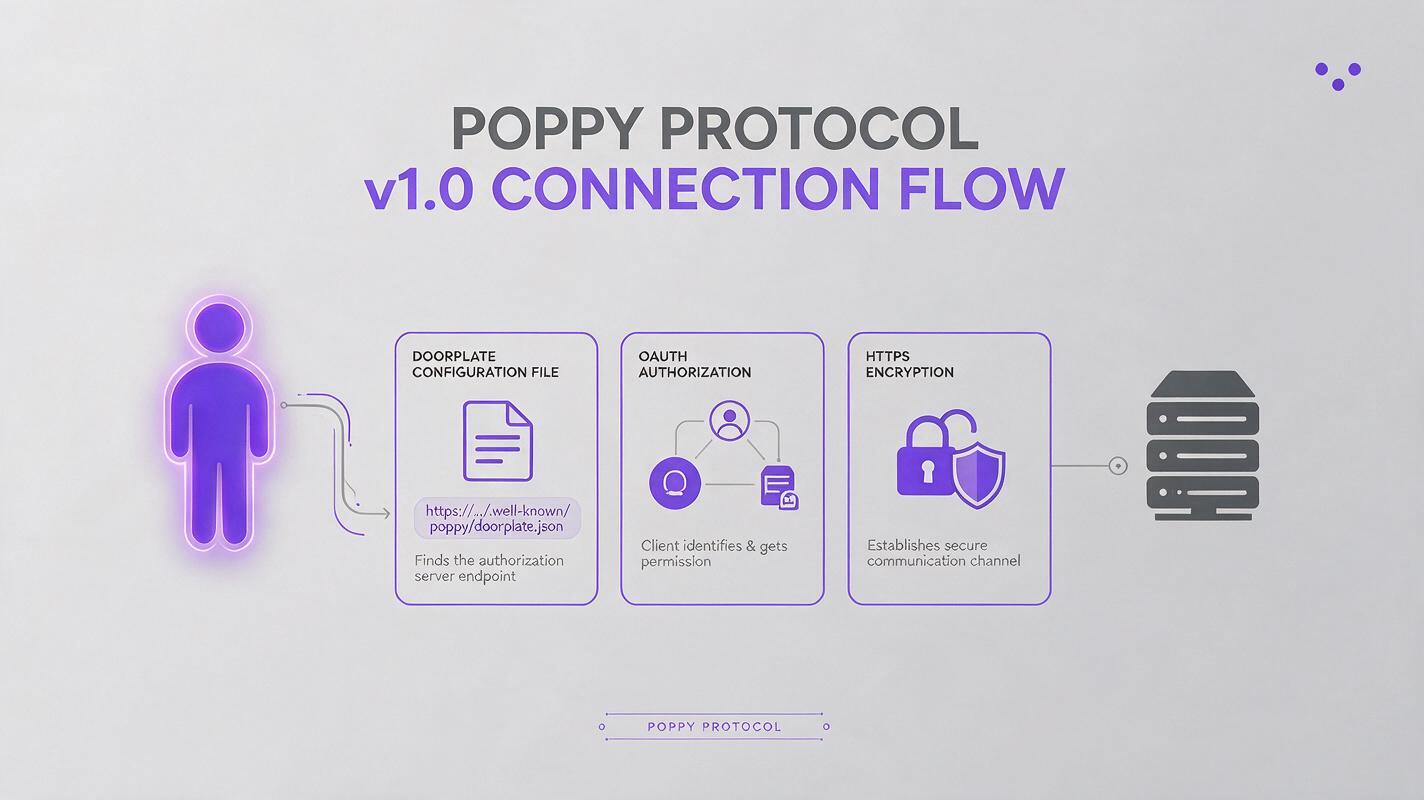
At its core, Poppy v1.0 combines three key components to create a standard "doorway" for agents to identify themselves to websites:
- Doorplate configuration file: A public file hosted by websites that outlines agent access rules, similar in concept to robots.txt but built for interactive agent interactions rather than just crawling.
- OAuth authorization: A standard authentication layer that lets agents and websites verify each other’s identities and grant appropriate access permissions.
- HTTPS encryption: End-to-end encryption for all agent-site communications to protect user data and prevent tampering.
The protocol is designed to address a longstanding gap in agent technology: without a standard way for agents to prove their identity and for sites to set access rules, agents often operate in a gray area of scraping, credential sharing, and unofficial integrations. Poppy aims to create a transparent, mutually agreed-upon framework for these interactions.
Reported Integrations and Ecosystem Partners
The Poppy v1.0 launch is reportedly tied to a broader ecosystem of agent infrastructure tools that have rolled out in recent weeks, creating a more complete stack for personal agent operations:
- Meta Muse: The protocol is said to be live in Meta’s personal assistant app, letting Muse agents interact with Poppy-enabled websites in a verified way.
- Shopify: The e-commerce platform is reportedly auto-publishing Poppy doorplate files across its entire catalog, making millions of merchant sites immediately compatible with Poppy-enabled agents.
- ChatGPT Wallet: Poppy pairs with OpenAI’s payment tool for agents, handling the "how an agent pays" side of transactions while Poppy handles identity and access.
- Cloudflare: Offers per-agent traffic analytics and access policies that work alongside Poppy’s identity layer.
- IBM Agent Identity and Vault 2.2: Provides additional agent identity verification and secure credential storage.
- AWS Bedrock AgentCore: Amazon’s November 12 runtime update supports sessions that start in under two seconds, hardware-isolated sessions, usage-based billing, and lower memory usage while paused, complementing Poppy’s access framework.
If widely adopted, this ecosystem could create a standardized way for agents to browse, interact with, and purchase from websites without relying on fragile workarounds like shared user credentials or custom per-site integrations.

Key Caveats and Open Questions
Despite the reported launch, there are several important caveats to note about Poppy v1.0:
- Second-hand reporting: Core facts about the release come from Chinese industry digest coverage, not an official announcement from Meta or Sierra. As of mid-November 2026, Meta’s investor relations and newsroom pages show no corresponding November 14-16 release, with the most recent updates being November 12 clean-manufacturing supply-chain agreements and November 7 Muse App Spaces news.
- Not a formal standard: Poppy is currently a vendor-alliance proposal, not an IETF or W3C standard. This means adoption depends on voluntary support from participating companies, rather than a formal industry-wide ratification process.
- Limited scope details: The digest reports do not outline full technical specifications, compliance requirements, or how disputes over access rules will be resolved.
It is too early to treat Poppy as a universal agent standard. For now, it remains a proposal backed by a group of major vendors, with official confirmation and broader adoption still pending.
What This Means for AI Content Creators
For content creators and content teams, the rise of standard agent protocols like Poppy could have significant implications for how content is discovered, distributed, and monetized in the coming years. As personal agents become a more common way for users to find information, shop, and access services, content that is compatible with agent access frameworks may reach wider audiences through agent-driven recommendations and responses.
Creators building e-commerce content, product reviews, and informational resources may benefit most from standardized agent access, as agents will be able to reliably pull and cite their content when answering user queries. For creators producing visual and video content, tools like ai image generator and ai video generator make it easy to build high-quality, agent-friendly content assets at scale. Using a multi-model platform like MagicBoat lets creators experiment with different content formats and tools without being locked into a single vendor’s ecosystem, which is especially valuable as agent standards continue to evolve.
If you want to test AI content tools to build assets optimized for the next generation of web access, you can try these models for free to see what works best for your workflow.

Key Takeaways
- Sierra and Meta have reportedly released Poppy v1.0, a personal-agent protocol for mutual trust between websites and assistants, combining a doorplate config file, OAuth, and HTTPS encryption.
- The protocol is said to be live in Meta Muse, with Shopify auto-publishing Poppy files across its catalog, and pairs with tools like ChatGPT Wallet, Cloudflare agent analytics, and AWS Bedrock AgentCore.
- The release is currently based on second-hand industry digest reporting, with no official confirmation from Meta, and Poppy is a vendor proposal rather than a formal IETF/W3C standard.
- Standardized agent protocols could reshape how content is discovered and distributed, making multi-model AI content platforms a valuable tool for creators adapting to the changing web landscape.
Keywords
poppy v1.0, meta muse, personal agent protocol, ai industry, agent identity, shopify, aws bedrock