Microsoft 365 Restored After 36-Hour Global Outage
Microsoft restored Microsoft 365 on November 14 after a global outage lasting more than 36 hours and generating over 7.4 million Downdetector reports. The incident highlights why cloud reliability, contingency planning and flexible AI production systems matter for teams working under deadlines.

Table of contents
Microsoft 365 Returns After a Global Service Breakdown
Microsoft fully restored Microsoft 365 at around 06:00 GMT on November 14 after an outage that lasted more than 36 hours. The disruption began at 11:17 ET on November 12 as an Exchange Online issue, then widened across the Microsoft 365 suite at 13:26. Outlook, Teams, SharePoint and other connected services became inaccessible or unreliable for organizations around the world.
Downdetector recorded more than 7.4 million reports worldwide during the incident. That figure represents submitted reports rather than 7.4 million unique users, but it still illustrates the extraordinary scale of the disruption. Microsoft 365 has more than 450 million paid professional seats, so even a partial service failure can affect a vast network of businesses, hospitals, government bodies, transport companies and communications systems.
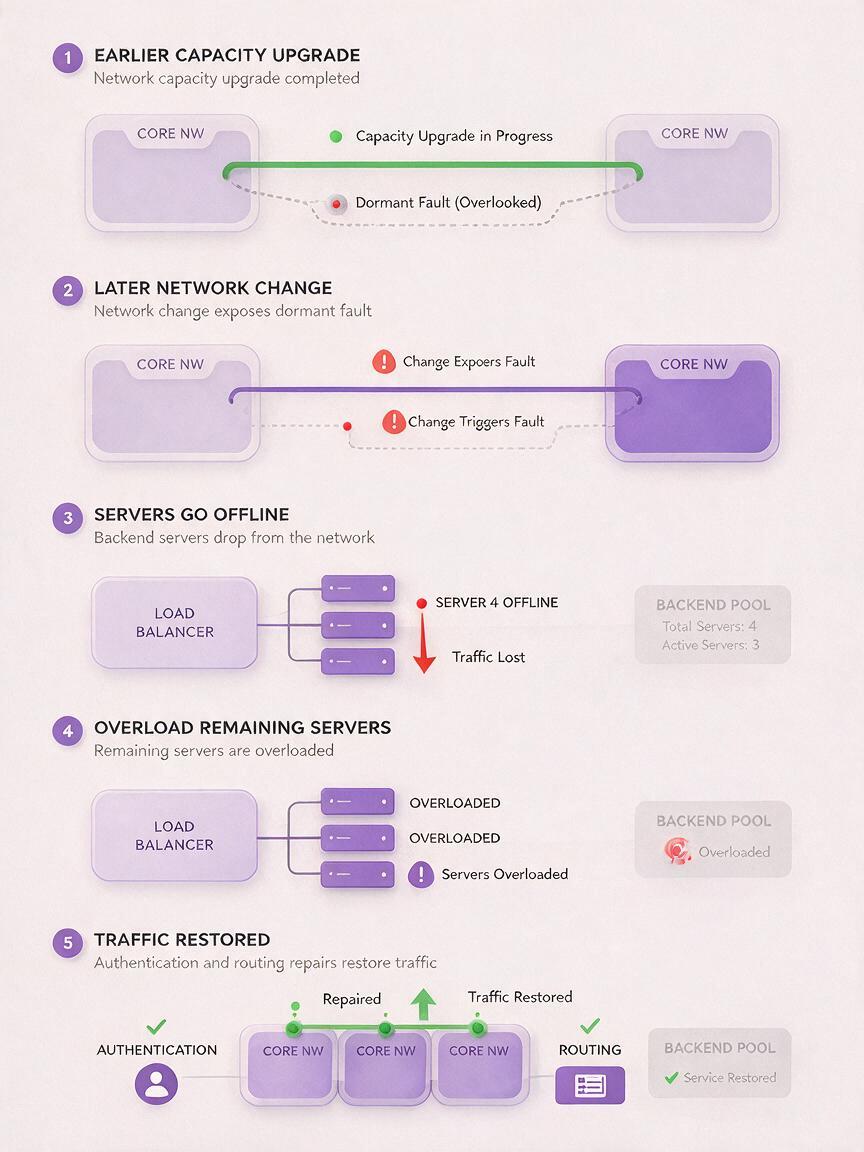
Microsoft said the outage was not caused by malicious activity or AI agents. Its initial explanation identified a dormant fault left by an earlier network-capacity upgrade. A later network change exposed that fault, knocked several backend servers offline and overloaded the remaining infrastructure. Engineers patched authentication and routing components, gradually restored traffic and then worked through delayed-email backlogs.
The company has promised a full post-incident report. Until that report arrives, the precise technical sequence and the complete scope of the damage remain subject to revision. Credit-rating analysts have estimated global insured losses of $300 million to $500 million, but that range is not based on verified claims.
For creative teams, the lesson is broader than email availability. Modern content production often relies on interconnected cloud services, AI automation and shared approval channels, which means the reliability of every dependency can determine whether an urgent campaign ships on time.
How a Dormant Network Fault Became a Suite-Wide Failure
The reported cause shows how an apparently inactive infrastructure defect can remain hidden until another change alters the surrounding environment. In this case, Microsoft traced the failure to an earlier network-capacity upgrade. The dormant fault was subsequently exposed by a later network change, taking backend servers offline and forcing excessive traffic onto the servers that remained available.
The resulting pressure was not confined to a single application. What began with Exchange Online expanded to the broader Microsoft 365 suite, demonstrating the operational risk created when authentication, routing and shared backend systems connect many products.
A cloud platform can contain many applications while still depending on a smaller set of common services. When those shared components fail, the visible disruption may spread far beyond the original fault.
Microsoft's recovery involved patching authentication and routing components before restoring traffic gradually. That controlled restoration mattered because sending all traffic back at once could have placed renewed pressure on recovering infrastructure. Delayed mail also created a backlog that continued to require attention after basic access returned.
| Incident detail | Reported information |
|---|---|
| Initial failure | Exchange Online issue beginning at 11:17 ET on November 12 |
| Wider disruption | Microsoft 365 suite affected from 13:26 |
| Full restoration | Around 06:00 GMT on November 14 |
| Duration | More than 36 hours |
| Downdetector volume | More than 7.4 million reports, not unique users |
| Reported cause | A dormant network fault exposed by a later network change |
| Security finding | Malicious activity and AI agents ruled out |
The Outage Reached Far Beyond Office Email
The disruption affected institutions whose work carries consequences well beyond ordinary business communication. Reported impact reached the UK National Health Service, the Metropolitan Police, Australian intelligence agencies, New Zealand embassies and University of Iowa Hospitals.
Air India, IndiGo and Akasa Air were also affected. Paccar delayed its quarterly earnings, while a Taiwanese company reportedly returned to fax communications to confirm trades. The fax example may sound like a relic from another era, but it captures an important operational principle: an independent fallback can become valuable when a dominant digital channel disappears.
US lawmakers have asked Microsoft for information about the outage. The event is also notable because it was Microsoft's second large-scale outage of the year, increasing pressure for a detailed account of the underlying fault, change controls, capacity safeguards and recovery process.
The estimated $300 million to $500 million in global insured losses gives a preliminary indication of the financial exposure created by a major cloud failure. However, the estimate should not be treated as a confirmed loss total because claims verification is still pending.

What the Incident Means for AI-Dependent Production
An AI workflow rarely consists of a model operating in isolation. A production chain may also depend on email, cloud storage, team chat, identity services, approval messages and asset transfers. If one shared platform becomes unavailable, the model itself can remain online while the surrounding production process stalls.
This distinction matters for anyone using an AI assistant or ai agent under a publication deadline. Reliability should be assessed across the complete workflow rather than only at the model layer. A script may already be generated, for example, while the approval conversation, source files or delivery instructions remain trapped in an unavailable service.
Creative teams can reduce concentration risk by keeping critical briefs and final assets in formats that are accessible outside a single communication suite. They can also distinguish essential production dependencies from convenient integrations, preserve local copies of urgent materials and establish an alternative approval channel before an outage occurs.
The same logic applies to AI tools. Building every task around one provider can make a workflow fragile when availability, access policies or infrastructure conditions change. A multi-capability environment offers more room to continue working across writing, visual development and video production without rebuilding the entire process around separate accounts.

Where MagicBoat Fits Into a More Resilient Creative System
MagicBoat provides a unified place for AI content creation, helping teams keep creative work organized around one account rather than scattering every capability across unrelated services. A producer can move from concept development to visual creation with an ai image generator, then continue into motion production with an ai video generator.
This does not eliminate the need for contingency planning, and no online platform is immune to infrastructure risk. The practical advantage is workflow flexibility: when creators can access multiple content capabilities in one environment, they have fewer disconnected accounts, handoffs and integration points to manage.
Microsoft's outage also shows why human oversight remains essential even as AI automation expands. Teams still need to know where source files live, who can approve a release and which communication channel remains available if a primary service fails. An efficient AI video workflow combines automation with clear ownership and recoverable assets.
Reporting Status and Remaining Questions
Microsoft has restored the affected services and ruled out both malicious activity and AI agents. The current explanation attributes the incident to a dormant fault from an earlier capacity upgrade that was exposed by a later network change.
Important questions remain open until the promised post-incident report is published. These include the exact sequence of backend failures, why the dormant condition survived the earlier upgrade, how the later change passed validation and what safeguards Microsoft will introduce to prevent a comparable suite-wide disruption.
The financial impact also remains provisional. The $300 million to $500 million insured-loss estimate is an analyst calculation rather than a claims-verified total, so it may change as organizations document operational and commercial losses.
Resilience Checklist
- Map shared dependencies: Identify which content tasks depend on email, identity, cloud storage and team communication.
- Keep critical assets accessible: Maintain recoverable copies of briefs, scripts and approved deliverables.
- Prepare another communication channel: Decide in advance how urgent approvals will continue during a suite-wide outage.
- Reduce tool fragmentation: Favor environments that bring related creative capabilities together.
- Preserve human ownership: Assign responsibility for approvals, publishing and incident decisions.
- Track the final findings: Reassess cloud dependencies after Microsoft publishes its complete report.
To build a more flexible content pipeline across visual and video production, try these models for free on MagicBoat.
Keywords
microsoft 365 outage, microsoft 365 restored, exchange online outage, cloud outage, ai workflow, ai automation, service resilience