Microsoft Adds Cerebras AI Chip Supply as Open-Weight Models Surge on OpenRouter
On November 16, 2026, Microsoft signed an undisclosed AI supply deal with Cerebras to diversify its chip portfolio beyond Nvidia and its own Maia/Cobalt processors, while Hugging Face began routing Hub inference through OpenRouter. OpenRouter’s own data shows open-weight models grew from 26.8% of tokens in October 2025 to 71.7% by September 2026, costing roughly a quarter of closed-model alternatives. These shifts deliver more choice, lower costs, and greater reliability for AI content creators building flexible multi-model workflows.
Table of contents
What the Announcements Say
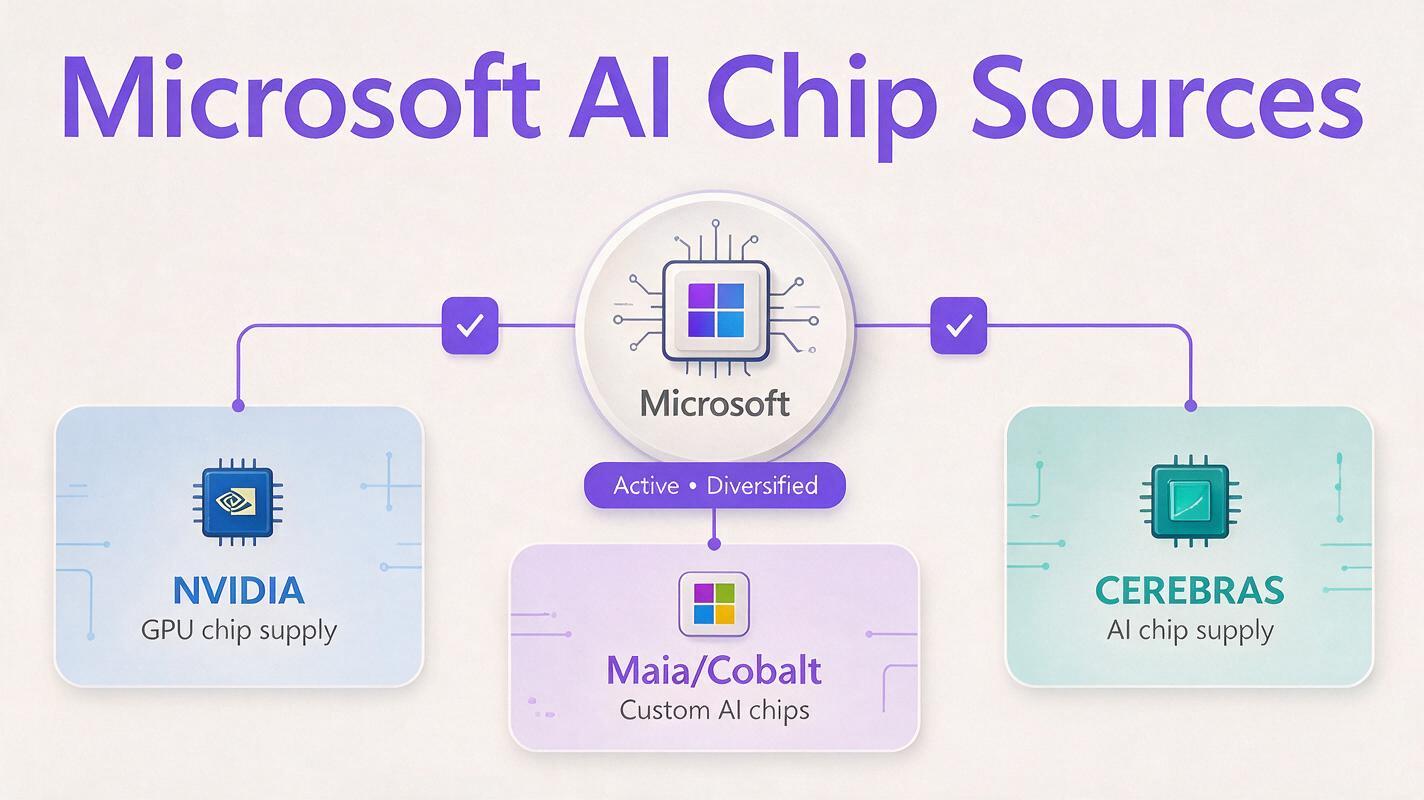
On November 16, 2026, two major shifts in the AI infrastructure and open-model ecosystem broke in tandem, as reported by Yahoo Finance, Chinese industry digests, and Silicon Noon. First, Microsoft signed an AI supply deal with Cerebras, adding another dedicated chip source to its portfolio beyond Nvidia and its own in-house Maia and Cobalt processors. Financial terms of the agreement were not disclosed.
Second, Hugging Face began routing Hub inference through OpenRouter, a move that connects one of the largest open-weight model repositories to a multi-provider inference platform. The shift comes as open-weight models have seen explosive growth on OpenRouter over the past year, per the platform’s own measurements.
Why the Cerebras Deal Matters for AI Infrastructure
Microsoft’s Cerebras partnership marks a significant step in diversifying its AI compute supply chain, a priority for major tech firms as demand for AI inference and training capacity continues to surge. By adding Cerebras as a dedicated chip supplier, Microsoft reduces its reliance on Nvidia’s dominant market position and spreads risk across its own custom silicon and third-party providers.
Cerebras is known for its wafer-scale AI processors, which are designed to handle large, high-throughput workloads more efficiently than traditional GPU clusters for certain use cases. The deal follows a broader pattern of hyperscalers investing in multiple chip architectures to match different workload needs, from large language model inference to specialized generative AI tasks.
Open-Weight Model Growth on OpenRouter: The Numbers
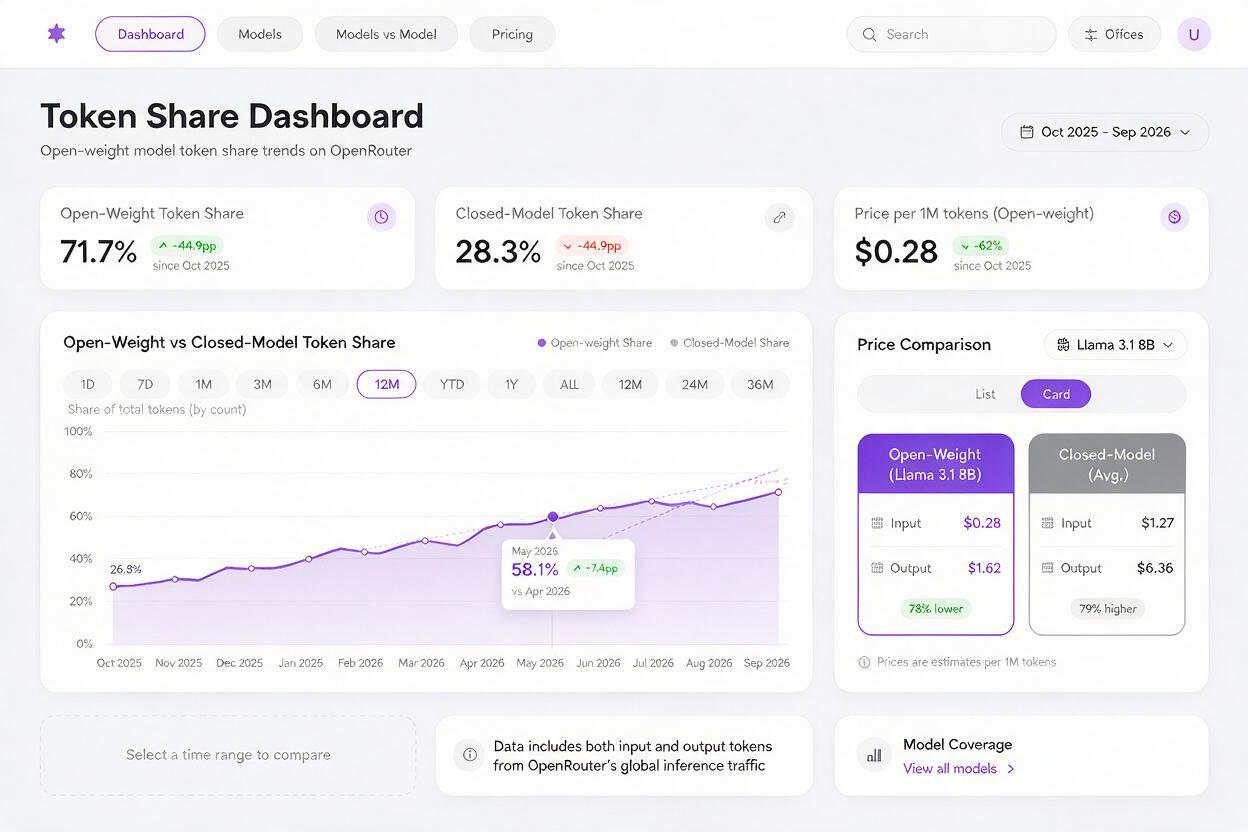
OpenRouter’s own internal data shows a dramatic shift toward open-weight models over the past 12 months. In October 2025, open-weight models accounted for just 26.8% of all tokens processed on the platform. By the end of September 2026, that share had skyrocketed to 71.7% — a nearly threefold increase in a single year.
Cost is a major driver of that growth. Open-weight models on OpenRouter cost roughly a quarter of the price of closed-model alternatives, at $0.28 per million input tokens and $1.62 per million output tokens, compared to $1.27 per million input and $6.36 per million output for closed models.
Hugging Face routing Hub inference through OpenRouter is expected to accelerate this trend further, as developers and users who previously accessed open-weight models directly through Hugging Face’s infrastructure now have a seamless path to scaled, pay-as-you-go inference across dozens of open models.
What This Means for AI Content Creators
For independent and professional AI content creators alike, these two developments translate directly to more choice, lower costs, and greater workflow reliability. Diversified chip supply at the infrastructure level reduces the risk of widespread outages or sudden price hikes tied to a single vendor, making long-term creative planning more predictable.
The rapid growth of affordable open-weight models also opens up new possibilities for budget-conscious creators. An ai video generator pipeline built on open-weight models can handle bulk background generation or initial cut drafts at a fraction of the cost of closed-model alternatives, freeing up budget for high-impact closed-model tasks like final polish or complex scene generation. Similarly, an ai script writer powered by open-weight models can take on repetitive drafting work for short-form content series without blowing through production budgets.
Platforms that aggregate both leading closed models and high-performance open-weight options in one place make it easy to mix and match tools based on each task’s needs. MagicBoat gives creators access to a full suite of generative AI tools through a single account, with transparent pricing and no vendor lock-in. You can try these models for free to build a flexible, cost-effective creative workflow that fits your project’s unique requirements.
Key Takeaways
- Microsoft’s November 16 Cerebras supply deal adds a third dedicated AI chip source, reducing reliance on Nvidia and in-house Maia/Cobalt processors.
- Open-weight models now make up 71.7% of tokens processed on OpenRouter, up from 26.8% in October 2025, at roughly a quarter the cost of closed-model alternatives.
- Hugging Face routing Hub inference through OpenRouter is expected to further drive open-weight model adoption among developers and creators.
- Diversified compute supply and lower open-weight pricing create more flexible, cost-effective options for AI content creation workflows.
Keywords
ai agent, ai workflow, ai automation, ai assistant, open-weight models, cerebras, openrouter