What Is Musalem’s Rate-Hike Warning? AI Funding Risk | MagicBoat
St. Louis Fed President Alberto Musalem said on November 18, 2026 that the United States may need several interest-rate increases before spring 2027 and that rates could be as much as one percentage point too low to return inflation to 2%. His comments are not Federal Open Market Committee consensus, but they highlight a financing risk for debt-funded AI data centers and the creative services that depend on them.
Table of contents
Musalem’s warning puts AI infrastructure financing back in focus
St. Louis Fed President Alberto Musalem said on November 18, 2026 that the United States may need several interest-rate increases before spring 2027. Musalem also said rates could be as much as one percentage point too low to bring inflation back to the Federal Reserve’s 2% target.
The warning matters to the AI sector because higher borrowing costs can put additional pressure on debt-financed data centers. It is one Federal Reserve official’s view rather than Federal Open Market Committee consensus, but it identifies a financial risk for an industry expanding through capital-intensive computing infrastructure.
For AI video and image creators, the immediate lesson is not that cloud tools will suddenly disappear. It is that infrastructure cost, model availability and service reliability belong in the same planning conversation as output quality, especially when a production workflow depends on one provider.
What Musalem said on November 18
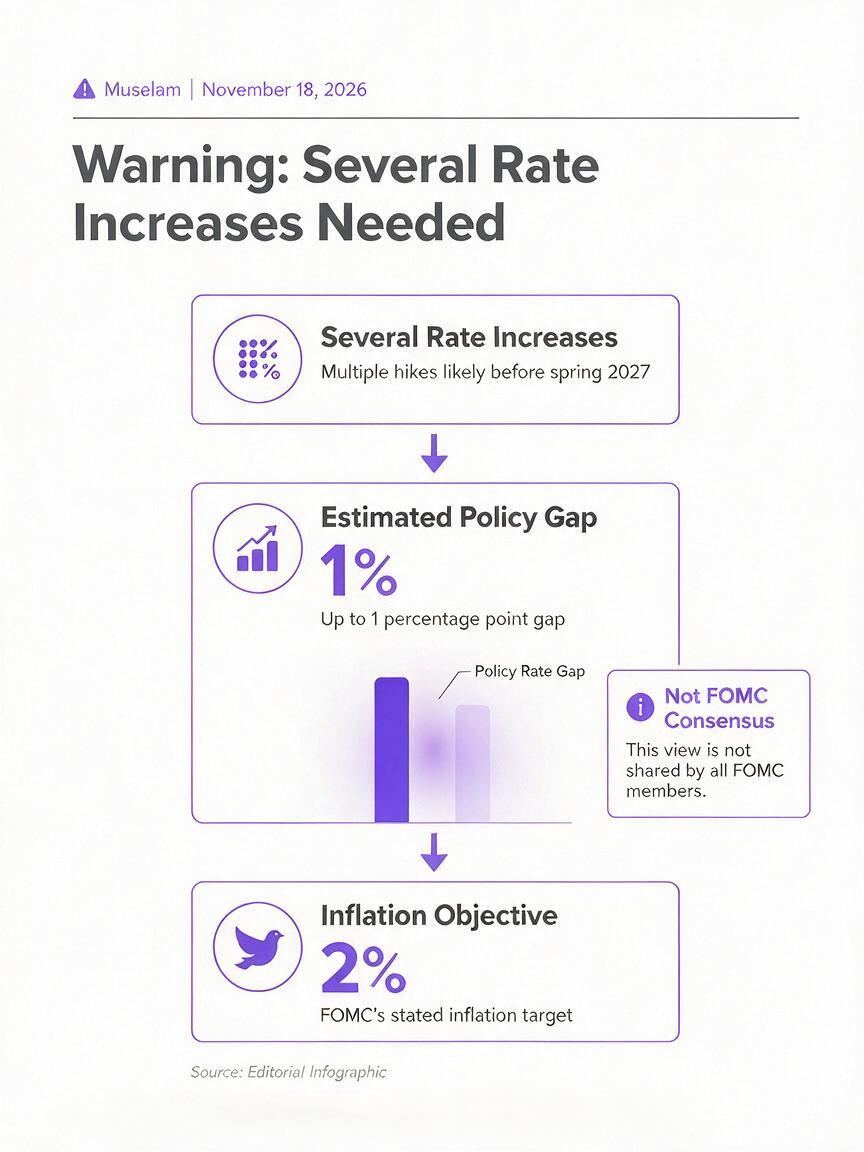
According to the November 18, 2026 account of Musalem’s remarks, the St. Louis Fed president argued that several rate increases may be required before spring 2027. He also estimated that interest rates were up to one percentage point below the level needed to return inflation to the Federal Reserve’s 2% objective.
The timing and magnitude of any future rate action were not established by those remarks. No specific schedule for the possible increases was disclosed, and no AI-sector financing estimate accompanied the warning.
The essential caveat: Musalem’s November 18 position represents one official’s assessment. It is not a decision or consensus forecast from the Federal Open Market Committee.
That distinction is important. A policymaker’s warning can influence expectations and financing discussions without guaranteeing that the central bank will follow the path described. The relevant signal for the AI market is therefore heightened funding uncertainty rather than a confirmed series of increases.
Key figures behind the rate warning
| Item | Figure or status | Attribution |
|---|---|---|
| Possible monetary-policy direction | Several increases before spring 2027 | Musalem, November 18, 2026 |
| Estimated policy-rate gap | Up to 1 percentage point too low | Musalem, November 18, 2026 |
| Inflation objective | 2% | Federal Reserve objective cited in the November 18 remarks |
| FOMC consensus status | Not consensus | The account explicitly characterizes the statement as one official’s view |
| Estimated AI data-center cost impact | Not disclosed | No sector-wide figure accompanied the remarks |
The one-percentage-point estimate is the central quantitative detail. It indicates how far Musalem believed policy might be from a level consistent with the 2% inflation objective, but it should not be treated as a promised increase or as a complete Federal Reserve forecast.
Why debt-financed AI data centers are exposed
AI data centers require large amounts of capital before they can deliver computing capacity. When part of that expansion is financed with debt, the cost of capital becomes a direct input into decisions about how quickly projects proceed and how much financial pressure their owners can absorb.
Musalem’s November 18 warning does not identify any particular data-center operator, project or loan. It instead raises a sector-level question: if rates remain restrictive or rise further, how resilient are infrastructure plans that depend heavily on borrowed money?
The potential pressure can appear throughout an AI infrastructure chain. A more expensive funding environment may encourage closer scrutiny of proposed capacity, contract duration and expected utilization. The supplied account does not quantify any of these effects, so it would be inappropriate to estimate cancellations, price increases or construction delays from Musalem’s remarks alone.
There is also an important difference between AI demand and the financing structure used to serve that demand. Strong interest in an ai agent or ai assistant does not automatically make every data-center financing plan equally durable. Demand can continue while lenders and operators become more selective about capital allocation.
What the warning does and does not establish
It establishes a hawkish risk scenario
On November 18, 2026, Musalem explicitly raised the possibility of several increases before spring 2027 and said rates could be up to one percentage point too low for the 2% inflation goal. That gives AI infrastructure planners a concrete scenario to consider.
It does not establish an official rate path
The remarks were not presented as Federal Open Market Committee consensus. They therefore do not establish the number, timing or size of future policy moves.
It does not establish creator-tool price changes
No AI model provider, creative platform or data-center operator announced a price change as part of Musalem’s November 18 remarks. No estimate was disclosed for how the warning could affect inference prices, subscriptions or generation credits.
It does not prove an AI demand reversal
The November 18 account concerns funding costs for debt-heavy infrastructure. It does not provide a figure showing lower demand for AI automation, content generation or cloud inference.
What this means for AI video and image creators
Creators generally experience infrastructure economics indirectly. A production team may never finance a data center, but it still depends on platforms that obtain computing capacity from those facilities. Funding pressure can therefore reinforce the value of flexible production planning even when there is no immediate service disruption.
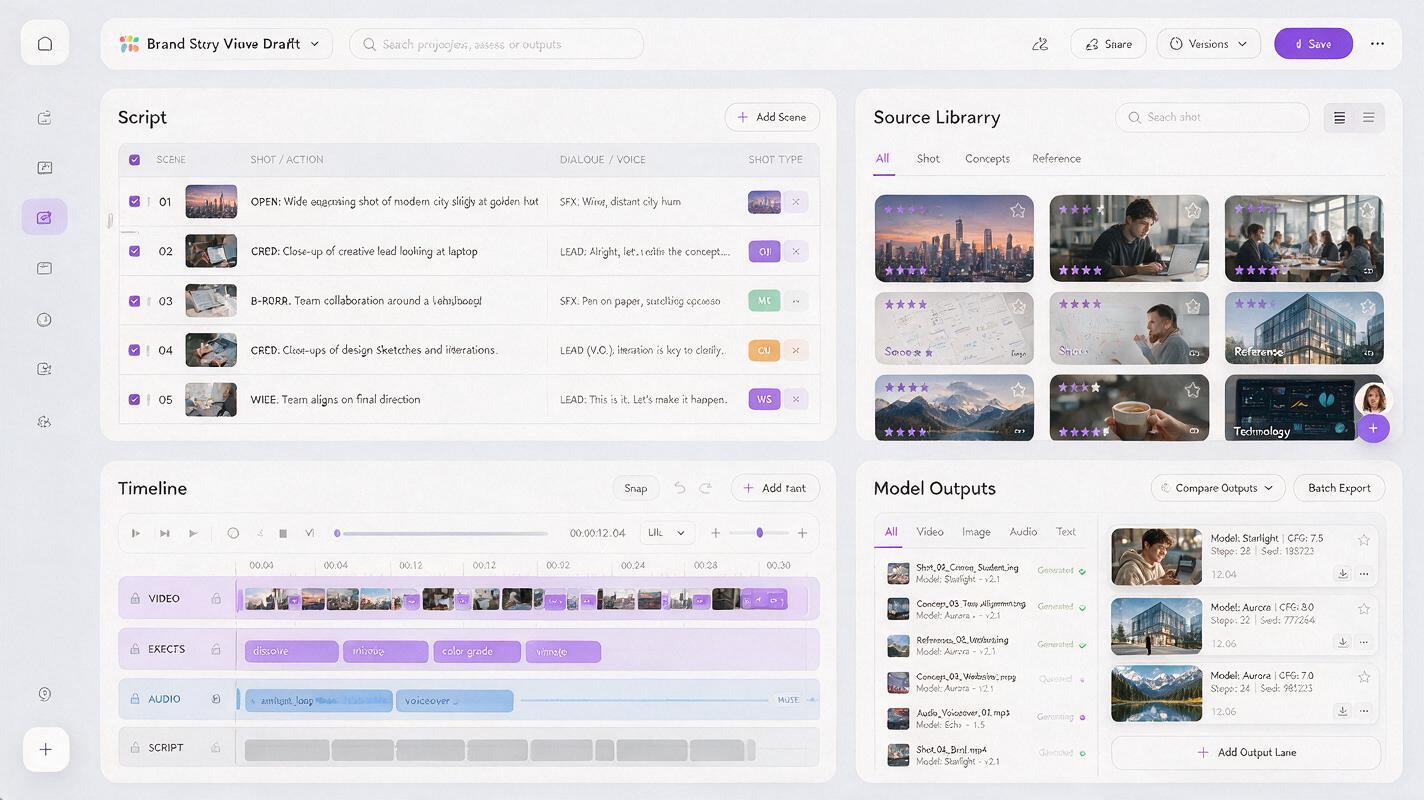
A resilient AI video workflow should avoid unnecessary dependence on one generation path. Keeping source images, scripts, prompts and approved outputs organized makes it easier to move between tools if availability or economics change. Creators can use an ai video generator for motion work while retaining reusable production assets outside any single model session.
The same principle applies to still-image production. An ai image generator can support concept art, visual development and campaign assets, but the surrounding workflow should preserve the creative brief and review history so the work is not tied to one infrastructure provider.
This is where a multi-model environment becomes useful. MagicBoat gives creators one account for creative AI workflows, reducing the operational friction of moving between available capabilities. Musalem’s warning is not a reason to abandon cloud creation; it is a reason to treat model choice and platform stability as production variables rather than afterthoughts.
How creative teams can interpret the signal
The most measured response is to separate confirmed information from scenarios. The confirmed information from November 18 is that Musalem raised the possibility of several increases before spring 2027 and assessed rates as up to one percentage point too low for the 2% target. The scenario is that higher financing costs could squeeze debt-heavy AI data-center development.
Creative teams do not need to forecast Federal Reserve policy to respond sensibly. They can focus on factors within their control: portable assets, repeatable prompts, clear approval records and access to more than one creative capability. That approach supports continuity without making unsupported assumptions about future rates or platform prices.
Teams should also avoid treating a single official’s remarks as a settled macroeconomic outcome. The account explicitly says Musalem’s position is not FOMC consensus. Any decision about long-term subscriptions, production commitments or infrastructure exposure should preserve that caveat.
Bottom line
Musalem’s November 18, 2026 warning introduces a clear but conditional risk for AI infrastructure. Several possible increases before spring 2027, combined with his estimate that rates may be up to one percentage point too low for 2% inflation, could intensify funding pressure on debt-financed AI data centers.
The comments do not represent Federal Open Market Committee consensus, and they do not establish any AI service price increase or capacity reduction. For creators, the practical conclusion is to build portable, multi-model production systems that can accommodate changes in cost or availability without interrupting an entire campaign.
To explore video, image and story creation in one place, try these models for free on MagicBoat.
Key takeaways
- Musalem said on November 18, 2026 that several rate increases may be needed before spring 2027.
- He estimated that rates could be up to one percentage point too low to return inflation to the Federal Reserve’s 2% objective.
- The remarks are one official’s view, not Federal Open Market Committee consensus.
- No estimated data-center cost impact or creator-platform price change was disclosed.
- Creators can reduce workflow concentration risk by preserving reusable assets and maintaining access to multiple creative capabilities.
Keywords
musalem rate hike, ai data center funding, ai infrastructure, interest rates, ai workflow, ai video workflow, federal reserve