Musk Pledges $10.5B in SpaceX Shares to US Kids, Responding to Anthropic Fund
Elon Musk has pledged one SpaceX share to every U.S. child, a commitment valued at roughly $10.5 billion covering an estimated 72 million kids. The announcement is a direct response to Anthropic's Public Benefit Fund and tests the Trump administration's child-investment policy, signaling growing AI industry influence on public benefit frameworks that impact creative professionals.
Table of contents
Musk's $10.5B SpaceX Share Pledge: What We Know
On October 20, 2026, Elon Musk announced a pledge to give one share of SpaceX stock to every child in the United States, a commitment valued at roughly $10.5 billion based on the company's latest closing price. The pledge covers an estimated 72 million U.S. children, and Musk framed the announcement as "just the start" of broader efforts in this space.
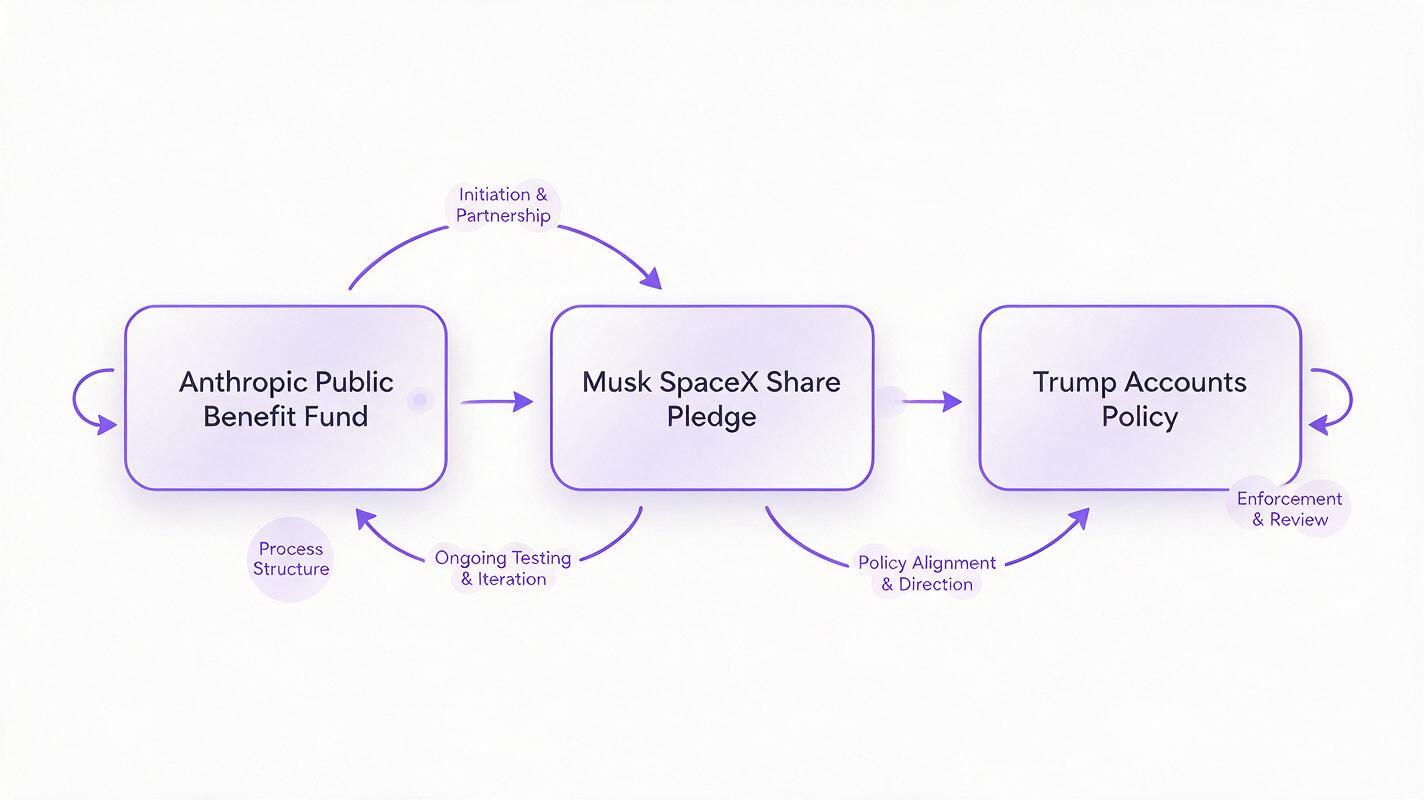
The announcement is not an isolated policy proposal: it is a direct public response to Anthropic's recently established Public Benefit Fund, which allocates a portion of the AI company's shares to address AI's impact on the labor market and other public goods. Musk's pledge also serves as a test of the Trump administration's proposed "Trump Accounts" child-investment policy framework, marking a rare intersection of private industry, AI sector growth, and federal policy experimentation.
While the pledge is tied to SpaceX rather than a direct AI product announcement, its roots in the AI industry's growing public benefit commitments make it relevant for every stakeholder in the AI ecosystem, including content creators who rely on AI tools for their work.
How the Pledge Connects to the AI Industry
To understand the significance of Musk's announcement, it helps to ground it in the recent AI industry context. Just one day prior, on October 19, 2026, Anthropic announced its Public Benefit Fund, which contributes 5% of the company's shares to a dedicated LLC fund (pending shareholder approval), with an additional 2% contribution for every 50% rise in the company's valuation. The fund is explicitly prohibited from financing lobbying or political donations, and its primary focus is mitigating AI's labor-market impact. Combined with the founders' 80% equity pledge to public purposes, roughly 20% of Anthropic's shares are earmarked for public benefit.
Musk's SpaceX share pledge mirrors this public-benefit framework but scales it to a national, child-focused investment model, using his personal wealth and SpaceX's valuation to test a policy idea that has been floated in AI policy circles as a way to address widespread labor displacement from AI automation. The move signals that AI industry leaders are no longer just building tools—they are actively shaping public policy and social safety net proposals that will define how communities interact with AI for decades to come.
It also underscores the staggering economic power of the AI sector. With Anthropic's IPO push reportedly targeting a valuation of over $1 trillion, and AI companies driving some of the largest wealth creation in modern history, industry leaders are increasingly positioned to test large-scale social policies that were once the exclusive domain of governments.
What This Means for AI Video and Image Creators
For AI video and image creators, this announcement may feel distant from day-to-day workflow tasks like editing clips or generating concept art, but it carries tangible implications for the AI tools ecosystem and creator livelihoods.
First, the growing focus on public benefit and labor market support from AI leaders signals that the industry is taking concerns about creative labor displacement seriously. As companies like Anthropic allocate billions in value to labor market transition funds, creators can expect more targeted support programs, training initiatives, and accessible tooling designed to help creative professionals adapt to AI rather than be replaced by it. This could include expanded access to free ai tools, educational resources for upskilling, and grant programs for AI-augmented creative projects.
Second, the normalization of public benefit commitments from major tech and AI leaders could lead to more responsible AI deployment practices that protect creators. For example, clearer copyright frameworks for AI-generated content, better compensation models for creators whose work informs AI training data, and more transparent model development processes are all areas that public benefit funds could help advance.
Third, the rapid pace of AI industry evolution—from model releases to regulatory shifts to public policy announcements—means creators need flexible, reliable access to the best tools available without being locked into a single provider. Platforms that centralize access to leading text to video and image to video models, along with image generation and audio tools, help creators adapt to industry changes seamlessly, without missing a beat in their production schedules.
Finally, the growing economic and policy influence of AI companies means that creator voices matter more than ever. As public benefit funds and policy frameworks are designed, creators have an opportunity to advocate for the specific support and protections they need, from fair use guidelines to affordable access to frontier AI models.
How Multi-Model Platforms Support Creator Stability
In an era of rapid AI industry change—from public benefit announcements to model updates to regulatory shifts—creators benefit from workflows that are not dependent on a single AI provider. A multi-model creative platform like MagicBoat gives creators access to a wide range of leading AI tools in one centralized account, so they can switch between models, test new capabilities, and maintain production continuity even as the broader AI landscape evolves.
Whether you're generating concept art for a short film, turning a static reference image into a dynamic motion clip, or writing a script for a social media series, a unified platform eliminates the need to manage multiple subscriptions, track scattered model updates, or rebuild workflows from scratch every time a new model is released or a policy changes.
You can try these models for free to explore which tools fit your creative workflow best, with no long-term commitment required.
Key Takeaways
- Elon Musk has pledged one SpaceX share to every U.S. child, a commitment valued at roughly $10.5 billion covering an estimated 72 million kids.
- The pledge is a direct response to Anthropic's Public Benefit Fund, which allocates 5% of the AI company's shares to address AI's labor market impact and other public goods.
- The announcement signals the growing economic and policy influence of the AI industry, as leaders move beyond tool building to shape large-scale social policy.
- For AI creators, this shift could lead to more accessible AI tools, better labor transition support, and clearer creative rights frameworks as public benefit funds expand.
- Multi-model platforms like MagicBoat help creators navigate industry uncertainty by providing centralized, stable access to leading AI creative tools.
Keywords
musk spacex shares, anthropic public benefit fund, ai industry news, ai labor market impact, free ai tools, text to video, image to video