Netflix Viewing Data Signals a Smarter AI Video Strategy
Netflix viewing data gives creators a useful signal about the story formats competing for audience attention. This editorial framework shows how to translate those signals into original AI video concepts, short-drama tests, and repeatable content workflows without copying successful shows.
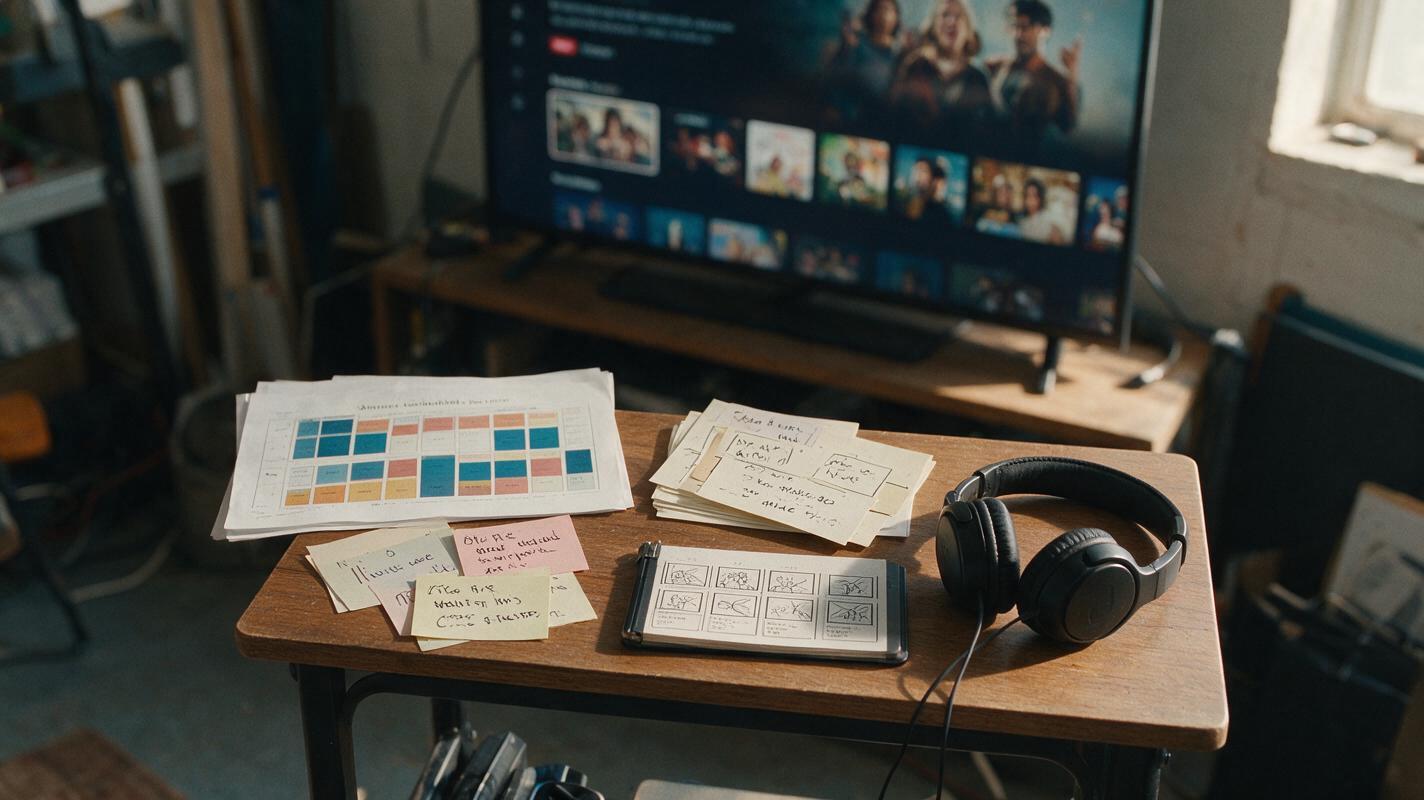
Table of contents
Netflix Attention Signals Can Become a Creator Testing Plan
Netflix viewing data has become a recurring public measure of which stories hold attention across languages, genres, and release windows. For content creators, the opportunity is not to imitate a popular show but to convert visible audience signals into original premises, sharper hooks, and inexpensive AI video experiments.
A viewing chart cannot explain every reason a title succeeds. It can, however, reveal where attention is concentrating and encourage creators to ask more useful questions: Is the premise immediately understandable? Does the story contain a repeatable conflict? Can one emotional promise sustain several episodes? Those questions are especially valuable when generative tools make it possible to test a concept before committing to a full production.
The practical promise: treat entertainment performance as a creative signal, then use AI to prototype an original response rather than produce a low-value copy.
What Netflix Viewing Data Actually Tells Creators
Audience data is most useful when it is read as evidence of behavior, not as a formula. A strong result may reflect the concept, cast, timing, existing intellectual property, promotion, recommendation systems, regional relevance, or a combination of these factors. A creator working at a smaller scale cannot reproduce that entire environment.
What creators can examine is the visible structure surrounding a successful title:
- Premise clarity: whether the central situation can be explained in one sentence.
- Emotional engine: the fear, desire, rivalry, mystery, or transformation that keeps the story moving.
- Episode propulsion: whether each scene naturally creates a new question.
- Visual identity: the locations, costumes, objects, and color choices that make the title recognizable.
- Format fit: whether the concept works because it is a feature, a series, a documentary, or a compact episodic drama.
This approach shifts the creator's focus from “make something like the current hit” to “understand which audience promise is working, then build a distinct promise for a specific community.” That distinction is essential for responsible AI content creation.
The AI Video Pipeline Is Moving Toward Early Proof
Traditional production often requires creators to make consequential decisions before viewers see anything: scripts are finalized, locations are booked, and footage is captured before the team learns whether the hook communicates clearly. An AI-assisted pipeline can move part of that learning earlier.
A writer can turn the same original premise into several short treatments, visualize alternative openings, compare character introductions, and assemble a rough teaser. These materials are not substitutes for taste, performance, editing, or production craft. Their value is that they make an idea visible enough to discuss and test.
| Creative question | Conventional early artifact | AI-assisted test artifact | Decision it supports |
|---|---|---|---|
| Is the premise clear? | Written logline | Short visual concept clip | Whether viewers understand the situation quickly |
| Which opening is stronger? | Script alternatives | Multiple rough cold opens | Which version creates immediate curiosity |
| Does the world feel distinctive? | Mood board | Consistent scene studies | Whether the visual language supports the genre |
| Can the conflict repeat? | Episode outline | Miniature episode previews | Whether the idea has an episodic engine |
| Is the format appropriate? | Pitch document | Trailer, vertical scene, or short-drama pilot | Where the concept feels most natural |
The important pipeline shift is therefore not simply faster generation. It is the ability to obtain early creative evidence. A rough AI film prototype may reveal that a premise needs less exposition, a stronger visual objective, or a more decisive final beat before additional resources are committed.
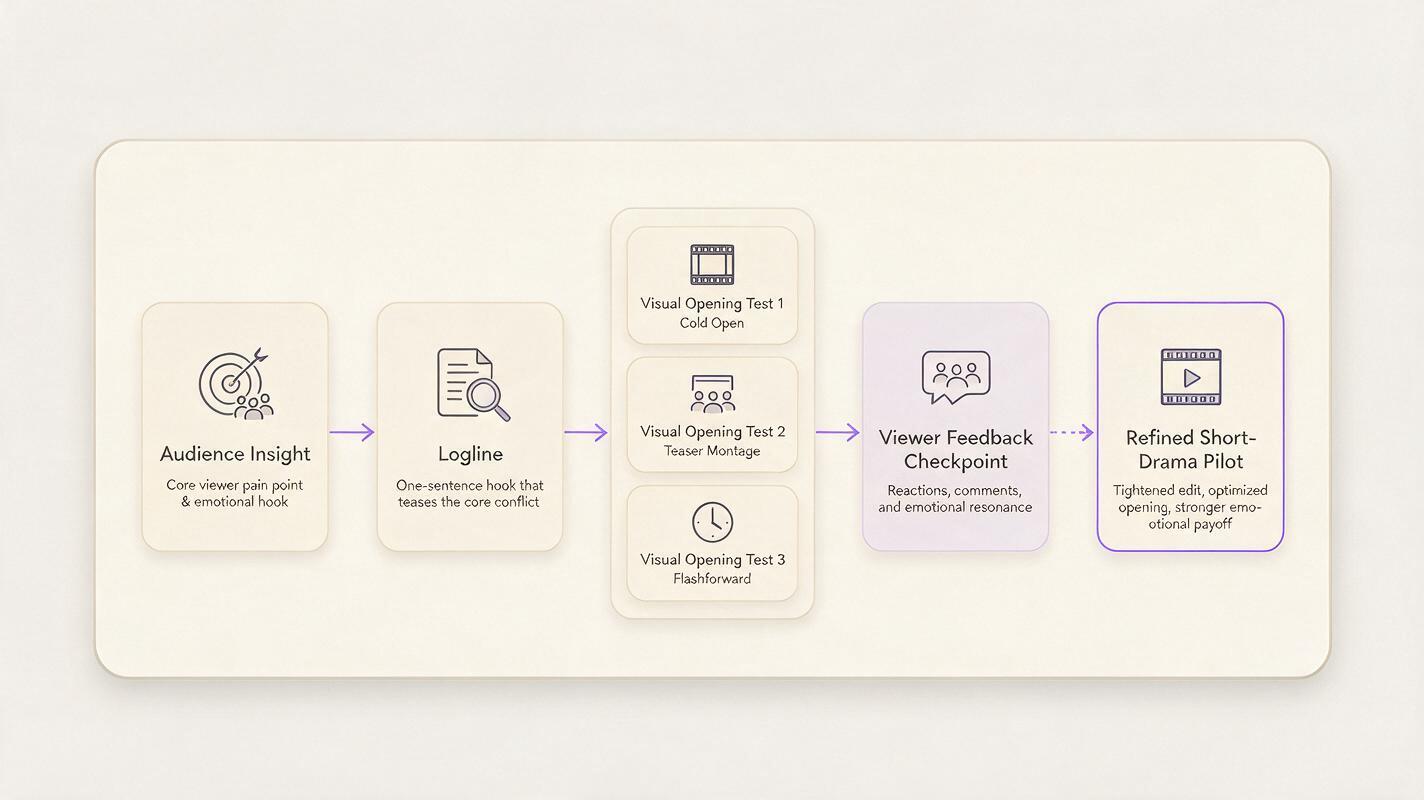
From a Viewing Signal to an Original Story Hypothesis
A useful analysis separates the audience signal from the protected expression of a particular show. Creators can study broad patterns—such as contained suspense, relationship reversals, survival pressure, workplace rivalry, or investigative momentum—without borrowing characters, dialogue, scenes, costumes, or signature imagery.
Start by writing a neutral observation about the apparent audience appeal. Then turn it into a hypothesis for a different audience and setting. If viewers appear drawn to high-pressure group decisions, for example, an original response could explore volunteers managing a storm shelter, chefs improvising during a citywide blackout, or researchers deciding what to save from a damaged archive.
The following prompt structure keeps the exercise centered on transformation:
Audience signal: [a broad emotional or structural pattern]
Target audience: [a specific community or viewing context]
Original setting: [a place unrelated to the reference title]
Character objective: [a concrete goal]
Escalating obstacle: [the pressure that intensifies]
Episode turn: [a decision or discovery that changes the situation]
Visual rule: [one consistent, achievable aesthetic principle]

Generate three distinct story premises.
Do not reuse existing characters, dialogue, plot events, or signature imagery.
Explain the repeatable conflict in one sentence for each premise.
This gives the creator several hypotheses rather than a single expensive bet. The strongest candidate should be the one with a clear emotional promise and enough room for meaningful variation—not merely the one that resembles a current hit.
AI Short Drama Is a Practical Format for Testing Hooks
An AI short drama can function as a compact story laboratory. Its limited duration forces the creator to define what the viewer needs to know, what changes during the scene, and why the next episode deserves attention.
A practical test package might include:
- A one-sentence premise that can be understood without background material.
- Three character cards focused on goals, conflicts, and visible behavior.
- A short cold open that begins with a decision, discovery, or disruption.
- Two alternative endings: one based on revelation and one based on consequence.
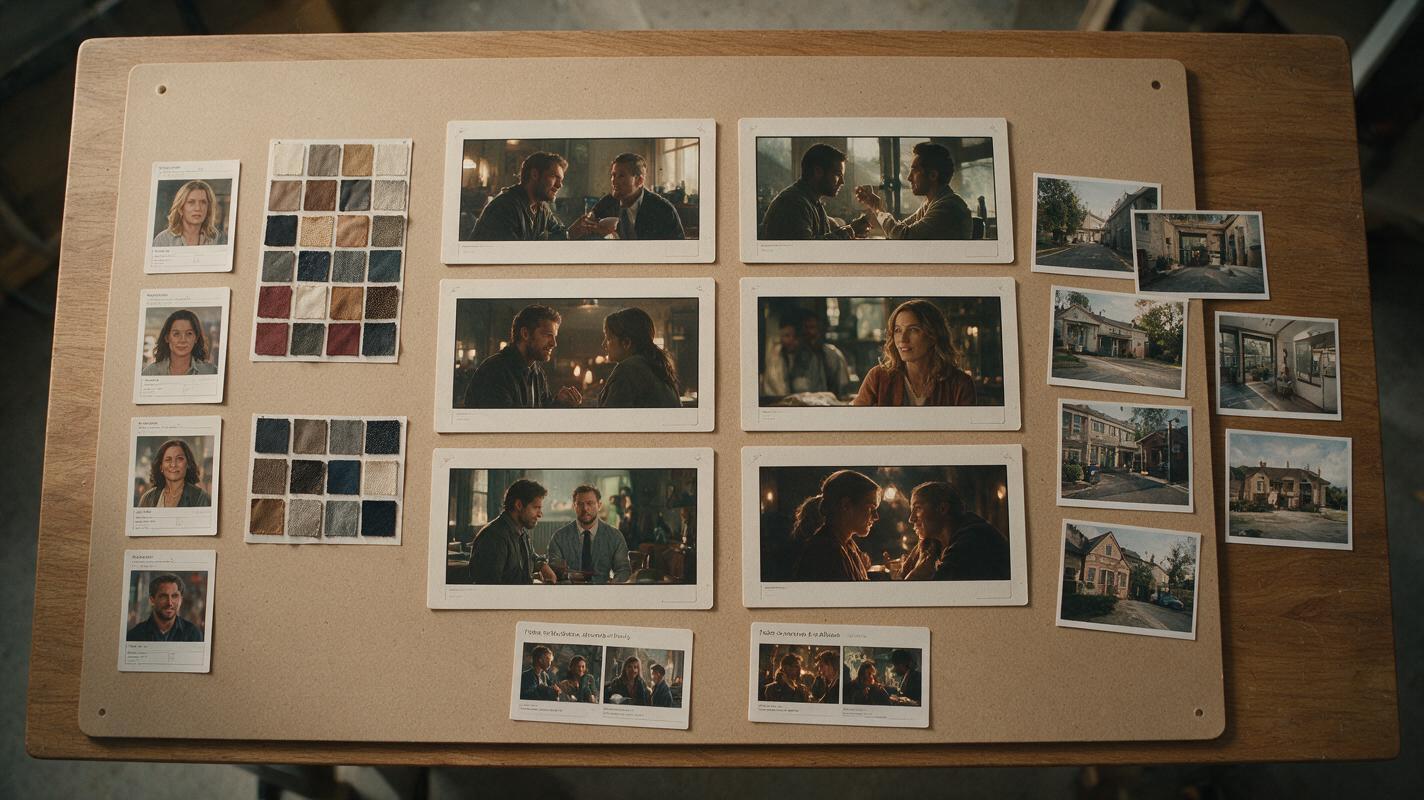
- A visual reference sheet covering location, wardrobe, lighting, and recurring objects.
- Vertical and horizontal scene concepts for different distribution contexts.
Creators can use text to video workflows to explore how a written hook translates into images and pacing. Continuity still requires human review: character appearance, object placement, screen direction, tone, and narrative causality should remain coherent from shot to shot.
A Better Test Than Raw View Counts
At the prototype stage, the most useful feedback is often qualitative. Ask a small group of target viewers to describe the premise in their own words, identify the character's objective, and predict what might happen next. Confused summaries point to exposition problems; identical predictions may indicate that the turn is too obvious; incompatible descriptions may mean the visual storytelling lacks focus.
This type of feedback does not guarantee future performance. It helps the team distinguish a generation problem from a story problem before producing more material.
Human Direction Still Creates the Competitive Difference
As AI lowers the effort required to produce a rough clip, the scarcity moves elsewhere. Distinctive judgment becomes more important: choosing an underexplored audience, recognizing a truthful character detail, rejecting generic imagery, and editing scenes around emotional change rather than spectacle alone.
| Weak response to a hit | Stronger creator response |
|---|---|
| Copy the surface genre and imagery | Identify the underlying emotional appeal |
| Generate a complete episode immediately | Test the premise, opening, and turn separately |
| Use prompts with only visual adjectives | Describe character goals, actions, space, and consequences |
| Treat every generated shot as final | Review continuity and edit for narrative purpose |
| Chase a broad anonymous audience | Design for a defined viewer community |
The creator's durable advantage is not access to generation alone. It is the ability to combine cultural observation, story architecture, visual direction, and audience feedback into a repeatable editorial process.

Where MagicBoat Fits the Experiment
MagicBoat can support the bridge between a written story hypothesis and a viewable AI video or short-drama concept. A creator can begin with an original premise, define a scene's characters and dramatic turn, create visual material, and use the result to evaluate whether the concept deserves further development.
That workflow is particularly useful for independent filmmakers, social video teams, writers developing visual pitches, and marketers exploring episodic branded stories. Instead of treating the first output as a finished production, they can compare variations and refine the storytelling brief.
Start free with MagicBoat and turn one audience insight into an original scene test, teaser, or AI short-drama pilot.
Sources Note
No retrievable public third-party source links or title-specific viewing figures were included in the supplied background material. Accordingly, this article does not attribute rankings, dates, performance statistics, or release claims to any individual Netflix title.
Final Checklist
- Describe the audience signal without copying a show's protected creative elements.
- Convert the signal into an original premise for a defined viewer community.
- Test premise clarity before expanding the full story.
- Compare alternative openings and episode turns.
- Review character, object, location, and tonal continuity.
- Use viewer feedback to separate story problems from generation problems.
- Keep human editorial judgment at the center of every AI-assisted decision.
Keywords
netflix viewing data, ai video, ai content creation, ai short drama, text to video, ai film