Netflix Drops Tyson, The Trap, Michael Che and Solar Opposites
Netflix’s October 13 slate brings together the four-episode Tyson docuseries, German thriller The Trap Season 1, Michael Che: Shot in Minnesota and the final season of Solar Opposites. The varied release lineup highlights how sharply defined formats and audience promises can help both streaming titles and independent AI content stand out.
Table of contents
Netflix Builds a Four-Title October 13 Release Slate
Netflix expanded its October lineup on October 13 with four distinctly positioned releases: Tyson, The Trap Season 1, Michael Che: Shot in Minnesota and the final season of Solar Opposites.
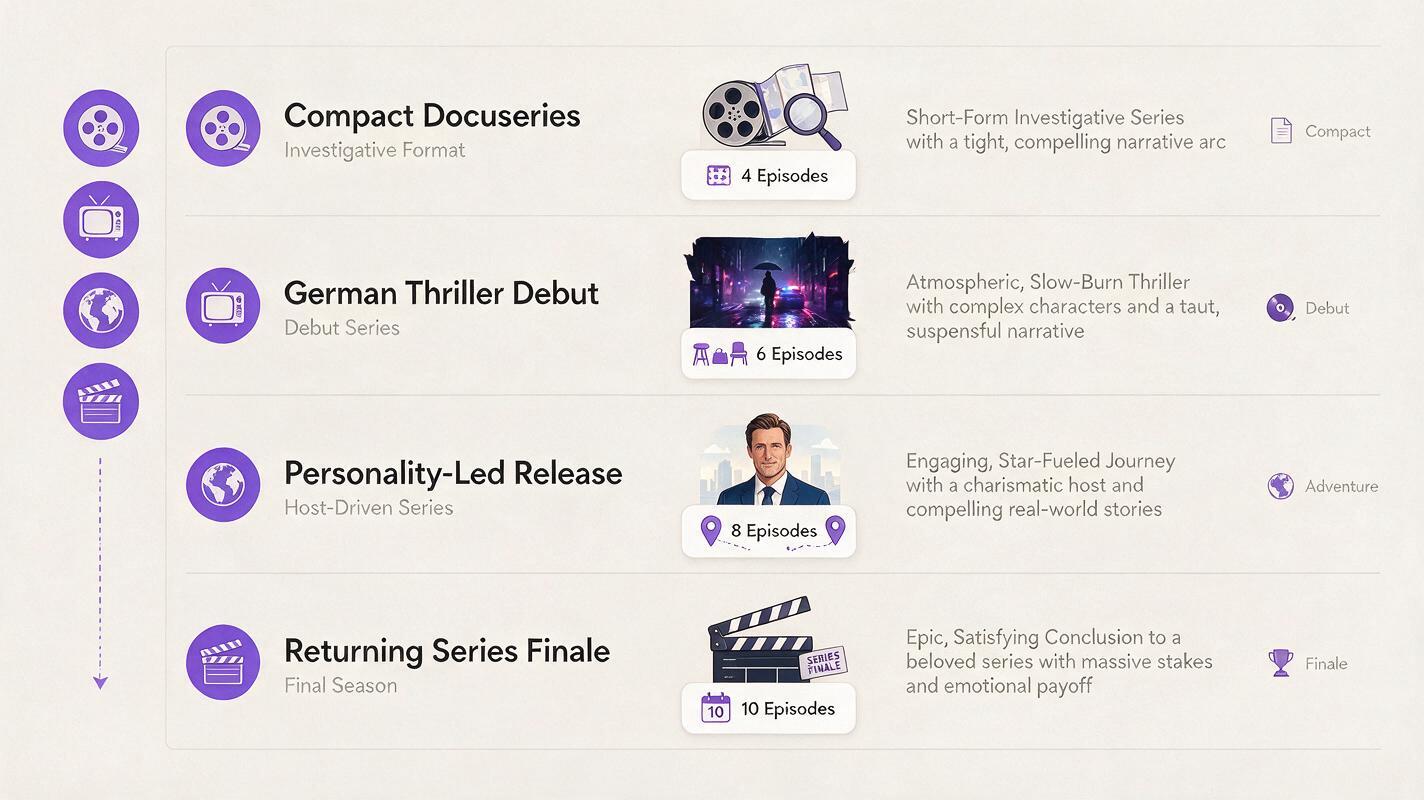
Tyson arrives as a four-episode docuseries, giving the day a nonfiction anchor. The Trap introduces a German thriller at the beginning of its first season, while Michael Che: Shot in Minnesota adds another named release with an identity centered on its featured performer and location. Solar Opposites completes the group with its final season, turning an ongoing title into a concluding event.
The collection is notable because Netflix is not asking one genre to carry the entire date. Documentary storytelling, a German thriller, a personality-led title and a returning series finale all compete for attention while addressing different viewing interests. The common thread is not subject matter but clarity: every release can be described through a compact, recognizable premise.
For independent producers, that contrast offers a useful lesson. AI content creation becomes more effective when the format, tone and audience promise are established before visual production begins.
Four Releases, Four Different Audience Signals
A crowded streaming catalog rewards titles that communicate their identity quickly. Netflix’s October 13 group demonstrates four ways to create that immediate signal without requiring the projects to resemble one another.
| Release | Confirmed format or status | Immediate positioning signal |
|---|---|---|
| Tyson | Four-episode docuseries | A compact nonfiction series organized around one central subject |
| The Trap | German thriller, Season 1 | A genre-first debut with room for episodic development |
| Michael Che: Shot in Minnesota | Named October 13 release | A personality- and location-led title |
| Solar Opposites | Final season | A conclusion aimed at viewers following the existing series |
These labels do important editorial work. “Docuseries” establishes a factual format. “German thriller” combines geography and genre. A performer’s name creates a direct personality hook. “Final season” signals closure and gives existing viewers a reason to return.
A strong content concept should remain understandable when reduced to one subject, one format and one emotional promise.
That principle matters even more for short-form entertainment, where viewers may decide whether to continue within moments. A mysterious premise without a clear genre can feel vague; a visually polished clip without a recognizable story engine can be equally difficult to follow.
Tyson Shows the Value of a Bounded Documentary Format
Tyson’s four-episode structure gives the docuseries a defined editorial boundary. Rather than presenting the project as an unlimited archive, the episode count indicates a selected, organized treatment of its subject.
For AI film development, the relevant lesson is not to imitate Tyson or any real person. It is to recognize how a bounded nonfiction format can guide research, scripting and visual planning. An original documentary concept could divide its material by time period, conflicting perspective, location or thematic question. Each episode would then need a distinct narrative purpose while contributing to the larger series.
An ai film generator can support original concept visualization after that editorial structure is established. Producers can explore the visual rhythm of an opening, transitions between thematic sections and the contrast between intimate and wide establishing imagery without presenting generated material as authentic archival evidence.
This distinction is essential. AI video can help communicate an original treatment or visualize scenes, but responsible documentary work still depends on clear separation between verified material, dramatized interpretation and creative concept art.
The Trap Demonstrates the Power of Genre-First Positioning
The Trap enters the lineup with two highly legible identifiers: it is a German thriller and it is beginning its first season. Even without adding unsupported plot details, those facts provide a framework for audience expectations. The genre points toward tension, while the season label suggests an episodic story capable of continuing across multiple installments.
That clarity is valuable for anyone developing an original ai short drama. A series needs more than attractive individual scenes. It needs a repeatable dramatic engine: a question that can deepen, a conflict that can escalate and a visual identity that remains recognizable from episode to episode.
A concise original thriller brief might look like this:
Format: serialized short drama
Genre: thriller
Central tension: one unresolved secret changes the meaning of every encounter
Visual rule: restricted locations and recurring environmental details
Episode promise: each installment reveals information and creates a new doubt
Continuity priority: stable characters, wardrobe, locations and atmosphere
This is not a description of The Trap. It is an original planning framework inspired by the release’s clear genre positioning. The distinction protects the integrity of the existing title while translating a broad programming lesson into a usable development principle.

Michael Che and Solar Opposites Highlight Two Forms of Recognition
Michael Che: Shot in Minnesota and the final season of Solar Opposites rely on different kinds of recognition. The former places a person and location directly in its title. The latter uses finality as the event, addressing an audience that already knows the series.
For original projects, personality-led recognition can come from a distinctive narrator, host or recurring fictional character. Continuity-led recognition develops when viewers understand the rules of a series and return to see how an established arc changes or concludes.
This contrast is especially useful in short-form production. A personality-led video can center its visual language on one recognizable voice or point of view. A serialized AI film needs stronger continuity across episodes, including recurring character traits, stable environments and a consistent tonal palette.
- Personality-led content benefits from a clear point of view and an immediately identifiable central presence.
- Series-led content benefits from continuity, recurring conflict and visible progression.
- Finale-led content benefits from resolving established questions rather than introducing unrelated material.
Neither approach is automatically stronger. Their effectiveness depends on whether the title, opening imagery and story structure make the intended relationship with the audience clear.
What the Release Mix Means for AI Content Creation
The October 13 slate suggests that variety alone is not a strategy. Variety becomes useful when every project occupies a distinct editorial lane. Tyson has a limited documentary shape; The Trap has genre and regional identity; Michael Che: Shot in Minnesota foregrounds a named personality and place; Solar Opposites emphasizes conclusion.
Independent producers can apply the same principle across AI video, AI film and serialized short drama. Before generating scenes, they can define a compact positioning statement containing:
- The core format, such as a short film, docuseries concept or episodic drama
- The dominant genre or tone
- The central subject, character or conflict
- The reason this installment matters now
- The continuity elements that should remain stable
MagicBoat brings script planning, visual generation and video creation into one creative environment, helping producers move from a focused premise toward a coherent visual treatment. The goal is not to reproduce Netflix titles or recognizable entertainment properties. It is to develop original work with similarly clear positioning.
That approach also reduces wasted generation. When tone, format and continuity are decided early, prompts can focus on the actual dramatic objective of a scene rather than repeatedly searching for the project’s identity.

Editorial Takeaways From Netflix’s October 13 Lineup
- Tyson arrived as a four-episode docuseries on October 13.
- The Trap debuted as the first season of a German thriller.
- Michael Che: Shot in Minnesota joined the same release slate.
- Solar Opposites returned for its final season.
- Each title uses a different signal—format, genre, personality or finality—to define its audience promise.
- Original AI projects benefit from establishing that promise before generating scripts or visuals.
- Continuity and clear positioning matter as much as individual image quality in serialized work.
To explore original documentary concepts, thrillers and serialized visual stories in one place, try these models for free on MagicBoat.
Keywords
Netflix October releases, Tyson docuseries, The Trap Season 1, Michael Che: Shot in Minnesota, Solar Opposites final season, AI content creation, AI short drama, AI film