New York Opens RAISE Act Registration for Frontier AI Developers
New York has opened registration for the Responsible AI Safety and Education Act (RAISE Act), requiring frontier AI developers with over $500 million in annual revenue to register before the law takes effect on January 1, 2027. The mandate applies to major platforms including OpenAI, Anthropic, Google, Meta and Microsoft, with requirements for public safety frameworks, 72-hour incident reporting and transparency reports. The new regulation creates clearer guardrails for AI development while adding operational obligations for platforms serving content creators and businesses.
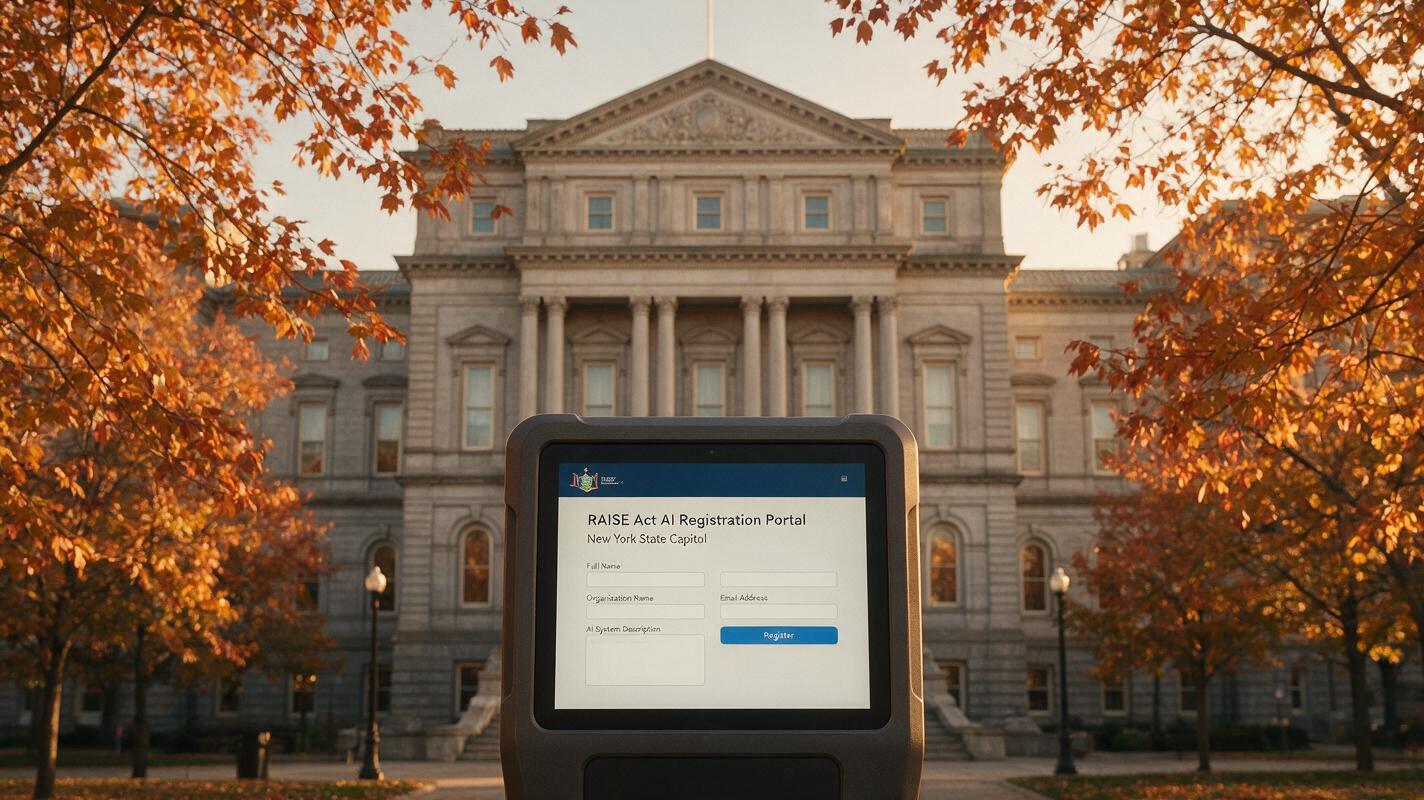
Table of contents
Breaking Down the New York RAISE Act Registration Launch
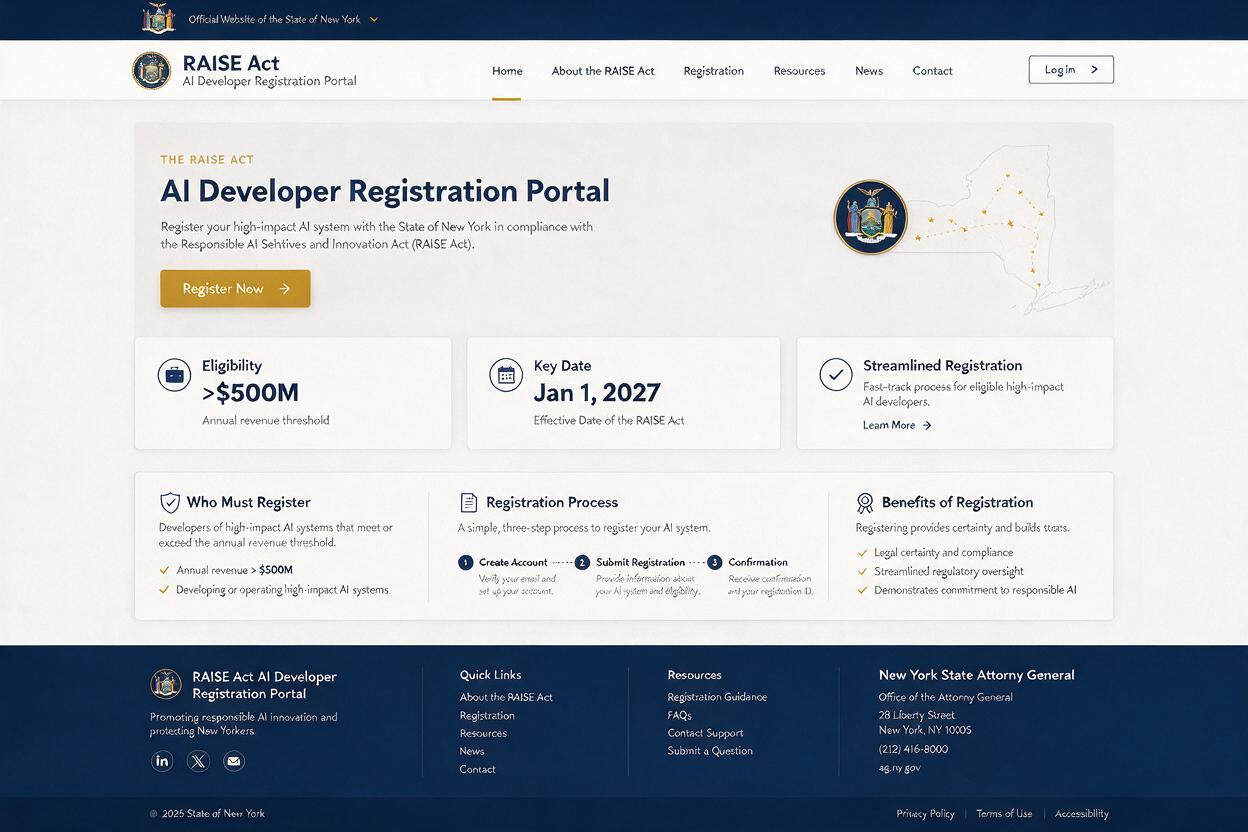
New York opened the registration portal for the Responsible AI Safety and Education Act (RAISE Act) on November 10, 2026, with Governor Kathy Hochul formally announcing the launch at a press conference and widespread media coverage following on November 11. The law, set to take effect January 1, 2027, applies to frontier AI developers with more than $500 million in annual revenue — a group that includes five major platforms: OpenAI, Anthropic, Google, Meta and Microsoft.
Covered developers must complete registration before the effective date to remain compliant. The state also launched the New York AI Responsibility and Research Center at Binghamton University, backed by a $55 million donation first announced in January, to support AI safety research and responsible development practices. Enforcement of the RAISE Act will be handled by the newly created Office of Digital Innovation, Governance, Integrity and Trust (DIGIT), a dedicated state agency focused on AI oversight.
Core Requirements for Covered AI Developers
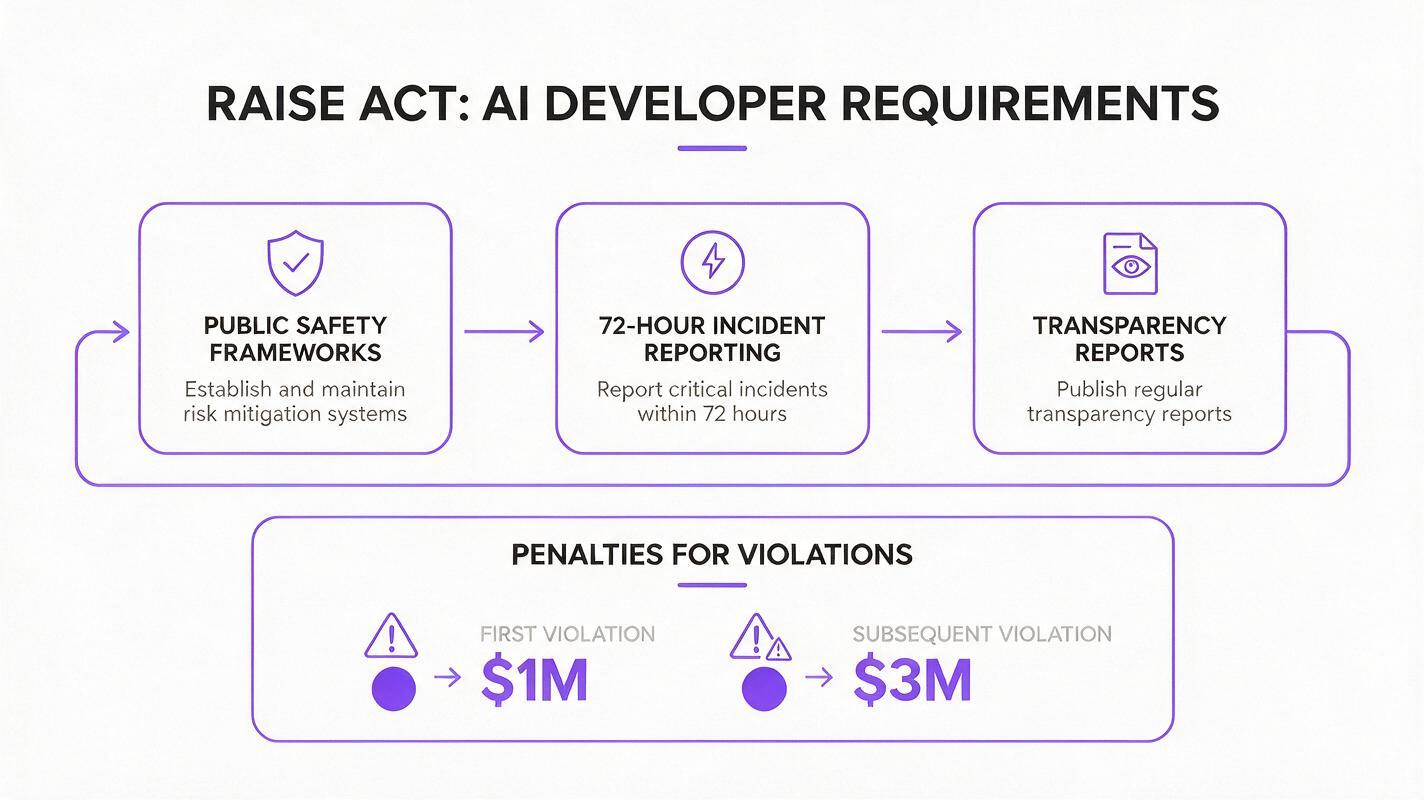
The RAISE Act imposes three primary obligations on covered frontier AI developers, all designed to increase transparency and accountability for the most advanced AI systems. First, each company must publish a public safety framework on its website, outlining its approach to identifying, testing and mitigating risks from its frontier models, including potential harms from misuse or unintended behavior.
Second, developers must report major safety incidents to state regulators within 72 hours of discovery, ensuring rapid disclosure for events that could pose significant risks to users, critical infrastructure or public safety. This fast reporting timeline is intended to give regulators and the public early visibility into issues before they escalate.
Third, covered platforms must publish regular public model transparency reports, giving users and stakeholders clear information about model capabilities, limitations, safety testing results and intended use cases. Some additional coverage of the law notes potential expanded requirements, including quarterly catastrophic-risk assessments and biennial disclosures, though the core registered mandate centers on the three baseline rules.
Penalties for non-compliance are substantial: up to $1 million for a first violation, and up to $3 million for subsequent violations, giving DIGIT significant enforcement leverage to ensure adherence. The registration portal opening marks the formal start of the compliance timeline, giving covered developers roughly two months to submit their registration materials and align their public disclosures with the law’s requirements.
What This Means for AI Content Creators
For independent creators and small teams that rely on frontier AI tools for content production, the RAISE Act introduces both new guardrails and greater clarity around AI safety and platform accountability. Mandatory public safety frameworks mean creators will have more standardized, comparable information about how major models are tested for risks, helping them make more informed choices about which tools to integrate into their ai workflow.
The 72-hour incident reporting rule also means major safety events — such as model outages, data breaches or unexpected ai agent behavior — will be disclosed more quickly, reducing the risk of creators building critical client work on platforms that are unknowingly experiencing safety or reliability issues. For creators who depend on consistent AI tool performance for tight deadlines, faster incident disclosure can help them pivot to alternative tools before projects are disrupted.
For creators using AI for tasks like scriptwriting, visual asset generation or ai video workflow production, greater regulatory oversight can also lead to more consistent product reliability over time, as platforms invest in safety and compliance infrastructure to meet state requirements. The law’s focus on frontier developers also means the most widely used advanced models — including those powering ai automation pipelines and creative AI tools — will fall under the new rules, creating a baseline level of transparency across the creator ecosystem.

Building Resilient AI Workflows Amid Regulatory Change
As AI regulation evolves across states and countries, creators building long-term content pipelines benefit from flexible, multi-model platforms that reduce reliance on any single provider. MagicBoat gives creators access to a wide range of AI tools in one centralized platform, making it easy to adapt workflows as regulatory shifts, platform policy changes or service disruptions occur.
For example, creators using ai image generator tools can switch between models without managing multiple accounts or billing setups, ensuring their production pipeline stays consistent even if individual platform policies or capabilities shift. The platform’s integrated tools for text to video, ai story generation and ai dubbing also let creators build end-to-end workflows without stitching together disjointed services, reducing the complexity of tracking compliance across multiple vendors.
For creators navigating new AI safety rules and platform changes, a unified multi-model platform provides stability and flexibility to keep projects on track. You can try these models for free to build a resilient, adaptable AI content workflow that fits your creative needs.
Key Takeaways
- New York’s RAISE Act registration portal is now open for frontier AI developers with over $500 million in annual revenue, with full compliance required by January 1, 2027.
- Covered platforms including OpenAI, Anthropic, Google, Meta and Microsoft must publish public safety frameworks, report major safety incidents within 72 hours and release regular model transparency reports.
- Penalties for non-compliance reach up to $1 million for first violations and $3 million for subsequent offenses, overseen by the newly created DIGIT state agency.
- For AI content creators, the rules bring greater transparency around model safety and faster incident disclosure, supporting more reliable ai workflow planning and risk mitigation.
- Multi-model platforms like MagicBoat help creators build resilient creative pipelines that can adapt to evolving AI regulation and individual platform changes.
Keywords
new york raise act, ai regulation, ai safety, openai safety, ai workflow, ai agent, frontier ai