Nicolas Cage Refused Amazon’s AI Waiver on Spider-Noir
Nicolas Cage refused an Amazon AI waiver connected to Spider-Noir and said he “probably” would not work with Amazon again. The dispute highlights why consent, transparency, and clearly defined boundaries matter whenever AI enters entertainment production.
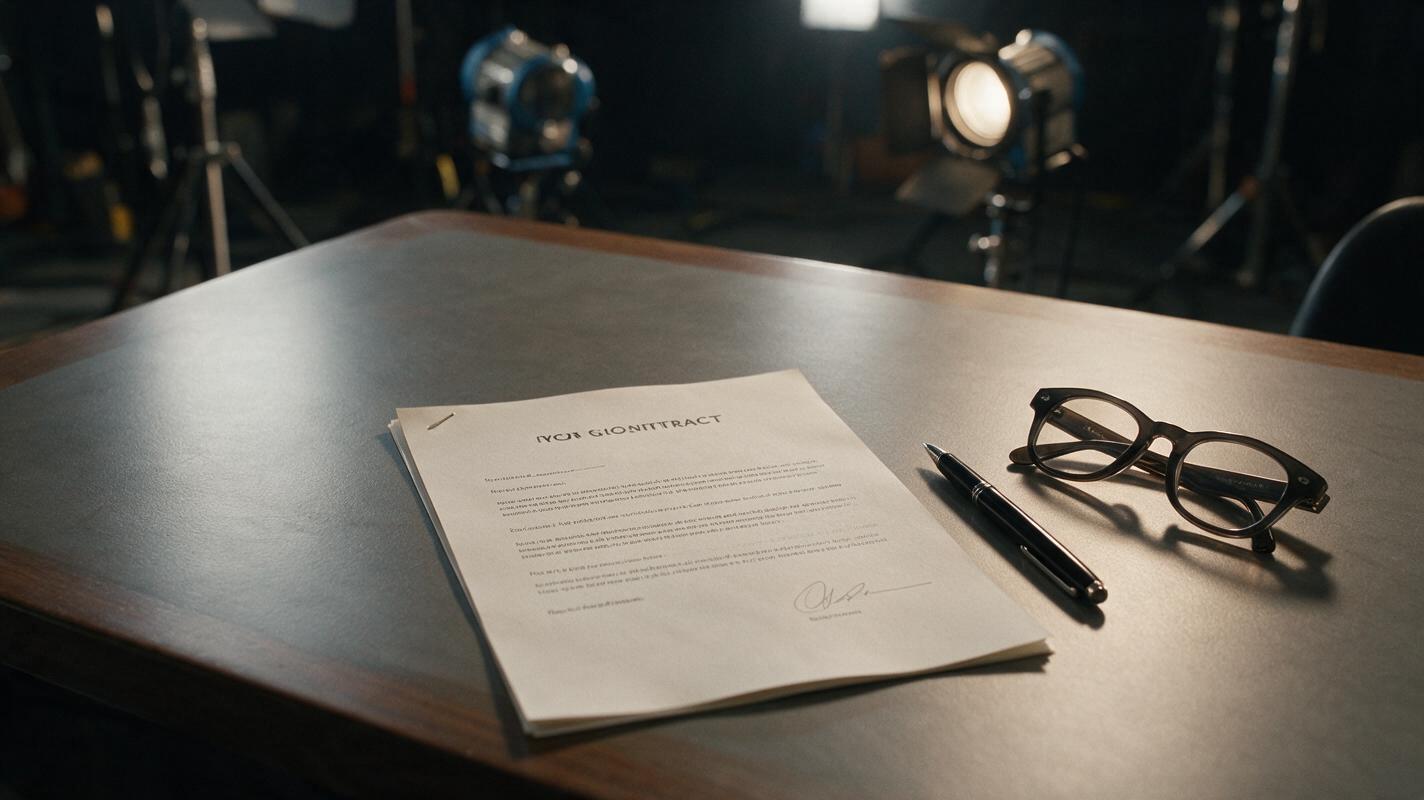
Table of contents
Nicolas Cage Draws a Line Over Amazon’s Spider-Noir AI Waiver
Nicolas Cage refused an Amazon AI waiver connected to Spider-Noir, according to an October 10 report from TheWrap. Cage also said he “probably” would not work with Amazon again, turning what might otherwise have remained a contractual disagreement into a prominent public dispute about AI and entertainment production.
The central news is not that Cage rejected AI as a general creative technology. The reported issue was a specific waiver associated with his work on Spider-Noir. The available account does not provide the waiver’s full language, so its exact scope should not be assumed. What is clear is that Cage refused it and linked the experience to the possibility of ending his working relationship with Amazon.
For filmmakers and digital storytellers, the dispute is a reminder that AI content creation is not only about what software can generate. It is also about whether everyone involved understands and accepts how AI may be used around a performance, production, or finished work.
The defining issue is informed agreement: AI may expand production options, but a person’s participation in a project should not be treated as automatic permission for every possible AI use.

Why the Spider-Noir Dispute Matters Beyond One Production
A high-profile actor refusing an AI waiver gives the broader industry debate a concrete focal point. Terms such as “AI use” can cover very different activities, yet a broadly written waiver may fail to communicate which activities are actually contemplated. Without precise language, participants may reasonably question what they are authorizing and how long that authorization could remain relevant.
Cage’s reported response also illustrates the business consequences of uncertainty. His statement that he “probably” would not work with Amazon again suggests that an AI-related disagreement can affect more than a single contract. It can influence trust and future collaboration.
This matters across production scales. A major entertainment company, an independent ai film team, and an ai short drama studio may have very different resources, but all depend on clear expectations. The smaller the team, the more important it can be to discuss those expectations before footage, voices, photographs, or other human contributions enter an AI-assisted workflow.
AI Tools and Human Permission Are Separate Questions
The usefulness of a tool does not determine whether a particular person has approved a particular use. A filmmaker might employ an ai film generator to explore an original visual concept without involving any real performer. That is fundamentally different from placing a recognizable person’s performance or identity into an AI process without clearly established permission.
The distinction can be summarized through three practical questions:
- What material is involved? The team should identify whether it is working with wholly original generated material or a human contribution such as a recorded performance, voice, or image.
- What use is intended? Planning, experimentation, promotion, and release are not interchangeable contexts.
- What has been approved? Permission should be specific enough that participants can understand the intended use rather than guessing from a broad label.
The Cage report does not reveal the answers Amazon’s waiver offered to those questions. It does demonstrate why performers may want answers before signing.
A Clearer Framework for Responsible AI Content Creation
Independent teams can take a useful lesson from the Spider-Noir dispute without speculating about confidential contract language. AI policies are easier to understand when they describe actual intended uses rather than relying on a single catch-all phrase.
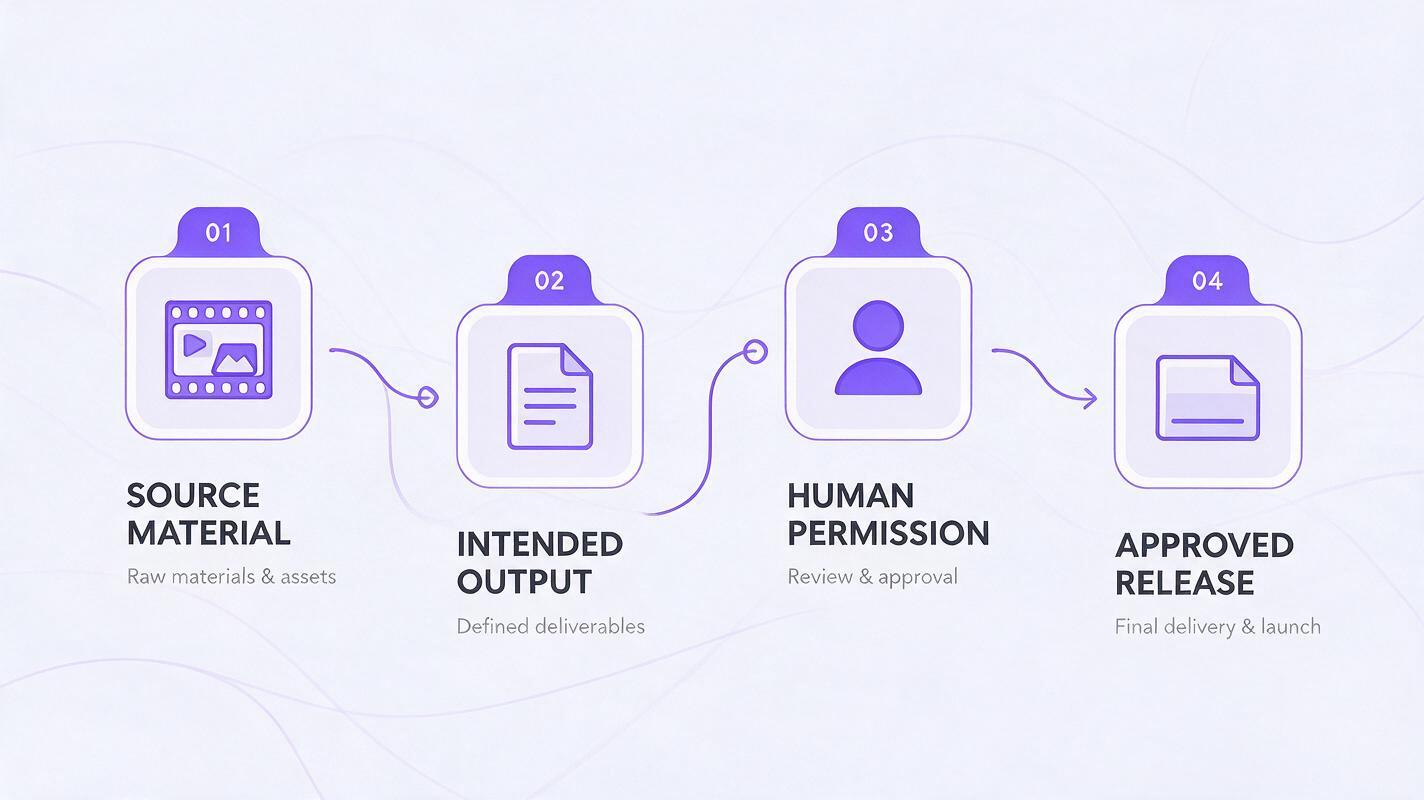
| Production concern | Clearer creative practice | Why it matters |
|---|---|---|
| Source material | Identify whether inputs are original, licensed, or supplied by a participant | Everyone can see what enters the workflow |
| Intended output | Define whether material is for internal exploration or public release | Approval is connected to a recognizable purpose |
| Human identity | Discuss any proposed use of a person’s image, voice, or performance | Consent is addressed before production advances |
| Project changes | Revisit approval if the planned use materially changes | Earlier agreement is not stretched into a different context |
This approach does not require every project to avoid AI. It requires the team to separate technical possibility from human authorization. Clear boundaries can protect relationships while allowing responsible experimentation with original content.
Where MagicBoat Fits Into an Original-First Workflow
MagicBoat gives storytellers one place to explore AI production tools while developing their own concepts. A team can use text to video for original scenes built from project-approved prompts, then evaluate those scenes before deciding what belongs in a larger production.
An original-first workflow can reduce ambiguity. Writers and directors can develop fictional characters, locations, visual motifs, and scene ideas specifically for their project rather than treating a real performer’s identity as an unrestricted production asset. If human contributors are introduced later, their involvement can be discussed against a clearly defined creative plan.
MagicBoat’s role is practical: it can support concept exploration, visual development, and ai video production within one account. The platform does not remove the need for permission. Instead, it can help teams organize their creative work around original ideas and clearly authorized inputs.
Creative Flexibility Still Needs Production Discipline
Fast experimentation can tempt teams to generate first and resolve boundaries later. The Spider-Noir news shows why reversing that order can create serious friction. A visually compelling result does not answer whether the underlying use was understood or accepted.
Responsible experimentation therefore combines creative freedom with a documented production scope. Teams should know which assets belong to the project, which people have agreed to participate, and whether a new use falls outside the original discussion. That discipline supports both human trust and a more stable creative process.

The Larger Signal for Film and Streaming
Cage’s refusal is significant because it makes AI consent part of a visible entertainment story. His reported willingness to reconsider future work with Amazon shows that AI terms can shape professional relationships, not merely post-production decisions.
The report also cautions against reducing the debate to a simple choice between innovation and opposition. A person can object to a waiver without making a universal statement about every AI tool or every production use. Precision matters in both contracts and public discussion.
For AI filmmakers, the strongest response is not to imitate Spider-Noir or Cage. It is to build original projects in which creative ambition and human permission reinforce each other. When the scope is clear, teams can focus on storytelling instead of resolving avoidable uncertainty after production has begun.
Key Takeaways
- Nicolas Cage refused an Amazon AI waiver associated with Spider-Noir.
- He said he “probably” would not work with Amazon again.
- The report does not provide the waiver’s complete terms, so its scope should not be invented or assumed.
- AI capability and permission to use a human contribution are separate matters.
- Original concepts, defined inputs, and clear approval can support more responsible AI film production.
- To explore an original production workflow, try these models for free on MagicBoat.
Keywords
nicolas cage amazon ai waiver, spider-noir, amazon ai waiver, ai content creation, ai film, ai video, performer consent