Nikon Disqualifies AI-Generated Small World in Motion Winner
Nikon disqualified an AI-generated winning video from its Small World in Motion microscopy contest on October 10, 2026. The decision highlights why provenance, disclosure, and human review now matter throughout every AI video workflow.

Table of contents
Nikon’s Microscopy Contest Draws a Line Around AI-Generated Video
Nikon disqualified an AI-generated winning video from its Small World in Motion microscopy contest on October 10, 2026. The decision reversed the winning status of a submission after its use of artificial intelligence became the central issue, putting one of the most recognizable microscopy video competitions into the wider debate over synthetic media, authenticity, and disclosure.
The key fact is straightforward but consequential: an AI-generated video had been selected as a winner and was subsequently disqualified. Because Small World in Motion is associated with microscopy imagery, the controversy also reaches beyond ordinary visual style. Viewers encountering a contest entry in this context may reasonably interpret it as a recording or representation connected to observations made through microscopy rather than as wholly synthetic footage.
For creative teams, the incident is a reminder that technical quality does not determine whether an AI-assisted work is suitable for a competition, publication, campaign, or scientific context. Provenance, category rules, disclosure, and the expectations created by the surrounding venue can be just as important as the finished image.
The central lesson: a polished AI-generated video can still fail editorial or competition review when its production method conflicts with the context in which it appears.

Why the Nikon Disqualification Matters Beyond One Contest
The Nikon Small World in Motion decision illustrates a growing distinction between visual possibility and acceptable use. An ai video generator can support experimentation, concept development, and imaginative storytelling, but those uses are not automatically interchangeable with documentary, scientific, journalistic, or competition submissions.
Context shapes the promise a piece of media makes to its audience. A synthetic microscopic world presented as visual fiction makes one promise. A video entered into a microscopy competition may make another, especially if viewers expect the depicted motion to originate from a real observation process. The same visual could therefore be acceptable in one setting and unacceptable in another.
This distinction affects several groups:
- Competition entrants need to understand whether generative media, AI-assisted editing, or fully synthetic material is permitted.
- Editors and commissioners need clear submission requirements and a reliable way to collect production disclosures.
- Brands and agencies need to match every asset with the rules of the channel where it will appear.
- Audiences need enough context to understand whether they are seeing recorded, reconstructed, enhanced, or generated material.
The disqualification does not establish that every use of AI video is inappropriate. It shows that the method of production can become decisive when authenticity is part of the work’s meaning.
Provenance Must Travel With the Asset
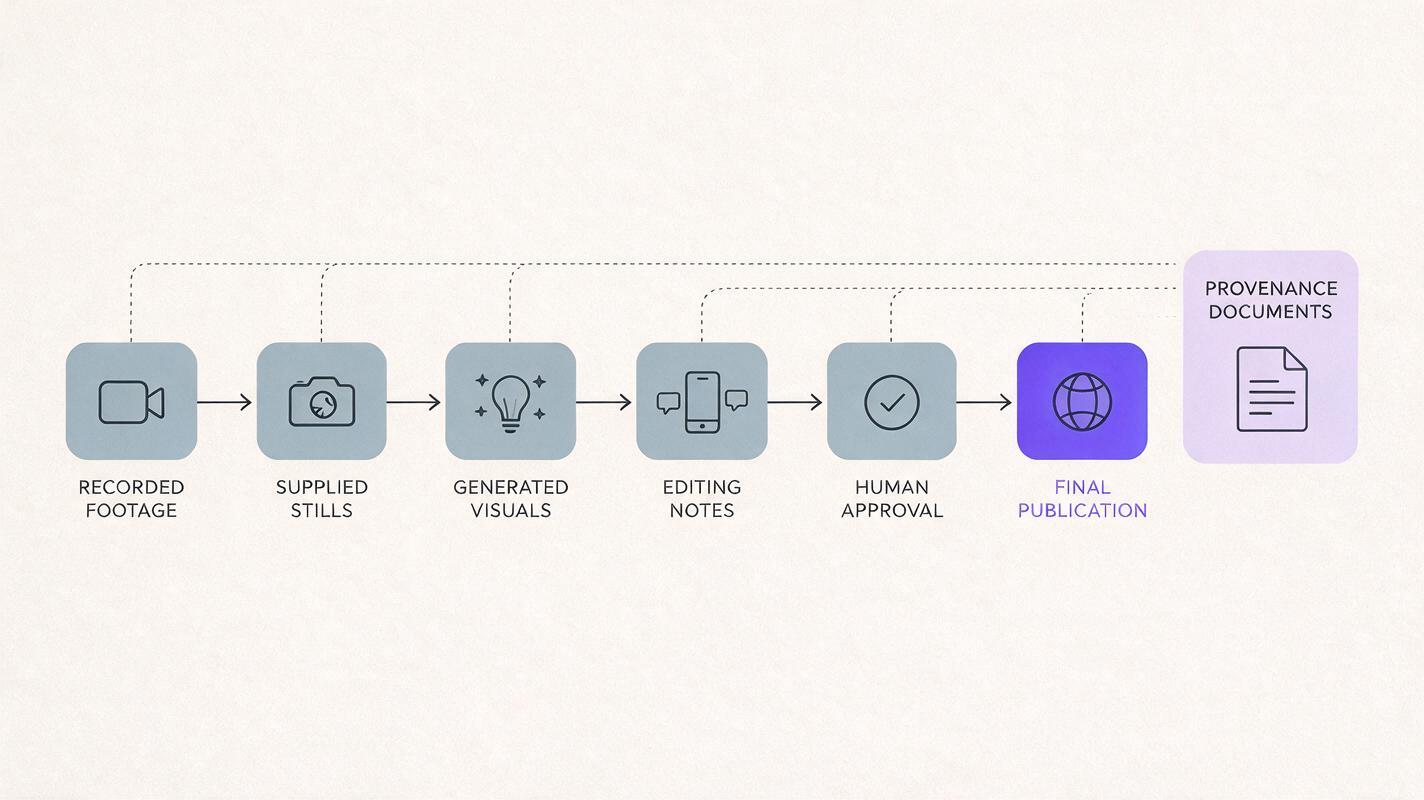
Creative provenance should not live only in someone’s memory or in a private chat. It needs to remain attached to the asset as that asset moves from an initial idea through generation, editing, approval, delivery, and publication.
A practical production record can distinguish among source material without making unsupported claims about authenticity. Teams can document whether a visual began as recorded footage, a still image, generated imagery, or a mixture of several inputs. They can also record which parts were altered and who approved the final use.
| Production question | Record to retain | Reason it matters |
|---|---|---|
| Where did the visual originate? | Recorded, supplied, generated, or mixed source | Clarifies the nature of the underlying material |
| What changed during production? | Editing and generation notes | Separates ordinary finishing from substantive synthesis |
| Where will it appear? | Contest, advertisement, fiction, social post, or editorial use | Connects the asset to the relevant expectations |
| Who reviewed it? | Named human approval owner | Prevents automated output from becoming an unexamined submission |
| What was disclosed? | Final disclosure language and placement | Creates a durable publication record |
This record is especially valuable in an ai workflow that uses several tools. A file can pass through an ai assistant, editing software, an ai automation layer, and a publishing system. Without a durable production note, meaningful information about the asset can disappear at each handoff.
Human Review Is More Than a Quality Check
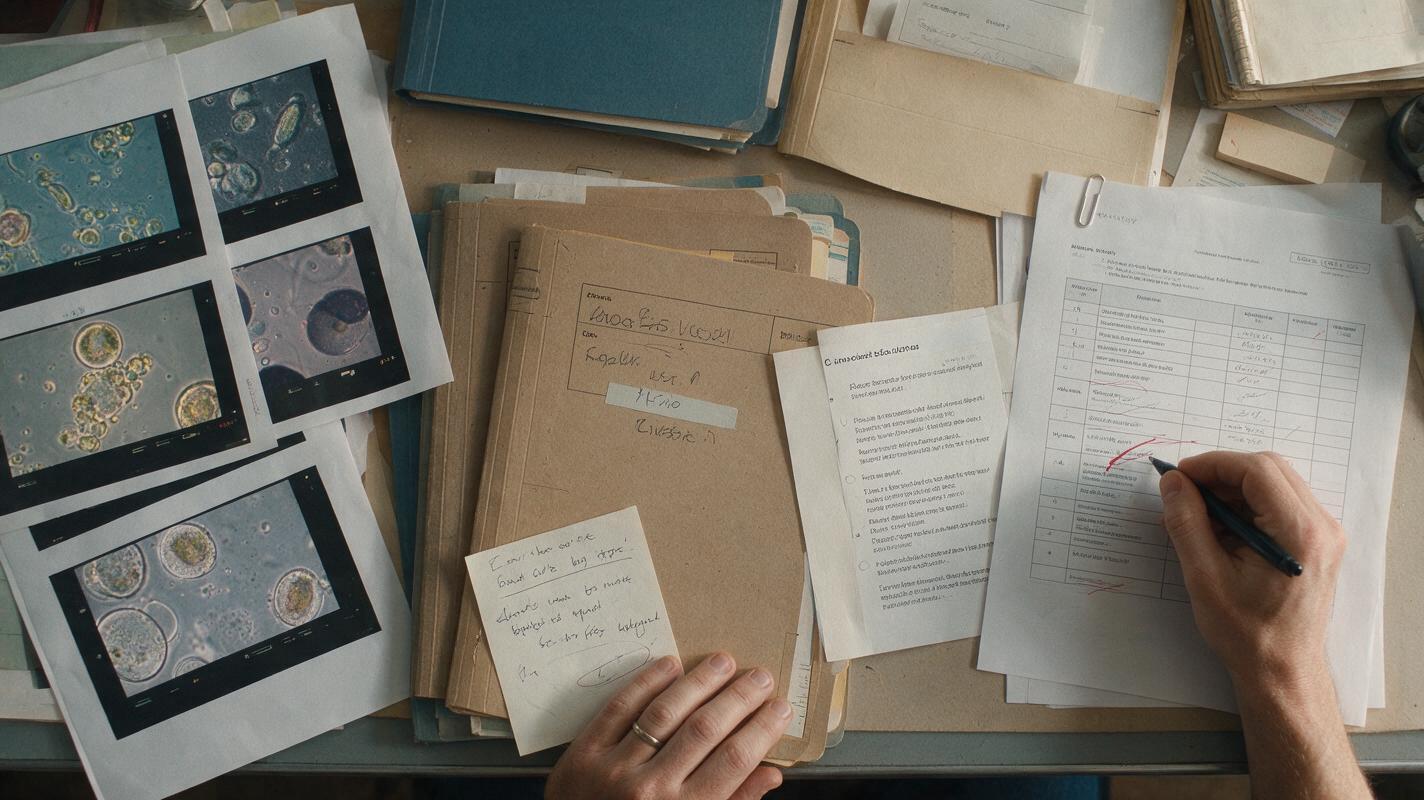
Human review is often treated as a final check for spelling, visual artifacts, or format. The Nikon incident shows why the review also needs to examine eligibility and representation.
A reviewer should be able to answer whether the production method is allowed, whether the asset is being described accurately, and whether its presentation could create a mistaken impression. Those questions cannot be delegated entirely to an ai agent because they depend on rules, context, and institutional judgment.
Review authority should also be explicit. The person who generated an asset should not be assumed to have approved every possible use of it. A creative director may approve its aesthetic quality, while an editor or contest manager determines whether it is suitable for a particular venue. Separating those responsibilities helps teams catch contextual problems before publication.
Disclosure Should Be Specific Rather Than Vague
A generic label can conceal more than it explains. Useful disclosure identifies the role AI played without overstating or minimizing it. The relevant distinction may be between a fully generated scene, generated elements added to recorded footage, or an image that was transformed into motion.
Teams using image to video tools should therefore preserve the original image, the resulting video, and a short note describing that relationship. This supports internal review even when public disclosure requirements differ across platforms or competitions.
What This Means for AI Video Production
The strongest response to the Nikon disqualification is not to avoid AI creation. It is to place AI creation inside a workflow that preserves intent and accountability.
Before generating an asset, teams can define its intended context: fictional entertainment, concept art, branded creative, editorial illustration, documentary material, or a competition entry. That context determines which questions must be resolved before the work leaves the production environment.
During generation and editing, source files and meaningful revisions should remain accessible. At review, a human should compare the production record with the destination’s rules. At delivery, disclosure information should travel with the exported asset instead of being separated from it.
This approach also helps teams avoid expensive rework. An impressive video that cannot be used in its intended channel has limited practical value. Eligibility and provenance are production requirements, not administrative details to consider after completion.
MagicBoat as a Controlled Creative Environment
MagicBoat gives creative teams a unified environment for developing scripts, images, and video ideas while keeping human judgment at the center of publication decisions. Rather than treating generated output as automatically ready for external use, teams can evaluate each result against the purpose and rules of the destination.
That is particularly useful when an ai video workflow includes several creative formats. Teams can explore concepts, compare outputs, retain source materials, and decide which version is appropriate for a fictional story, a campaign, or another clearly defined use case. A stable multi-model platform also reduces the need to scatter creative work across disconnected accounts, making internal review easier to organize.
MagicBoat does not replace contest rules or editorial judgment. It provides a practical place to create and assess content before a person authorizes its use. If you want to explore visual concepts while maintaining a review-first workflow, try these models for free.
Final Checklist
- Confirm whether AI-generated or AI-assisted media is permitted in the intended venue.
- Record whether the source is captured, supplied, generated, or mixed.
- Preserve original inputs and meaningful output versions.
- Describe the role of AI precisely in internal production notes.
- Assign a human owner for eligibility and publication approval.
- Review the final presentation for potentially misleading context.
- Keep provenance information connected to the delivered asset.
Keywords
nikon small world in motion, ai-generated video, ai video workflow, content provenance, ai automation, human review, ai video generator