Norm: The Tale of Norm Macdonald and The Disciple Hit Netflix
Netflix’s weekend documentary lineup pairs Norm: The Tale of Norm Macdonald, built from archive and family footage, with The Disciple: A Wu-Tang Fable, centered on fan-turned-insider Cilvaringz and Once Upon a Time in Shaolin. The contrasting projects show how documentaries can transform personal access, cultural memory and a sharply defined point of view into compelling screen stories.
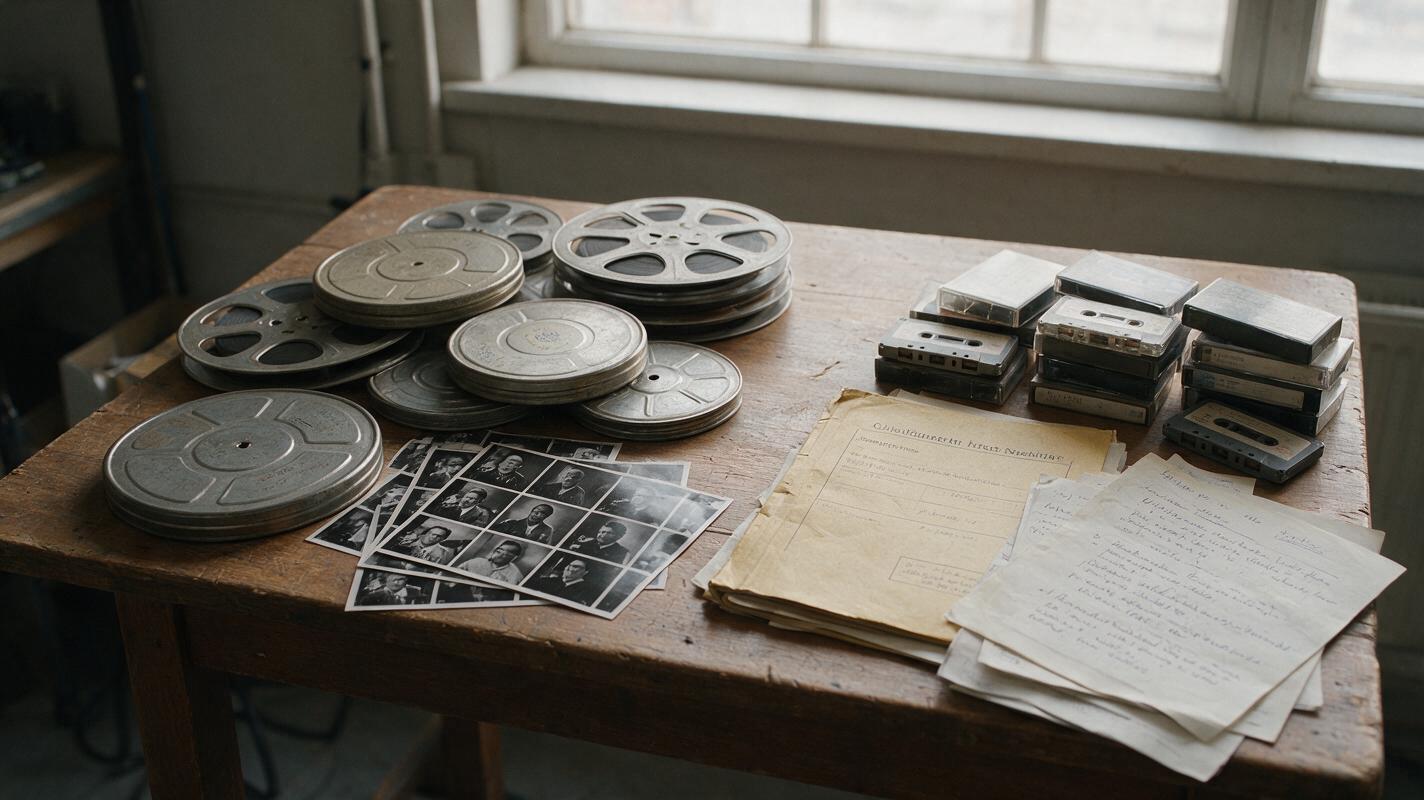
Table of contents
Two Netflix Documentaries Turn Rare Access Into the Main Event
Netflix’s weekend documentary lineup brings together two projects built around unusually intimate forms of access: Norm: The Tale of Norm Macdonald and The Disciple: A Wu-Tang Fable. The first draws on archival material and footage supplied by Norm Macdonald’s family, while the second follows Cilvaringz, a fan who gained a place inside Wu-Tang Clan’s orbit and became connected to Once Upon a Time in Shaolin.
Although both titles look backward at major entertainment legacies, they approach cultural memory from different positions. The Norm Macdonald film is anchored in personal records and family-held material. The Wu-Tang documentary is framed through a fan whose relationship with the group evolved into insider access, giving the story a perspective that sits between admiration, participation and historical documentation.
For filmmakers and digital storytellers, the pairing is a reminder that documentary appeal does not depend only on the fame of its subject. The source material, the narrator’s proximity and the clarity of the story angle can be just as important as the name on the poster.
Norm: The Tale of Norm Macdonald Builds From Personal Archives
Norm: The Tale of Norm Macdonald combines archival material with family footage. That distinction matters because family-held recordings can show a public figure outside the familiar context of performances, interviews and professionally managed appearances.
Archive-driven documentaries often operate on two levels. They revisit recognizable moments for existing fans while introducing private or less familiar material that can deepen the portrait. In this case, the combination of public archive and family footage gives the documentary a clear editorial foundation without requiring an artificially complicated premise.
The central attraction is not merely access to old recordings. It is the possibility that different categories of footage can reveal different versions of the same person.
That structure also demonstrates why careful selection matters. A collection of clips is not automatically a narrative. Meaning emerges from the contrast between materials: public and private, polished and informal, widely remembered and rarely seen. For anyone planning an original documentary or ai film, the valuable lesson is to classify source material by the role it plays in the emotional arc rather than treating every clip as interchangeable.

The Disciple Frames Wu-Tang History Through Cilvaringz
The Disciple: A Wu-Tang Fable takes a different route into its subject. Its central figure, Cilvaringz, began as a Wu-Tang fan and later found himself inside the group’s world. The documentary connects that unusual path with Once Upon a Time in Shaolin, giving the project a focused narrative thread within the wider Wu-Tang story.
The fan-to-insider perspective creates a built-in transformation. It begins with distance between an admirer and an established cultural institution, then follows what happens when that distance narrows. This point of view can make a large subject more accessible because the audience encounters it through one person’s changing relationship with it.
For independent storytellers, this is a useful model of narrative specificity. A documentary about an influential group can become too broad when it attempts to summarize everything. Centering one participant, one unusual relationship and one culturally significant object or event gives viewers a clearer route through the material.
Two Different Models of Documentary Access
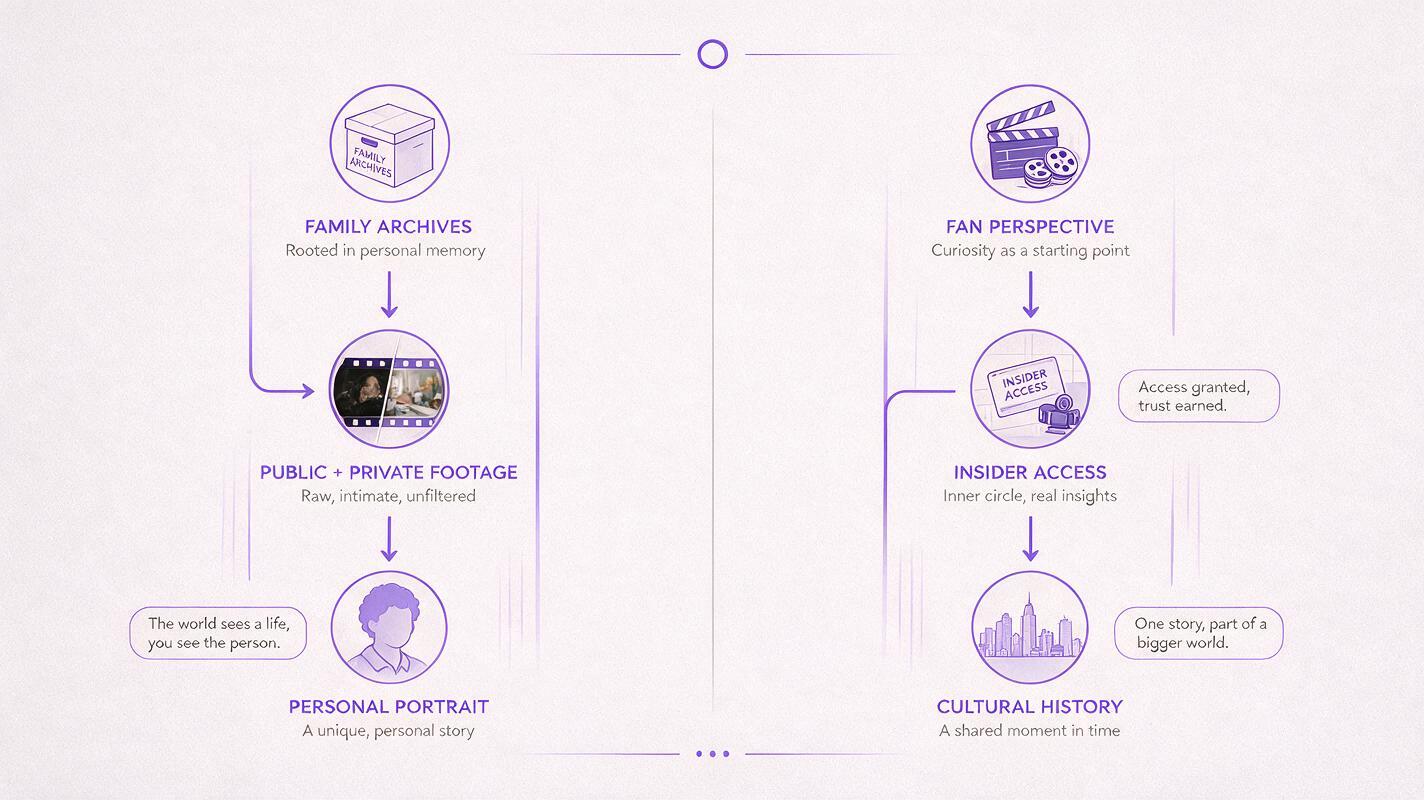
The Netflix pairing highlights two distinct ways to construct nonfiction storytelling. One begins with material preserved by people close to the subject. The other begins with a participant whose position changed over time.
| Documentary | Core access | Story perspective | Editorial opportunity |
|---|---|---|---|
| Norm: The Tale of Norm Macdonald | Archive and family footage | A portrait assembled from public and personal records | Contrast familiar performances with intimate material |
| The Disciple: A Wu-Tang Fable | Cilvaringz’s place inside Wu-Tang’s world | A fan whose relationship became that of an insider | Use personal transformation to enter a larger cultural story |
Neither approach requires a sprawling explanation of an entire career or movement. Both rely on a strong organizing principle. That is especially relevant in an attention economy where a documentary must communicate its unique access quickly, whether through a synopsis, trailer, poster or short social clip.
What the Pairing Reveals About Strong Nonfiction Pitches
A useful documentary pitch can often be reduced to three connected elements: the subject, the access and the point of view. These Netflix titles make those elements easy to recognize.
- The subject provides cultural interest, whether it is Norm Macdonald’s legacy or Wu-Tang’s world.
- The access offers material the audience may not otherwise encounter, such as family footage or an insider’s experience.
- The point of view turns that access into a coherent story rather than an undirected archive.
This framework also applies to smaller productions. A local performer, independent music scene or family collection can support a compelling documentary when the filmmaker has meaningful access and a precise editorial question. Scale may affect visibility, but specificity determines whether the material forms a story.
From Documentary Research to AI-Assisted Development
AI content creation can support the development of an original nonfiction concept without replacing the filmmaker’s responsibility to verify material, obtain permission and preserve context. Before production, a creator can organize themes, compare possible narrative angles and draft alternate treatments for the same body of research.
An ai film generator can help explore how a concept might be divided into an opening hook, character introduction, central tension and closing reflection. An ai video generator can also support original visual experiments for pitch materials, provided those visuals are clearly separated from authentic documentary evidence.
A useful development brief for an original project might look like this:
Project type: short cultural documentary
Central subject: an independent artistic community
Unique access: personal recordings and participant interviews
Point of view: one longtime fan who later joined the community
Narrative contrast: public performances versus private memories
Desired tone: intimate, reflective and historically grounded
The value of this brief is its precision. It identifies what the production can genuinely access and what narrative contrast may hold the film together. It does not imitate either Netflix documentary or claim access that the filmmaker does not possess.
Authenticity Must Remain Visible
When archive-based storytelling and AI video appear in the same workflow, clear boundaries are essential. Authentic footage should retain its provenance, while generated concept visuals should never be presented as historical evidence. Family recordings, interviews and cultural artifacts carry meaning because of where they came from and who preserved them.
That distinction can strengthen rather than restrict creative development. AI may assist with original mood exploration, storyboard concepts or promotional drafts, while verified source material remains the factual center of the documentary. The result is a workflow in which experimentation supports the story without obscuring the status of the evidence.
The two Netflix projects underline the enduring importance of human proximity. One has family footage; the other has a fan-turned-insider. Technology can help shape and present a concept, but meaningful access remains the element that audiences cannot get from a generic summary.
Why These Documentaries Matter Beyond Their Famous Subjects
Norm: The Tale of Norm Macdonald and The Disciple: A Wu-Tang Fable arrive with recognizable names, yet their most transferable lesson concerns perspective. One documentary reaches its subject through personal archives. The other enters a major cultural story through Cilvaringz and his unusual relationship with Wu-Tang.
For emerging filmmakers, the practical question is therefore not only “Who is the subject?” It is also “What can this production show that another production cannot?” A clear answer can shape the research plan, edit, trailer language and visual identity of an original documentary or ai short drama.
MagicBoat brings story, image and video creation options into one place for developing original concepts and campaign materials. To explore different approaches for your next ai film or ai video, try these models for free.
Final Checklist
- Define the documentary’s subject in one clear sentence.
- Identify the material or participant access that makes the project distinctive.
- Choose a point of view narrow enough to sustain a coherent narrative.
- Separate generated concept visuals from authentic documentary records.
- Confirm permissions and context before using personal or archival material.
- Build promotional assets around the project’s unique access rather than fame alone.
Keywords
netflix documentaries, norm macdonald documentary, the disciple wu-tang fable, cilvaringz, ai content creation, ai film, ai video