Norway Fines Microsoft Xandr $9.6M Over Ad Data Compliance
Norway's data protection authority has fined Microsoft's ad-tech unit Xandr approximately $9.6 million (NOK 100 million) for ad data-processing compliance violations. The enforcement action highlights growing regulatory scrutiny of data practices across the AI industry, with direct implications for content creators who depend on stable, compliant AI tooling for production workflows.

Table of contents
Norway Fines Microsoft Xandr $9.6M Over Ad Data-Processing Compliance
Norway's data protection authority has imposed a fine of approximately $9.6 million (NOK 100 million) on Microsoft's ad-tech subsidiary Xandr for violations related to ad data-processing compliance. The penalty, reported in mid-October 2026, marks another significant regulatory action in the broader landscape of data privacy enforcement across the technology and AI industry.
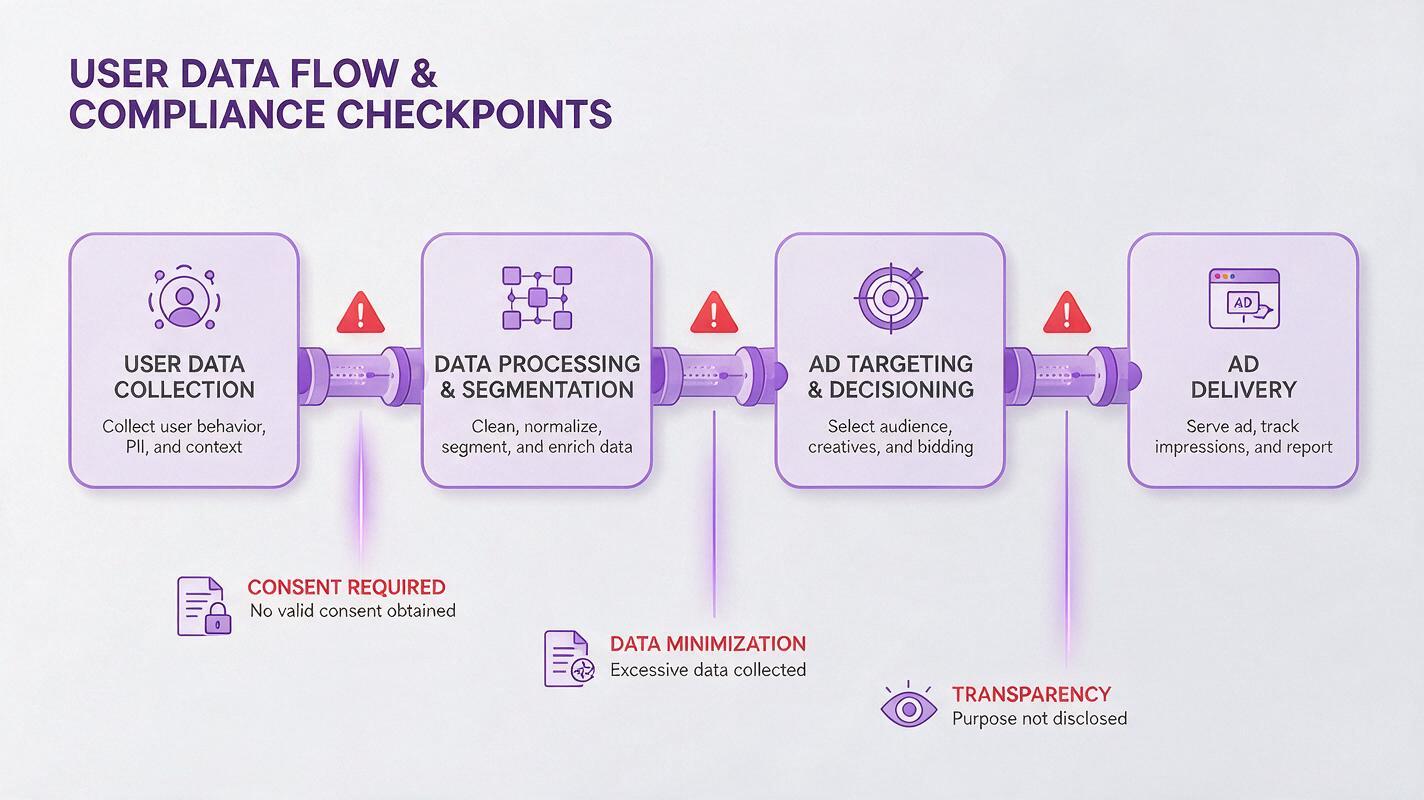
The fine specifically targets Xandr's ad data-processing practices, adding to a growing list of regulatory actions against major tech companies over how they collect, process, and use user data for advertising purposes. As regulators around the world tighten their oversight of data practices, the ripple effects extend well beyond ad-tech teams into every corner of the digital economy — including the tools and platforms creators use every day to produce content, manage workflows, and reach audiences.
For Microsoft, which acquired Xandr as part of its expansion into programmatic advertising, the penalty arrives at a moment when the company is pouring unprecedented resources into AI infrastructure and consumer AI products. The enforcement action serves as a reminder that even the largest technology players face real regulatory consequences when data-handling practices fall short of compliance standards — a dynamic that matters for anyone building creative workflows on top of these platforms.
What the Enforcement Action Signals
The Norwegian data protection authority's penalty against Xandr underscores a broader trend of intensifying regulatory scrutiny across the technology sector. Ad-tech platforms, which rely heavily on user data for targeting, measurement, and optimization, have become a particular focus for privacy regulators in Europe and beyond.
While the $9.6 million figure is relatively modest compared to the scale of Microsoft's overall business, the signal it sends about regulatory expectations matters more than the dollar amount. Regulators are increasingly willing to act on data-processing violations, and enforcement actions in one jurisdiction often set precedents that regulators in other regions follow. This creates a cascading compliance environment that shapes product roadmaps, pricing strategies, and access policies across the entire ai industry.
The timing is notable against a backdrop where ai capital expenditure continues to surge across major cloud and technology companies. Goldman Sachs estimates that five cloud giants' AI capex will grow 50% or more to $1.2 trillion next year, and players like deepseek are attracting multi-billion-dollar ai funding rounds. As investment scales up, so does regulatory attention — creating a tension that anyone building on AI tools needs to account for.
How Compliance Enforcement Reaches Creators
Data privacy enforcement actions have a way of cascading through the technology ecosystem in ways that aren't always immediately obvious. When one regulator takes action on a specific data practice, other regulators often follow. Companies respond by updating their terms of service, restricting certain features, or changing how their APIs work — and those changes directly affect the creators and content teams who depend on those tools.
This is where the connection to AI content creation becomes tangible. Creators building visual assets with an ai image generator or producing short-form content with AI video tools need to know the platforms they rely on will remain available, stable, and compliant with evolving regulations. A platform suddenly hit with major compliance issues could change its terms, restrict access, or raise prices — all of which directly impact ai video cost and production budgets for individual creators and content teams alike.
Regulatory risk isn't just a legal department concern — it's a production planning concern for every creator who depends on AI tools to deliver work on schedule.
Why Multi-Model Platforms Reduce Compliance Risk
Regulatory uncertainty is one of many reasons content teams are shifting toward multi-model AI platforms instead of building entire workflows around a single vendor's tools. When you rely on one company for everything from text generation to image creation to video editing, a single regulatory action, policy change, or service disruption can bring your entire production pipeline to a halt.
A multi-model approach gives you the flexibility to switch between tools, compare outputs, and keep creating even if one provider experiences challenges. This is especially important as the ai industry grows rapidly and regulatory frameworks continue to evolve at different speeds across regions. Whether you're working with models from DeepSeek, Anthropic, Google, or other providers, having all your tools accessible through one platform simplifies workflow management while reducing vendor concentration risk.
The benefits go beyond risk mitigation. Multi-model platforms also make it easier to compare ai video cost across different providers, experiment with different image generation styles, and find the right tool for each specific task without managing separate subscriptions, billing arrangements, and compliance paperwork for every individual service.

What This Means for Content Teams
For creators and content teams, the Xandr fine is a reminder to build resilience into your AI tooling strategy. Here's how the regulatory landscape shapes practical decisions for production workflows:
- Vendor diversification matters — Relying on a single provider for critical creative tools exposes your workflow to compliance, pricing, and availability risks.
- Platform stability is a production factor — When you're planning content calendars and delivery schedules, the regulatory posture of your tool providers deserves consideration alongside creative quality and speed.
- Cost predictability matters — Regulatory compliance costs often get passed along to users, which can shift ai video cost calculations and budget planning.
- Regional differences create complexity — A tool available in one region may face restrictions in another, making global content operations more challenging.
Platforms like MagicBoat address these challenges by bringing dozens of AI models together under a single account, so you can experiment with different creative tools, test approaches, and iterate on projects without managing separate subscriptions for each provider. The platform handles the integration layer, giving you access to a wide range of models while maintaining a unified billing and access model. try these models for free

Key Takeaways
- Regulatory scrutiny is intensifying — Norway's fine against Xandr is part of a broader pattern of data privacy enforcement that affects the entire tech and AI ecosystem, not just ad-tech teams.
- Compliance changes impact creators — Regulatory actions can lead to product changes, pricing shifts, and availability issues for the AI tools content teams rely on daily.
- Multi-model platforms reduce risk — Working with a platform that supports multiple AI providers gives you flexibility and continuity when individual vendors face challenges.
- AI industry growth brings more regulation — Record ai capital expenditure and ai funding levels mean more tools, more competition, and more regulatory complexity to navigate for everyone from DeepSeek to the largest cloud providers.
- Build resilience into workflows — Content teams that plan for regulatory uncertainty alongside creative and technical requirements will be better positioned to deliver consistent results.
Keywords
ai industry, ai funding, ai capital expenditure, deepseek, ai video cost, ai image generator, data privacy